


Site Admin
29. Pete O'Brien
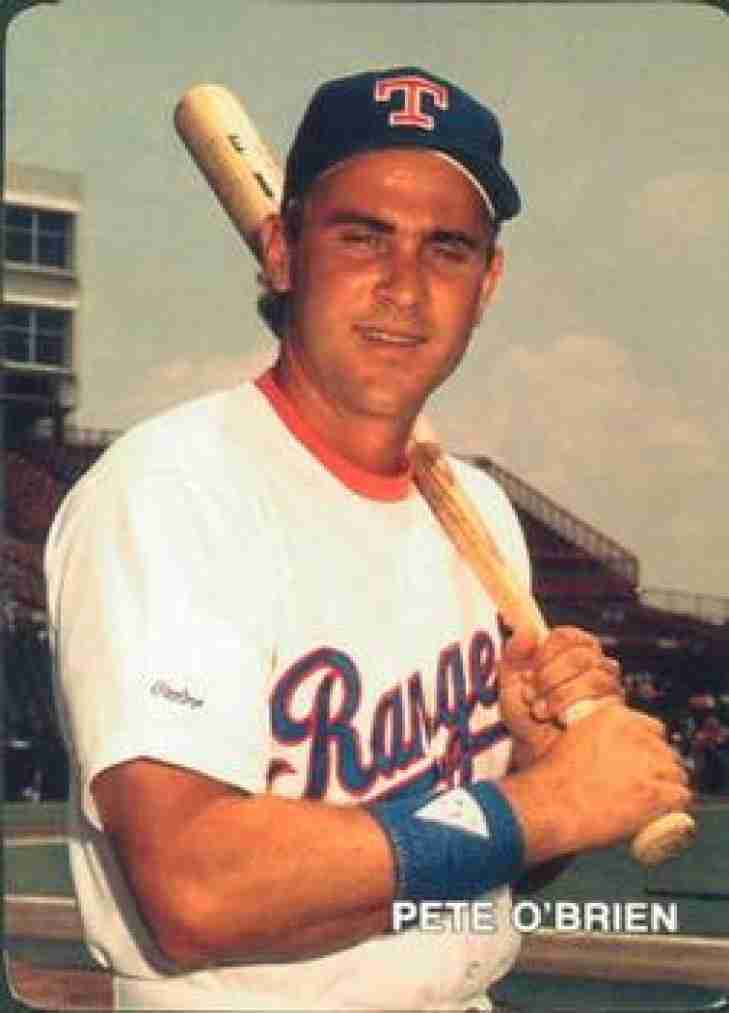
The mid-1980s Texas Rangers are often remembered for their flashy young talents, but Pete O’Brien's steady and reliable performance was the true backbone of the team. Drafted in the 15th round of the 1979 draft from Nebraska, this left-handed first baseman arrived in Arlington by late 1982 and quickly proved to be durable. While he wasn't a flashy slugger grabbing the spotlight every night, managers and teammates appreciated him as a consistently dependable, everyday player.
O'Brien was a consistent presence in the middle of the Rangers' lineup, combining solid line-drive power with strong contact skills. He surpassed 150 hits three times for the franchise, notably in 1985 when he achieved a career-high 171 hits and 92 RBIs. He was also effective at Arlington Stadium, with three seasons of 20 or more home runs. His best offensive year came in 1986, when he hit 23 home runs, drew 84 walks, and posted a .290 batting average, helping Texas reach an unexpected 87 wins and second place in the AL West, earning him 11th place in the AL MVP voting.
Beyond his reliable bat, O'Brien was an absolute wizard with the glove at first base, providing a crucial safety net for a young Rangers infield. With elite flexibility, supreme reflexes, and a pristine internal clock, he regularly ranked among the top in the American League in putouts and fielding percentage, culminating in an AL Gold Glove Award in 1988.
Following the 1988 schedule, the club traded him to the Cleveland Indians as part of a massive, nine-player blockbuster that brought Julio Franco to Arlington. With the Rangers, O’Brien had 914 hits, 151 doubles, 114 home runs, and 461 RBIs while generating a steady .273/.348/.425 slash line (110 OPS+).
27. Kevin Brown

Long before Kevin Brown became baseball’s first $100 million player, threw a no-hitter, or led different teams to the World Series, he was a key draft prospect for the Texas Rangers. Picked fourth overall in 1986 from Georgia Tech, this intense right-hander featured a powerful sinking fastball that defined his pitching style. Although his peak, close to Cooperstown, came after leaving Texas, his seven full seasons in Arlington set the stage for a highly successful major league career.
By 1989, Brown had become a regular in the Texas rotation, just behind legendary Nolan Ryan. He used a distinctive high-velocity sinker that generated numerous ground balls, showcasing efficiency often overlooked at Arlington Stadium, known for favoring hitters in the pre-humidor era. While early '90s fans and media admired strikeout kings, Brown emphasized solid contact, playing with a relentless, bulldog-like approach.
That unyielding approach culminated in a spectacular individual breakthrough in 1992. Completely dominating American League lineups, Brown authored a masterpiece of a season, leading the major leagues with 21 victories against just 11 defeats. Pacing the circuit with 265.2 grueling innings over 35 starts, he earned his first career All-Star selection and finished sixth in the AL Cy Young Award voting, becoming the first Ranger pitcher to reach 20 wins since Fergie Jenkins in 1974. He sustained that workhorse pace the following summer, logging another 233 frames to post 15 wins.
However, his time in Texas concluded amidst the structural chaos that gripped the sport in the mid-1990s. Brown took the ball for 26 starts during the strike-shortened 1994 campaign, but his relationship with the front office grew increasingly stagnant. Once the devastating player strike wiped out the World Series and spilled into the following spring, the business of the game shifted dramatically. When the strike finally settled in April 1995, Brown hit the open market as a free agent. The small-market Rangers, unwilling to commit to escalating long-term financial obligations, elected to let their former ace walk, clearing the path for him to sign a one-year deal with the Baltimore Orioles.
Across parts of eight seasons in Texas (1986, 1988–1994), Brown made 188 appearances (185 starts). He compiled a highly respectable 78–64 record with a 3.81 ERA and a 1.33 WHIP. He swallowed up 1,234 innings of work, recording 36 complete games, three shutouts, and 742 strikeouts.
28. Mike Hargrove
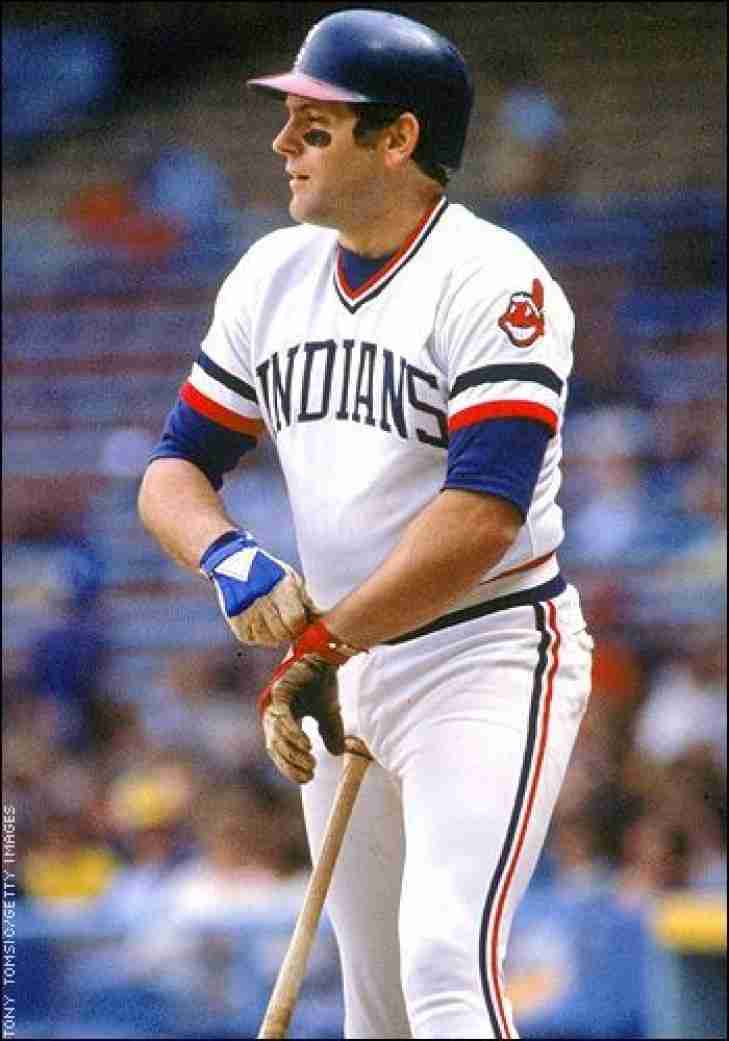
Long before analytics made on-base percentage a key indicator of offensive skill, Mike Hargrove mastered patience at Arlington. Known as "The Human Rain Delay," the left-handed first baseman gained his nickname due to his highly ritualistic routine between pitches—adjusting his helmet, tightening his batting gloves, and wiping his shoes—which disrupted the timing of opposing pitchers.
Hargrove entered Texas as a relatively unnoticed 25th-round draft pick from Northwestern Oklahoma State but quickly proved his talent. He started his career with an outstanding 1974 season, hitting .323 with a .395 on-base percentage, earning the American League Rookie of the Year Award and becoming a key part of the Rangers’ improving lineup. He continued his success in 1975, earning an AL All-Star selection by batting .303 and leading the team with 91 runs scored, demonstrating consistent offensive prowess.
While Hargrove didn't possess the towering home run power typically seen in corner infielders, his skill at controlling the strike zone was exceptional. He exemplified high-leverage patience, using his sharp vision to tire out pitchers and leading the American League in walks twice while with Texas—racking up a career-high 114 free passes in 1977 and 101 in 1978. During his five full seasons with the Rangers, he maintained a remarkable .399 on-base percentage, making him a persistent and frustrating presence on the bases for anyone trying to get through the lineup.
That productive residency ended unexpectedly before the 1979 campaign, when the Rangers traded him to San Diego in a multi-player blockbuster. Hargrove then spent a successful decade with the Cleveland Indians as a player and manager, but his peak was in Arlington.
Over his six seasons in the Lone Star State, Hargrove had 795 hits, 126 doubles, 51 home runs, and 338 RBIs while generating a .291/.399/.403 slash line (131 OPS+) and drawing 500 walks.
19. Nolan Ryan
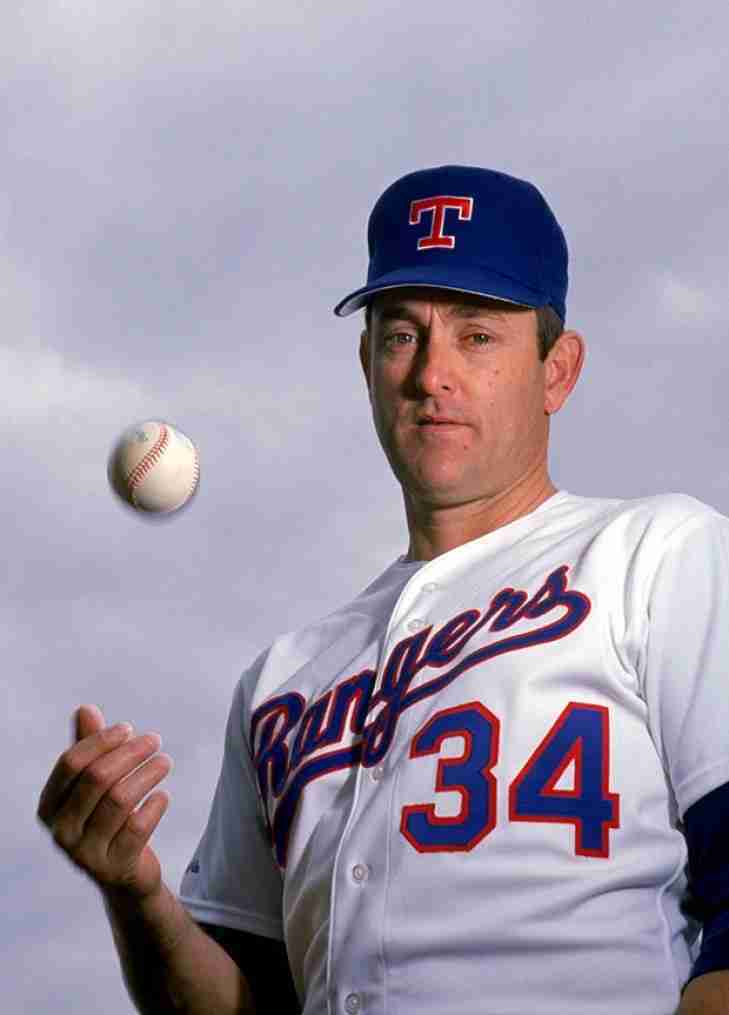
When Nolan Ryan entered into a free agency agreement with the Texas Rangers in December 1988, he was already 41 years old and possessed a distinguished career filled with numerous accolades. Traditional baseball wisdom indicated that the native Texan was returning home primarily to transition into retirement. However, "The Ryan Express" transformed his final five seasons into an extraordinary cultural and statistical phenomenon, thereby solidifying his position as a legendary figure in the history of sports in Lone Star State.
Operating with a high-velocity fastball that still defied time and physics, Ryan did not merely maintain a position in the starting rotation; he remained a formidable front-line force. His 1989 debut at Arlington was a remarkable demonstration of power, as he led the American League with 301 strikeouts over 239 innings—marking the sixth occasion in his career that he reached the 300-strikeout threshold. Even into his mid-40s, his exceptional pitching abilities remained entirely unhittable when he was fully concentrated, a fact he demonstrated to the baseball community by delivering his sixth career no-hitter against Oakland in 1990, followed by a spectacular no-hitter with 16 strikeouts against Toronto on May 1, 1991.
While his raw on-field value in Arlington was concentrated into the back end of his career, his physical presence provided the franchise with a significant competitive advantage and an immediate national profile. He was an intense, traditional competitor who demanded the strike zone, as famously exemplified by his legendary mound confrontation with Robin Ventura in 1993. Each time Ryan took the mound, he elevated the game to a high-stakes level, concluding his five-year tenure with an impressive 51–39 record and amassing 939 strikeouts against a heightened level of baseball age.
His final departure from the baseball field took place in September 1993, when a torn ligament in his right elbow abruptly ended his illustrious 27-year career in Major League Baseball. Although his number of starts was limited to 135, thereby resulting in his total statistical contributions being somewhat behind the franchise’s record holders over the decade, his late-career performance in terms of raw dominance and structural influence deeply left an indelible impression on the organization.
With the Rangers, Ryan made 135 appearances (all starts). He compiled a 51–39 record with a 3.43 ERA and a 1.12 WHIP. He logged 840 innings, recording 15 complete games, six shutouts, and 939 strikeouts. To permanently cement his monumental legacy, the Rangers retired his number 34 in 1996, and he was inducted into Cooperstown as a first-ballot member of the National Baseball Hall of Fame in 1999. He completed his journey with the organization by being inducted into the inaugural class of the Texas Rangers Hall of Fame in 2003, serving as the ultimate punctuation on his identity as a Texas icon.
