


Site Admin
14. Larry Dierker
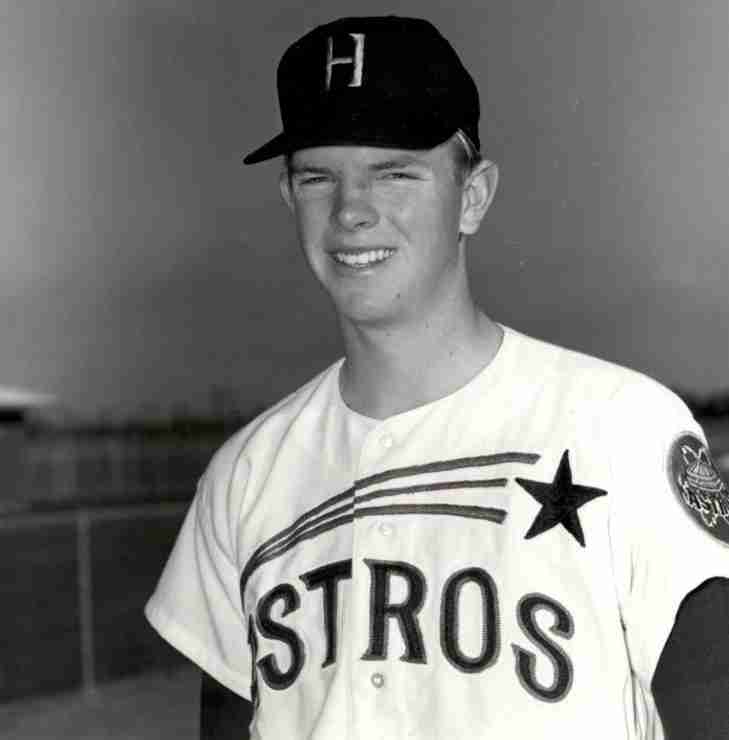
Larry Dierker is the story of the Houston franchise itself, stretching from its infancy as the Colt .45s through the dome-dwelling decades of the Astros. A right-hander with a focused intensity and a professional poise that belied his age, Dierker didn't just grow up in the organization; he became its defining voice and strategist. While he later achieved fame in the dugout and the broadcast booth, his primary legacy was forged on the mound as the first homegrown ace to reach the 20-win plateau in the Lone Star State.
Dierker’s ascent in Houston began with a moment of high-leverage theatre that has become part of baseball lore. On his 18th birthday in 1964, he made his major league debut and proceeded to strike out Willie Mays, signaling a transition from a schoolboy phenomenon to a legitimate big-league outlier. He spent the next several seasons navigating the growing pains of a young expansion club, establishing a reputation for specialized durability. By 1969, he became the first 20-game winner in franchise history. That season, he threw a staggering 282 innings with a 2.33 ERA, earning his first All-Star selection and proving he could maintain a steady-state excellence even in the most demanding workloads.
The middle of his residency was marked by a relentless, high-frequency presence in the rotation. He reached a second peak in 1971, earning another All-Star nod and continuing to pile up strikeouts despite the physical toll of pitching in the Astrodome’s humid, artificial environment. He possessed a tactical understanding of the game that allowed him to outthink hitters even as his velocity plateaued. He eventually amassed 137 wins and 1,487 strikeouts for the club, including a memorable no-hitter against the Expos in 1976. However, in 1977, when he was traded to the Cardinals, ending a 13-year run during which he had become the face of the rotation.
The final chapters of his Houston story were defined by a remarkable veteran-like second act. Following his retirement, Dierker transitioned into the broadcast booth, serving as the team’s voice for twenty years before being named the club’s manager in 1997. His shift from the microphone to the dugout was a statistical outlier in itself; he led the Astros to four division titles in five years, proving that his tactical mind was as sharp as his fastball had once been. He showed the organization that a "lifer" could provide value across three different decades and three different roles, weaving his personal narrative into the very fabric of the team.
The story in Houston reached its final punctuation in 2002 when the Astros retired his number 49, followed by his induction into the inaugural class of the Astros Hall of Fame in 2019. He showed the world that when you have the heart of a competitor and the discipline of a lifer, you don't just play for a franchise, you become its history.
With the Astros, Dierker compiled 137 wins, 1,487 strikeouts, and four division titles as a manager.
11. Jim Wynn
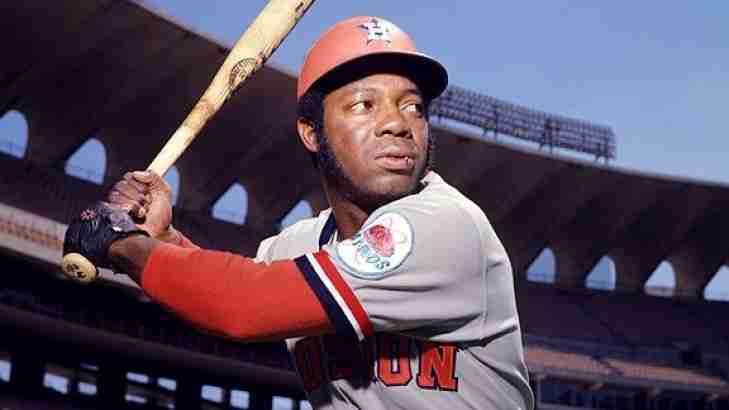
Jimmy Wynn’s career in Houston is a masterclass in why raw box scores can be deceiving. Standing only 5’ 9”, the man they called the “Toy Cannon” spent a decade launching high-frequency drives into the deepest reaches of the cavernous Colt Stadium and the Astrodome—parks that were notorious graveyards for power hitters. While his batting averages often hovered in the .250 range, modern evaluation has revealed a player who was decades ahead of his time, a specialized weapon who valued the walk and the long ball long before they became league-wide standards.
Wynn’s ascent in Houston began in 1963 with the Colt .45s, but it was the move to the Astrodome in 1965 that defined his professional resilience. In an era when "small ball" was the tactical norm, he defied the "Dome" in 1967 by launching 37 home runs—a staggering total for a park where the ball simply didn't carry. He combined this specialized power with elite speed, swiping 16 bases and providing the expansion franchise with its first legitimate superstar. He wasn't a contact specialist; he was a model of efficiency who forced pitchers to navigate a tiny strike zone that he protected with a focused intensity.
The center of his residency was marked by a 1969 campaign that served as a statistical outlier for the decade. That season, Wynn led the National League with 148 walks. While his .269 average appeared modest to contemporary eyes, his on-base percentage soared to .436, proving that he was one of the most difficult outs in the game. He followed this with another high-frequency power surge in 1970, hitting 27 homers and stealing 24 bases. He showed the organization that a player could become a franchise pillar simply by refusing to expand the zone, a steady-state approach that kept him at the top of the league's OPS leaderboard for years.
The final chapters of his Houston tenure saw a gradual decline in batting average, but the "Toy Cannon" remained a dangerous outlier until his departure. Even as injuries began to take a physical toll, he managed 20 home runs and 91 walks in 1972, maintaining a professional poise during a period where the Astros were struggling to find a supporting cast. He was eventually traded to the Dodgers following the 1973 season, leaving the Lone Star State with 1,291 hits and 223 home runs, numbers that would have been significantly higher had he played in a hitter-friendly environment.
The story in Houston reached its final punctuation in 2005 when the organization retired his number 24, followed by his induction into the Astros Hall of Fame in 2019.
6. Roy Oswalt
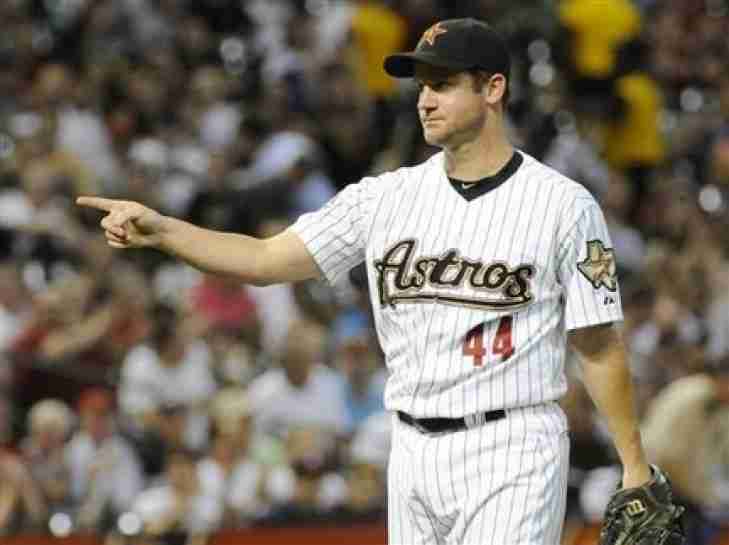
Roy Oswalt’s arrival in Houston in 2001 was like a jolt of electricity to a franchise already boasting legendary arms. A 23rd-round draft pick with a mid-90s heater and a "12-to-6" curveball that dropped off a table, Oswalt skipped the traditional grace period for rookies. He stepped onto the mound at Enron Field and immediately began dismantling big-league lineups with a surgical precision that made his 6'0" frame seem much larger.
He burst onto the scene in 2001 with a 14-3 record and a 2.73 ERA, finishing second for the Rookie of the Year and fifth in the Cy Young race. This wasn't a fluke; it was a blueprint. His best years were between 2004 and 2005, when he recorded back-to-back 20-win seasons, the first Astro to do so in a quarter-century. During this run, he led the National League in wins (2004) and provided a masterclass in durability, consistently eclipsing the 200-inning mark with a focused intensity that demoralized opposing hitters.
The hallmark of his time in Houston was his ability to rise to the occasion when the stakes were highest. During the 2005 postseason, Oswalt reached a historic outlier status. In the NLCS against St. Louis, he delivered a legendary performance in Game 6, pitching seven innings of one-run ball to clinch the pennant. His efforts earned him the NLCS MVP and famously won him a brand-new Caterpillar bulldozer from owner Drayton McLane. He possessed a specialized mental toughness that allowed him to thrive alongside Hall of Fame teammates like Roger Clemens and Andy Pettitte, often outshining them as the most reliable arm on the staff.
During the 2010 season, Oswalt was traded to Philadelphia, marking the end of a decade-long journey that saw him transform from a late-round sleeper into a statistical titan. He departed with 1,593 strikeouts and a reputation as a man who simply refused to be beaten, especially with a championship on the line.
As an Astro, Oswalt compiled 143 wins and 1,593 strikeouts while securing the 2005 NLCS MVP and an NL ERA title. The organization provided the final punctuation on his legacy in 2020 by inducting him into the Astros Hall of Fame.
7. Jose Cruz
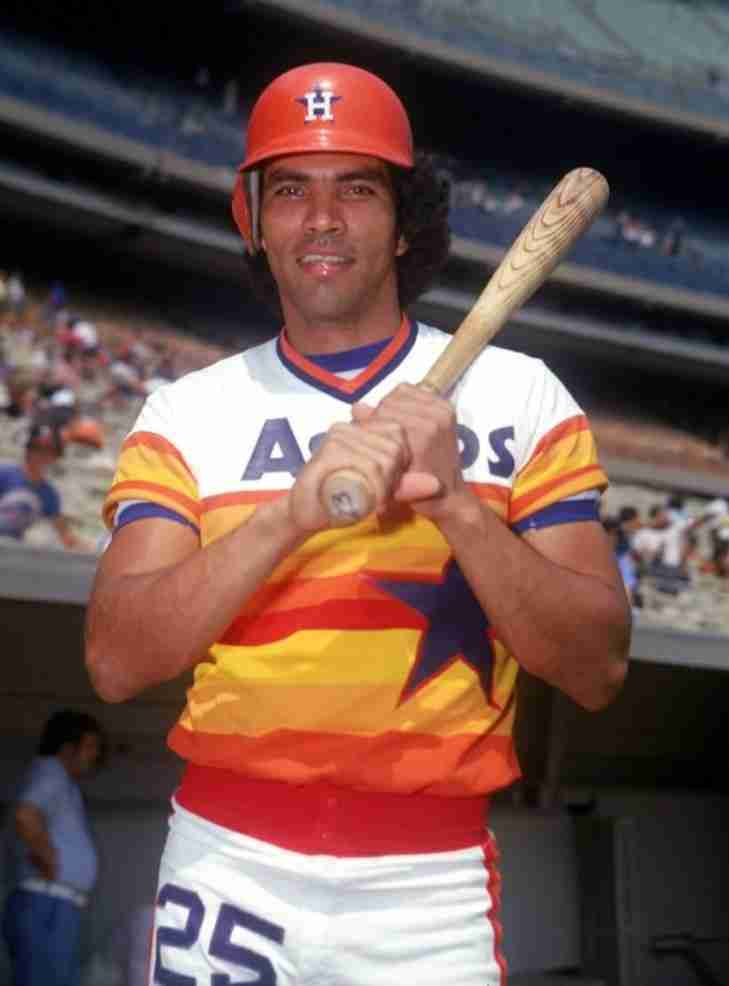
Long before the "Killer B's" took over Houston, the Astrodome belonged to a left-handed contact artist from Puerto Rico named Jose Cruz. Arriving in 1975 after a stint in St. Louis, "Cheo" became the definitive face of the franchise during the most pitcher-friendly era in baseball history. In a cavernous ballpark where home runs went to die, Cruz mastered the art of the line drive, carving out a legacy as one of the most consistent and beloved hitters to ever wear the tequila-sunrise stripes.
Cruz’s tenure in Houston was a masterclass in hitting for average and creating chaos on the basepaths. He hit his stride in the late 1970s and stayed there for a decade, posting a batting average of .300 or better in six different seasons. His best year was in 1983, a summer where he led the National League with 189 hits and drove in 92 runs, earning a Silver Slugger and a third-place finish in the MVP race. He was a model of specialized efficiency, utilizing a short, lightning-quick stroke to slice doubles into the gaps and providing the steady-state production that carried the Astros to their first-ever division titles in 1980 and 1986.
Cruz’s versatile athleticism often went overlooked in the national spotlight. He wasn't just a slap hitter; he possessed a deceptive burst of speed that saw him eclipse the 30-stolen base plateau five times as an Astro. He possessed a professional resilience that allowed him to remain a high-frequency contributor well into his late 30s, eventually amassing 1,937 hits in a Houston uniform. He served as the primary engine for the 1980 "Cardiac Kids," utilizing his veteran-like poise to lead the club through a grueling one-game playoff and into the postseason for the first time in franchise history.
He left for the New York Yankees after the 1987 season and would go on to amass 1,937 hits, 288 stolen bases, and a .292 batting average while finishing in the top ten of the MVP voting three times. Houston bestowed the ultimate honor on Cruz: a franchise Hall of Fame induction in 2019.
