


Committee Chairman
Why Second Looks Matter: Reconsidering The Betting Bans In A Sport That Sells Betting
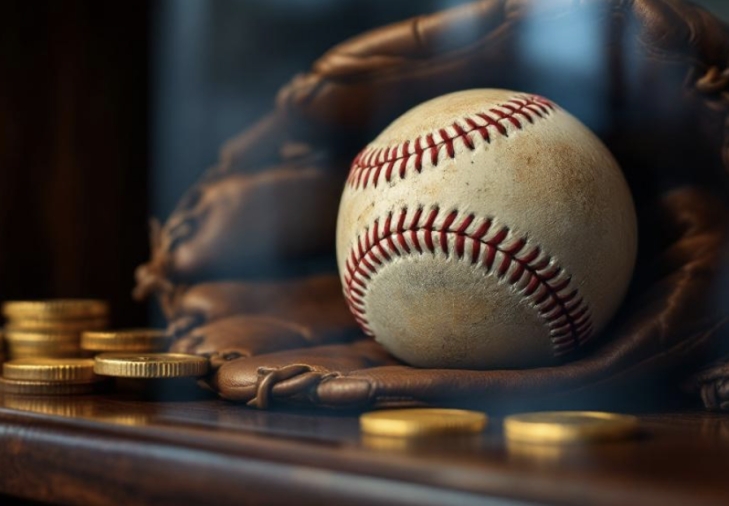
Pete Rose died in 2024. On May 13, 2025, Commissioner Rob Manfred ruled that permanent ineligibility ends at a person's death and removed 17 deceased people from baseball's ineligible list. Rose was one of them. Shoeless Joe Jackson was another.
Neither record moved. Rose still finished with 4,256 hits, Jackson with a .356 lifetime average, and those numbers sat unchanged under the ban for decades. What moved was the sport holding the file. The league that expelled its hit leader for betting on games now sells sportsbook partnerships and co-branded casino games to the same people who argue about him every winter.
This site's chairman has already written that the league profits from what it threw Rose out for. The Classic Baseball Era Committee that can put him and Jackson on a ballot meets in December 2027, roughly 15 months from now, so the argument has time to sharpen. Sharpening it means knowing what the sport actually sells, not just that it sells something.
Baseball Wrote Its Betting Rule To End The Argument
Rule 21 makes betting on a game in which a person has a duty to perform grounds for permanent ineligibility. The wording leaves a commissioner almost no room once a finding lands, which was the point of drafting it that way after 1919.
Rose accepted that status in a 1989 settlement with Commissioner A. Bartlett Giamatti, after investigator John Dowd concluded he had bet on baseball while managing the Cincinnati Reds. Dowd's report recorded wagers of $2,000 on his own team.
Jackson had less recourse than that. A Chicago jury acquitted him in the Black Sox case in 1921, Commissioner Kenesaw Mountain Landis expelled him anyway, and he died in 1951 with no route back.
Then the Hall of Fame shut its own door. Its board barred anyone on the ineligible list from appearing on a ballot in 1991, which handed the decision to a list instead of to voters. For 34 years the Hall never had to say what it thought about Rose, because the rule spoke first.
Other Leagues Lifted Their Bans Faster And Their Players Reached The Halls
Football ran the same offense on a much shorter clock. The NFL suspended Green Bay halfback Paul Hornung and Detroit defensive tackle Alex Karras for a year in 1963 for violating league gambling policy. Both came back the following season and both built careers that selectors could later weigh whole.
Hockey went the other way. In 1948 the NHL banned Billy Taylor of the New York Rangers for life and suspended Don Gallinger of the Boston Bruins indefinitely over gambling allegations, as ESPN's timeline of league gambling scandals sets out. The league reinstated both in 1970 and neither man played again.
Taylor had set the single-game assist record with seven in 1947. Wayne Gretzky later matched that mark without passing it, so the record outlived the ban by decades. The career did not.
|
Player |
Ban |
Reinstated |
Hall outcome |
|
Paul Hornung |
NFL, 1963 |
Within a year |
Pro Football Hall of Fame, 1986 |
|
Alex Karras |
NFL, 1963 |
Within a year |
Pro Football Hall of Fame, 2020 |
|
Billy Taylor |
NHL, 1948 |
1970, after 22 years |
Not inducted |
|
Don Gallinger |
NHL, 1948 |
1970, after 22 years |
Not inducted |
|
Pete Rose |
MLB, 1989 |
2025, after his death |
Eligible for the 2027 committee |
|
Joe Jackson |
MLB, 1921 |
2025, after his death |
Eligible for the 2027 committee |
What separates those rows is elapsed time rather than severity. Hornung and Karras served a year, returned and finished, so voters eventually held a complete resume. Taylor and Gallinger waited 22 years and had nothing left to add to theirs.
A Room Of 16 Will Decide What No Ballot Ever Did
The 2025 ruling did not put Rose in Cooperstown. It removed the bar in front of him. The Hall said a screening committee could place him and Jackson on the Classic Baseball Era Committee ballot, and that panel next sits in 2027.
Era committees run on arithmetic unlike a writers' ballot. Sixteen people sit in the room, a candidate needs 12 of them, and one vote is therefore worth 6.25% of the total. More than 400 writers vote on the annual ballot, where a single vote shifts a candidate by a fraction of a percentage point.
Small rooms move quickly in both directions. Four people changing their minds can settle a case a large electorate would have argued over for a decade, and a candidate whom several panelists knew personally starts nearer 12 than his record alone would put him.
Readers here have already voted on the question. Rose sits third in this site's ranking of baseball players outside Cooperstown, and 69.6% of those who answered the poll on his page chose to put him in.
The Sport They Come Back To Sells The Bet
MGM Resorts International and BetMGM announced a renewal of their MLB partnerships on June 23, 2026. That release dated the relationship to 2018, when the two became the league's first Official Gaming and Sports Betting Partners, and said BetMGM would keep developing co-branded MLB-themed casino games and marketing them across MLB Network, MLB.com and the league's digital properties.
MLB added a second kind of market this year. It named Polymarket its exclusive prediction market partner on March 19, 2026, and CNBC's report on the agreement recorded that both sides would work to "restrict markets that present an integrity risk to MLB, such as individual pitches, manager decisions, and umpire performance, among others."
Read those two announcements together and the league's position looks consistent rather than two-faced. It sells the spectator side of betting and fences off the parts a participant could move. Rose stood on the wrong side of that fence as a manager, not as a customer.
The spectator side is the one a reader of this site meets. A game carrying a club's name gets marketed on league platforms to people who follow the league, and the usual way in is a sign-up offer.
A No-Deposit Offer Is A Contract With Four Numbers In It
The no-deposit form is the one built for first contact, because it posts a credit to a new account before any money goes in. That is what attaches it to a sponsorship push: the account opens first and the terms arrive with it.
The figure printed on the front of it is the least binding part. Four separate terms decide what that credit can turn into, and none of them sit in the headline.
First comes the playthrough multiple, the total staking required before any resulting balance can leave. A multiple of ten means ten times the credit has to pass through as stakes. Turnover satisfies it rather than winning, so a player who is down can still clear it.
Second comes game weighting. Titles do not all count at the same rate, and one that credits a stake at a fraction of its value stretches the turnover needed without touching the number on the front.
Third comes the win cap, a ceiling on how much of the balance can be withdrawn at all. Fourth comes expiry, the date after which the credit and whatever was built on it disappears.
Two offers can advertise the same figure and diverge on all four terms, which is why the figure is not the comparison. Bonus.com's no-deposit offer analysis lays those terms out offer by offer. Each set belongs to the operator that wrote it rather than to any common standard, and operators revise them.
The Rule That Caught Rose Still Catches Players
MLB placed Tucupita Marcano on the permanently ineligible list in 2024 after finding he had placed 387 baseball bets totaling more than $150,000. That made him the first active player banned for life over gambling in roughly a century.
Federal prosecutors charged Cleveland pitchers Emmanuel Clase and Luis Ortiz in November 2025 over an alleged scheme to rig pitches for bettors. Both men pleaded not guilty in Brooklyn federal court in February 2026 to a rewritten indictment, as did a third person charged as a middleman.
Prosecutors allege the pitchers took several thousand dollars in payoffs to help two gamblers win at least $460,000 through more than 100 in-game prop bets and parlays on pitch speed and pitch outcomes. The charges remain allegations and neither man has been convicted.
MLB and its authorized sportsbooks capped wagers on pitch-level markets at $200 and shut those markets out of parlays. The Polymarket agreement fences the same ground from the prediction-market side. Both limits land on the market the indictment describes, a wager on one pitch rather than on a game.
Operators rewrite markets and promotion terms while cases like these run, and the Bonus.com feed on Facebook is one place those revisions get posted.
A Second Look Can Land After The Subject Is Gone
Rose died about seven months before the ruling that made him eligible, and he is not the first name on that list. The delay is structural rather than unlucky.
Dick Allen missed election by one vote on the 2014 Golden Era ballot, died in 2020, missed by one vote again in 2021 and was finally chosen in 2024. Dave Parker won election in that same 2024 vote with 14 of 16 and died 29 days before his induction in July 2025.
The calendar does most of that damage. Era committees convene once every three years, so a candidate who falls short waits out a full cycle before the same panel reconvenes. Under a rule adopted in 2025, a candidate drawing fewer than five votes sits out the next cycle, and a second such result ends the candidacy outright.
That is the machinery Rose's case enters in December 2027. Nobody will ask the panel whether the sport changed around him, but it will be voting inside the changed sport, which is not the same as judging the record alone. Jackson's case reaches the same room 108 years after the World Series that ended his career.
Our Notinhalloffame Football list has been updated: 41-60, Part 3
We are diligently working away at Notinhalloffame on revising our Football lists to reflect the winter’s respective classes, but as you may have seen, we have been swamped with our main project, the United States Athletic Hall of Fame, which is the only one of its kind, where you can vote for the greatest Athletes, Coaches, Contributors, and Commentators for the 2026 Class.
This is a very important project, and please support us by voting daily at www.theusahof.com.
In the meantime, we have rebuilt the 41-60 (Part 3) on our Notinhalloffame Football List, which we are pleased to show below:
They are:
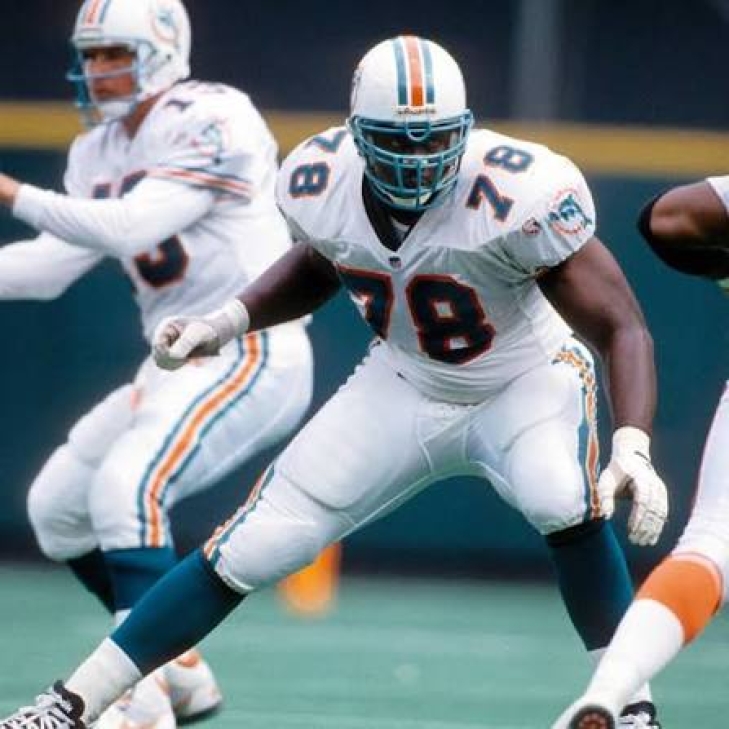
#41. Richmond Webb
#42. Ricky Watters
#43. James Harrison
#44. Haloti Ngata
#45. Maurkice Pouncey
#46. Lee Roy Jordan
#47. Marshawn Lynch
#48. Hines Ward
#49. Charlie Conerly
#50. Jake Scott
#51. Harold Jackson
#52. Billy Howton
#53. Jerry Mays
#54. Walt Sweeney
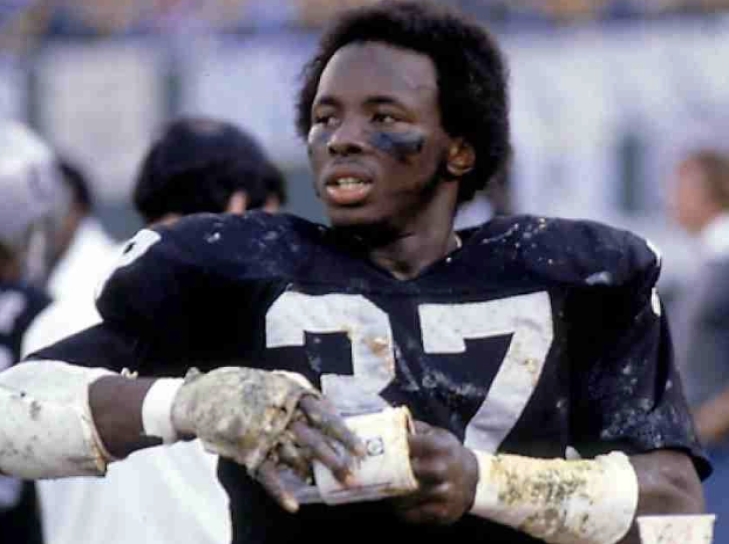
#55. Mark Gastineau
#56. Larry Grantham
#57. John Brodie
#58. Ed Budde
#59. London Fletcher
#60. Pete Retzlaff
Look for more updates soon!
Thank you all for supporting Notinhalloffame.com.
Our Notinhalloffame Football list has been updated: 21-40, Part 2
We are diligently working away at Notinhalloffame on revising our Football lists to reflect the winter’s respective classes, but as you may have seen, we have been swamped with our main project, the United States Athletic Hall of Fame, which is the only one of its kind, where you can vote for the greatest Athletes, Coaches, Contributors, and Commentators for the 2026 Class.
This is a very important project, and please support us by voting daily at www.theusahof.com.
In the meantime, we have rebuilt the 21-40 (Part 2) on our Notinhalloffame Football List, which we are pleased to show below:
They are:
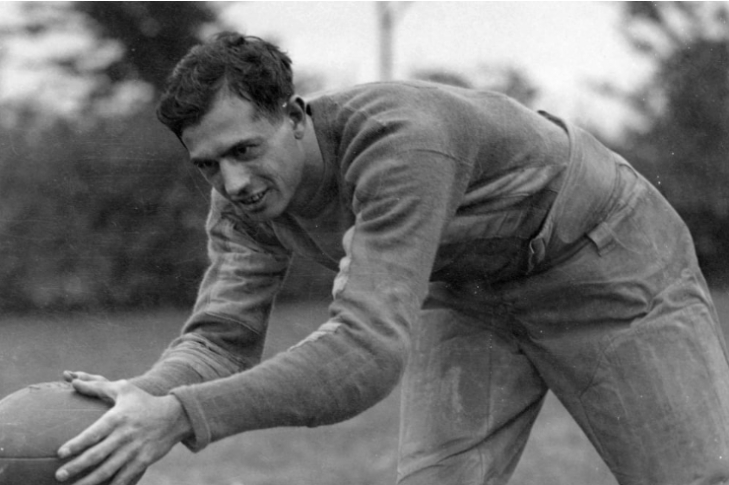
#21. Verne Lewellen
#22. Frank Gore
#23. Reggie Wayne
#24. Kevin Williams
#25. Steve Wisniewski
#26. Steve Smith Sr.
#27. Dick Schafrath
#28. Louis Wright
#29. Jahri Evans
#30. Al Wistert
#31. Bob Kuechenberg
#32. Otis Taylor
#33. Joe Jacoby
#34. Jimmy Patton
#35. Roman Gabriel
#36. Tommy Nobis
#37. Jim Marshall
#38. Neil Smith
#39. Randall Cunningham
#40. Bobby Boyd
Look for more updates soon!
Thank you all for supporting Notinhalloffame.com.
The Pro Football Hall of Fame Revisited Project: 2001 Semi-Final VOTE
2001 SEMI-FINAL RESULTS:
Thank you for your participation in the Pro Football Hall of Fame Revisited Project. If you are unaware of what that is, we acted like the PFHOF had its first class in January 1946.
We have completed the years up to 2000.
For “2001,” a Preliminary Vote with nearly 100 players whose playing career ended by 1995. We also follow the structure in which players have 20 years of eligibility, and if they do not make it into the Hall, they are relegated to the Senior Pool.
Each voter was asked to select 25 names from the preliminary list, and the top 25 vote-getters were named Semi-Finalists.
A week later, the voters were asked to pick 15 names from the 25 Semi-Finalists, and next week, they will choose five from the remaining 15. We will continue this process every week until we catch up to the current year.
31 votes were cast, with the top 15 advancing.
This is for the “Modern Era”
Bold indicates they advanced to the Finals:
|
Player |
Year of Eligibility |
Vote Total |
|
Art Monk WR |
1 |
25 |
|
Bob Griese QB |
16 |
23 |
|
Lester Hayes DB |
10 |
23 |
|
Roger Craig RB |
3 |
23 |
|
Jackie Slater T |
1 |
23 |
|
Ken Anderson QB |
10 |
21 |
|
Sterling Sharpe WR |
2 |
21 |
|
Cliff Harris S |
17 |
19 |
|
Ken Stabler QB |
12 |
19 |
|
Billy “White Shoes” Johnson WR/R |
8 |
18 |
|
Drew Pearson WR |
13 |
17 |
|
Rickey Jackson LB-DE |
1 |
17 |
|
Deron Cherry DB |
5 |
15 |
|
Andy Russell |
20 |
14 |
|
Lemar Parrish DB |
14 |
14 |
|
Ken Riley DB |
13 |
14 |
|
Todd Christensen TE |
8 |
14 |
|
George Kunz T |
16 |
13 |
|
Joe Jacoby T |
1 |
3 |
|
Winston Hill T |
19 |
12 |
|
Joe Klecko DE-NT |
8 |
12 |
|
Fred Dean DE |
11 |
11 |
|
Mark Gastineau DE |
8 |
8 |
|
Jimbo Covert T |
1 |
6 |
|
Steve McMichael DT |
2 |
5 |
This is for the “Senior Era”
*Bold indicates they advanced to the Finals:
|
Player |
Year of Eligibility |
Vote Total |
|
Floyd Little RB |
1 |
22 |
|
Arch Ward CONTRIBUTOR |
12 |
18 |
|
Otis Taylor WR-FL |
1 |
14 |
|
Walt Sweeney G |
1 |
13 |
|
Alan Ameche FB |
15 |
16 |
|
None of the Above |
3 |
This is for the “Coaches/Contributors Era”
*Bold indicates they advanced to the Finals:
|
Player |
Year of Eligibility |
Vote Total |
|
SCOUT: Eddie Kotal |
6 |
19 |
|
EXEC: Ron Wolf |
3 |
18 |
|
COACH: Tom Flores |
5 |
17 |
|
EXECUTIVE: George Young |
4 |
11 |
|
OWNER: Eddie DeBartolo Jr. |
2 |
8 |
|
None of the Above |
2 |
We will post the Class of 2001 Pro Football Hall of Fame Revisited Project next Saturday.
Thank you to all who contributed. If you want to be part of this project, please let us know!
