


Committee Chairman
Our All-Time Top 50 Baltimore Ravens have been revised
Yes, we know that this is taking a while!
As many of you know, we here at Notinhalloffame.com are slowly generating the 50 of each major North American sports team. That being said, we have existing Top 50 lists out and we always consistently look to update them when we can and based on necessity. As such, we are very happy to present our pre-2021 revision of our top 50 Baltimore Ravens of all-time.
As for all of our top 50 players in baseball we look at the following:
1. Advanced Statistics.
2. Traditional statistics and how they finished in the NFL.
3. Playoff accomplishments.
4. Their overall impact on the team and other intangibles not reflected in a stat sheet.
There are two new additions in the Top 50, and some jumps by active Ravens, but nothing affecting our top five. As always, we announce them below
They are:
1. Ray Lewis
2. Ed Reed
5. Haloti Ngata
You can find the entire list here.
The changes are:
Justin Tucker, the best Place Kicker of the last decade has moved up from #16 to #13.
Lamar Jackson, the enigmatic Quarterback and former MVP rocketed from #30 to #19.
Cornerback, Jimmy Smith, moved up one spot to #40.
Linebacker, Matt Judon, who signed with the New England Patriots on the offseason, climbed up six spots to #42.
The new entries are Cornerback,Marlon Humphreyand Offensive Lineman, Orlando Brown Jr., who debut at #48 and #49 respectively.
We welcome your input and commentsand as always, we thank you for your support.
The WWE Hall of Fame adds ten new names to their legacy wing
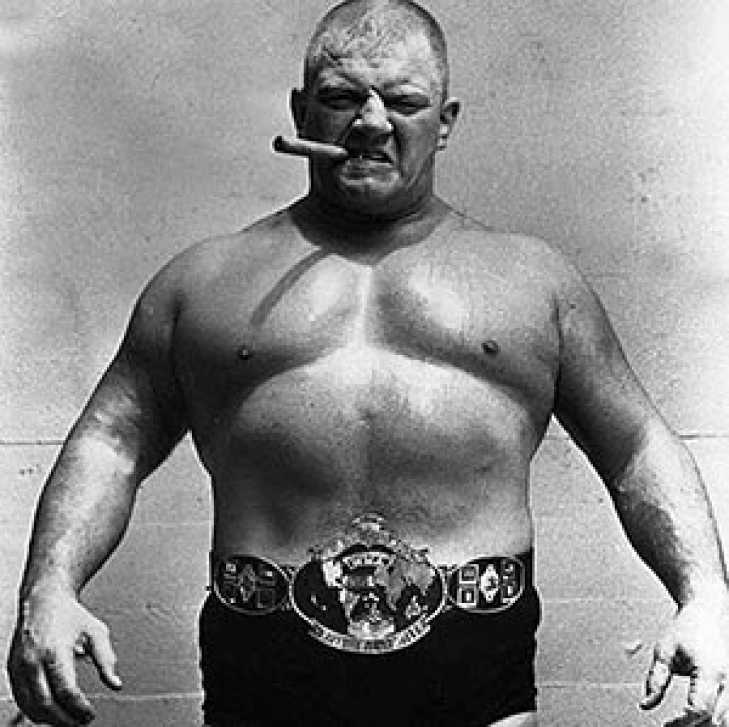
Last night, the WWE held their Hall of Fame ceremony and in addition to the names that had been previously announced, the WWE added new names to their legacy wing.
Inducted as part of the 2020 Class were:
Ray Stevens
Brickhouse Brown
“Dr. Death” Steve Williams
Baron Michele Leone
Gary Hart
Inducted as part of the 2021 Class were:
Dick the Bruiser
Pez Whatley
Buzz Sawyer
Ethel Johnson
Paul Boesch
We will be working on our WWE revisions, which should be done later this month.
11. Marlon Humphrey
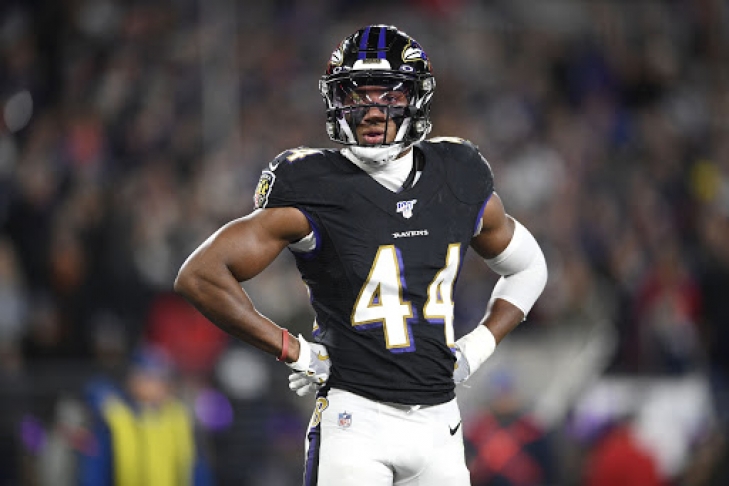
Drafted 16th overall in 2017 after winning a national title at Alabama under Nick Saban, Marlon Humphrey joined Baltimore with high hopes. Instead of immediately starting, he spent his rookie year learning defensive schemes behind veterans Jimmy Smith and Brandon Carr, before eventually becoming the key player in the secondary.
Humphrey brought a distinctive combination of speed, boundary press skills, and trail coverage to the Ravens. His signature move was the "Fruit Punch"—a powerful, precise right hook aimed at the football during extra yardage battles. Whether lining up as an outside shadow corner or sliding into the nickel slot to cover quick slants, Humphrey earned a reputation as one of the league's most versatile and physical defensive backs.
Humphrey established himself as an elite player during his breakthrough in 2019. He showcased his range with perimeter shutdowns, snagged three interceptions, recovered two fumbles for touchdowns, and limited top receivers, which earned him his first Pro Bowl and First-Team All-Pro honors. His outstanding 2020 season further solidified his reputation, as he made his second Pro Bowl appearance and led the NFL with eight forced fumbles, the highest by a defensive back in over twenty years.
Humphrey showcased his durability and versatility in 2022, earning his third Pro Bowl and achieving a career best with three sacks and three interceptions. Despite an injury-plagued 2023 limited to 10 games, he made a strong comeback in 2024, setting a personal record with six interceptions and adding 15 pass deflections. This performance earned him his fourth Pro Bowl invitation and his second First-Team All-Pro honor.
Throughout the 2025 season, he upheld his high standards, starting 15 games and anchoring the secondary. He led Baltimore with four interceptions, deflected 13 passes, and made 68 tackles, showcasing his ongoing importance as a top slot and boundary defender. Humphrey's 17 forced fumbles and 23 interceptions are the highest totals by a Baltimore defensive back since Ed Reed, including a league-leading eight forced fumbles in 2020.
Entering the 2026 season—his tenth in Baltimore—Humphrey remains the veteran leader of the secondary. Thus far, he has appeared in 131 regular-season games, cementing his place as one of the premier corners of his generation.
Is Larry Fitzgerald Retiring?
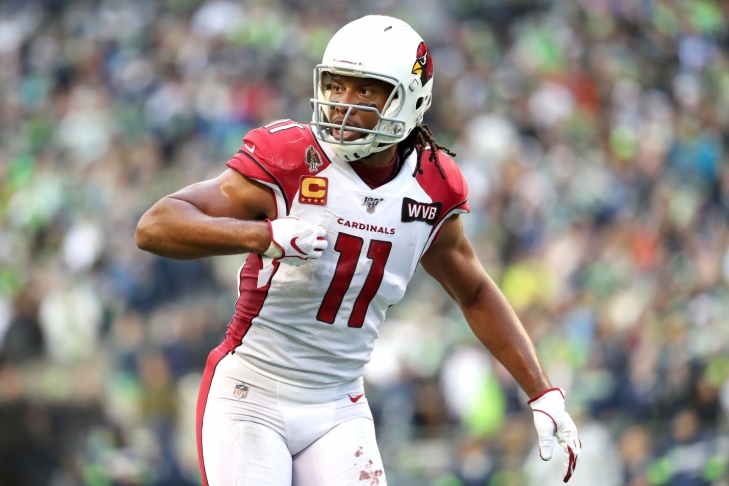
There has been a lot of speculation of late that Larry Fitzgerald, the free agent Wide Receiver, will be retiring shortly. If he does, this would make a loaded group of first ballot eligible even stronger, as Drew Brees, Philip Rivers, Jason Witten and Maurkice Pouncey have all called it a career in 2020.
Fitzgerald, who is 37, had career-lows last season (54 Receptions, 409 Yards, 1 Touchdown), and after 17 seasons in the National Football League, this might be it. Playing his entire career with the Arizona Cardinals, Fitzgerald has accumulated 17,492 Receiving Yards, which is second all-time behind Jerry Rice, who is more than 5,000 Yards ahead of him. Fitzgerald’s 121 Touchdowns are currently sixth all-time.
If Fitzgerald plays in 2021, it won’t likely be with Arizona, who just signed A.J. Green. In our 2020 pre-season rank of active players with Hall of Fame credentials, Fitzgerald was ranked #5.
We don’t what Fitzgerald will be doing in 2021, but we will always wish him the best at whatever it is.
