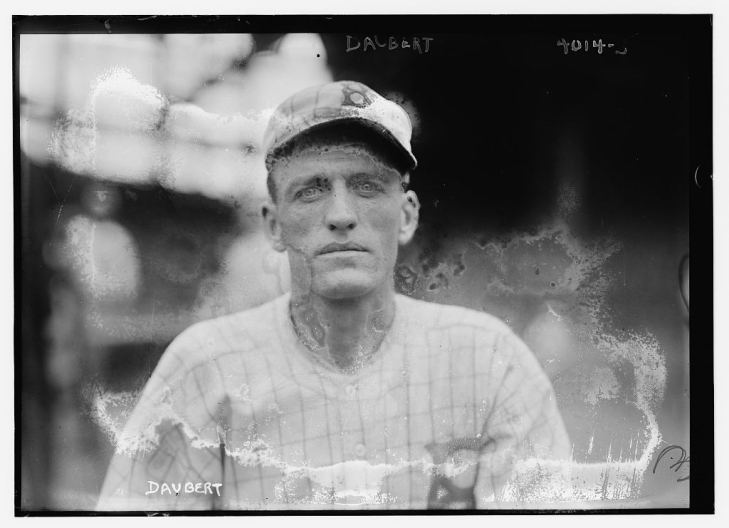
In exploring the history of the New York Giants during John McGraw's extensive leadership, names like Christy Mathewson and Bill Terry are often remembered. However, if you had visited McGraw’s office at the Polo Grounds in the 1920s, you'd see only two photos: one of Mathewson and another of a fiercely dedicated, widely admired right fielder who embodied the competitive spirit of the team's early success. Ross Youngs, known as “Pep," joined the team full-time in 1918 and quickly earned affection. Instead of relying on size or home run power, he combined aggressive, athletic play with exceptional contact hitting, forging a brief yet remarkable career that remains one of baseball's most touching stories.
After participating in seven games for New York in 1917, his initial 1918 season immediately established him as a regular at the forefront of the New York batting lineup. Youngs consistently executed powerful line drives and hastened beyond outfield throws, making it a daily habit, and achieved a commendable .302 batting average over 121 games. This foundational season commenced an extraordinary seven-year period during which he maintained averages well above .300, thereby establishing himself as one of the foremost catalysts within the National League.
During 1920, he achieved his highest individual offensive performance, batting .351 with 204 hits and 92 runs. He maintained this high contact level in the 1923 championship race, leading the league with 121 runs and contributing 200 hits to McGraw’s lineup. Although he never won a formal batting title, Youngs was frequently among the league leaders, leading the National League in times on base twice (1919 and 1920), thanks to his keen eye that resulted in a .399 on-base percentage over his career.
His high-octane style transferred to the grass of the Polo Grounds, where his defensive profile exhibited a compelling combination of high risk and high reward. Youngs demonstrated an exceptional throwing arm, leading all National League right fielders in assists on five separate occasions during his tenure. Nonetheless, his aggressive, wall-crashing pursuit of fly balls occasionally resulted in noticeable inefficiencies, leading the league in defensive outfield errors four times. Despite these mechanical errors, his vigorous energy and crucial baseline contributions enabled New York to secure four consecutive National League pennants, ultimately culminating in back-to-back World Series victories over the cross-town rival Yankees in 1921 and 1922.
Tragically, an unforeseen physical crossroads cut his brilliant prime short. During the 1924 season, Youngs contracted a streptococcal infection that ultimately triggered a severe, debilitating kidney disorder known as Bright's disease. He courageously played through the early stages of the illness, appearing in 95 games during the 1926 campaign while maintaining a remarkable .306 average despite his rapidly fading physical leverage.
By late summer, his condition worsened to the point where McGraw insisted he leave the team to rest. Youngs never took the field again, tragically passing away in October 1927 at the young age of 30.
The final chapter of his legacy arrived decades later, igniting a lingering analytical debate among baseball historians. In 1972, the Veterans Committee officially elected Ross Youngs into the National Baseball Hall of Fame. Because the committee at the time was heavily populated by his former Giants teammates—including Frank Frisch and Bill Terry—the selection faced immediate criticism from writers who argued that cronyism had compromised the voting standards, pointing to his abbreviated career totals of 1,491 hits and 42 home runs. Yet, looking past the post-career political friction reveals an undeniable peak of efficiency, anchored by a lifetime .322 batting average and a rock-solid 32.4 career position bWAR over just nine full seasons.
Long before sports used complex algorithms to track muscle movements and high-speed wheels, a pioneering right fielder emerged in Northern California, redefining the potential of a leadoff hitter. Signed by the San Francisco Giants from Southern California in 1964, Bobby Bonds didn’t simply wait to succeed his legendary teammate and mentor, Willie Mays. Debuting in June 1968—immediately making an impact with a historic grand slam in his first game—he took control of the top of the batting order, building an impressive seven-season peak that set the standard for the modern game.
Becoming a full-time regular in 1969 truly broke the mold of traditional, low-impact leadoff roles. Bonds made setting the table and clearing it look effortless, turning it into a consistent daily habit. He smashed 32 home runs and swiped 45 bases while pacing the National League with 120 runs scored. With that performance, he became just the fourth member in major-league history to join the exclusive 30-30 club.
He established the 30-30 milestone as a personal benchmark, achieving this feat an impressive five times throughout his career. Notably, in the 1973 regular season, he narrowly missed surpassing this milestone with a remarkable performance, hitting a career-high 39 home runs and stealing 43 bases. That particular season represents the pinnacle of his individual achievements within his regional tenure. Bonds decisively outperformed opposing National League teams, leading the Major Leagues with 131 runs scored and 341 total bases, and finishing in a close third place in the National League Most Valuable Player (MVP) voting.
Beyond his standard offensive damage, it was his elite instinct and high-velocity range on the grass that solidified his comprehensive value anchor. He combined a powerful arm with spectacular closing speed, capturing three National League Gold Glove Awards (1971, 1973, 1974) to prove he was a complete, two-way superstar.
However, Bonds was a highly aggressive pull-hitter whose advanced efficiency filters were frequently hindered by his historic strikeout volume; he led the senior circuit in strikeouts four times during his stay in San Francisco, setting a major-league record with 189 punchouts in 1970 that stood for over three decades. Furthermore, the front office grew increasingly anxious regarding long-term fiscal commitments amidst an organizational transition, triggering a sudden, highly shocking business exit.
In a November 1974 trade that stunned local fans, management initiated a definitive business departure by trading their 28-year-old superstar to the New York Yankees in a straight superstar swap for Bobby Murcer.
Bonds, who would later be the second player after teammate Willie Mays to reach 300 Home Runs and 300 Stolen Bases, was traded to the Yankees in 1974. During his time with the Giants, he accumulated 1,106 Hits, 186 Home Runs, and 263 Stolen Bases. In 2008, Bonds was part of San Francisco's first Wall of Fame Class.
Before establishing himself as a top middle-of-the-order power hitter, Matt Williams was a highly regarded amateur talent from UNLV, so sought after that the front office used the third overall pick in the 1986 draft to acquire his rights. While his defensive skills at shortstop and third base immediately stood out when he quickly moved up to the majors in 1987, his early at-bats were quite rough. In his first three partial summers at Candlestick Park, he struggled with contact issues, batting below .200 despite hitting 34 home runs in 747 plate appearances. Although his sudden muscular gains helped the team reach the 1989 National League pennant, he was in dire need of a technical overhaul—and before the 1990 season, he responded with an impressive, award-winning breakout.
Williams has been a dedicated presence at the hot corner, turning hitting against National League pitchers into a consistent part of his daily routine. His incredible 1990 season saw him demolish senior circuit pitchers, hitting 33 home runs and driving in a league-leading 122 RBIs, all while raising his batting average to a solid .277. This outstanding performance earned him his first career All-Star nod and a Silver Slugger Award, cementing his nickname as "Matt the Bat."
Williams consistently showcased his power over six summers, surpassing 20 home runs each year. His peak came during the strike-shortened 1994 season, where he hit an incredible 43 home runs in just 112 games, showing a historic pace to challenge the single-season record. These achievements earned him his second Silver Slugger, a second All-Star selection, and a close second in the NL MVP voting, behind teammate Barry Bonds.
Apart from his typical offensive power, Williams's exceptional spatial awareness on the field cemented his overall value. He showcased remarkable lateral range combined with a strong throwing arm, earning three National League Gold Glove Awards (1991, 1993, 1994) and establishing himself as a versatile, two-way superstar.
After a 1996 season interrupted by a fractured foot that limited his play, the front office underwent a significant organizational change. In November 1996, GM Brian Sabean made a surprise blockbuster trade, sending their legendary third baseman to the Cleveland Indians in a major multi-player deal involving Jeff Kent and Jose Vizcaino. Although initially met with strong local outrage, the trade ultimately improved the team's roster structure, laying the groundwork for the late-90s comeback, even as Williams continued his powerful hitting with Cleveland and Arizona.
In San Francisco, he accumulated exactly 1,092 hits, 205 doubles, 247 home runs, and 732 runs batted in.
Gaylord Perry later became baseball's first pitcher to win a Cy Young Award in both leagues—excelling for Cleveland in the American League and San Diego in the National League. It’s easy for casual fans to overlook his remarkable ten-year stretch of consistent durability in Northern California. He made his major-league debut in April 1962, and initially faced challenges in securing a permanent spot, battling structural inconsistency and often pitching as an unpredictable reliever out of the bullpen. However, everything changed around 1964 when he fully mastered a highly controversial, grease-slicked spitball—an infamous pitch, real or imagined, that showcased his exceptional resilience and endurance.
His 1966 debut as a full-time, leading anchor immediately disrupted the senior circuit rankings. Perry made playing intense, high-stakes matches a disciplined daily practice, resulting in an impressive breakthrough. He ended the season with a 21–8 record, a sterling 2.99 ERA, and a career-high 201 strikeouts across 290.2 heavy frames to command his very first career All-Star selection.
This was just the beginning.
Perry established himself as a consistent presence at the top of the rotation, consistently maintaining an ERA below 3.00. He led the National League in innings pitched consecutively in 1969 (325.1) and 1970 (328.2). Additionally, he secured a place in the franchise's no-hit history by delivering a famous 1–0 game against Bob Gibson and the St. Louis Cardinals in September 1968.
The peak of his West Coast career came during an exceptional 1970 regular season. Perry delivered an outstanding display of durability, leading the major leagues with a career-high 23 wins and 29 complete games. His performance featured a historic run where he tied the franchise record with four straight shutouts and pitched 40 consecutive scoreless innings. His remarkable efficiency earned him a starting spot for the National League in the All-Star Game and a close second in the NL Cy Young Award voting behind Bob Gibson.
After a 1971 season where his wins dropped to 16, the front office became concerned about age. Believing that the 33-year-old starter had no more physical potential and that his prime was behind him, management made a heavily one-sided winter trade in November 1971, trading their star pitcher to the Cleveland Indians for Sam McDowell. This trade quickly gained a reputation as one of the worst in franchise history.
Although McDowell quickly faded on the West Coast, Perry turned his departure into a new chapter of national prominence, winning the 1972 AL Cy Young award in Cleveland and continuing his successful career for over a dozen more seasons, ultimately reaching 300 wins and 3,000 strikeouts.
Perry had 1606 strikeouts with a 134-109 record with the Giants, and he entered the Baseball Hall of Fame in 1991. San Francisco retired his number 36 in 2005, and three years later he was part of the Wall of Fame's first monstrous class.