


Site Admin
94. Boog Powell
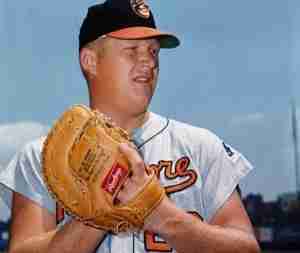
History has given the pitching staff much of the credit for the Baltimore Orioles’ World Series runs in 1966 and 1970, but it was the heavy-hitting Boog Powell who was the favorite of Maryland fans.
Boog Powell was built like a bull. The power hitter easily won the hearts of Baltimore with his booming home runs and nice demeanor. He batted cleanup for over a decade and solidified the lineup, providing much-needed offense for the pitching-heavy Orioles. He was a good clutch hitter, and though he committed his share of errors, he was able to prevent many miscues for his infielders by scooping up many a low throw.
Boog Powell got injured a bit and missed a handful of games each season. This prevented him from increasing his career hit and power numbers, which would have made him a better Hall of Fame candidate. Powell did win an MVP and was a runner-up another year, but he was occasionally accused of having his popularity outweigh his ability, which may explain his low Hall vote.
Should Boog Powell be in the Hall of Fame?
37. Kevin Brown
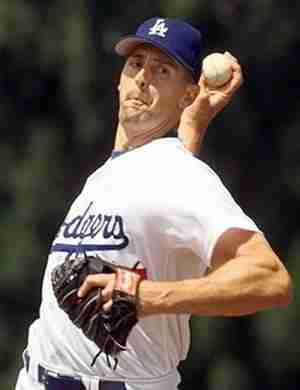
A lot of baseball players take flak for their high salaries. One of those who did was Kevin Brown, who was the first man in professional baseball to sign a contract worth $100 Million. Sadly for Brown, his deterioration made that one of the worst contracts, as in the final years of his career, he was not a player who should have been among the game’s highest-paid.
This isn’t to say that Kevin Brown didn’t have flashes of brilliance because he certainly had enough of them to warrant such a huge contract in the first place. He was regarded as one of the most intense pitchers, and as much as his temper served to fuel his unparalleled competitiveness, it also would cause his unraveling on occasion. Nevertheless, Kevin Brown was a major reason that the Florida Marlins won their surprise World Series in 1997 and the Padres’ 1998 World Series appearance. He had a brilliant fastball and forkball and rarely gave up the longball.
Unfortunately, Kevin Brown was unable to maintain his skill set, and his production dropped off during his final years with the Dodgers and during his American League return to the Yankees. Had Kevin Brown lived up to the years leading up to his nine-digit contract, he would be a serious contender for induction. As it stands now, it doesn’t look good.
Should Kevin Brown be in the Hall of Fame?
61. Carl Mays
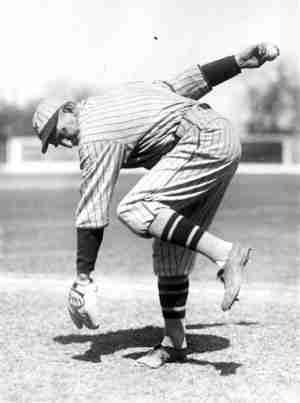
It is often the case for various Halls of Fame to discriminate based on the likeability of the candidate. Carl Mays was not necessarily the most liked player in his day, and his brushes with controversy probably pushed Mays on the opposite side of the bubble.
Sadly, Carl Mays is not best remembered for his four World Series rings or his 208 career wins. He is best known for a beanball he pitched that killed the Cleveland Indians’ Ray Chapman. Mays was also not the most liked player and was a spitball pitcher (legal at the time) which has not necessarily shone him in the brightest of lights. He was a very adept submarine style pitcher and though he won his share of games he could never shake the cloud of Ray Chapman.
Mays may eventually be considered, as the sting of his accident may have washed away. What doesn’t is that he was a purveyor of the spitball, and that in itself could be enough to keep him out.
Should Carl Mays be in the Hall of Fame?
47. Billy Pierce
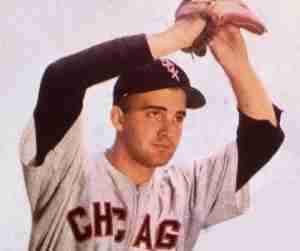
Regardless of the era, it is an impressive feat to be a key member of Chicago's rotation for a decade. The Chicago White Sox may not have won a World Series in the ’50s, but they were a good team, and much of their success was due to the pitching of Billy Pierce.
Through the decade of the ’50s, few were more dependable on the mound than Billy Pierce. The southpaw won 154 games that decade and was constantly pitted against aces of other staffs. Pierce was occasionally the victim of poor run support from his own team, but was still very much a winner. He had a wide assortment of pitches and an excellent fastball that shockingly came from his thin frame.
As a great pitcher for Chicago, he was part of a very good team that won the pennant only once. Pierce himself was also very good, but he played at the same time with other good pitchers, and the Sporting News Awards was all he was able to win. Pierce has been largely forgotten, even in Chicago. He deserves a lot better than that.
Should Billy Pierce be in the Hall of Fame?
