


Site Admin
47. Jose Guzman
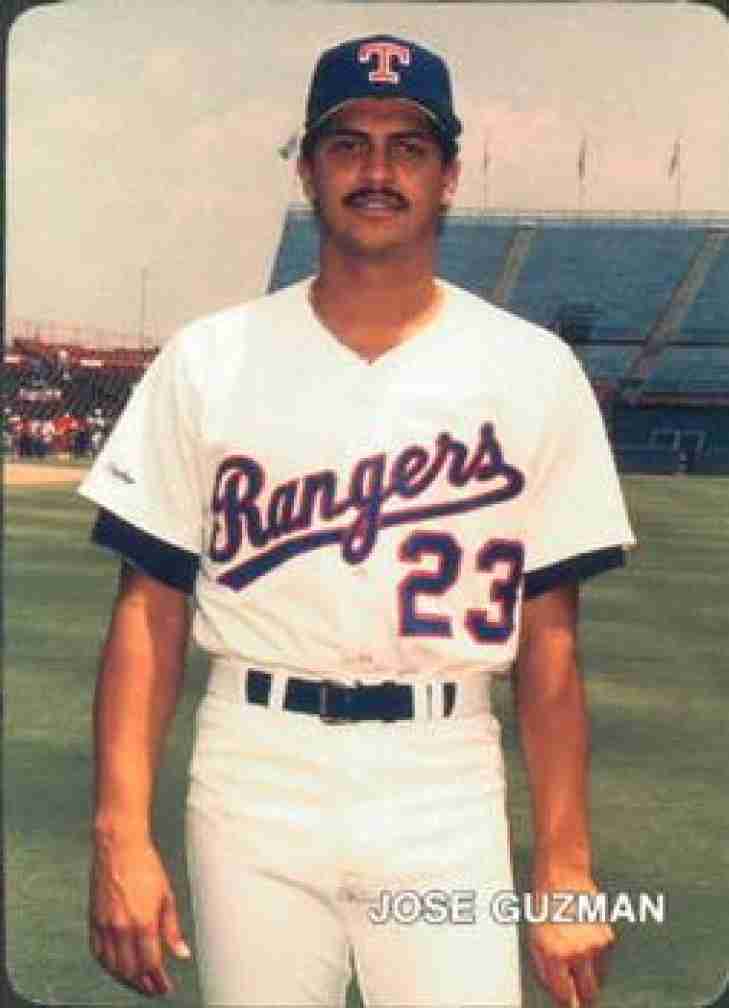
When José Guzmán signed with the Texas Rangers as an undrafted free agent from Puerto Rico in 1981, few predicted his dramatic, high-leverage performances at Arlington. He debuted in 1985 at age 22, quickly becoming a key part of a young Rangers team. With a fastball in the low 90s and a sharp slider, Guzmán spent about a decade providing frontline skill and resilience.
Guzmán’s early years in Arlington were characterized by heavy workload, with a focus on durability. By 1986, as a regular starter, he often pitched long, consuming large innings. He exceeded 200 innings in both 1987 (208.0 IP) and 1988 (206.0 IP), recording back-to-back double-digit win seasons. His aggressive, power-oriented pitching style resulted in high strikeout rates for his time, frequently ranking in the top ten in the American League for strikeout density (SO/9) and constantly challenging opposing batters.
Just as he was establishing himself in Texas, disaster struck. Severe shoulder injuries derailed his momentum, causing him to miss the 1989 and 1990 seasons.
Guzmán's comeback to Arlington in 1991 is a shining example of emotional resilience. Considered finished by many, he fought his way from the minors to orchestrate a remarkable and historic revival. He led the 1991 rotation with a 13–7 record and a stellar 3.09 ERA, a high-pressure performance that earned him the American League Comeback Player of the Year Award. He built on this success with an even more impressive season in 1992, securing a career-high 16 wins, pitching 224.0 demanding innings, and ranking fourth in the league with 179 strikeouts.
Following that triumphant 1992 showcase, the veteran right-hander tested the free-agent market, signing with the Chicago Cubs, where he famously came within one out of throwing a no-hitter at Wrigley Field before re-aggravating the shoulder woes that would ultimately close his big-league career.
As a Ranger, Guzmán appeared in 159 games (152 starts). He compiled a 66–62 record alongside a rock-solid 3.90 ERA and a 1.34 WHIP. He logged 1,013.0 innings of work, recording 715 strikeouts.
40. Rick Helling
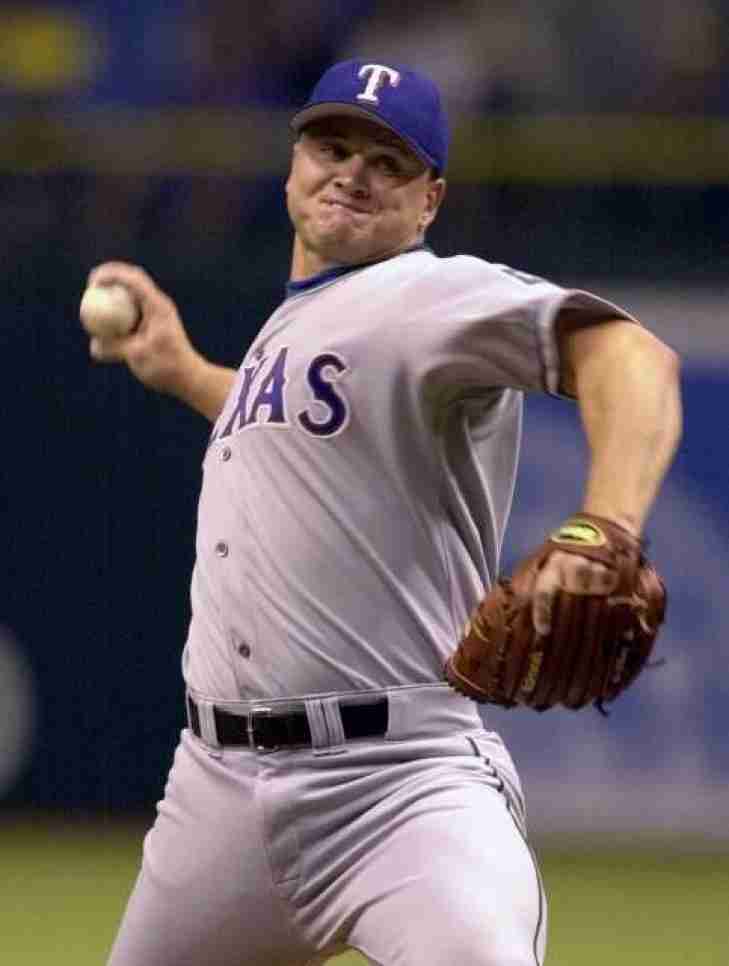
Drafted in the first round out of Stanford in 1992, Rick Helling cracked the big leagues by 1994, but struggled to find a definitive role in an explosive, hitter-friendly environment. Bouncing between the starting rotation and the bullpen during his early development, he had an incomplete initial run in Arlington and was largely a footnote when the team traded him to the Florida Marlins midway through the 1996 season.
Yet, a year later, the baseball gods engineered a perfect homecoming. Texas re-acquired Helling in an August 1997 trade, setting the stage for a second stint that would permanently rewrite his legacy in the Lone Star State. No longer a timid young arm trying to find his footing, he stepped directly into the rotation and became an absolute workhorse, anchoring a high-powered Texas squad poised to contend for American League West titles.
That incredible transformation reached a memorable highlight during a fantastic 1998 season. Helling confidently challenged the tough, run-heavy environment of the late 1990s by posting an impressive 20–7 record. This tied him with David Cone and Roger Clemens for the most wins in the American League. He truly became the go-to pitcher for Texas, setting a club record with 11 wins on the road and pitching a tough 216.1 innings, helping the Rangers secure a division title.
Helling established himself as a model of exceptional durability over the next three seasons, consistently recording at least 34 starts and 215 innings annually through 2001. He challenged hitters with a heavy, over-the-top fastball inside the notorious launchpad of The Ballpark in Arlington. His high-volume workload came with a cost: he allowed many home runs, including leading the majors with 41 long balls in 1999. Despite pitching in a tough era for pitchers, Helling was a key contributor to the franchise, finishing with an impressive 68–51 overall record in Texas and frequently giving his potent offense opportunities to score.
Following the 2001 campaign, his journey led him to Arizona and Baltimore, setting up a poetic late-career twist. Helling rejoined the Marlins mid-2003, filling a key swingman role and pitching crucial frames to help Florida win the World Series.
With Texas, Helling appeared in 165 games (151 starts). And compiled a winning 68–51 record while logging 982.1 innings with 688 strikeouts.
32. Hank Blalock
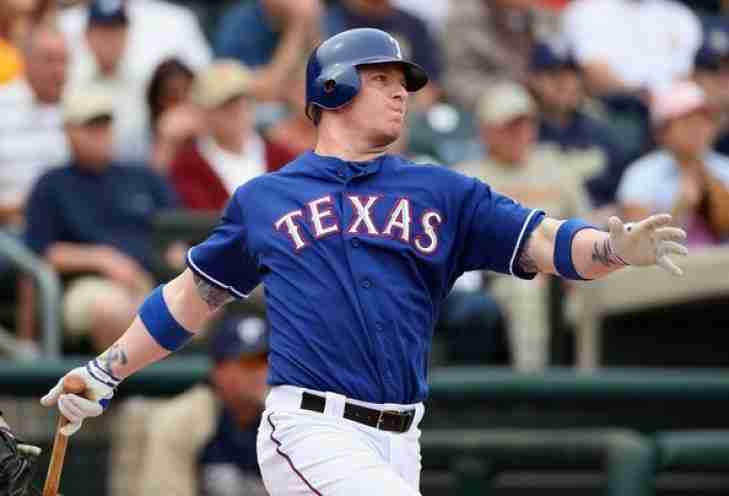
Before he was old enough to legally order a drink, Hank Blalock was celebrated as a key figure in a new era for Arlington. Coming up through the minor leagues with a wave of talented young players, the smooth-swinging, left-handed third baseman started playing full-time in 2003 and quickly brought energy to the team. With a graceful, fluid swing and a calm, collected attitude, Blalock not only met high expectations but also became a beloved core player in a powerful Texas lineup.
Hank the Crank provided an excellent mix of high-quality gap power and reliable strength, ideal for the hitter-friendly Ballpark in Arlington. He set an impressive standard early, recording over 170 hits in three straight seasons from 2003 to 2005. His peak came in 2004, a standout year when he used his left-handed bat to hit a career-high 32 home runs, 38 doubles, and 110 RBIs, earning his second consecutive American League All-Star selection.
For local fans, however, his most legendary theatrical showcase came on a national stage during the 2003 midsummer classic. Stepping in as a pinch-hitter in the eighth inning, the young rookie launched a dramatic, game-winning two-run home run off National League closer Éric Gagné, securing home-field advantage for the American League in the World Series and instantly making him a household name.
After a remarkable early-career rise that saw him earn multiple All-Star selections, Blalock’s career was hindered by a series of physical setbacks. Starting in 2006, severe shoulder problems and thoracic outlet syndrome significantly affected his throwing and prevented him from reaching his physical prime. This led to a defensive switch from third base to first base and designated hitter. Despite these limitations, his innate hitting skills stayed strong; he managed two more effective seasons in Arlington, hitting 25 home runs in 2009 and ending his Ranger career with a total of 152.
Following that season, Blalock spent one final, brief calendar year with the Sacramento River Cats and the Tampa Bay Rays before officially closing his career at just 29 years old. As a Ranger, he accumulated 944 hits, 210 doubles, 152 home runs, 564 RBIs, and a .269/.334/.453 slash line.
39. Jeff Russell
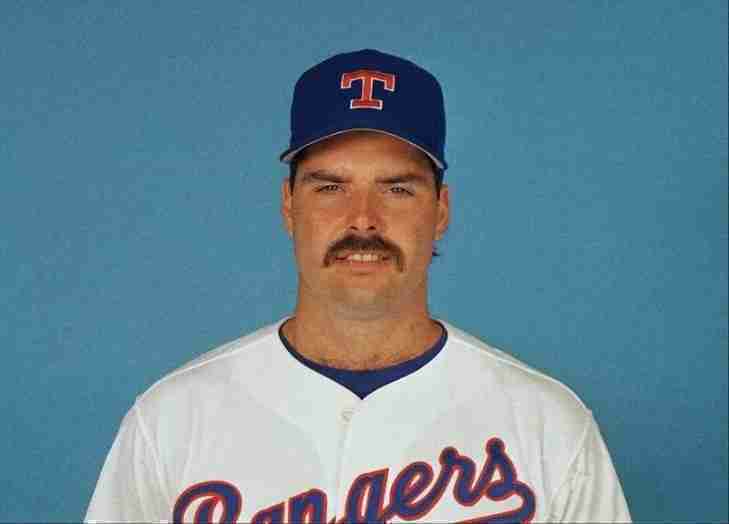
When Jeff Russell arrived in North Texas midway through the 1985 season—as part of a significant trade that sent franchise legend Buddy Bell to Cincinnati—the player to be named later, he was a traditional, hard-throwing starting pitcher. He initially served exactly that role for the Rangers, pitching long innings with mixed results. Nevertheless, a strategic mid-career shift to the bullpen unlocked his full potential, turning him from a susceptible starter into a dominant late-inning reliever feared across the American League.
The transition started to take shape during the 1988 campaign. While dividing his time between rotation duties and high-leverage relief, Russell demonstrated remarkable adaptability for manager Bobby Valentine. He pitched 188 innings over 34 appearances and earned his first American League All-Star nod by delivering a powerful, biting fastball that was especially effective in short, intense outings.
That experimentation laid the groundwork for a historic, full-time closer role during a remarkable 1989 season. Positioned at the back of the Texas bullpen, Russell completely shut down opposing hitters. He pitched 71 times, posting a tiny 2.00 ERA and leading the league with a career-high 38 saves. His exceptional ninth-inning dominance earned him a second straight All-Star selection, a ninth-place finish in the AL Cy Young voting, and the prestigious AL Rolaids Relief Man Award—recognizing the league's most statistically impressive closer.
For three seasons, Russell was the top frontline protector of Texas leads, recording 28 saves in 1992 before being part of the blockbuster trade that acquired José Canseco for the Rangers. Although his career led him through Oakland, Boston, and Cleveland, his loyalty to Arlington remained strong. In a notable late-career turn, he returned to Texas for two more seasons in 1995 and 1996, where he served as a veteran mentor and added 23 saves, raising his franchise total to 134.
Russell made 445 appearances (65 starts) and compiled a 41–55 record, a 3.74 ERA, and a 1.34 WHIP. He compiled 712.1 innings, striking out 446 batters, and was inducted into the Texas Rangers Hall of Fame in 2015.
