


Site Admin
44. Haloti Ngata
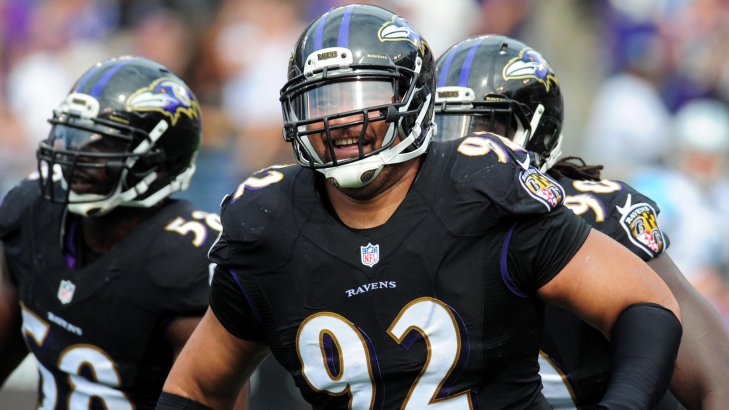
In the 2006 NFL Draft, the Baltimore Ravens made an excellent selection by grabbing Haloti Ngata with the 12th pick. Ngata was a former All-American defensive tackle from the University of Oregon, and the Ravens were looking for someone to stuff up the middle of their defense. Ngata proved to be the answer to their prayers.
As soon as he joined the team, Ngata became a starter, and he quickly made a name for himself as one of the best defensive tackles in the league. He played multiple positions on the line, including defensive end and nose tackle, and he excelled at all of them.
From 2009 to 2013, Ngata was a fixture in the Pro Bowl and was named a First Team All-Pro in 2010 and 2011. His immense size and power made him a dominant force on the field, and he could clog multiple lanes at once, making it incredibly difficult for opposing teams to move the ball.
Ngata played a crucial role in the Ravens' Super Bowl XLVII win, using his strength and tenacity to disrupt the opposing offense and help secure the victory. After his time with the Ravens, Ngata went on to play for the Detroit Lions and the Philadelphia Eagles, but he will always be remembered as a dominant defensive force in the NFL.
Over the course of his career, Ngata recorded 32.5 sacks and 517 combined tackles. His legacy as one of the league’s best defensive players is secure, and he will always be remembered as one of the most dominant forces on the field.
Darren Sproles

Darren Sproles was nicknamed “The Lightning Bug” and it was an absolute joy to watch the 5’ 6” Running Back frustrate opposing tacklers on a weekly basis.
Brian Orakpo
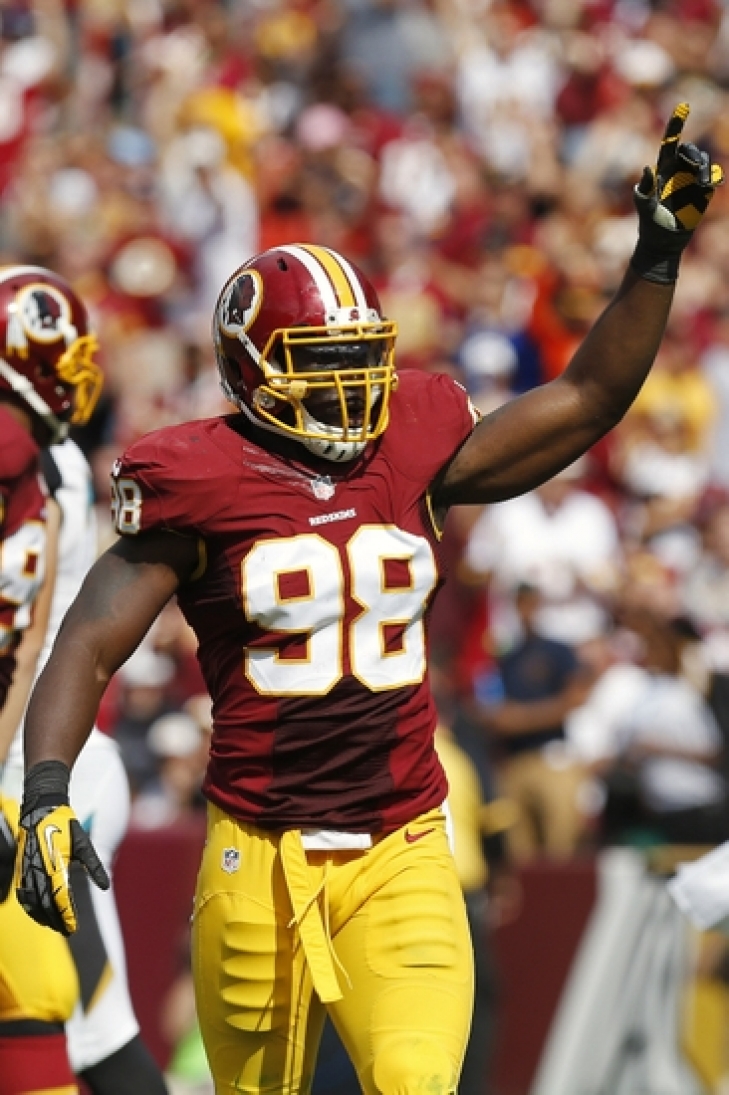
The 2008 Bronco Nagurski Trophy winner from the University of Texas had a good start as a pro at the Washington Redskins where he was a Pro Bowl Selection as a rookie. Orakpo returned to the Pro Bowl next year and again in 2013 and as a Redskin he twice had a ten Quarterback Sack season. The Linebacker would sign with the Tennessee Titans in 2015 where he was a Pro Bowler for a fourth time in 2016. He would retire with 66 Quarterback Sacks.
48. Bobby Witt

Bobby Witt's story in Arlington exemplifies a striking statistical paradox in Texas Rangers history. Drafted third overall in 1985 from the University of Oklahoma, the right-hander was known for his electrifying, high-velocity fastball that scouts long fantasized about. However, during his two separate periods with the team, that potent fastball was often at odds with his control. Witt was a high-risk pitcher—capable of striking out the side with ease, yet also prone to loading the bases quickly without the ball making contact with a batter.
His early years with the franchise featured a striking mix of impressive talent and notable inconsistency. As a 22-year-old rookie in 1986, he struck out 174 batters but also led the American League with 143 walks in just 157.2 innings. He continued this volatile trend in 1987, issuing 140 walks—again leading the league—and also topped the circuit in wild pitches. Despite this paradox, his best performances produced legendary moments, including a remarkable 1987 game where he struck out four batters in a single inning.
That unrestrained potential came together as a true masterpiece during a standout 1990 season. For that summer, Witt focused on his top skills, achieving a career-high 17–10 record with a sharp 3.36 ERA over 222.0 innings. He completely shut down opposing lineups, finishing second in the American League with 221 strikeouts and setting a franchise record with seven consecutive road wins. This was the dominant front-line performance the Rangers envisioned, but the stability was temporary. By late 1992, as his walks increased and his effectiveness declined, the front office traded him in a landmark deal to Oakland for Jose Canseco.
After a brief multi-city odyssey, Witt engineered a full-circle homecoming, returning to Arlington late in the 1995 season. His second act in Texas beautifully summarized his career’s maddening duality. In 1996, he displayed incredible durability, winning 16 games for a division-winning Rangers squad, yet he did so while saddled with a bloated 5.41 ERA. He even added to his eccentric folklore in 1997, becoming the first American League pitcher in 25 years to hit a regular-season home run during the dawn of interleague play—sending his bat directly to the Baseball Hall of Fame.
He would eventually move on to pitch for three more franchises, ultimately closing his 16-year major league journey by earning a World Series ring as a veteran reliever with the 2001 Arizona Diamondbacks.
Within the broader historical ledger of the franchise, evaluating Witt requires a heavy dose of analytical realism. On the surface, his 104 victories and 1,375 strikeouts in a Texas uniform look like the portfolio of an elite team legend. Yet, his less-than-impressive 4.88 ERA, a heavily congested 1.58 WHIP, and four separate seasons generating negative bWAR heavily suppress his standing on the all-time ladder. He benefited immensely from pitching alongside some of the most explosive, run-heavy offenses in Arlington history, turning his tenure into a wild, unforgettable ride that remains one of the most distinctive chapters in Rangers lore.
His overall numbers in Texas saw Witt compile a 104–104 record, a 4.88 ERA, and a 1.577 WHIP with 1,375 strikeouts.
