


Site Admin
31. Barney Chavous
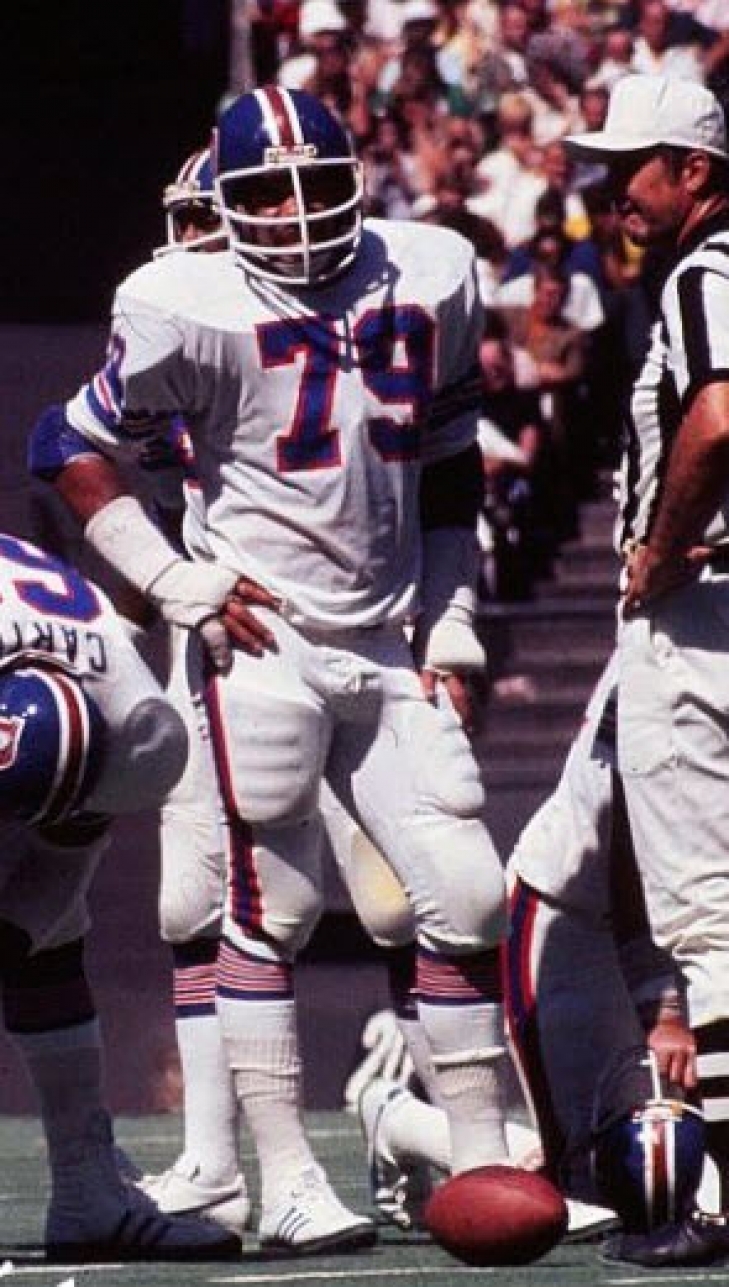
Long before the 3-4 defense became a standard NFL blueprint, Barney Chavous was quietly setting the benchmark for dirty-work defensive line play in Colorado. Selected in the second round out of South Carolina State in 1973, the powerful trench anchor started his career as a defensive tackle before shifting to left defensive end, where he held down a starting role for 13 consecutive seasons.
Chavous quickly became an indispensable pillar of Denver's iconic "Orange Crush" defense. Operating at the tip of Joe Collier’s 3-4 front, he absorbed constant double-teams from opposing offensive lines, freeing up linebackers like Randy Gradishar and Tom Jackson to roam free and make plays. Despite taking on those grueling assignments, Chavous brought constant, relentless pressure off the edge, helping power Denver to its first AFC Championship and Super Bowl XII appearance.
Because official NFL sack tracking did not begin until 1982, Chavous is credited with just 23.0 official sacks. However, Pro Football Reference credits him with 75.0 career sacks—a total that held as the franchise's all-time record at the time of his retirement and still ranks fourth in team history behind only Von Miller, Simon Fletcher, and Karl Mecklenburg. He retired after the 1985 season.
His commitment to the organization extended far past his playing days. Chavous later served 11 seasons on the Denver coaching staff as an assistant strength coach, earning two Super Bowl rings during the John Elway era.
25. Ed McCaffrey
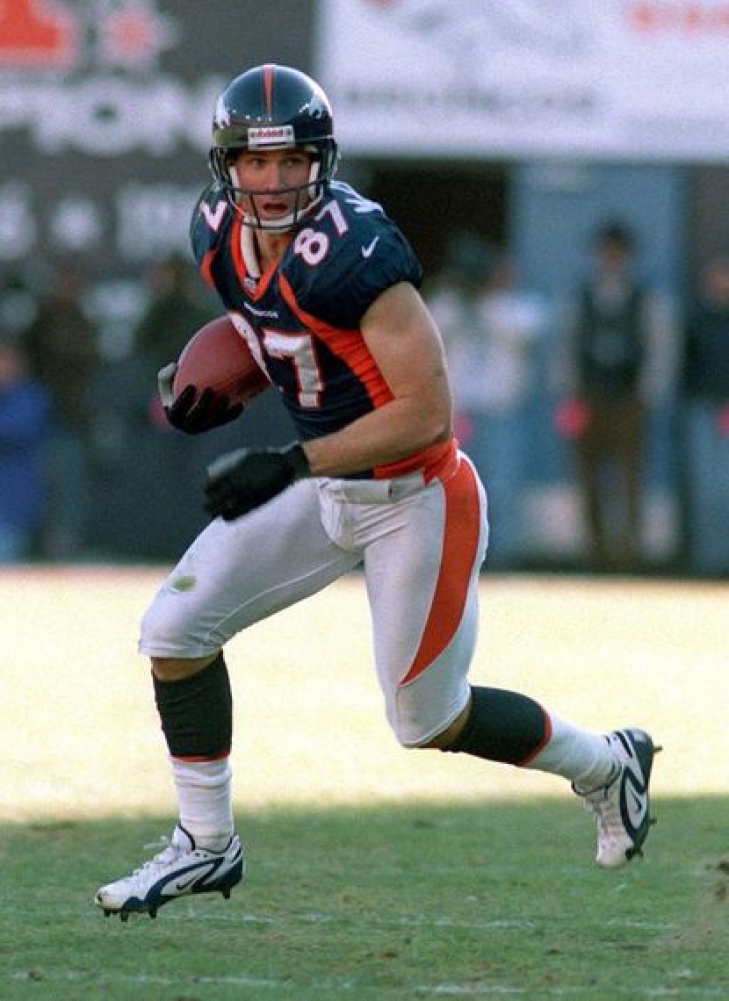
When Mike Shanahan took over as Denver’s head coach in 1995, one of his first orders of business was luring free-agent wideout Ed McCaffrey to Mile High. The two had previously won Super Bowl XXIX together in San Francisco, and Shanahan knew "Eddie Mac" was the missing puzzle piece for John Elway’s offense. Standing 6-foot-5 and wearing shoulder pads that looked like they belonged to a high schooler, McCaffrey looked unassuming, but he quickly forged a reputation as one of the most fearless over-the-middle pass catchers and ferocious perimeter blockers in the NFL.
McCaffrey’s ability to withstand heavy contact while holding onto the football made him a fan favorite and a reliable third-down option. In Denver’s consecutive Super Bowl victories (XXXII and XXXIII), his strong downfield blocking aided Terrell Davis, and his precise route-running kept defenses alert.
As the offense expanded, McCaffrey became an elite threat alongside Rod Smith. Between 1998 and 2000, he achieved three straight 1,000-yard receiving seasons. His breakout year in 1998—64 catches for 1,053 yards and 10 touchdowns—earned him a Pro Bowl and Second-Team All-Pro honors. In 2000, he improved further with 101 receptions for 1,317 yards, and along with Smith, became only the second NFL duo to each record 100 catches in a single season. His 101 receptions set a then-franchise record for most catches in a season.
Tragedy struck in the 2001 season opener when McCaffrey suffered a devastating compound leg fracture on Monday Night Football—holding onto the ball for a spectacular catch even as his leg broke. Showing the sheer grit that defined his career, he returned in 2002 to post a 903-yard campaign. He played one final season in 2003 before hanging up his cleats, leaving a lasting legacy in Mile High that his son Christian would later carry on in the family football lineage.
In his nine years in Denver, he compiled 462 receptions, 6,200 receiving yards, and 46 touchdown catches in orange and blue.
23. Al Wilson
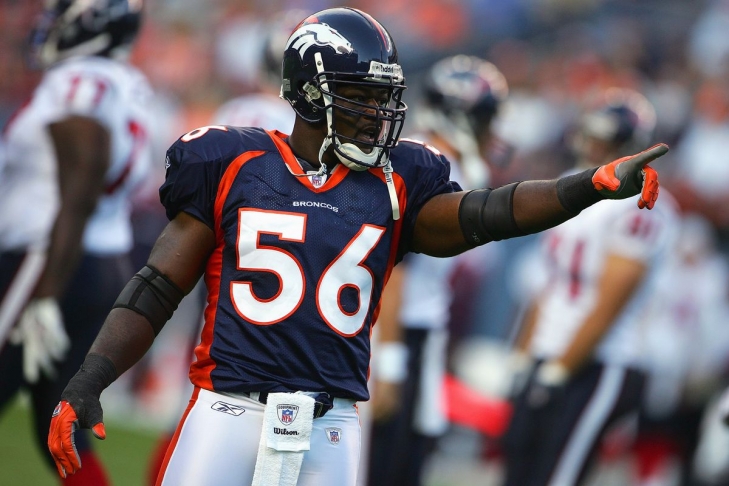
Fresh off leading the Volunteers to a national championship, Al Wilson was chosen 31st overall in the 1999 NFL Draft and quickly secured the middle linebacker position in Denver. While middle linebackers were traditionally known for their hard-hitting role, Wilson revolutionized the position for the modern game by combining fierce tackling, exceptional sideline-to-sideline agility, and keen pass-rushing instincts.
Operating as the unquestioned vocal leader and heartbeat of Denver's defense, Wilson generated immense pressure on opposing backfields. His 5.0-sack campaign in 2000 showcased his blitzing value, and by 2001 he earned his first of three consecutive Pro Bowl trips. He was an absolute tackle machine in the middle of the field, leading the Broncos' defense in tackles for multiple seasons and consistently surpassing the 100-stop mark.
Wilson’s best season was in 2005. Anchoring a defense that powered Denver to a 13–3 record and an appearance in the AFC Championship Game, Wilson earned First-Team All-Pro honors and his fourth Pro Bowl nod after recording 72 tackles, 3.0 sacks, and two forced fumbles. He added a fifth Pro Bowl selection in 2006, continuing to operate as one of the premier off-ball linebackers in the NFL.
Tragically, his dominant run ended unexpectedly. Wilson suffered a severe neck injury during a December 2006 matchup against Seattle. Though he bravely finished out the campaign, medical evaluations that offseason revealed significant underlying spinal damage. Released by Denver in March 2007, Wilson visited several teams but was never medically cleared to return to the field, forcing an early retirement at age 29.
Over his career, Wilson played in 125 regular-season games with 119 starts. He compiled 712 total tackles, 21.5 sacks, eight forced fumbles, seven fumble recoveries, and five interceptions.
22. Trevor Pryce

From Clemson, Trevor Pryce was selected 28th overall in the 1997 NFL Draft, joining a Denver locker room firing on all cylinders. At an imposing 6-foot-5 and 290 pounds, Pryce possessed a rare blend of explosive interior quickness and edge power. He served as a valuable rotational contributor on back-to-back championship squads as a young player, earning Super Bowl XXXII and XXXIII rings while soaking up veteran wisdom along the defensive line.
Once those veteran leaders stepped aside, Pryce transformed into one of the most destructive interior pass rushers in professional football. Primarily positioned as a three-technique defensive tackle—while occasionally shifting to defensive end as dictated by the scheme—his rapid first-step quickness consistently disrupted pocket formations before interior guards could effectively engage him. This exceptional skill set established a consistent four-year period of Pro Bowl selections from 1999 to 2002.
Pryce's peak performance was achieved during the 1999 season when he recorded a career-high of 13.0 sacks, earning First-Team All-Pro honors and establishing himself as an elite defender. He further demonstrated his prowess in 2000 with a 12.0-sack performance, marking consecutive seasons with double-digit sacks from the interior—a rare accomplishment for a defensive tackle. Whether disrupting double teams inside or controlling the edge on early downs, Pryce was the definitive cornerstone of Denver's defense at the turn of the century.
Apart from a 2004 season shortened by back surgery, Pryce maintained steady interior pressure at Mile High for nearly ten years. He achieved 8.5 sacks in 1998 and 2003, and 9.0 in 2002. He was often among the league leaders in quarterback hits and tackles for loss before joining Baltimore in 2006.
With the Broncos, Pryce had 4.0 sacks, 312 total tackles, seven forced fumbles, and two Super Bowl rings.
