


Committee Chairman
48. Vitali Yachmenev
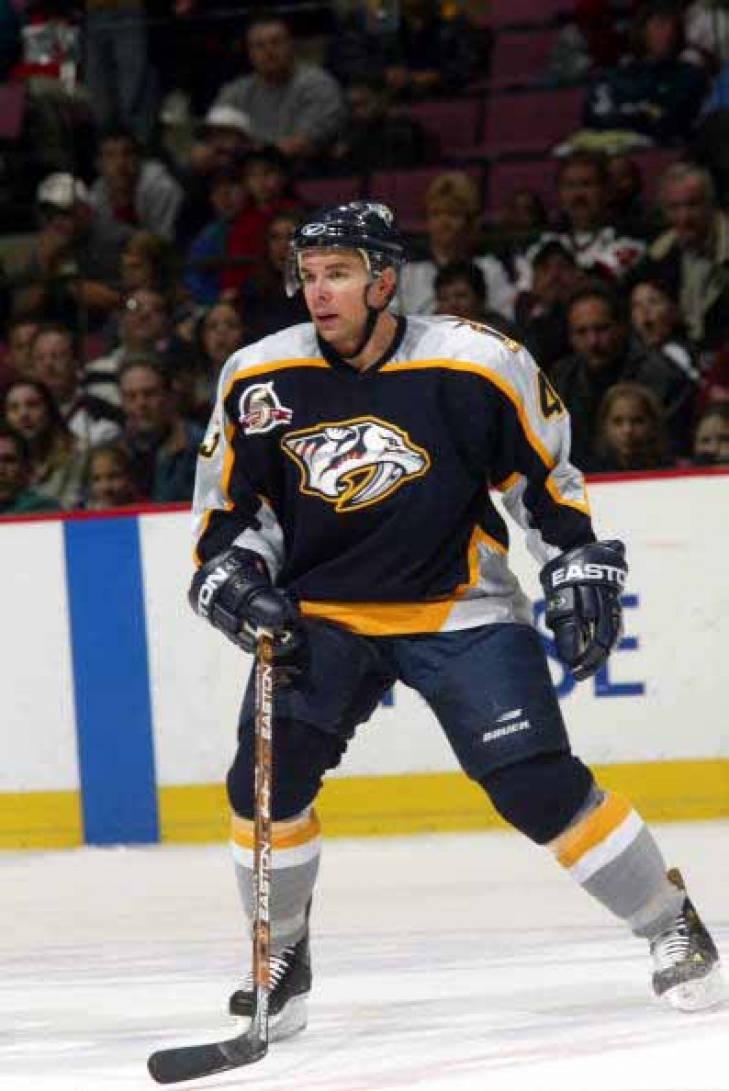
After three years with the Los Angeles Kings, Vitali Yachmenev was traded to the Nashville Predators, the team he finished his NHL career with.
Yachmenev was an original Predator, joining them in their expansion year, though he never reached the 53-Point year he did as an NHL rookie with Los Angeles. Nevertheless, the Russian Left Wing did score 130 Points for the Predators before returning home to play in the KHL.
46. Karlis Skrastins
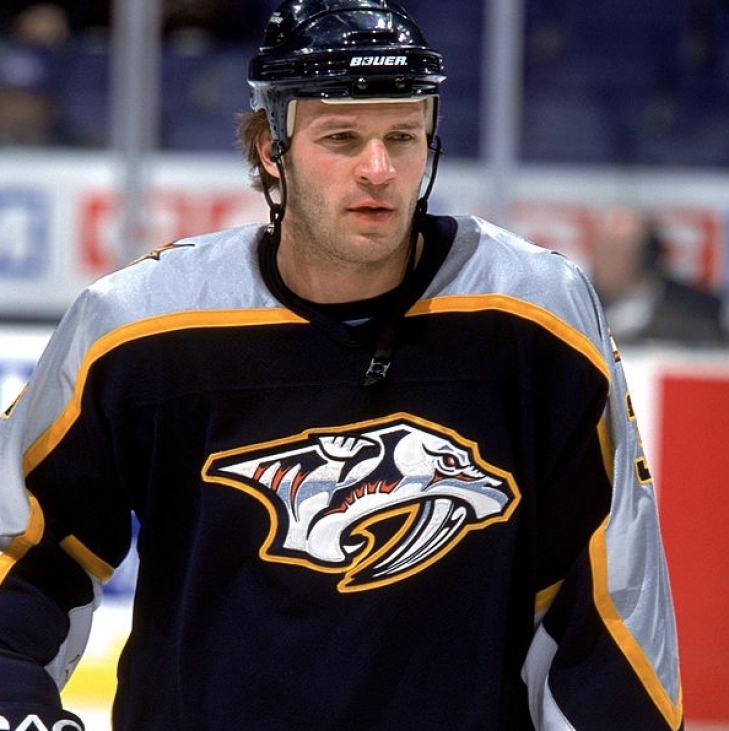
It was an incredible feat for Karlis Skrastins to make the Predators roster in 1998, albeit for only two games. A player drafted in the Ninth Round is not often expected to make the NHL, let alone in the year they were drafted.
The Russian Defenseman would become a stalwart on the blueline, establishing himself as one of Nashville's better shot blockers and traditional defensemen. He played for the Predators for four seasons, totaling 54 Points. Skrastins departed Nashville in the 2003 off-season when he was traded to Colorado.
Skrastins tragically died as one of the many people who perished in the Lokomotiv Yaroslavl plane crash in 2011.
Should Philip Rivers be a Hall of Famer?
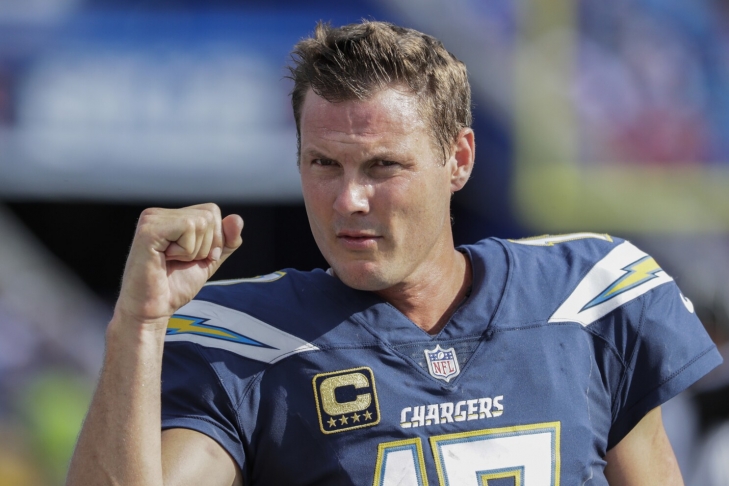
The career of Philip Rivers will be a furious debate for Hall of Fame voters when the quarterback becomes eligible in the 2025 class. Rivers never won a Super Bowl or even played in one, but he was one of the finest quarterbacks of his generation.
Over a 17-year career with the San Diego/Los Angeles Chargers and the Indianapolis Colts, Rivers threw for 63,440 passing yards along with 421 touchdowns to 209 interceptions. He holds two NFL records with the most consecutive completions in a game with 25, and the most games in a row with a passer rating over 120.
Rivers is a Chargers’ legend and arguably their greatest player alongside LaDainian Tomlinson. No player appeared in more games or won more games for the franchise than Rivers. He also enjoyed one stellar season for the Colts, guiding them back to the post-season. Rivers left both the Chargers and Colts in strong positions in the AFC Conference with quarterbacks Justin Herbert and Carson Wentz respectively.
The Chargers are backed in the NFL odds from Betfair at 9/1 to win the AFC Conference in the 2021 season and appear in their first Super Bowl in 27 seasons. Los Angeles have an early advantage over their rivals in the AFC West division and are poised to return to the post-season for the first time in three years, therefore, tracking their progress in the NFL betting tips may be worthwhile this term.
For all Rivers’ achievements, his inability to drag the franchise into the title game will be a stain on his legacy. It is why he may miss out on the Hall of Fame. Rivers could be established alongside other quality passers of his generation such as Tony Romo in the hall of very good rather than the elite category. The Chargers should have reached the Super Bowl in the 2006 campaign, boasting the best record in the AFC and an abundance of talent at their disposal.
However, he and his high-powered offense choked under the pressure, suffering a one-and-done defeat to the New England Patriots. The same Patriots haunted the Chargers in the following season. Rivers’ legacy was enhanced by his performance as he played on a torn ACL and battled 60 minutes against the unbeaten New England outfit, losing 21-12 even without Tomlinson who left the contest in the first quarter.
After those near misses, head coach Marty Schottenheimer was fired and the Chargers failed to mount another significant run during Rivers’ tenure. He remained on point during the regular season and formed excellent rapports with Vincent Jackson, Keenan Allen and most importantly of all Antonio Gates. However, when it came to the clutch, Rivers was unable to rise to the occasion and drag his team through in the playoffs.
Unfortunately for him and the Chargers, they played in the era of Brady, Peyton Manning and Ben Roethlisberger, who had a monopoly on Super Bowl appearances for their respective franchises in the AFC Conference. Those players rightfully are and will belong in the Hall of Fame.
Had the breaks gone another way or had he excelled in the fourth quarter Rivers may have had the credentials to push a claim through to Canton in the mould of Eli Manning. However, those post-season performances will count against his bid. Therefore, it would be very surprising to see him donning the gold jacket come 2025.
45. Bill Houlder
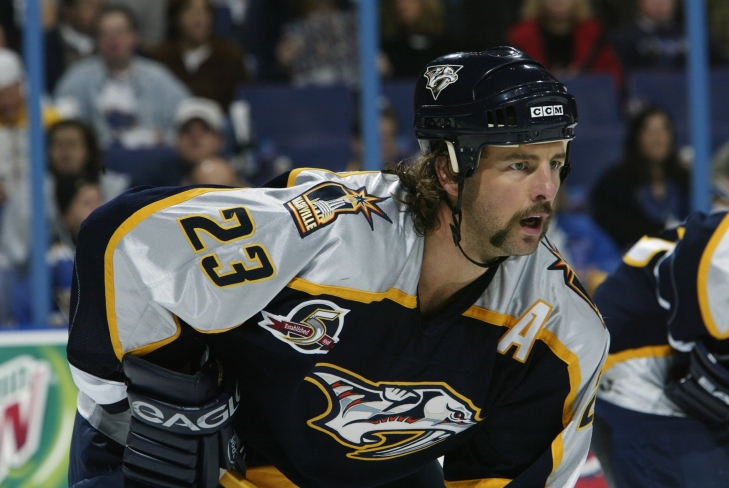
Beginning his NHL career in 1987 with the Washington Capitals, Defenseman Bill Houlder would later play for Buffalo, Anaheim, St. Louis, and Tampa Bay, before joining Nashville early in the 1999/00 Season after being selected off the Waiver Draft.
Houlder was in his early 30s by this time and did not have the same offensive capability, but the Defenseman was still a savvy player and still provided value to a young team. Houlder played until the end of the 2002/03 Season, scoring 44 Points over 302 Games with the Predators.
