


Committee Chairman
50. Gary Pettis
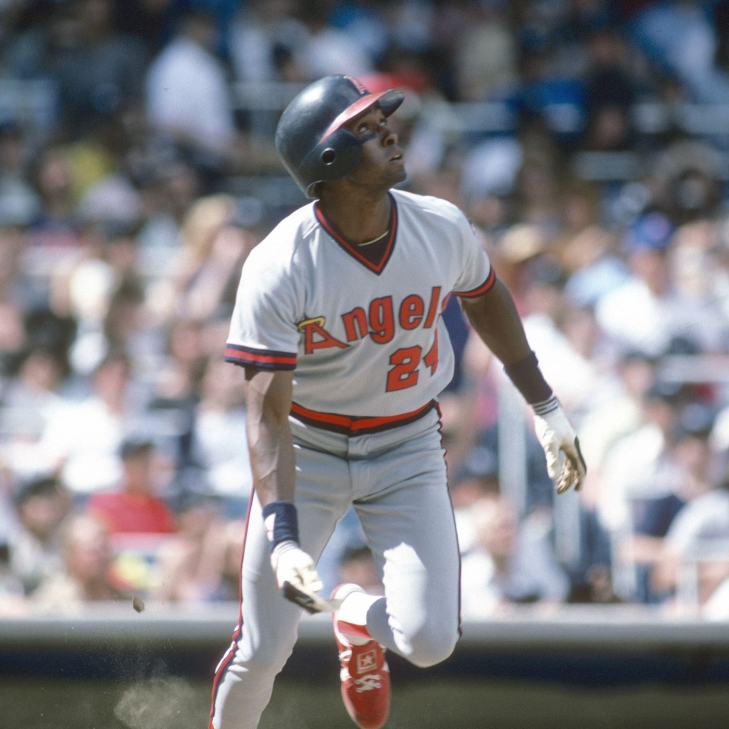
Spending the first six years of his career as a California Angel, Gary Pettis was a blur of speed that immediately redefined the limits of what a center fielder could cover. Drafted as a late-round flyer, he operated as a specialized defensive wizard whose legs were his greatest asset both on the paths and in the grass.
After a brief introduction to the big leagues, Pettis seized the starting center field job in 1984 and turned the position into a highlight-reel theater. He demonstrated a high-caliber ability to track down fly balls that seemed destined for the wall, using his elite speed to shrink the outfield. This early stretch established a high-quality floor, proving that even with a limited bat, his field value made him a professional mainstay for a team with championship aspirations.
Pettis peaked between 1985- 1986, earning consecutive Gold Glove Awards. In 1986, he led the league with 22 Total Zone Runs, crucial for the Angels' division win. While nearly powerless at the plate, he was a constant threat on base, ranking second in stolen bases for three straight years, swiping 145 bases in three seasons and causing pitchers to lose focus.
While he was a technical marvel in center field, rarely committing an error and frequently robbing home runs, his offensive efficiency remained a recurring concern. He showed the organization a specialized resilience despite his struggles to stay above the "Mendoza Line" in batting average, relying on his ability to draw walks to keep his on-base percentage respectable.
After the 1987 season, the Angels traded Pettis to the Detroit Tigers in exchange for pitcher Dan Petry. The move cleared the way for the arrival of Chili Davis and allowed a young Devon White to transition to center field. Pettis had 186 stolen bases, 467 hits, and two Gold Gloves as an Angel.
44. Scot Shields
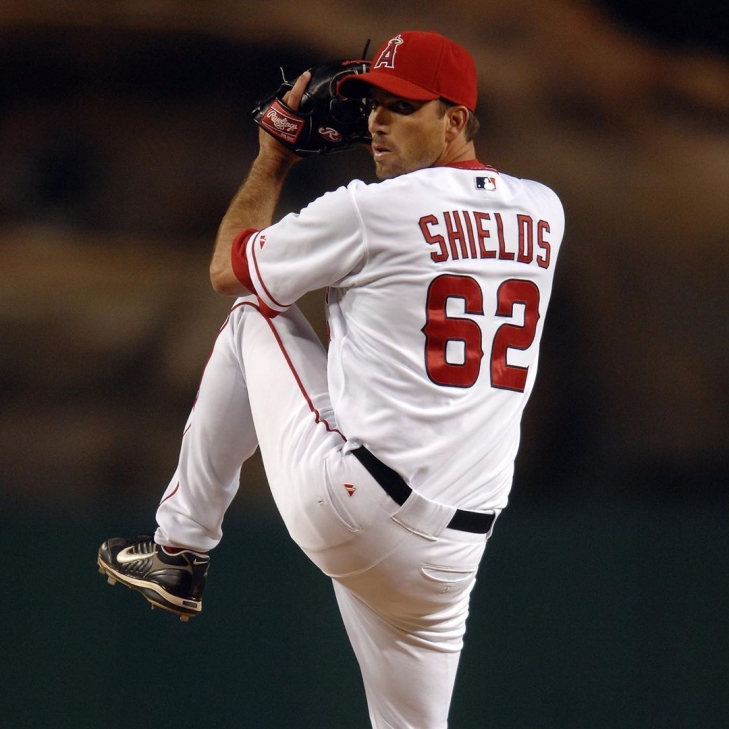
Scot Shields was initially seen as a low-ceiling prospect after the 38th round but defied expectations to become a key reliever in the franchise's most successful era. He served as the vital "bridge" to Troy Percival and Francisco Rodriguez for ten seasons, demonstrating that a specialized sinker can outweigh a high draft pick.
Debuting in 2001, Shieldshe played a supporting role on the 2002 World Series Championship team; it was his work over the following years that cemented his legacy. Shields demonstrated a high-frequency ability to enter games with runners on base and neutralize threats with a heavy sinker that felt like a bowling ball to opposing hitters.
Between 2004 and 2008, authoring a five-year run of volume that was essentially unprecedented for a setup man. He showed a high-caliber stamina by appearing in at least 60 games in each of those seasons, exceeding 70 appearances in three consecutive years from 2005 to 2007. He was a tactical weapon for Mike Scioscia, often pitching multiple innings to protect a lead. This high-volume output turned him into a perennial secret weapon, as he consistently finished near the top of the league in holds and relief innings pitched.
Shoelds played until 2010, retiring as a career Angel. Over his career, Shields accumulated 21 Saves and had 114 Games Finished.
43. Clyde Wright
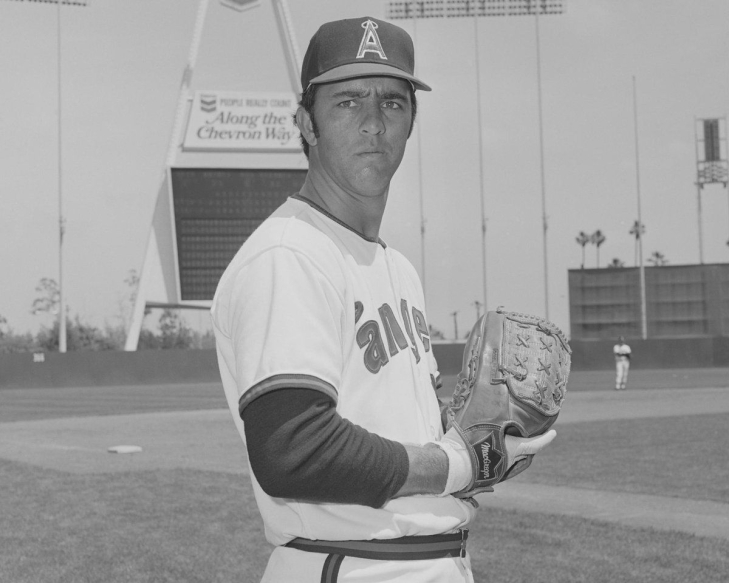
Debuting with the Angels in 1966, Clyde Wright arrived as a wiry southpaw with a specialized repertoire that took a few years to fully calibrate. While he spent his first four seasons bouncing between the rotation and the bullpen, even suffering through a miserable one-win campaign in 1969, he transformed into a technical marvel practically overnight.
Wright demonstrated flashes of high-quality potential during his 1966 debut, but he quickly became a professional mainstay in the "swingman" category, oscillating between spot starts and high-leverage relief. It wasn't until he perfected a screwball during winter ball, reportedly at the suggestion of teammate Jim Fregosi, that he truly found the high-caliber arsenal needed to anchor a major league rotation.
In 1970, Wright won 22 games, setting a franchise record for a left-hander that still stands today. He was a high-stakes performer on July 3, 1970, when he famously tossed a no-hitter against the Oakland A’s, an achievement that occurred just hours after he was inducted into the NAIA Hall of Fame. His efficiency that year earned him his only All-Star selection and a sixth-place finish in the Cy Young voting.
Between 1971 and 1972, he was a valuable technical player, posting two consecutive seasons with an ERA below 3.00 and pitching over 250 innings each year. He demonstrated a particular skill in keeping hitters off balance, earning 16 wins in '71 and increasing to 18 wins in ’72.
In 1973, physical wear began to impact his high-frequency output. Battles with chronic back pain made it difficult for him to even bend over on the mound, a specialized struggle that led to a league-leading 19 losses. Following the season, Wright was dealt to the Milwaukee Brewers.
With the Angels, Wright had an 87-85 record with a 3.28 ERA.
47. Chili Davis
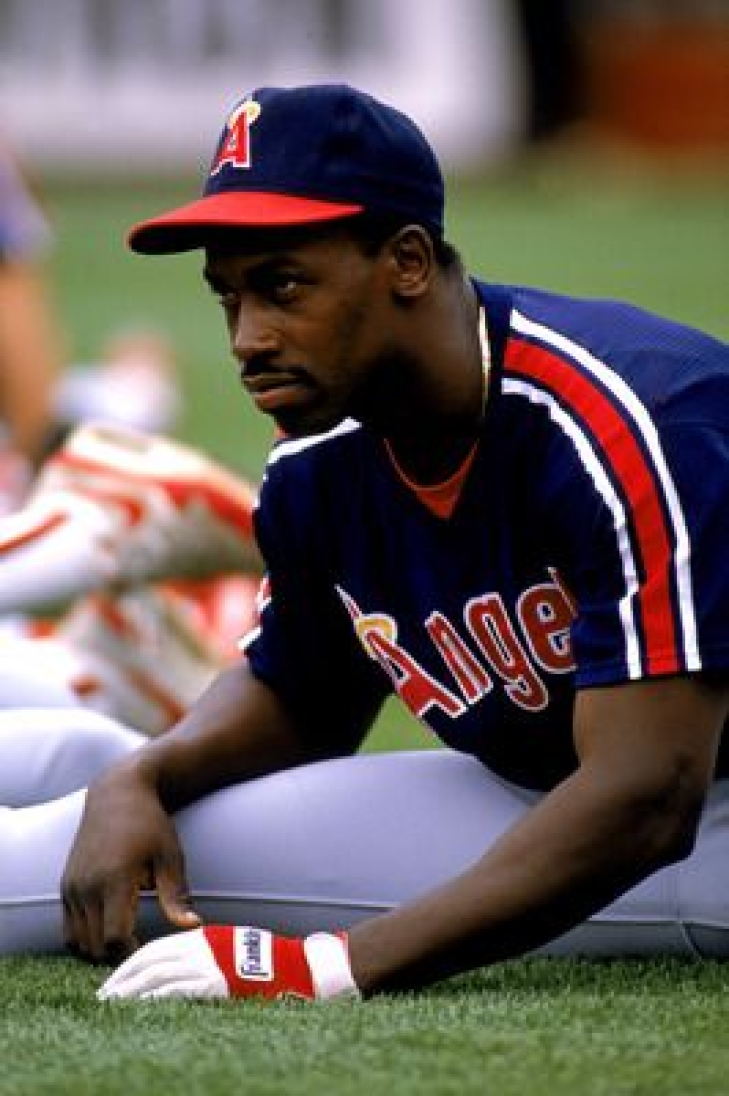
Chili Davis’ arrival as a free agent after the 1987 season in Anaheim was a homecoming of sorts, a move driven by a desire to escape the notorious elements of San Francisco. Having grown up in Los Angeles after moving from Jamaica as a child, Davis had become a star for the Giants but grew increasingly frustrated with the "cold and windy" conditions at Candlestick Park.
Davis’ first season with the Angels saw 21 homers and 93 RBIs but also a franchise-record 19 errors in right field. By 1990, back problems and defensive issues led to a switch to DH, emphasizing his offensive skills. He left for Minnesota as a free agent in 1991, won a World Series there, and returned in 1993 as a free agent, this time only for his bat and veteran presence.
The second stint saw Davis belt at least 20 home runs and 80 RBIs across all four seasons(1993–1996), while maintaining a healthy on-base percentage. He left again via free agency (Kansas City), but had solid numbers with the Halos: 156 home runs, 973 hits, and a .279 batting average.
