

22. Carlton Fisk
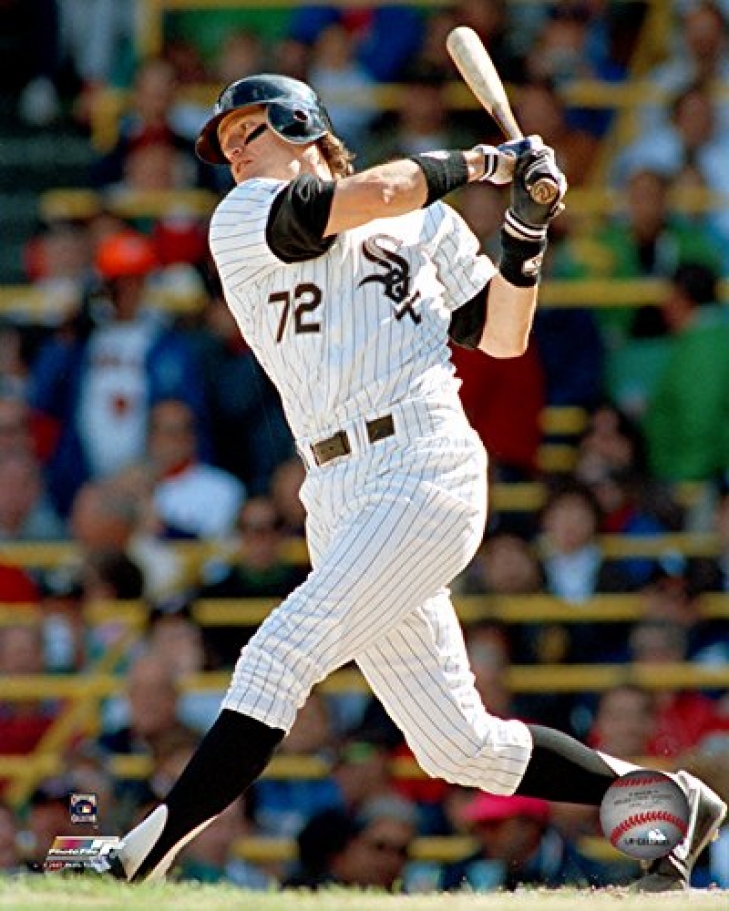
When Carlton Fisk arrived in Chicago in 1981, he was already 33 years old, an age at which most catchers are contemplating their retirement plans. Instead, Fisk signaled a fresh start by flipping his jersey number and asserting himself as the veteran gravity for a developing White Sox roster. He didn't just ease into the twilight of his career; he exploded into it, earning All-Star nods in his first two seasons. By 1983, he was the primary engine for the "Winning Ugly" squad that captured the AL West, finishing third in the MVP race with a blend of tactical leadership and a .289 average that proved his bat was as sharp as his legendary game-calling.
The middle chapter of his Chicago residency was a remarkable display of late-career power. In 1985, at the age of 37, Fisk posted some of the most staggering offensive metrics of his life, blasting 37 home runs and driving in 107 runs. He was a statistical outlier, a catcher who seemed to gain strength as the years piled up. FIskwas rooted in his ability to maintain elite production at a grueling position well past the point of physical reason. Even as he crossed into his 40s, he remained a legitimate threat, rattling off back-to-back 18-home run seasons in 1990 and 1991. He wasn't just "playing for his age"; he was an All-Star at 43, a feat that few in the history of the sport have ever replicated.
His ChiSox was built on a foundation of intense professionalism and a famously prickly competitive streak. He was the field general who wouldn't tolerate a lack of effort from his pitchers or his teammates. However, the final walk toward the exit in 1993 was a jarring contrast to the dignity of his career. Released mid-road trip without warning, Fisk’s twelve-season residency ended with a lack of ceremony that left a bitter taste for both the player and the fans. Despite that exit, his 214 home runs and 1,259 hits in a White Sox uniform ensured he would never be seen as just a "Boston transplant."
Carlton Fisk was a second-ballot immortal in 2000, and the White Sox wasted no time in honoring his longevity, retiring his number 72 in 1997.
18. Carlton Fisk

Carlton Fisk didn't just play catcher for the Red Sox; he commanded the field. After brief cups of coffee in '69 and '71, "Pudge" took the reins in 1972 and immediately validated the front office’s faith. He became the first player to ever win the AL Rookie of the Year by unanimous vote, pairing a .293 average and 22 home runs with a defensive maturity that earned him a Gold Glove in his first full season.
Fisk was a perennial All-Star in seven of his nine full seasons in Boston, but his legacy is forever defined by a single swing in October 1975. In Game 6 of the World Series, Fisk launched a towering drive toward the left-field foul pole at Fenway Park. The ensuing television footage of Fisk jumping sideways and "willing" the ball fair with his arms became the most iconic visual in baseball history. Though Boston fell in Game 7, Fisk propelled the team to the brink of a title and cemented his status as the face of their Pennant.
Offensively, Fisk provided a rare blend of power and contact. In an era where catchers were often defensive specialists, Fisk was a middle-of-the-order threat, finishing in the top ten of MVP voting twice (1972 and 1978). He combined a high baseball IQ with rugged durability, allowing him to handle pitching staffs with a legendary "commander-in-chief" presence. He also posted a career .481 Slugging Percentage while playing the most physically taxing position in the game.
The "Pudge" era in Boston ended in 1981 due to a clerical error by the front office, leading him to sign with the Chicago White Sox. He left Fenway with 1,259 hits and 162 home runs (214 total career HRs by the time he left Boston's records) and a reputation as the greatest catcher in the team's history. Inducted into the Baseball Hall of Fame in 2000, the Red Sox moved quickly to retire his Number 27 and cement his place in the Red Sox Hall of Fame.
Awards = HOF? Part Five: The Silver Slugger (Catcher) (MLB)
Needless to say, different awards in different sports yield hall of fame potential. In basketball, the team sport with the least amount of players on a roster, the dividend for greatness much higher. In baseball, it is not as much as a great individual season does not have the same impact.
