

15. Jim Ringo
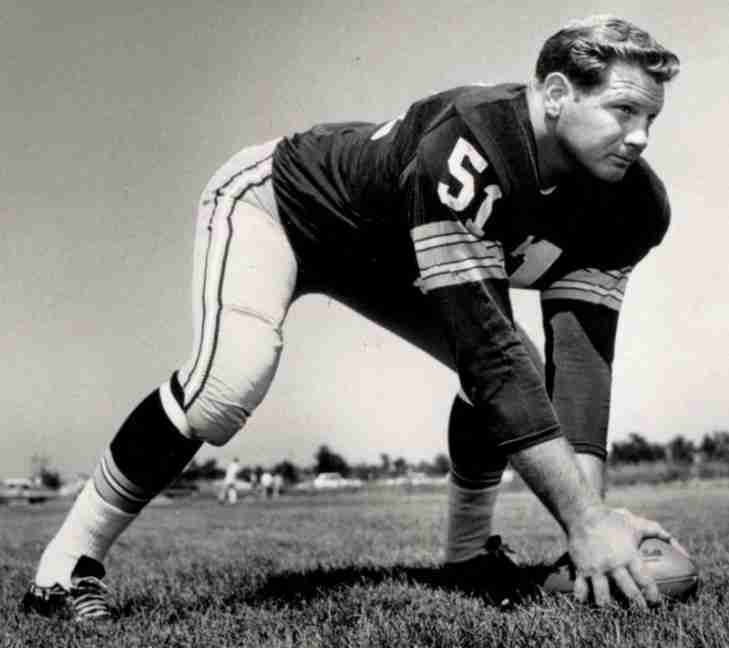
Jim Ringo entered the league undersized for an offensive lineman at just 211 pounds, but the seventh-round pick from Syracuse quickly neutralized that deficit with lightning-quick footwork and technical precision. He took over as the Green Bay Packers' starting center in his rookie campaign and anchored the interior line through two distinctly different eras in the Tundra.
When Vince Lombardi arrived in 1959, Ringo became the vital on-field general for the iconic "Lombardi Power Sweep." Masterfully executing block-and-seal maneuvers against larger nose tackles, he spearheaded the blocking units that powered Green Bay to back-to-back NFL Championships in 1961 and 1962. His flawless line calls and unmatched durability made him the premier center of his generation, earning ten Pro Bowl selections and six First-Team AP All-Pro nods overall, with most coming during his decorated decade in Wisconsin.
Ringo's tenure in Titletown ended suddenly after the 1963 season, when he was traded to the Philadelphia Eagles, where he played four final seasons before retiring. His foundational contributions to Green Bay's dynasty led to his induction into the Green Bay Packers Hall of Fame in 1974, his being named to the NFL 1960s All-Decade Team, and his ultimate immortality with a Pro Football Hall of Fame enshrinement in Canton in 1981.
He started 126 games for the Packers.
20. James Lofton
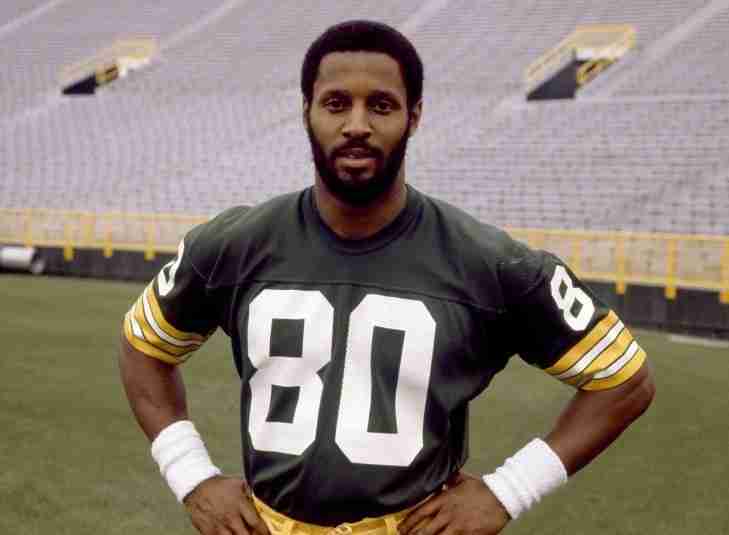
Stepping onto the turf as a first-round pick (6th overall) out of Stanford in 1978, James Lofton brought track-star speed and an extraordinary vertical leaping radius to Green Bay. The NCAA long jump champion wasted no time establishing himself as the premier big-play target in Titletown, hauling in 46 receptions for 818 yards and six touchdowns as a rookie to earn his first of seven Pro Bowl selections with the franchise.
Lofton’s brilliance defined Green Bay’s high-flying passing attack throughout the late 1970s and 1980s. Between 1980 and 1985, he recorded five 1,000-yard receiving seasons in six years, highlighted by a dominant stretch alongside quarterback Lynn Dickey. In 1983 and 1984, Lofton led the NFL in yards per reception in back-to-back seasons, averaging an astounding 22.4 and 22.0 yards per catch—including a career-high 1,361 receiving yards in 1984. Opposing secondaries simply could not contain his stride, forcing teams to roll safety help over the top or risk giving up instant long-distance scores, such as his career-long 83-yard touchdown run on a reverse against the Giants in 1982.
His durability in Wisconsin was just as remarkable as his speed; Lofton never missed a single game due to injury across his nine seasons in Titletown, starting 135 of 136 regular-season games. After departing Green Bay following the 1986 campaign, he continued stretching defenses for the Raiders, Bills, Rams, and Eagles. During his run in Buffalo, he remained a potent deep threat for a team that reached three consecutive Super Bowls, ultimately becoming the first receiver in league history to cross the 14,000-career-receiving-yards mark. His long-standing achievements in Green Bay earned him induction into the Green Bay Packers Hall of Fame in 1999, followed by his enshrinement into the Pro Football Hall of Fame in 2003. He was also chosen for the 1980s All-Decade Team.
Statistically, as a Packer, he compiled 530 receptions, 9,656 receiving yards, 49 receiving touchdowns, and 180 rushing yards with one touchdown.
18. Tony Canadeo
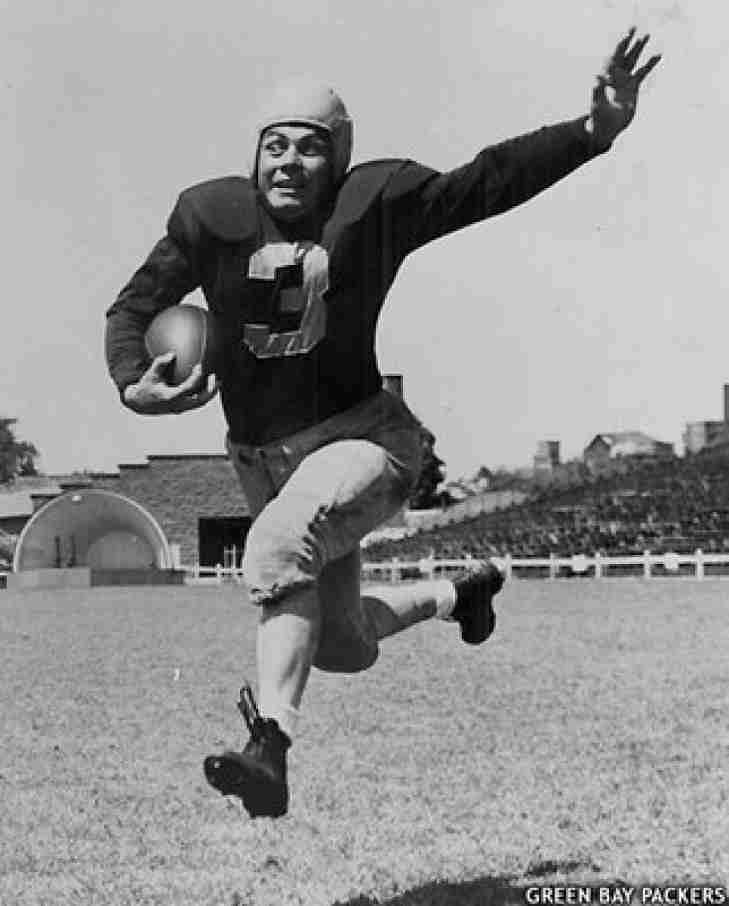
Long before single-position specialists dominated professional football, Gonzaga alumnus Tony Canadeo provided Green Bay with an explosive, do-it-all weapon who defined the grittiest era of franchise history. Known affectionately as the "Gray Ghost" for his prematurely silver hair and ghost-like open-field vision, Canadeo took on every assignment Curly Lambeau threw his way—rushing, throwing, catching, returning kicks, punting, and lining up in the secondary.
Canadeo's two-way mastery helped keep Green Bay at the top of the NFL hierarchy during the 1940s. He earned First-Team All-Pro honors in 1943 after leading the squad in rushing and passing, then helped power the Packers to the 1944 NFL Championship over New York. After stepping away from football to serve in the U.S. Army during World War II, Canadeo returned to the Packers in 1946 without missing a beat. His defining individual peak arrived in 1949 when he rushed for 1,052 yards—becoming just the third player in NFL history (and the first in franchise history) to crack the single-season 1,000-yard barrier, a feat made all the more remarkable given it occurred during a 12-game schedule on a two-win team.
Upon his retirement following the 1952 campaign, Canadeo left as the franchise's all-time leading rusher. In 1952, Green Bay officially retired his No. 3—the first jersey number retired in the organization's historic existence. His enduring impact on the franchise led to his induction into the Green Bay Packers Hall of Fame in 1973, followed by his enshrinement into the Pro Football Hall of Fame in 1974.
Across 11 active seasons spent entirely with the Green Bay Packers (1941–1944, 1946–1952), Canadeo played in 116 regular-season games with 85 starts, plus two postseason contests (two postseason starts). He compiled 4,197 rushing yards, 26 rushing touchdowns, 1,642 passing yards, 16 passing touchdowns, 69 receptions, 579 receiving yards, five receiving touchdowns, nine interceptions, 51 punts, and 1,385 total return yards.
21. LeRoy Butler
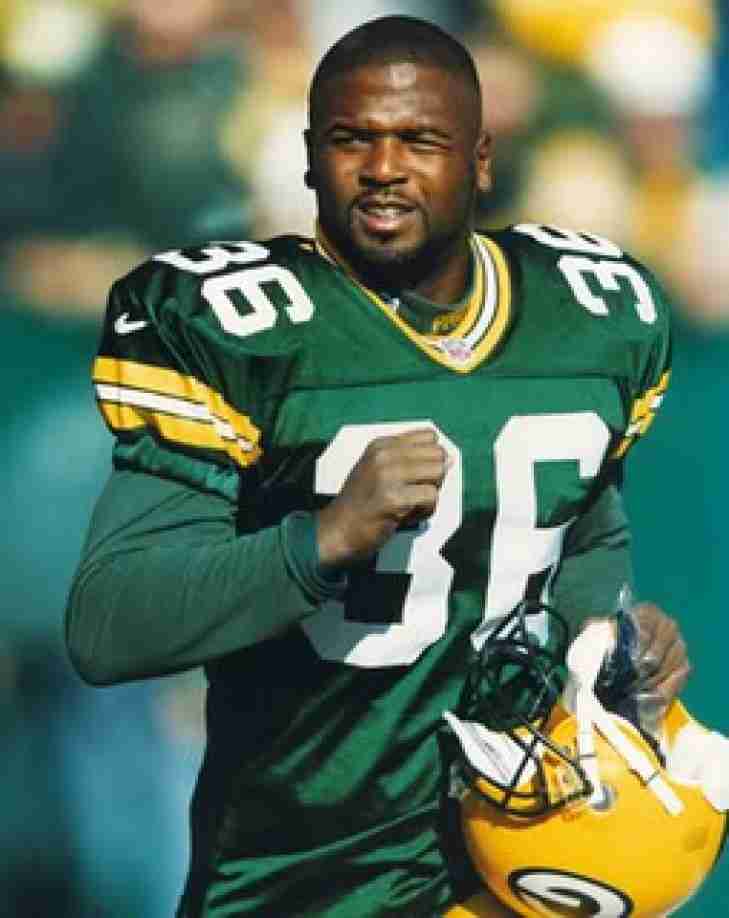
Drafted in the second round (48th overall) out of Florida State in 1990, LeRoy Butler arrived in Green Bay as a versatile, instincts-driven defensive back who would ultimately revolutionize how NFL defensive coordinators utilized the strong safety position. Stepping into defensive coordinator Fritz Shurmur’s aggressive scheme, Butler evolved into the ultimate hybrid weapon—a bone-jarring run enforcer in the box, a smooth coverage defender against tight ends and slot receivers, and a terrifying blitz threat coming off the edge.
Butler's tactical brilliance powered Green Bay's defensive renaissance in the 1990s. In a December 1993 matchup against the Los Angeles Raiders, he permanently altered NFL touchdown culture when he scooped up a Reggie White fumble lateral and vaulted into the South End Zone bleachers—spurring the world-famous "Lambeau Leap." His versatility reached absolute peak impact during the championship run of 1996, when he posted 87 tackles, five interceptions (including a 90-yard pick-six), two fumble recoveries, and a career-high 6.5 sacks to anchor the league's top-ranked scoring defense.
Beyond his iconic celebration, Butler created a historic legacy as the first defensive back in NFL history to amass at least 20 career sacks and 20 career interceptions. Serving as a key leader for Green Bay's consecutive Super Bowl-winning teams—including a standout game with seven tackles and a sack in Super Bowl XXXI against New England—he earned three straight First-Team AP All-Pro honors from 1996 to 1998 (and four overall: 1993, 1996–1998) as well as four Pro Bowl selections.
His durability in Wisconsin was equally remarkable, as he played in 116 consecutive games before a shoulder injury forced his retirement. Named to the NFL 1990s All-Decade Team, Butler’s contributions led to his induction into the Green Bay Packers Hall of Fame in 2007, followed by his enshrinement into the Pro Football Hall of Fame in 2022.
Butler played in 181 regular-season games with 166 starts, plus 14 postseason contests (all 14 postseason starts), and accumulated 38 interceptions (533 return yards, one touchdown), 20.5 sacks, 889 tackles (723 solo), 12 forced fumbles, and 10 fumble recoveries.
22. Dave Robinson
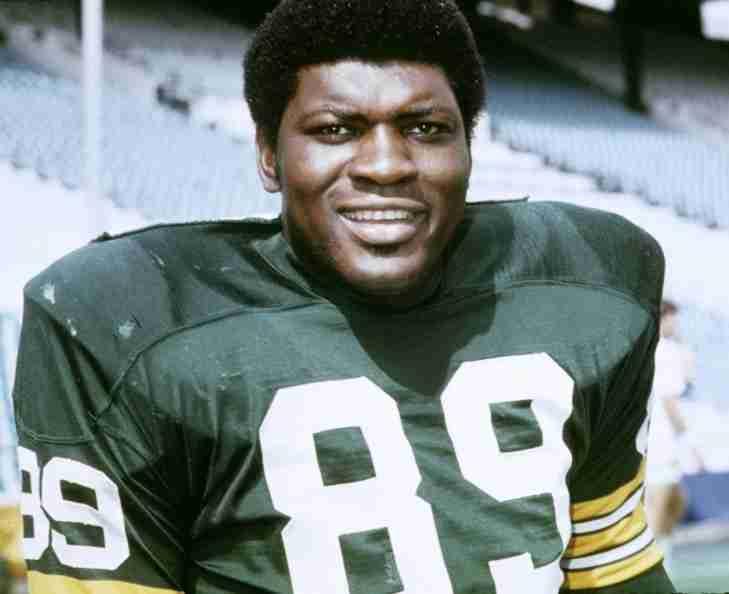
Drafted in the first round (14th overall) out of Penn State in 1963, Dave Robinson arrived in Green Bay as a physical anomaly who fundamentally altered the outside linebacker position. Standing 6-foot-3 and 245 pounds with a massive wingspan and raw sprint speed, Robinson gave Vince Lombardi a rare defensive weapon capable of completely taking over the left side of the field.
Robinson’s addition solidified Green Bay's renowned linebacking corps, joining Ray Nitschke and Lee Roy Caffey. After earning a starting spot in 1965, he became the primary defender against the league's best tight ends, regularly neutralizing Hall of Famers such as John Mackey and Mike Ditka at the line of scrimmage. His instincts in open space were just as effective, with five interceptions in 1966 helping lead the league's top-ranked scoring defense.
As playoff pressure peaked, Robinson consistently made game-changing plays that defined the Green Bay dynasty. His most memorable moment came in the 1966 NFL Championship Game against Dallas, where he correctly read a goal-line play, shed his block, and knocked quarterback Don Meredith to force a risky throw. Tom Brown then intercepted the pass in the end zone, securing the title. The following year, he finished a standout First-Team All-Pro season by earning MVP honors at the Pro Bowl, and also contributed to the defense's victory in Super Bowl II.
His run in the state of Wisconsin came to an end following the 1972 season when the rebuilding Packers traded the veteran linebacker to George Allen’s "Over the Hill Gang" in Washington for a 1974 second-round draft choice. After playing two final seasons in Washington, Robinson retired in 1974. Named to the NFL 1960s All-Decade Team, his legendary contributions led to his induction into the Green Bay Packers Hall of Fame in 1982, followed by a Senior Committee election to the Pro Football Hall of Fame in 2013.
As a Packer, Robinson had 21 interceptions and 22 sacks.
28. Ahman Green
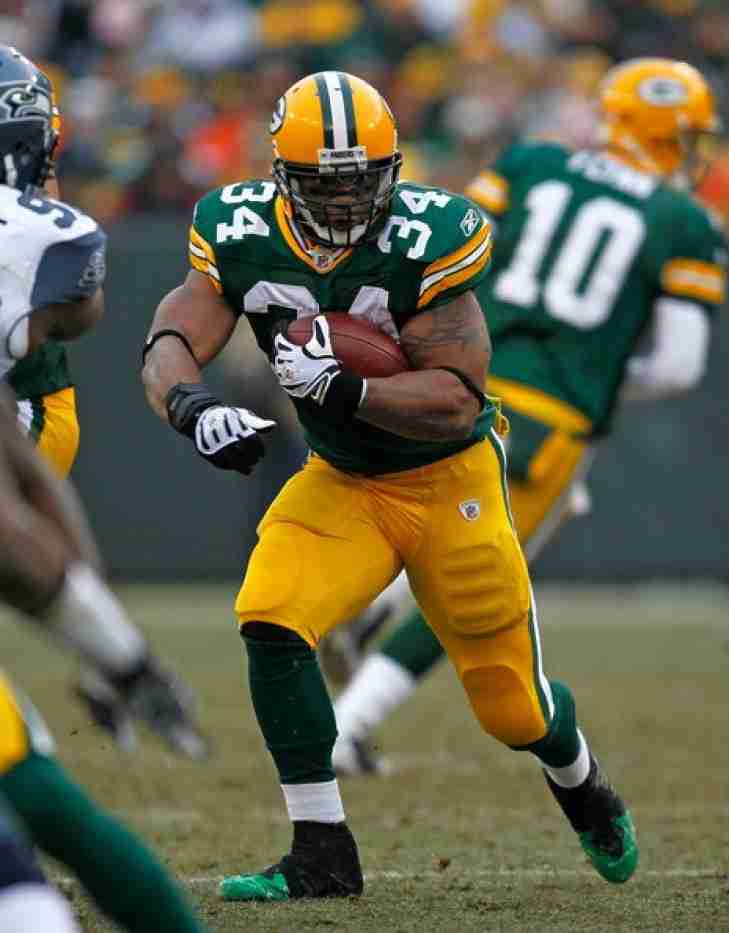
Acquired in a blockbuster trade from Seattle prior to the 2000 season, Ahman Green brought explosive zero-to-sixty acceleration and brutal tackle-breaking power to Green Bay. The Nebraska product stepped into the backfield and instantly became the engine of Mike Sherman’s offense, racking up 1,175 rushing yards and 13 total touchdowns in his debut campaign with the Packers.
Green’s dominance in the early 2000s marks one of the most impressive multi-year peaks by any running back in NFL history. From 2000 to 2004, he led the league in total yards from scrimmage with 9,036 yards. His standout year was 2003, when he totaled a historic 1,883 rushing yards and 15 touchdowns, including a franchise-record 98-yard rushing score against Denver. That season, he also caught 50 passes for 367 yards and scored five more touchdowns. A four-time Pro Bowl selection (2001–2004) with the Packers, Green achieved six 1,000-yard rushing seasons for the team, consistently fighting through contact and punishing secondaries both on the ground and in the screen game alongside Brett Favre.
After spending two seasons in Houston, Green went back to Wisconsin in 2009 to cement his legacy with the Packers. On November 8, 2009, in a game against Tampa Bay, he officially overtook Hall of Famer Jim Taylor as the Packers’ all-time leading rusher. His versatile playing style, combining rushing and receiving skills, led to his induction into the Green Bay Packers Hall of Fame in 2014.
In Green Bay, he had 8,322 rushing yards, 54 rushing touchdowns, 350 receptions, 2,726 receiving yards, and 14 receiving touchdowns.
13. Jim Taylor
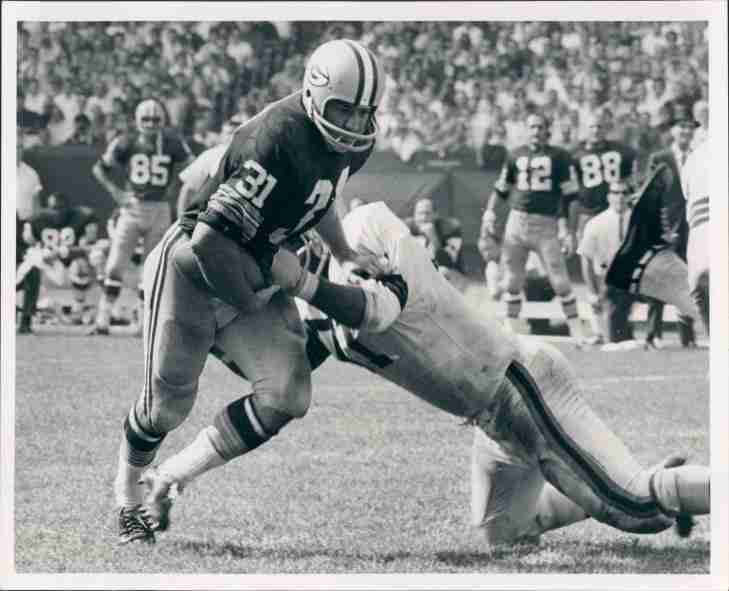
Standing just 6-foot-0 and roughly 215 pounds, Jim Taylor didn't fit the physical mold of a traditional early-60s battering ram, yet he ran with a ferocious, head-seeking contact style that terrified linebackers. Selected out of LSU in the second round of the 1958 draft, Taylor became the bruising interior half of Vince Lombardi's iconic backfield tandem alongside Paul Hornung, seeking out contact on every single carry and establishing the physical identity of Green Bay's dynasty.
Operating behind Lombardi's famed sweep and relentless inside-zone runs, Taylor put together five straight 1,000-yard campaigns from 1960 through 1964, earning five consecutive Pro Bowl selections along the way. His absolute peak arrived in 1962, when he put together one of the most dominant rushing seasons in pro football history. Taylor wrested the league rushing title away from Jim Brown, exploding for 1,474 rushing yards and 19 rushing touchdowns to capture NFL MVP honors. When the Packers needed him most in the sub-zero wind chill of the 1962 NFL Championship Game against the Giants, Taylor carried the ball 31 times for 85 grueling yards, scoring Green Bay's lone touchdown in a gritty 16–7 victory.
Twice leading the NFL in rushing touchdowns (1961 and 1962), Taylor became the first back in league history to post five consecutive 1,000-yard seasons. He served as the primary workhorse on four NFL Championship teams in Green Bay and capped off his Packers tenure by scoring a touchdown in the franchise's Super Bowl I victory over Kansas City. When he departed for New Orleans in 1967, only Jim Brown stood ahead of him on the NFL’s all-time rushing leaderboard.
Taylor played in 119 regular-season games for Green Bay (133 career). He compiled 8,207 rushing yards, 175 receptions for 1,727 receiving yards, and 91 total touchdowns (81 rushing, 10 receiving), alongside four NFL Championship rings and a Super Bowl I title. A five-time Pro Bowler, 1962 First-Team All-Pro, 1962 NFL MVP, and member of the NFL’s 1960s All-Decade Team, Taylor was inducted into the Packers Hall of Fame in 1975 and enshrined into the Pro Football Hall of Fame in 1976.
14. Reggie White
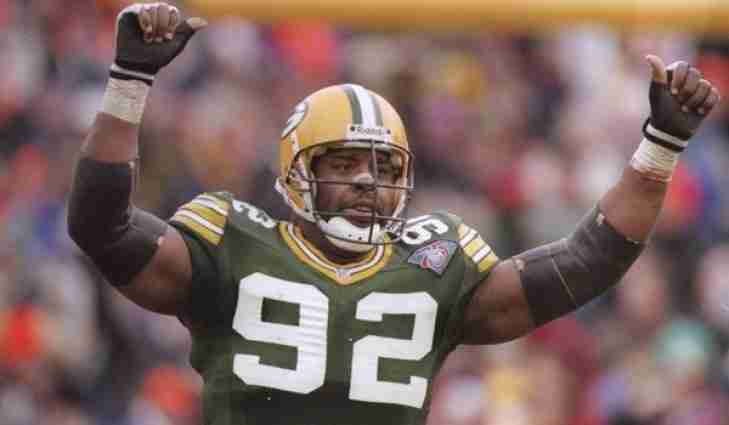
When Reggie White shocked the sports world by signing a four-year, $17 million contract with Green Bay in the spring of 1993, he didn't just choose a new football team—he single-handedly transformed the entire trajectory of the Packers franchise. At a time when cold, small-market Titletown was viewed across the league as an undesirable destination for elite talent, the NFL’s premier defensive player chose Green Bay over major market suitors like San Francisco and Washington. White’s decision shattered the stigma, instantly legitimizing the organization and signaling to the league that the Packers were built to win.
Arriving in Wisconsin near Motown at age 32 after eight legendary seasons in Philadelphia, the "Minister of Defense" immediately brought the confident swagger and leadership vital for a championship team, complementing rising star quarterback Brett Favre. His presence attracted future talent, demonstrating to other high-profile veterans that Green Bay was an ideal destination to pursue a championship.
White remained an absolute force on the field, utilizing his signature, unblockable hump move to physically overpower tackle after tackle. Across his six seasons in Green Bay, he earned six consecutive Pro Bowl selections and two First-Team All-Pro honors (1995 and 1998). His impact peaked in 1996, when he anchored a unit that allowed the fewest points and fewest yards in the NFL. In Super Bowl XXXI against New England, White put on a defensive masterclass, recording a Super Bowl-record three sacks in the second half to slam the door on the Patriots and deliver Green Bay its first Lombardi Trophy in 29 years.
Two years later, at age 37, White authored a sensational final chapter in Green Bay by capturing the 1998 NFL Defensive Player of the Year award after recording 16.0 sacks. He retired from the Packers that season as the franchise's all-time sack leader, leaving behind a revived culture of winning that permanently reshaped modern Green Bay football.
In his six seasons with the Packers, White played in 96 regular-season games with 95 starts for Green Bay (232 career). He compiled 68.5 sacks, 301 combined tackles, 14 forced fumbles, eight fumble recoveries, and one interception for the Packers, along with a Super Bowl XXXI championship ring. A six-time Pro Bowler, two-time First-Team All-Pro, 1998 NFL Defensive Player of the Year, and member of the NFL’s 1990s All-Decade Team, White was posthumously enshrined into the Pro Football Hall of Fame in 2006, inducted into the Packers Hall of Fame in 2007, and had his No. 92 retired by the franchise.
Seriously, this might be one of the greatest franchise-altering free agent signings ever.
12. Herb Adderley
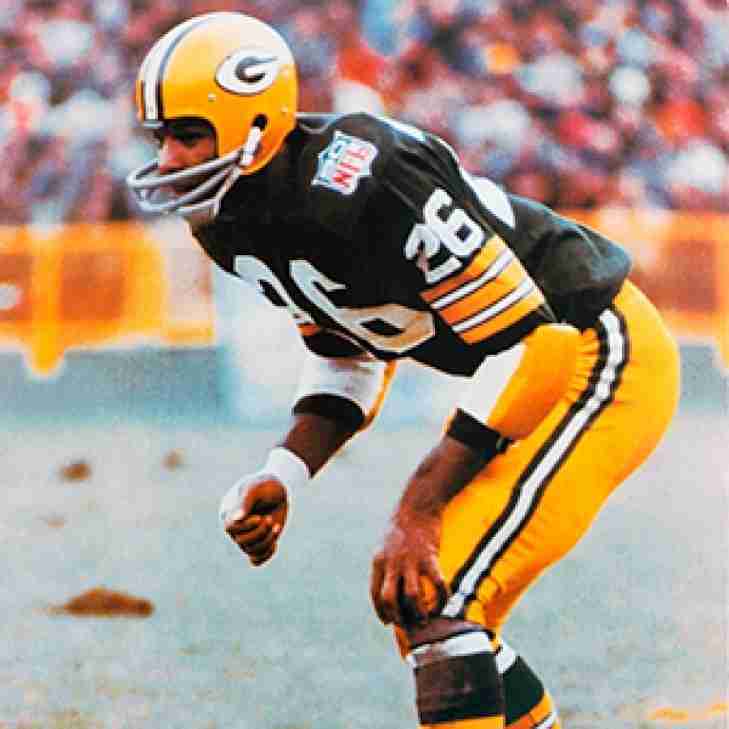
Converted from a college halfback into a starting cornerback midway through his 1961 rookie season, Herb Adderley unlocked a new era of aggressive, game-changing play on the perimeter for Vince Lombardi's defense. Drafted 12th overall out of Michigan State, Adderley brought elite running back instincts, high-end speed, and exceptional ball skills to left cornerback, turning every interception and kick return into an immediate threat to score.
Adderley quickly transformed into one of the most feared shutdown corners of the 1960s, anchoring Green Bay's secondary alongside Willie Wood and Hank Gremminger. His ability to jump routes and instantly transition into an open-field runner produced jaw-dropping numbers: he led the NFL in interception return yards twice (1962 and 1965) and returned seven pickoffs for touchdowns during his Green Bay tenure. Adderley was also a dynamic weapon on special teams, logging over 3,000 kick return yards and taking two back to the house, compiling nine total non-offensive touchdowns in Green Bay.
His stretch of individual dominance yielded four First-Team All-Pro selections (1962, 1963, 1965, 1966) and five Pro Bowl nods in Green Bay, while serving as a defensive linchpin for five NFL Championship squads. Adderley’s definitive signature moment arrived in Super Bowl II against Oakland, where he intercepted Daryle Lamonica in the fourth quarter and darted 60 yards down the sideline for the first pick-six in Super Bowl history, putting the exclamation point on Lombardi’s final game with the franchise.
After nine dominant seasons in Green Bay, he was traded to Dallas in 1970, where he added a sixth world championship ring in Super Bowl VI before retiring as a member of the NFL’s 1960s All-Decade Team.
He compiled 39 interceptions for 780 return yards and seven pick-sixes, plus 120 kickoff returns for 3,080 yards and two return touchdowns in Green Bay, alongside five NFL Championship rings and two Super Bowl titles. A five-time Pro Bowler and four-time First-Team All-Pro in Green Bay, Adderley was enshrined in the Pro Football Hall of Fame in 1980 and inducted into the Packers Hall of Fame in 1981.
17. Jerry Kramer
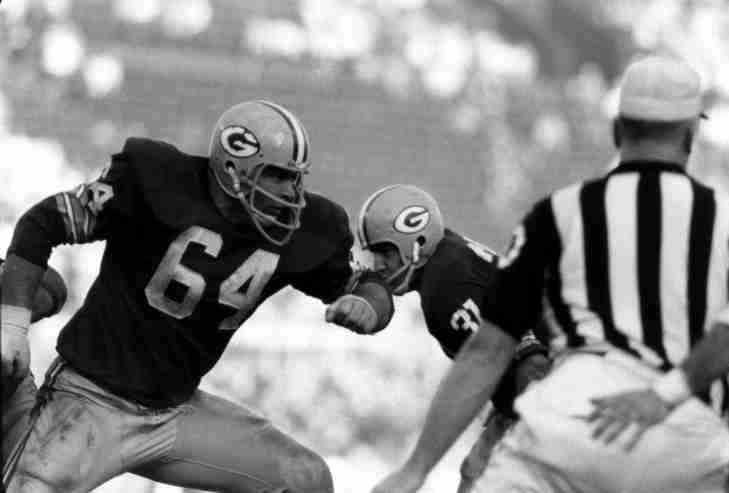
Arriving in Green Bay as a fourth-round pick out of Idaho in 1958, Jerry Kramer quickly emerged as the fierce physical engine driving Vince Lombardi’s relentless offensive line. Matched with Fuzzy Thurston in the interior, Kramer’s rare combination of downfield mobility and raw power transformed the iconic "Packer Sweep" from a simple ground play into an unstoppable football juggernaut.
Kramer's impact extended far beyond routine blocking duties. A versatile star, he also doubled as the team's primary placekicker for several seasons, famously boot-kicking three field goals in freezing conditions to secure the 1962 NFL Championship over New York. His defining moment came in the iconic 1967 "Ice Bowl" victory against Dallas, when his legendary wedge block cleared the path for Bart Starr’s game-winning quarterback sneak. During his decade-plus tenure in Titletown, Kramer earned five First-Team AP All-Pro selections (1960, 1962, 1963, 1966, 1967) and three Pro Bowl nods, helping Green Bay win five NFL titles and the first two Super Bowls.
For decades, Kramer was the most glaring omission from Canton, the only member of the NFL 50th Anniversary All-Time Team not enshrined. The long-awaited correction finally arrived in 2018 when the Seniors Committee selected him for induction into the Pro Football Hall of Fame, decades after his 1975 entry into the Green Bay Packers Hall of Fame.
In green and gold, Kramer played in 130 regular-season games with 119 starts, plus nine postseason contests (all 9 starts). He also amassed 119 regular-season starts, four fumble recoveries, 29 field goals, and 90 extra points.
1. Aaron Rodgers
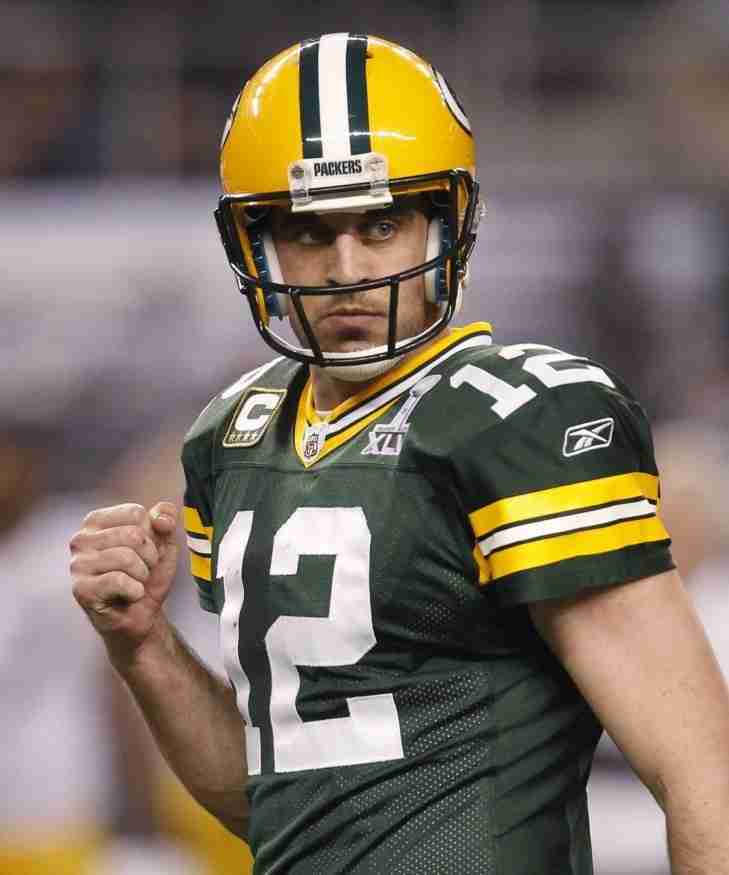
On draft night in 2005, Aaron Rodgers sat in the green room watching an agonizing fall down the draft board until the Green Bay Packers finally picked him 24th overall. Intended as Brett Favre's successor, Rodgers spent three years on the bench, navigating an awkward relationship with the legendary quarterback. When Favre was traded to the New York Jets in 2008, Rodgers took over as the starter under heavy scrutiny, quickly demonstrating precise passing, exceptional mobility, and a rare talent for protecting the football.
Rodgers quickly proved he was not just a replacement but an upgrade in efficiency. He threw for over 4,000 yards with 28 touchdowns in his first year as a starter, but his true coronation came in 2010. After barely making the postseason as a wild-card team, Rodgers went on a postseason tear for the ages, culminating in a pristine performance in Super Bowl XLV. Passing for 304 yards and three touchdowns against the Pittsburgh Steelers, he earned Super Bowl MVP honors and delivered Green Bay its fourth Lombardi Trophy.
In the following season, Rodgers delivered one of the most statistically impressive campaigns in NFL history. In 2011, he threw for 4,643 yards and 45 touchdowns, with only six interceptions, and set the NFL single-season passer rating record at 122.5. He earned his first AP NFL MVP award by a wide margin, solidifying his reputation as the top quarterback in the league. His signature style—marked by exceptional accuracy, a quick flick of the wrist for powerful throws, and a keen ability to draw defensive offsides through his hard count—became the model for modern quarterbacking.
Rodgers won his second MVP award in 2014 after throwing 38 touchdowns to just five picks, consistently leading Green Bay to deep playoff runs. Yet despite regular-season brilliance and four NFC Championship Game appearances, postseason heartbreak began to define the mid-2010s Packers. Agonizing, high-profile playoff losses—often exacerbated by defensive collapses or special teams blunders—left fans and analysts debating whether Green Bay was squandering the prime of a talent whose individual ceiling was as high as anyone to ever play the position.
As his career progressed into the late 2010s, friction brewed between Rodgers and the front office. Tensions reached a boiling point in the spring of 2020 when general manager Brian Gutekunst traded up in the first round of the draft to select quarterback Jordan Love without consulting Rodgers. Fueled by the perceived slight, Rodgers responded with a late-career revival that shattered any narrative of his decline, capturing back-to-back NFL MVPs in 2020 and 2021 behind staggering touchdown-to-interception totals of 48-to-5 and 37-to-4.
Off the field, Rodgers increasingly became a lightning rod for national controversy. His public media appearances—most notably on The Pat McAfee Show—and unvarnished views on organization management, media narratives, and holistic health frequently dominated headlines. The drama peaked during the 2021 season over his vaccination status, after revealing he was "immunized" despite not taking the COVID-19 vaccine, leading to intense public backlash, league fines, and a media firestorm that overshadowed his stellar play on the field.
His relationship with Green Bay management remained a rollercoaster of contract standoffs, cryptic offseason retirement hints, and public grievances regarding how veteran teammates were treated. Yet, even amidst the off-field noise and drama, Rodgers continued to operate as an absolute surgical force on the field, holding the defense accountable while throwing Hail Marys that seemed to defy the laws of physics.
Following a disappointing 8–9 campaign in 2022, the long-brewing divorce finally materialized in April 2023 when the Packers traded Rodgers to the New York Jets, bringing a dramatic 18-year era in Titletown to an official end. While his exit was messy and polarizing, his individual brilliance in Green Bay remains mathematically and historically unequaled by any quarterback who ever put on a helmet.
In Green Bay, Rodgers played in 230 regular-season games, completing 4,758 passes for 57,521 yards, 475 touchdowns, and just 105 interceptions—boasting the lowest career interception percentage in NFL history. A four-time NFL MVP (2011, 2014, 2020, 2021), four-time First-Team All-Pro, and a selection to the NFL 2010s All-Decade Team, Rodgers stands as statistically the most dominant player in Green Bay Packers history.
We also understand if you disagree with the assessment as to who is at the top of this list.
9. Henry Jordan
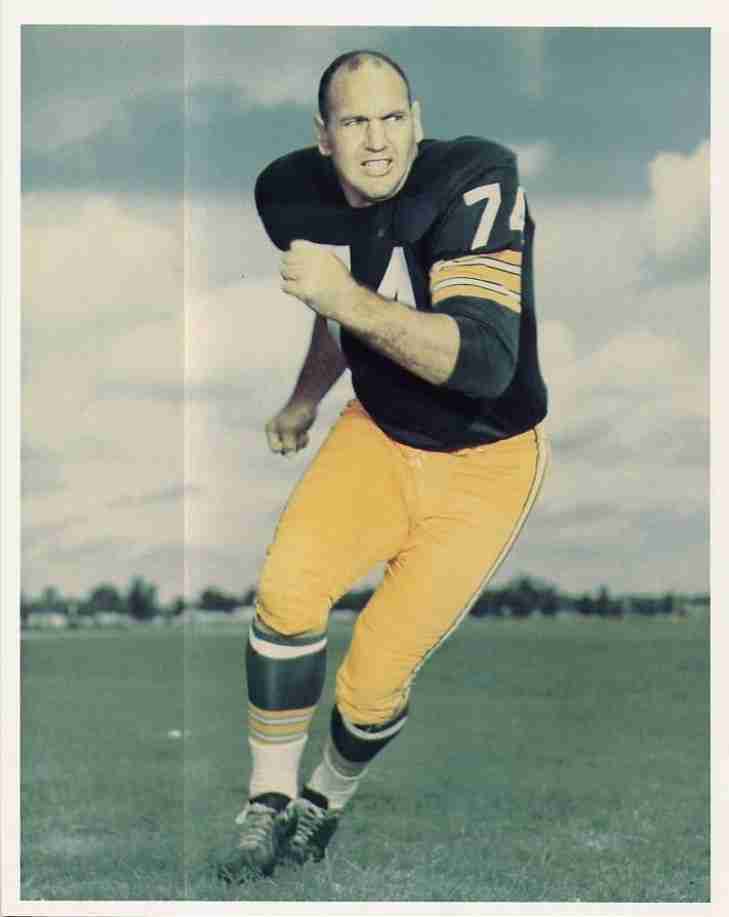
Traded from Cleveland to Green Bay in 1959 for a modest fourth-round draft pick, Henry Jordan proved to be one of the ultimate bargains of Vince Lombardi's tenure. A former NCAA wrestling runner-up at the University of Virginia, Jordan brought elite leverage, cat-like quickness, and rare lateral agility to right defensive tackle, using his technique to consistently shoot gaps and collapse pockets from the inside.
Jordan served as the relentless interior engine for a defense that captured five NFL Championships and the first two Super Bowls. From 1960 through 1964, he went on an absolute tear, earning five consecutive First-Team All-Pro selections. While Willie Davis provided edge pressure, Jordan harassed quarterbacks from the middle, unseating opposing guards and making key plays on the biggest stages—including a 3.5-sack performance in the 1967 Western Conference Championship against Los Angeles and 1.5 sacks in Super Bowl I.
Famous off the field for his sharp wit—once quipping that Lombardi "treats us all the same, like dogs"—Jordan was all business between the lines. Though sacks were not an official stat in his era, Pro Football Reference credits him with 59.5 unofficial sacks and 20 fumble recoveries over his 11 seasons in Green Bay, making him one of the most destructive interior pass rushers of the 1960s.
As a Packer, he compiled 59.5 unofficial sacks, 20 fumble recoveries, and one defensive touchdown for the Packers, along with five NFL Championship rings and two Super Bowl titles. A four-time Pro Bowl selection, five-time First-Team All-Pro, and member of the Packers Hall of Fame (1975), Jordan was posthumously enshrined into the Pro Football Hall of Fame in 1995.
11. Curly Lambeau
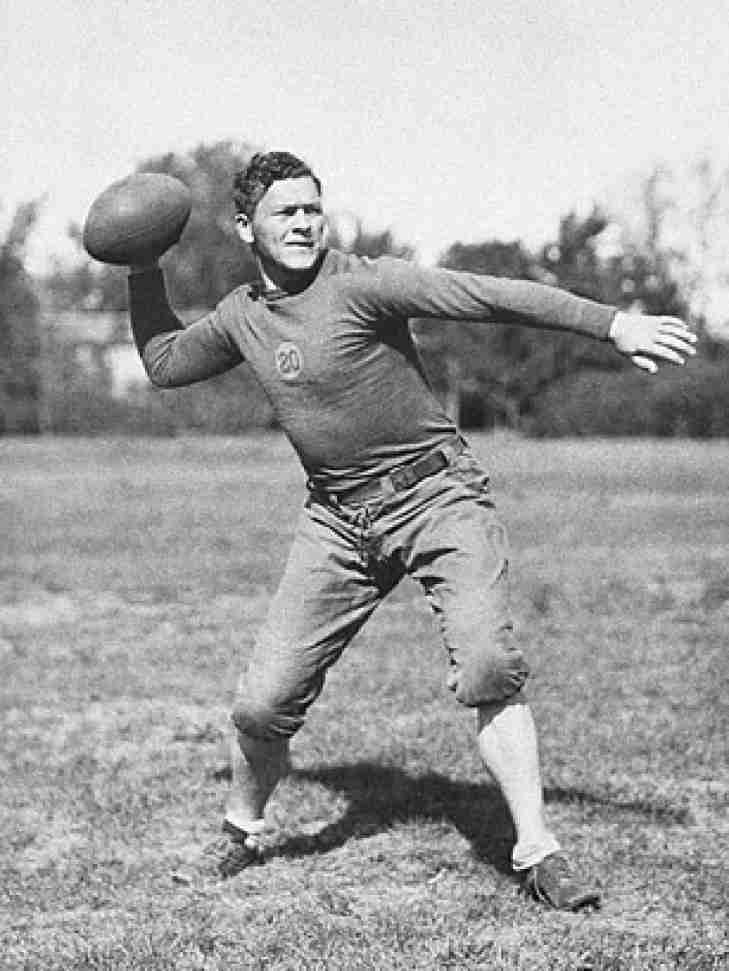
Would there be a Green Bay Packers football team if it were not for Curly Lambeau?
Considering he founded the team, we can safely say no!
Organizing a town team in 1919 with $50 worth of equipment from his employer, the Indian Packing Company, Earl "Curly" Lambeau didn't just build a franchise—he created the bedrock of pro football in Green Bay. Serving as the team's primary tailback, passer, and head coach, Lambeau was an offensive visionary who popularized the forward pass long before it became standard practice in the rugged, run-heavy early years of the NFL.
Operating as Green Bay’s primary offensive engine throughout the 1920s, Lambeau delivered almost every "first" in franchise history, throwing the Packers' first official pass, scoring their first passing touchdown, and kicking their first field goal. A natural leader with a booming presence, he weaponized the passing game behind Knute Rockne’s Notre Dame Box system, leading Green Bay into the NFL in 1921 and keeping the team competitive through the league's grueling early era.
His decade-long dual role as a player-coach culminated in 1929 with a crowning achievement. Lambeau spearheaded Green Bay to an undefeated 12–0–1 record, capturing the franchise's very first NFL Championship in his final season taking snaps on the field. That victory established the Packers as a national powerhouse and set the stage for Lambeau's transition into a full-time head coach, where he added five more NFL titles (1930, 1931, 1936, 1939, 1944) and drafted legendary figures like Don Hutson.
Though his coaching tenure in Green Bay ended in 1949 after 31 seasons, his name became permanently etched into the soul of the sport when New City Stadium was renamed Lambeau Field following his passing in 1965.
As a player including pre-NFL years), Lambeau played in 77 official NFL games. He compiled 1,260 passing yards, 24 passing touchdowns, eight rushing touchdowns, and three field goals as a player, winning six overall NFL Championships as a player and head coach. An inaugural charter member of the Pro Football Hall of Fame in 1963 and member of the Packers Hall of Fame (1970), Lambeau remains the foundational architect of Title Town.
10. Paul Hornung
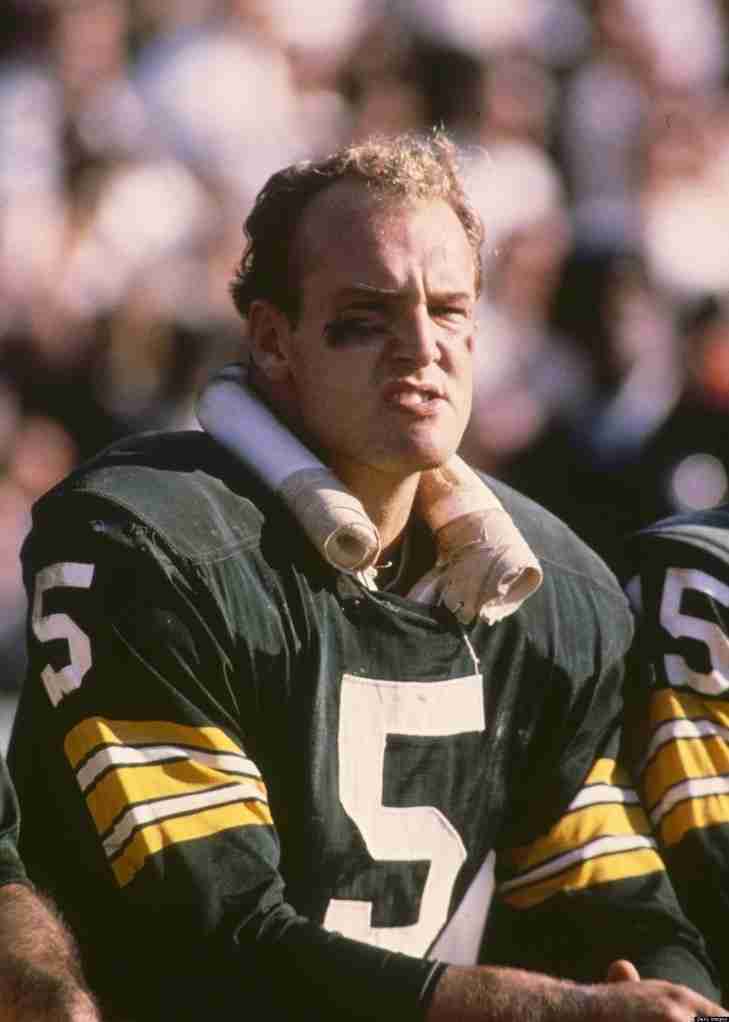
Paul Hornung, who won the 1956 Heisman Trophy as a versatile quarterback at Notre Dame, joined Green Bay as the top overall pick in the 1957 NFL Draft. Nicknamed "The Golden Boy," he initially faced challenges in settling into a specific position under earlier coaching staffs. However, everything changed when Vince Lombardi took charge in 1959, transitioning Hornung to halfback and unleashing one of the most adaptable offensive players of his era.
Under Lombardi's scheme, Hornung became the key read on the legendary Green Bay Power Sweep. With exceptional field vision and surprising power, he paired with fullback Jim Taylor to give the Packers a relentless 1-2 punch in the backfield. Beyond running the football, Hornung was a legitimate threat to throw on halfback options and served as Green Bay’s primary placekicker. That triple-threat production led to a historic individual run from 1959 through 1961, during which he led the NFL in scoring for three consecutive seasons.
His peak came in 1960, when he set an NFL single-season record by scoring 176 points—15 touchdowns, 15 field goals, and 41 extra points —a record that stood for 46 years. Hornung was named First-Team All-Pro in 1960 and 1961, and he earned the NFL MVP award in 1961. He consistently excelled in high-stakes games, setting a championship-game record with 19 points in the 1961 victory over the New York Giants and achieving a tough 105-yard rushing performance in the 1965 title game win against Cleveland.
Though his prime was shortened by a yearlong gambling suspension in 1963 alongside Alex Karras and by nagging pin-bone nerve injuries in his neck, Hornung's clutch big-game factor was essential to four NFL Championship teams. He retired as a true cornerstone of the 1960s Lombardi dynasty and as a member of the NFL’s 1960s All-Decade Team.
Over his career, Hornung played in 104 regular-season games, compiling 3,711 rushing yards, 130 receptions for 1,480 receiving yards, 62 total touchdowns (50 rushing, 12 receiving), 66 field goals, 190 extra points, and 760 total points, alongside four NFL Championship rings and a Super Bowl I title. He joined the Packers Hall of Fame (1975); Hornung was enshrined in the Pro Football Hall of Fame in 1986.
7. Willie Wood
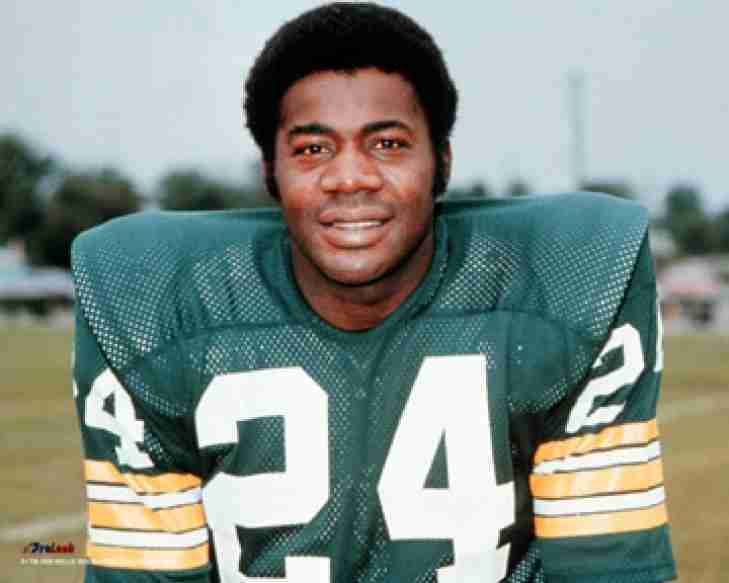
Writing a personal pitch letter directly to Vince Lombardi in 1960 proved to be the ultimate gamble for Willie Wood, an undrafted quarterback out of USC who couldn't catch an NFL draft call. Lombardi brought him in for a free-agent tryout, immediately moved the quick-footed athlete to free safety, and watched him turn into the back-end general of Green Bay's defense for the next twelve years.
By his second season in 1961, Wood was installed as the starting safety, and he celebrated his third year by putting together a defensive masterclass in 1962. He led the NFL with 12 interceptions, earned his first of eight career Pro Bowl trips, and secured First-Team All-Pro honors while helping power Green Bay to its second consecutive world championship. Wood’s closing speed and uncanny spatial awareness turned the Packers' secondary into a no-fly zone throughout the 1960s, while his vision made him a dual threat as the league's top punt returner in 1964 with a 13.3-yard average.
Wood's defining signature moment arrived on pro football's biggest stage in Super Bowl I. With Green Bay holding a tight 14–10 lead over Kansas City early in the third quarter, Wood stepped in front of a Len Dawson pass, picking it off and returning it 50 yards down to the Chiefs' 5-yard line to set up the game-clinching touchdown. That momentum-shifting turnover sparked a blowout and cemented Wood’s reputation as one of the game's ultimate big-stage performers, anchored alongside Herb Adderley in a secondary that won five NFL Championships and two Super Bowls.
His individual accolades piled high across the decade, yielding nine overall All-Pro honors—including five First-Team All-Pro selections (1964–1967, 1969)—and five total rings. Wood retired following the 1971 season having never missed a single game in his 12-year career, leaving as the premier free safety of his era and earning a spot on the NFL’s 1960s All-Decade Team.
Wood retired after the 1971 season. He compiled 48 interceptions for 699 return yards, two pick-sixes, 139 punt returns for 1,391 yards (a 10.0 career average), and two punt return touchdowns, along with five NFL Championship rings and two Super Bowl titles. Wood was enshrined in the Pro Football Hall of Fame in 1989.
8. Willie Davis

Arriving in Green Bay via trade with Cleveland in 1960, Willie Davis stepped into Titletown and instantly established himself as the quick-striking cornerstone of Vince Lombardi’s defense. After serving two years in the U.S. Army and being misplaced on offense by the Browns, the Grambling State product unlocked his Hall of Fame potential the moment Lombardi permanently installed him at left defensive end.
Davis combined exceptional speed, long-limbed leverage, and a powerful first step right off the snap. In a time when defensive line play focused mainly on stopping the run, Davis changed the game by relentlessly pursuing opposing quarterbacks. His quickness was unmatched by offensive tackles, enabling him to collapse pockets, disrupt timing, and consistently force turnovers in the backfield.
His ten-year tenure in Green Bay, away from Honolulu, brought remarkable achievements. Davis led a defensive line with Henry Jordan, helping the Packers win five NFL Championships and two Super Bowls (I and II). From 1962 to 1967, he achieved an impressive run, earning five consecutive Pro Bowl selections and five First-Team All-Pro honors (1962, 1964–1967). Lombardi highly valued his consistent leadership, appointing Davis as the Packers' defensive captain — the first African American to hold such a position in franchise history.
Although sacks were not officially recorded in the NFL during his playing career, modern analysis and research by Pro Football Reference attribute Davis with 99.5 sacks while with Green Bay, including five seasons with double-digit totals. He was also highly skilled at forcing turnovers, setting a franchise record with 21 opponent fumble recoveries. His durability was unmatched, as he played all 10 seasons with the Packers without missing a game.
With the Packers, Davis compiled 99.5 unofficial sacks, 21 fumble recoveries (22 total), two safeties, and one defensive touchdown, alongside five NFL Championship rings and two Super Bowl titles. A member of the NFL’s 1960s All-Decade Team, Davis was inducted into the Packers Hall of Fame in 1975 and enshrined into the Pro Football Hall of Fame in 1981.
2. Brett Favre
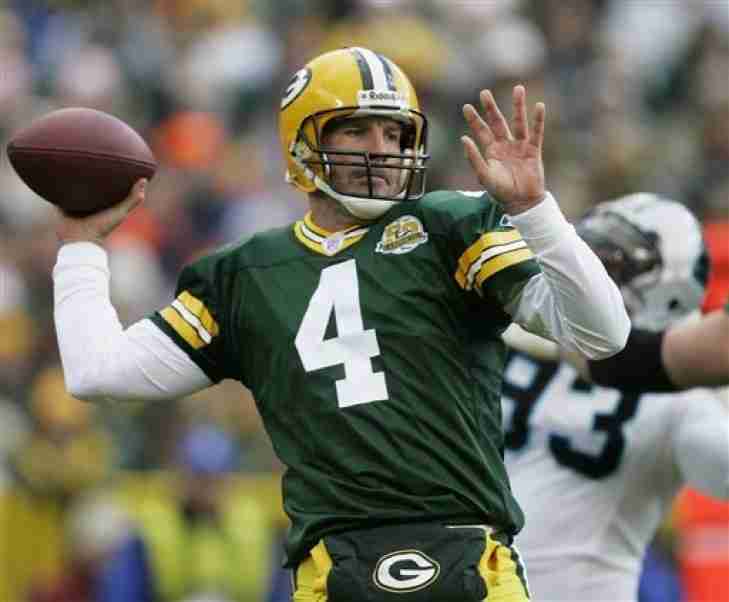
Drafted in the second round of the 1991 NFL Draft by the Atlanta Falcons, Brett Favre spent his rookie season buried on the depth chart—completing zero passes and throwing two interceptions—before Green Bay general manager Ron Wolf surrendered a first-round pick to acquire him in 1992. When Don Majkowski suffered an ankle injury in Week 3 against Cincinnati, Favre stepped off the bench and engineered a dramatic, game-winning drive capped by a touchdown pass to Kitrick Taylor, seizing a starting job he would not relinquish for the next 16 years.
That incredible comeback sparked one of the longest and most resilient careers in professional sports history. Favre emerged as the ultimate ironman, enduring broken bones, sprains, and intense wear-and-tear to start 253 consecutive regular-season games for Green Bay—an extraordinary streak that epitomized his relentless determination. With a cannon arm and a playful approach to the game, he played with pure joy, often throwing sidearm passes, celebrating with offensive linemen, and attempting risky throws into double coverage that only his raw arm talent could pull off.
Favre’s definitive peak was a three-year period from 1995 to 1997, becoming the first—and remains the only—NFL player to win three consecutive AP NFL MVP awards. In 1995, he threw for 4,413 yards and 38 touchdowns, guiding Green Bay to its first NFC Championship Game in over twenty years. He continued to elevate his performance in 1996, throwing 39 touchdown passes to lead the NFL's best offense and helping Green Bay defeat the New England Patriots in Super Bowl XXXI for the franchise's first Lombardi Trophy in 29 years.
His legendary status in Titletown was solidified by his bold approach, risking everything for victory and adopting a gunslinger persona. He led the NFL in touchdown passes for three consecutive seasons (1995–1997) and guided Green Bay back to a second straight Super Bowl XXXII appearance. Although his aggressive playstyle resulted in a high number of turnovers—eventually making him the NFL's all-time leader in career interceptions—his teammates consistently supported his fearless attitude, transforming the Packers into regular contenders during the 1990s and early 2000s.
Yet, for all his on-field heroism, the latter portion of Favre's tenure in Green Bay became increasingly complicated by high-profile off-field personal struggles and offseason drama. Early in his Packers career, he publicly battled a severe addiction to the painkiller Vicodin, entering a rehabilitation facility in 1996 before courageously returning to lead Green Bay to a world championship that very same season. Later in his career, his annual public indecision regarding retirement turned every offseason into a media circus, straining his relationship with head coach Mike McCarthy and general manager Ted Thompson.
The long-simmering friction reached a bitter breaking point in the summer of 2008. After formally announcing his retirement in March, Favre had a change of heart months later and demanded his starting job back over young successor Aaron Rodgers. The front office stood firm, leading to an acrimonious split and a trade to the New York Jets. The feud intensified the following year when Favre signed with Green Bay's bitter division rival, the Minnesota Vikings, leading them to a division sweep over the Packers in 2009 in front of an enraged Lambeau Field crowd.
His post-football legacy took further damage and public scrutiny because of serious civil litigation over his involvement in the Mississippi welfare funds scandal, along with past league investigations into inappropriate workplace conduct during his time in New York. While these off-field issues permanently tarnished his standing with many fans, time eventually softened the competitive wounds between the franchise and its most charismatic quarterback.
The fences were officially mended in July 2015 when Favre returned to a packed Lambeau Field to have his iconic No. 4 jersey retired and his name enshrined on the stadium facade alongside the franchise's greatest legends. With the Packers, Favre appeared in 255 regular-season games, compiling 61,655 passing yards and 442 touchdown passes while winning 160 games as a starter. A three-time NFL MVP, three-time First-Team All-Pro, nine-time Pro Bowler in Green Bay, and member of the NFL 1990s All-Decade Team, Favre was enshrined in the Pro Football Hall of Fame in his first year of eligibility in 2016.
4. Forrest Gregg
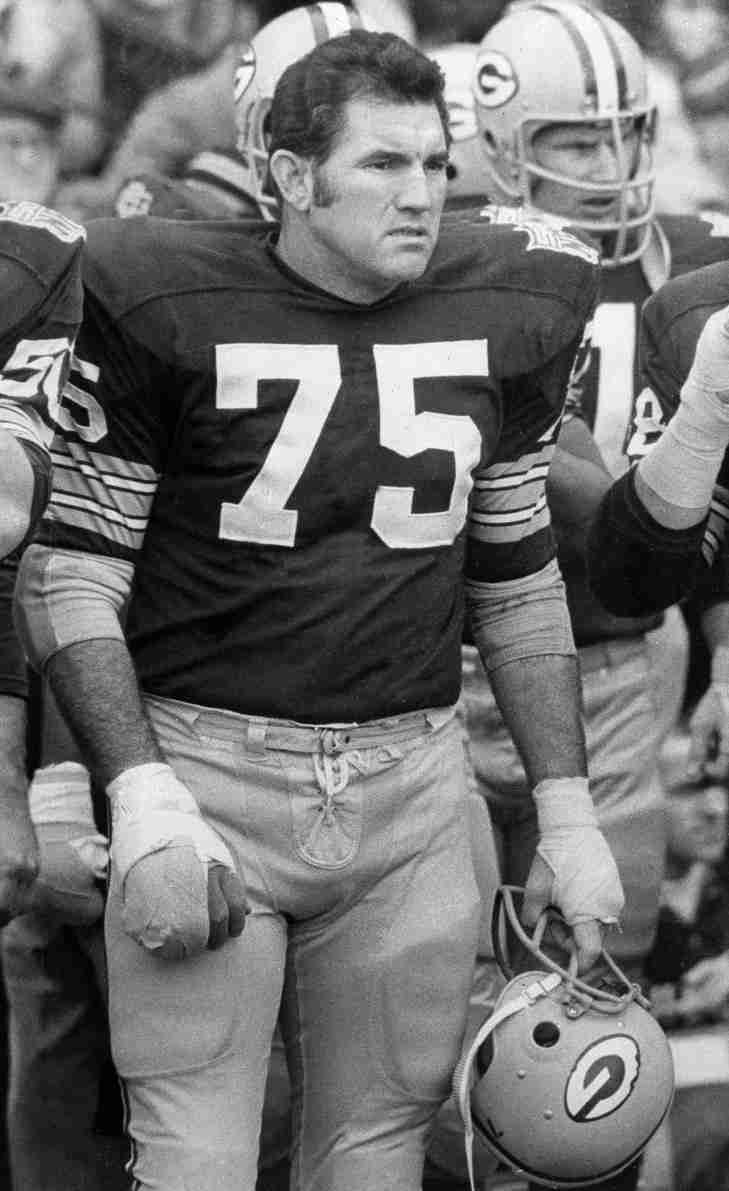
After being drafted in the second round of the 1956 NFL Draft out of SMU, Forrest Gregg moved to Green Bay, where he quietly developed one of the most physically imposing careers among offensive linemen in pro football history. At 6-foot-4 and 250 pounds, Gregg combined technical skill, quickness off the line, and sharp mental acuity. He became a cornerstone of Vince Lombardi's offensive line, consistently playing right tackle and shifting inside to guard as needed during games.
Lombardi famously gave Gregg the ultimate compliment a head coach could bestow, calling him "the finest player I ever coached" in his book Run to Daylight. That praise was earned through flawless execution on the gridiron. Gregg was the lead technician behind Green Bay's iconic power sweep, consistently firing off the ball with surgical precision to seal off edge defenders and clear lanes for Paul Hornung and Jim Taylor. His pass protection was equally flawless, giving Bart Starr a pristine pocket to operate in during the franchise's 1960s dynasty's highest-stakes moments.
Beyond his elite technique, Gregg stood among the ultimate ironmen in professional sports history. From his rookie season in 1956 through the 1970 campaign, he appeared in a then-league-record 188 consecutive regular-season games. His relentless work ethic and durability produced a remarkable run of individual accolades; between 1959 and 1968, he earned nine Pro Bowl nods and was named First-Team All-Pro seven times (1960, 1962–1967).
Gregg's consistent role on the right side of the line was crucial to Green Bay's five NFL Championship wins (1961, 1962, 1965, 1966, 1967), including Super Bowls I and II. After 14 successful seasons with the Packers, he finished his playing career with the Dallas Cowboys in 1971, earning a sixth ring in Super Bowl VI. He returned to the team in 1984, coaching for four seasons as Green Bay's head coach.
With Green Bay, Gregg played in 193 games, starting 156. He was part of the NFL 1960s All-Decade Team and the NFL's 75th and 100th Anniversary All-Time Teams, and was inducted into the Green Bay Packers Hall of Fame in 1977. That year, he was also enshrined in the Pro Football Hall of Fame.
3. Don Hutson
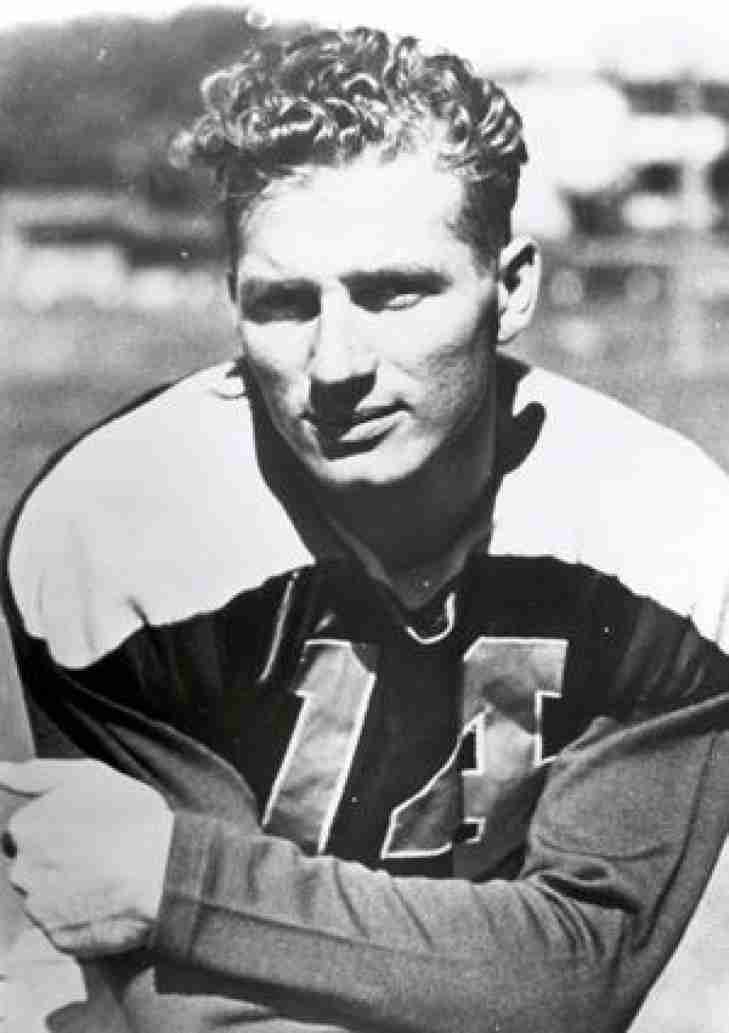
Signing with Green Bay in 1935 out of Alabama, Don Hutson would single-handedly revolutionize offensive football. At a time when teams viewed the pass as a desperate last resort, head coach Curly Lambeau paired the lightning-quick end with passers Arnie Herber and Cecil Isbell, creating a vertical attack that caught the entire league flat-footed. Hutson invented the modern route tree—perfecting precise Z-outs, post patterns, and sudden double-moves that left defensive backs grasping at air. On the first play of his second career game, he caught an 83-yard touchdown pass against the Chicago Bears, setting the standard for a career defined by instant, explosive production.
Nicknamed "The Alabama Antelope" for his gliding, 9.7-second 100-yard dash speed, Hutson did not merely lead the league; he completely eclipsed his contemporaries. Over an 11-year run, he topped the NFL in receptions eight times, receiving yards seven times, and receiving touchdowns nine times—including an extraordinary stretch from 1941 to 1944 where he swept all three categories annually. In 1942, he became the first player in pro football history to break the 1,000-yard receiving barrier, catching 74 passes for 1,211 yards and 17 touchdowns in just 11 games—a statistical margin over his peers that remains unmatched in sports history.
His supreme individual brilliance drove Green Bay to three NFL Championships (1936, 1939, and 1944). Hutson’s dominance was so total that he captured back-to-back Joe F. Carr Trophies as the NFL MVP in 1941 and 1942, standing as one of the few receivers ever to earn the league's top individual honor. In a 1945 matchup against Detroit, he showcased his explosive scoring capability by racking up an absurd 29 points in a single quarter—catching four touchdown passes and kicking five extra points.
Operating in the two-way, ironman era of football, Hutson was far more than an offensive weapon. Playing safety on defense, he used his instincts and speed to intercept 30 passes over his final six seasons, even leading the entire NFL with six interceptions in 1940. He also doubled as the team's primary placekicker, converting 172 extra points and seven field goals. When he retired following the 1945 season, he held 18 major NFL records, including 99 career touchdown catches—a mark that stood untouched for 44 years until Steve Largent finally broke it in 1989.
Hutson played his entire career with the Packers, appearing in 116 games with 488 receptions, 7,991 yards, and 105 touchdowns. An eight-time First-Team All-Pro, he was named to the NFL 1930s All-Decade Team and the NFL's 50th, 75th, and 100th Anniversary All-Time Teams. In 1951, the Packers retired his No. 14 jersey, making him the first in franchise history, and he was inducted into the Pro Football Hall of Fame in 1963.
5. Bart Starr
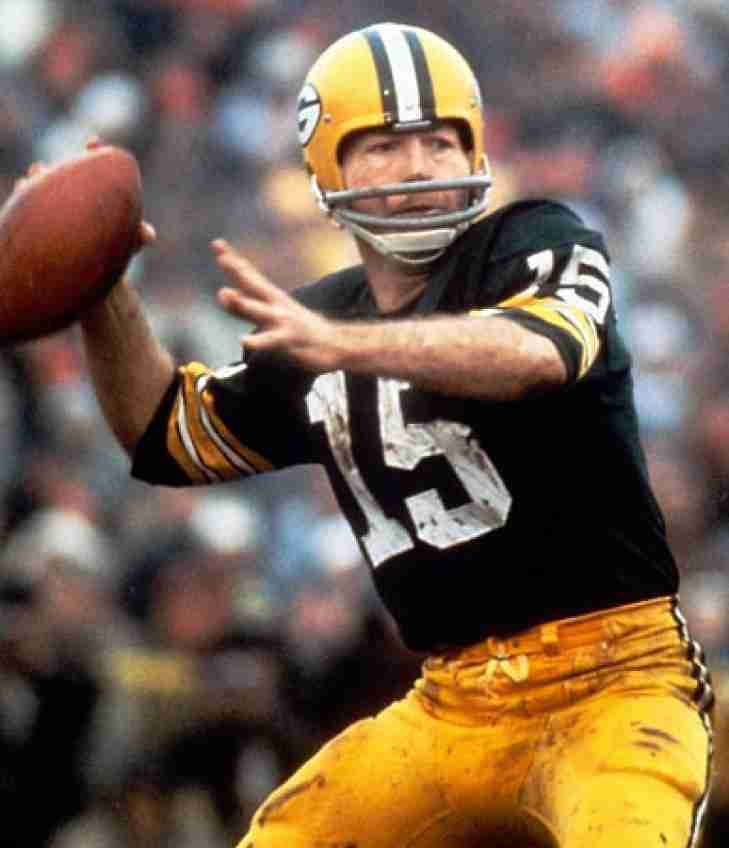
Can we begin by saying that Bart Starr is one of the greatest athlete names ever?
With the 200th overall pick of the 1956 NFL Draft out of Alabama, Bart Starr quietly went from an afterthought depth piece before transforming into the ultimate field general of pro football's grandest dynasty. He spent his early years splitting time in a struggling offense, but everything shifted with the 1959 arrival of head coach Vince Lombardi. Recognizing Starr's elite preparation, unflappable composure, and sharp decision-making, Lombardi handed him full control of the offense, setting off a golden era in Titletown.
Starr was the ultimate master of field position, running Lombardi's offense with a calculating mindset that prized efficiency over raw volume. In an era when quarterbacks routinely threw nearly as many interceptions as touchdowns, Starr treated turnover avoidance like a religion. He set a then-NFL record by throwing 294 consecutive passes without an interception across the 1964 and 1965 seasons, demonstrating an ability to read coverage and protect the football that was decades ahead of its time.
His accuracy in executing Green Bay's iconic power sweep compelled opposing safeties to step up towards the line of scrimmage, creating dangerous play-action passing chances. Starr led the NFL in completion percentage four times (1962, 1966, 1968, 1969) and in passer rating four times, consistently outperforming opposing secondary schemes with precise timing. His 1966 season remains a benchmark for quarterback mastery: throwing 14 touchdowns with only three interceptions, guiding the Packers to a 12–2 record, winning the AP NFL MVP award, and earning Super Bowl I MVP honors.
When the stakes were highest, Starr possessed a unique, ice-cold clarity that defined his big-game brilliance. He orchestrated back-to-back world titles in 1961 and 1962, dismantling the New York Giants in consecutive NFL Championship Games. In the 1961 title matchup, he threw three touchdown passes in a 37–0 rout, proving that Green Bay's offense could flex its passing muscles whenever teams stacked the box against the run.
That clutch DNA reached its legendary apex in the 1967 NFL Championship Game—the iconic "Ice Bowl" against the Dallas Cowboys. Trailing 17–14 in minus-13-degree temperatures with 16 seconds left and no timeouts, Starr called his own number on third-and-goal. After Jerry Kramer's famous block on Jethro Pugh, Starr lunged over the goal line for the game-winning touchdown sneak, securing Green Bay's third consecutive league title and cementing his reputation as the most clutch quarterback to ever play on the gridiron.
Starr’s postseason metrics remain mind-boggling in historical context. He compiled an astonishing 9–1 postseason record, throwing 15 touchdown passes and just three interceptions. His career postseason passer rating of 104.8 stood as an NFL record for decades, serving as definitive mathematical proof that no quarterback in history elevated his game in the playoffs more consistently than No. 15.
With the Packers, Starr played 196 games, completing 1,808 passes for 24,718 yards and 152 touchdowns. A four-time Pro Bowler and on the NFL 1960s All-Decade Team, his No. 15 jersey was retired in 1973. Enshrined in the Pro Football Hall of Fame and Packers Hall of Fame in 1977, he is regarded as the ultimate winning quarterback in pro football history.
