

34. Chip Banks
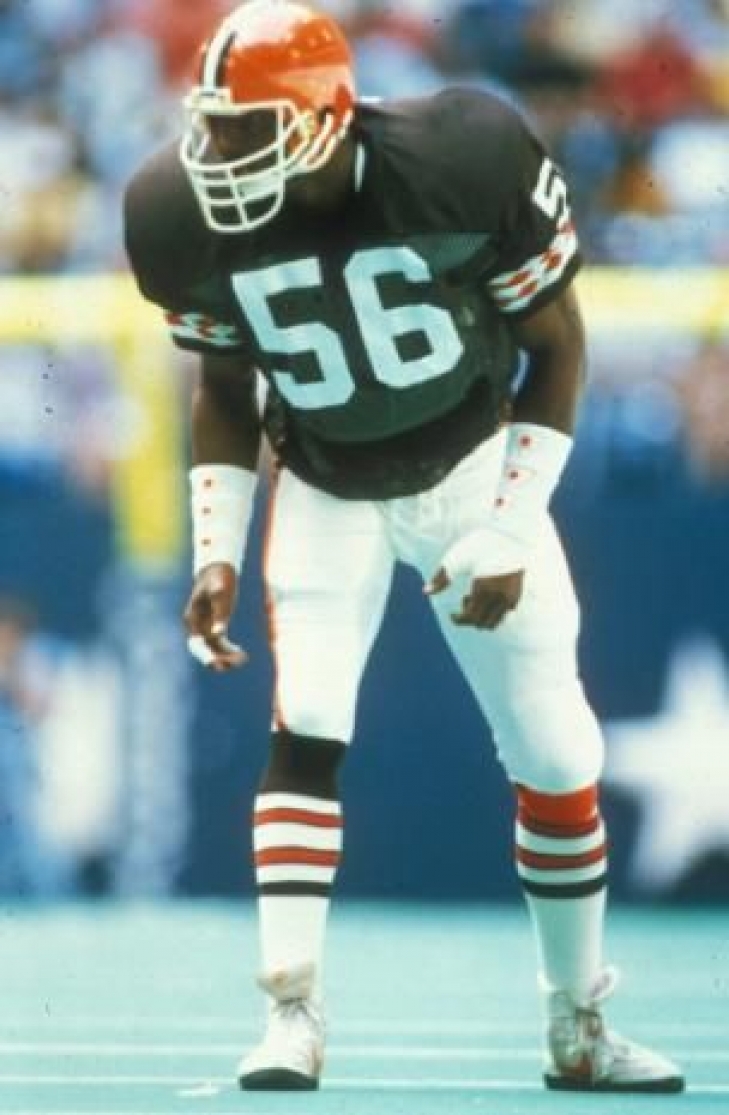
Selecting Chip Banks with the third overall pick in the 1982 draft paid immediate dividends for a Cleveland defense looking for a game-changer at linebacker. The USC product stepped onto the professional stage unfazed by the transition and put together a dominant inaugural campaign. Banks captured the AP NFL Defensive Rookie of the Year award while earning his first Pro Bowl selection, showcasing a rare blend of length, closing speed, and sideline-to-sideline pursuit.
Over his five seasons in Ohio, Banks established himself as one of the premier outside linebackers in the game. He was a versatile cornerstone of Marty Schottenheimer's defense, equally capable of setting the edge against the run, dropping into pass coverage, or blitzing the quarterback. From 1982 through 1986, he made four Pro Bowl appearances and earned First-Team All-Pro honors in 1983, solidifying a stretch when his name was consistently mentioned alongside the elite defenders of his era.
Banks played a key role in Cleveland's resurgence as a conference power, contributing to consecutive playoff runs in 1985 and 1986, and reaching the 1986 AFC Championship Game. In 1985, he achieved a career-best 11 sacks, showcasing his talent for disrupting pass blocking when given the chance on the edge. Over his five years with the Browns, he posted double-digit Approximate Value ratings in four seasons, consistently delivering strong performances.
Despite his superstar trajectory on the field, friction between Banks and the Cleveland front office began to simmer over contract demands. Fearing an impending holdout and a protracted negotiation, the Browns traded him to the San Diego Chargers ahead of the 1987 season as part of a high-profile draft-day swap. His business conflicts followed him to the West Coast, culminating in Banks sitting out the entire 1988 season during a contract holdout before resuming his career with the Indianapolis Colts.
With Cleveland, Banks started all 73 regular-season games he appeared in, racking up 27.5 sacks, five interceptions, and six fumble recoveries.
48. Eric Metcalf
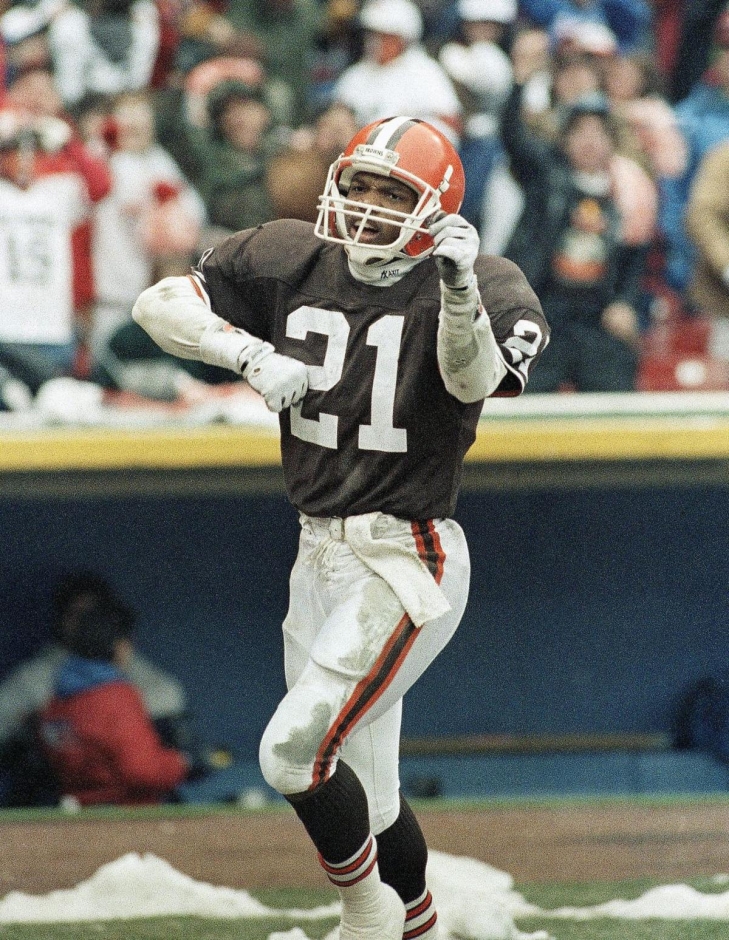
Selected 13th overall in the 1989 NFL Draft out of Texas, Eric Metcalf brought a lightning-quick, open-field dynamic to Cleveland. Possessing world-class track speed and ankle-breaking lateral agility, the multi-purpose weapon defied traditional position labels, stepping onto the field as a hybrid threat capable of scoring every time he touched the football.
Though officially listed as a running back, Metcalf operated as a true dual-threat offensive centerpiece throughout his six-year tenure in Ohio. He split time between the backfield and the slot, compiling 2,229 rushing yards and catching 297 passes for another 2,732 yards. His dual-threat capacity peaked in 1992 when he hauled in a career-high 47 receptions and five receiving touchdowns, serving as a reliable escape hatch for Cleveland's passing attack.
Metcalf’s most electrifying impact came in the return game, where his vision and uncontainable acceleration turned special teams into must-watch television. He led the NFL in Kick Return Yards as a sophomore in 1990 with 1,052 yards, but his iconic moment arrived during a 1993 matchup against Pittsburgh, where he returned two punts for touchdowns—including a game-winning 75-yard sprint late in the fourth quarter. That magical 1993 campaign saw Metcalf lead the entire NFL in all-purpose yards (1,932), earning him First-Team All-Pro honors and the first of consecutive Pro Bowl selections in Cleveland.
After another Pro Bowl selection in 1994, Metcalf signed with the Atlanta Falcons ahead of the 1995 season and embarked on a long journey as a marquee return specialist across the league before retiring in 2002. As a Brown, Metcalf accumulated 9,108 all-purpose yards and 31 total touchdowns (15 rushing, 9 receiving, 5 punt returns, 2 kickoff returns). The Browns permanently honored him by inducting him into the Cleveland Browns Legends in 2008.
21. Hanford Dixon
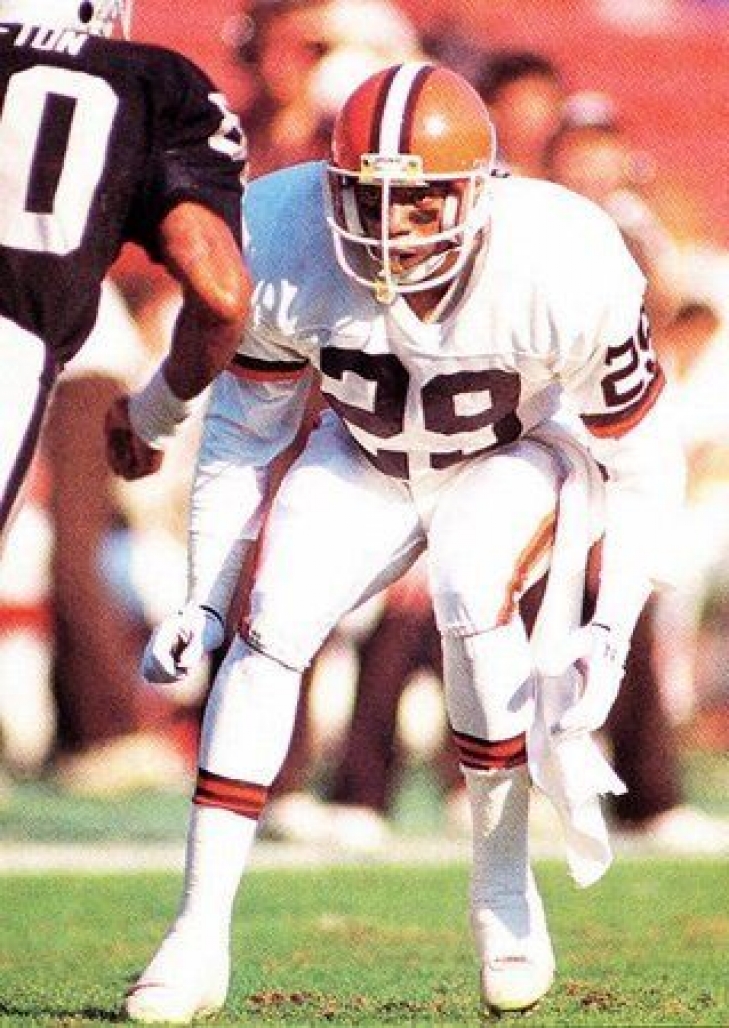
With the 22nd overall pick in the first round of the 1981 NFL Draft, the Browns selected Hanford Dixon out of Southern Mississippi who was heralded as a fierce, physical cornerback with exceptional closing speed. Over nine seasons in the orange and brown, Dixon locked down the right side of the secondary, starting 128 of his 131 regular-season games and creating a cultural movement that defined the franchise for generations.
Dixon quickly established himself as a starter, bringing an aggressive, press-man style to the boundary. Alongside Frank Minnifield, Dixon formed what many analysts consider the premier cornerback duo of the late 1980s. At 5 feet 11 inches and 186 pounds, Dixon operated with a lethal blend of trail-technique recovery, violent jam-at-the-line aggression, and elite closing speed. In an era when receivers were granted far more leeway, Dixon bullied split ends at the line of scrimmage, throwing off the timing of route trees and forcing opposing quarterbacks to look elsewhere.
His peak came during the 'Bernie Kosar era,’ when he earned three straight Pro Bowl selections from 1986 to 1988 and received First-Team All-Pro honors in 1986 and 1987. In 1986, he led a defense that finished 12-4 and made the playoffs, intercepting five passes and dominating his side of the field so thoroughly that opposing offensive coordinators often avoided throwing to his area. During the strike-shortened 1987 season, he recorded three interceptions in 12 games, followed by four interceptions in 1988.
With both Dixon and Minnifield possessing elite cover skills, defensive coordinator Marty Schottenheimer was free to leave both cornerbacks on single-coverage islands. This allowed the Browns to stack the box against the run and dial up creative blitzes with linebackers Clay Matthews and Chip Banks, serving as a cornerstone for Cleveland's run to three AFC Championship Game appearances. Quarterbacks who dared to test Dixon during this three-year window were met with tightly contested throwing lanes and punishing hits along the sideline.
Beyond his coverage skills, Dixon earned an enduring spot in team lore as the founding father of the "Dawg Pound." During training camp, Dixon began barking at defensive linemen to get them fired up, a ritual that quickly spread to the bleachers at Municipal Stadium and gave rise to one of the most famous fan sections in professional sports.
Retiring after the 1989 season, Dixon spent his entire professional career in Cleveland. Overall, he played in 131 regular-season games and nine postseason contests, recording 26 interceptions and two fumble recoveries. The franchise Dixon by inducting him into the Cleveland Browns Legends in 2003.
28. Frank Minnifield
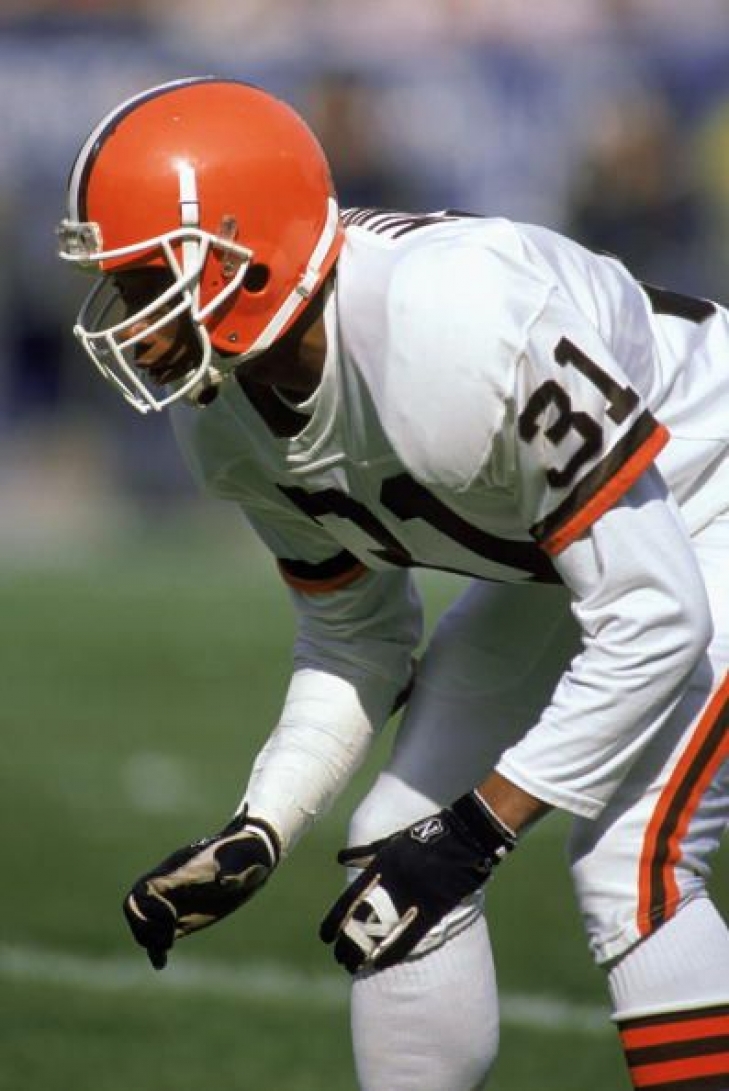
Frank Minnifield, initially overlooked by NFL teams from Louisville, took an unconventional path to professional football. He began in the USFL with the Chicago Blitz and Arizona Wranglers, demonstrating early on that his 5-foot-9 stature did not hinder his ability to excel in pass defense. During contract disputes, Minnifield filed and won a lawsuit against the USFL, which nullified his contract and allowed him to sign with Cleveland as a free agent in 1984.
The Browns put him on the field right away, and Minnifield responded with an All-Rookie campaign at cornerback. Playing with an ultra-physical, press-man style, he made up for his modest stature with fiery aggression, incredible leaping ability, and a willingness to deliver bone-jarring hits on boundary receivers and ball carriers alike.
By 1986, Minnifield had become a household name, earning four consecutive Pro Bowl selections from 1986 to 1989. Alongside Hanford Dixon on the opposite side, they formed the league's top cornerback duo. Defensive coordinator Marty Schottenheimer often relied on single coverage for both, freeing the front seven to focus on stopping the run. Minnifield’s career peaked in 1988 when he received First-Team All-Pro honors, with Second-Team All-Pro recognition in 1987 and 1989.
Alongside Dixon, Minnifield helped birth a franchise identity when the two began barking at their defensive teammates during training camp drills. That energy spilled directly into the bleachers at Municipal Stadium, creating the legendary "Dawg Pound" culture that remains the heart and soul of the fan base to this day.
A severe knee injury limited Minnifield to just seven games in 1990, stripping away some of his signature suddenness. He fought through injuries over his final two campaigns, serving as a respected veteran leader before hanging up his pads after the 1992 season.
Across nine seasons spent entirely in Cleveland (1984–1992), Minnifield picked off 20 passes and recovered seven fumbles. The team named him a Cleveland Browns Legend in 2005.
41. Mike Pruitt
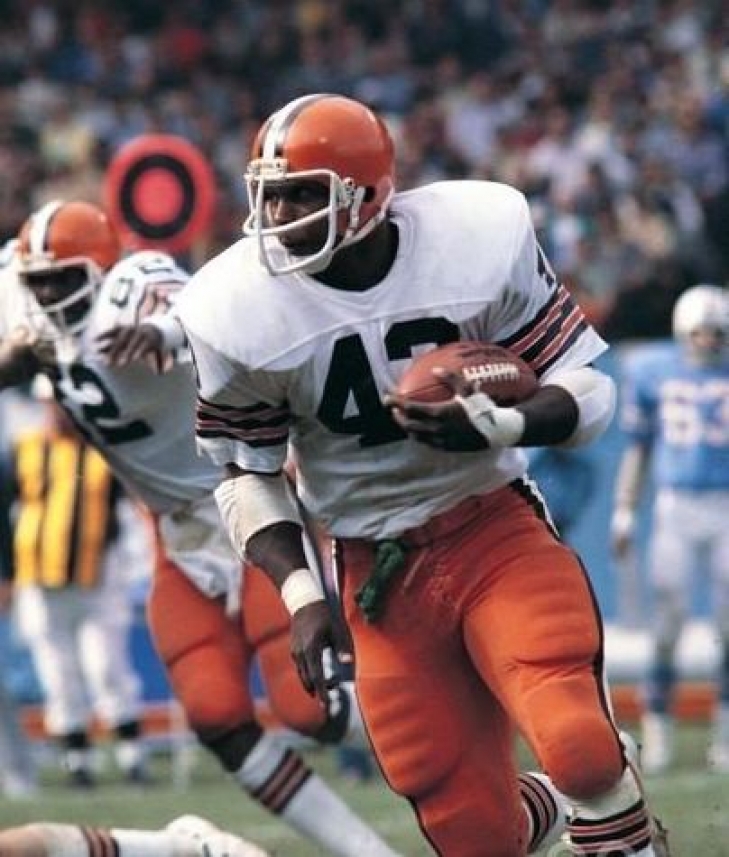
Selected in the second round of the 1976 draft out of Purdue, Mike Pruitt stepped into a Cleveland backfield looking for a new physical identity. The power fullback spent his first two seasons largely stuck on the bench behind established veterans, but when his opportunity expanded in 1978, he showcased a punishing, downhill running style that quickly made him indispensable.
Pruitt smashed through the league in 1979, putting together a breakout campaign for the ages. Operating as the focal point of the offense, he pounded opposing fronts for career highs in rushing yards (1,294) and yards from scrimmage (1,666), scoring nine touchdowns while earning his first Pro Bowl selection. His ability to move the chains on short-yardage downs gave Cleveland a relentless, physical punch that balanced Brian Sipe's passing attack.
He proved that explosive season was no fluke during the historic 1980 "Kardiac Kids" division-winning run. Pruitt racked up 1,034 rushing yards, added 471 receiving yards, and recorded six total touchdowns, earning his second consecutive Pro Bowl nod. He remained a high-volume workhorse over the next several seasons, topping 1,500 yards from scrimmage again in 1981 and logging his fourth career 1,000-yard rushing campaign in 1983.
As injuries and heavy workload mileage caught up to him, Pruitt saw his snap count decline in 1984. Cleveland released the veteran fullback prior to the 1985 season, allowing him to finish his career with short stops in Buffalo and Kansas City.
Over his time with the Browns, Pruitt accumulated 6,540 rushing yards, 1,761 receiving yards, and punched in through the end zone 52 times. The Browns inducted him as one of their legends in 2004.
35. Greg Pruitt
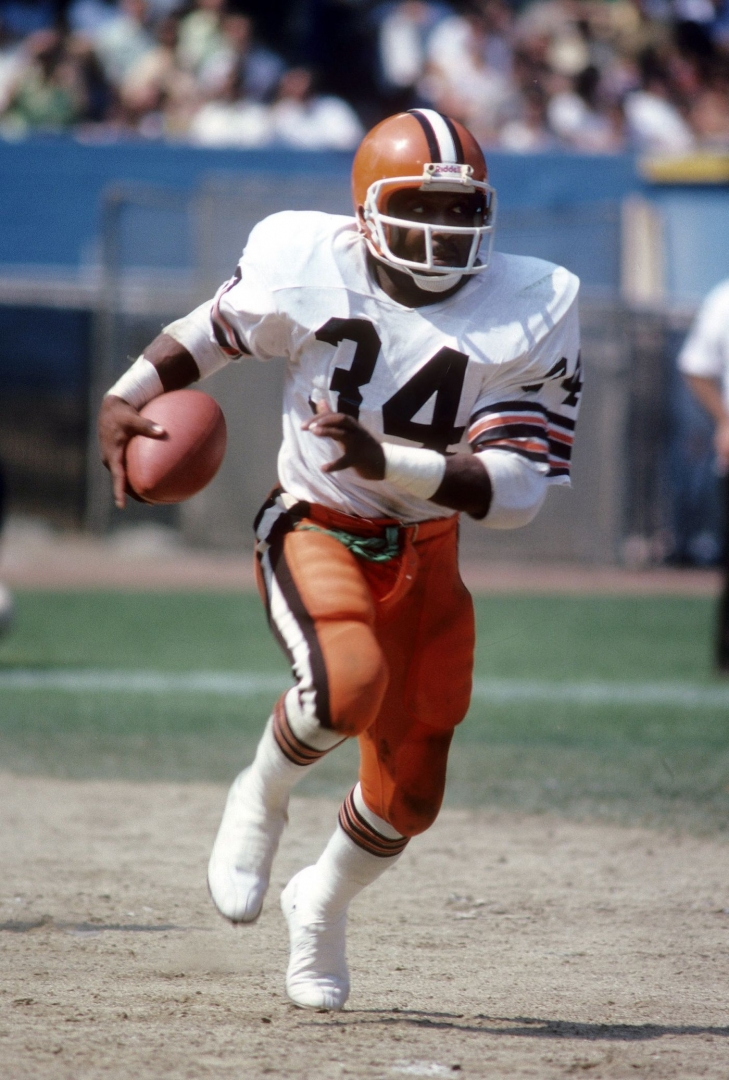
Carrying a frame listed at just 5 feet 10 inches and 180 pounds, Greg Pruitt shattered the misconception that a tailback needed heavy mass to survive the pro game. Fresh off an All-American career at Oklahoma—where he finished as a two-time Heisman Trophy finalist—the Browns spent a second-round pick on him in 1973. Rather than force-feeding him carries right away, Cleveland used his sub-4.4 speed as an open-field return man, earning him a Pro Bowl nod as a rookie.
Pruitt’s role expanded in his second season, setting up a dominant three-year run as Cleveland’s premier offensive threat. From 1975 to 1977, he eclipsed the 1,000-yard rushing mark in three consecutive seasons while operating behind an interior offensive line anchored by Joe DeLamielleure and Gene Hickerson. Known for his signature tear-away jerseys—a tactic designed to prevent tackles that forced the NFL to eventually change its uniform rules—Pruitt earned back-to-back Pro Bowl selections in 1976 and 1977, averaging over 4.5 yards per carry and racking up double-digit touchdowns.
A knee injury in 1979 slowed his raw breakaway gear, forcing him to adapt his game. Instead of fading, Pruitt evolved into a dual-threat weapon out of the backfield for the "Kardiac Kids" era. Over the 1980 and 1981 campaigns, he served as a high-volume safety valve for MVP quarterback Brian Sipe, pulling in a combined 115 receptions as a third-down specialist and perimeter playmaker.
After nine years in Ohio, Pruitt was traded to the Los Angeles Raiders ahead of the 1982 season. He reinvented himself yet again on the West Coast, reinventing his career as an elite punt returner and earning his fifth career Pro Bowl nod in 1983, capped off by a Super Bowl XVIII championship victory over Washington.
Pruitt finished his nine-season tenure in Cleveland (1973–1981) with 5,496 rushing yards, 3,022 receiving yards, and 2,182 return yards, totaling 10,700 all-purpose yards and 42 touchdowns. The organization named him to the inaugural class of the Cleveland Browns Legends in 2001.
33. Jerry Sherk
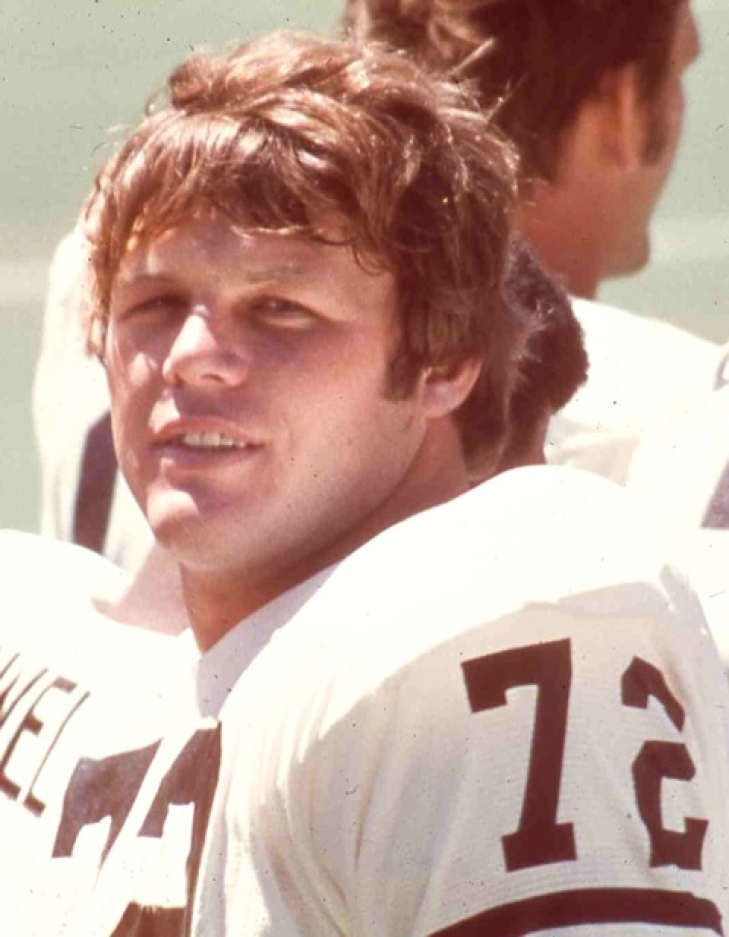
Taken in the second round of the 1970 NFL Draft out of Oklahoma State, Jerry Sherk stepped into Cleveland's defense as an immediate factor along the interior. While the 1970s lacked the championship hardware of previous decades for the Browns, Sherk served as the primary anchor for the franchise's defensive front throughout the entire era.
He won the starting right defensive tackle job as a rookie and quickly established himself as a dominant force against both the run and the pass. Combining raw wrestling strength with explosive lateral quickness, Sherk consistently collapsed the pocket from the inside. Over a stellar four-year stretch from 1973 to 1976, he earned four consecutive Pro Bowl selections, capping that run in 1976 with First-Team All-Pro honors and the Newspaper Enterprise Association (NEA) NFL Defensive Player of the Year award.
Sherk was among the most effective interior pass rushers of his generation. Though sacks did not become an official NFL statistic until 1982, retroactive film study credits him with 69.5 career sacks in Cleveland, including four seasons in which he cracked double digits. His relentless motor kept the Browns competitive through a transitional era, providing a steadying presence amid roster turnover and coaching changes.
A severe knee infection suffered in 1979 nearly ended his career, limiting him to just one game that season. Sherk fought his way back, returning to play three final seasons primarily as a designated pass rusher and veteran mentor before ending his career after the 1981 campaign.
Across 12 seasons spent entirely in Cleveland (1970–1981), Sherk played in 156 regular-season games and recorded 12 fumble recoveries alongside his 69.5 sacks.
49. Dub Jones
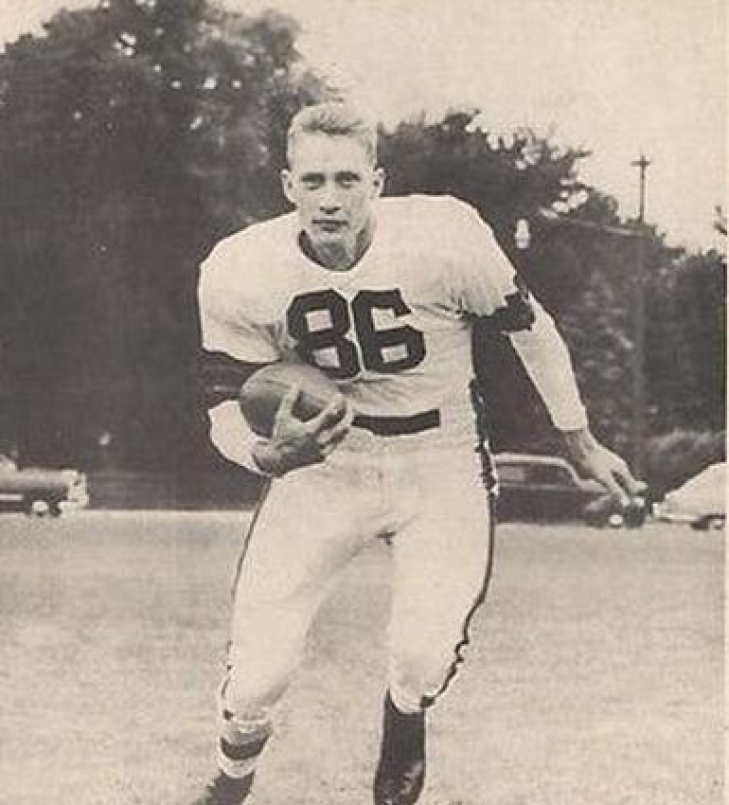
Landing in Cleveland following a circuitous route through the early days of professional football, William "Dub" Jones became one of Paul Brown's most lethal offensive weapons. Originally selected second overall by the Chicago Cardinals in 1946 out of Tulane, Jones opted for the AAFC instead, spending time with Miami and Brooklyn before Brown recognized his unique skill set and acquired him in 1948.
Upon arriving in Northeast Ohio, Jones added a versatile, big-play dimension to a backfield that was already dominating the AAFC. He contributed to undefeated and championship-winning seasons in 1948 and 1949, but his production expanded dramatically when the Browns jumped to the NFL in 1950. Operating as a hybrid halfback and flanker, Jones' rare combination of track speed and soft hands made him an ideal target for Otto Graham in Brown's innovative passing schemes.
His career peaked in the early 1950s, headlined by a legendary individual performance against the Chicago Bears on November 25, 1951. Jones tied an NFL single-game record by scoring six touchdowns in a 42–21 victory, a historic mark that still stands today. He earned consecutive Pro Bowl honors in 1951 and 1952, topping 1,000 yards from scrimmage in 1952 while finishing among the league leaders in both rushing and receiving efficiency.
Jones remained a vital contributor through the mid-1950s, helping power Cleveland to additional NFL Championship titles in 1954 and 1955 before hanging up his cleats.
In his eight seasons with Cleveland, Jones accumulated 4,784 yards from scrimmage and 40 total touchdowns, and the organization recognized him by naming him a Cleveland Browns Legend in 2004.
31. Bobby Mitchell
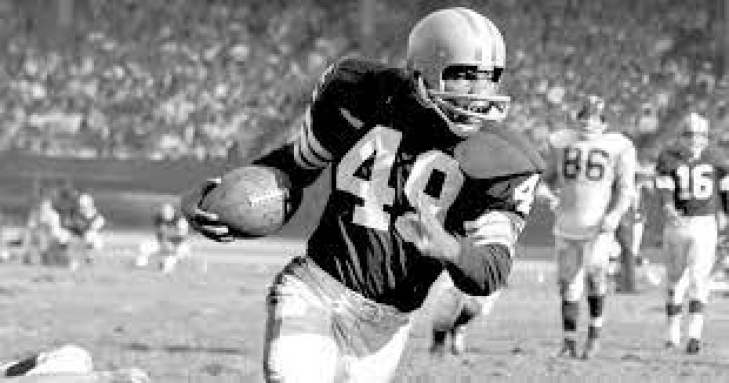
Selected in the seventh round of the 1958 NFL Draft out of Illinois, Bobby Mitchell became another iconic discovery by head coach Paul Brown. Boasting electric 9.5-second 100-yard-dash speed, Mitchell immediately stepped into the Cleveland backfield alongside Jim Brown, creating one of the most explosive, dynamic rushing duos in football history.
Cleveland utilized Mitchell as a versatile and multifaceted player. Capable of scoring at any moment he possessed the ball, he positioned himself at halfback, extended out wide as a pass receiver, and served as the team's primary kick and punt return specialist. During his four seasons in Ohio, Mitchell accumulated an impressive total of 5,916 all-purpose yards, consistently ranking within the top six league-wide in all-purpose yards each season. His exceptional speed on the periphery complemented Jim Brown's formidable interior power, propelling the Browns' offense to consecutive winning seasons and securing a place in the 1957 NFL Championship Game.
Despite his significant productivity and popularity, Mitchell was traded after the 1961 season. In pursuit of a formidable full-time fullback to complement Jim Brown, Cleveland exchanged Mitchell to Washington for the rights to Heisman Trophy recipient Ernie Davis. Tragically, Davis was diagnosed with leukemia shortly after the trade, which prevented him from ever participating in an NFL game. Concurrently, the transaction bore substantial historical significance: Washington was the last remaining segregated team in the NFL, and owner George Preston Marshall faced substantial pressure from the federal government to desegregate. Mitchell thus became the first African American star in the history of the Washington franchise.
Switching to a full-time flanker in his new environment, Mitchell achieved a Hall of Fame level, leading the league in receiving yards twice and earning four Pro Bowl selections. Over four seasons with Cleveland (1958–1961), he played 48 games, totaling 2,297 rushing yards, 1,462 receiving yards, and 38 touchdowns.
47. Warren Lahr
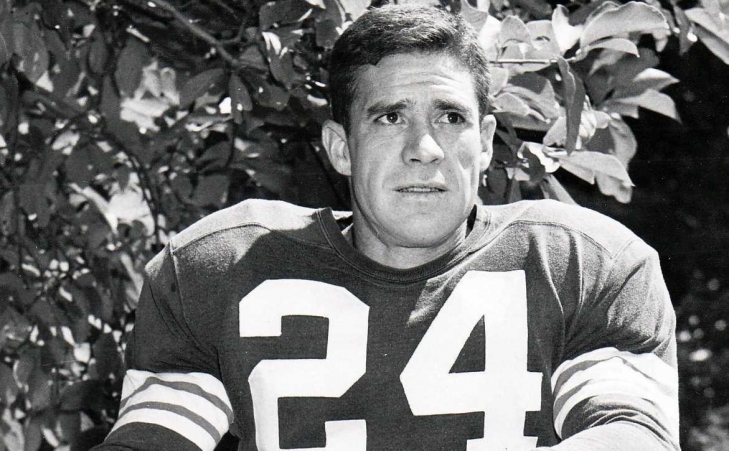
Warren Lahr signed with the Cleveland Browns in 1948 following his collegiate tenure at Western Reserve. Initially, he joined Paul Brown's team as a backup quarterback. A preseason knee injury sidelined him for the entire rookie year, thereby endangering his position on the roster. Undeterred, Lahr perservered and transitioned to a defensive back position, securing a starting role in the secondary during the 1949 season. He promptly made a significant impact, contributing to Cleveland's culmination of an undefeated campaign by winning the final AAFC Championship before the league's integration with the NFL.
Once positioned on defense, Lahr developed into a fundamental element of Paul Brown’s secondary. Renowned for his sharp instincts, robust tackling, and exceptional ball-hawking skills, he consistently nullified opposing wide receivers and maximized opportunities for turnovers. His impenetrable coverage on the perimeter was instrumental in Cleveland's smooth transition to the NFL, beginning with his role as cornerback during the celebrated 1950 NFL Championship victory against the Los Angeles Rams.
Lahr’s individual performance reached its peak nationally in the early 1950s. He received his sole Pro Bowl selection in 1953, a season during which he intercepted five passes and returned two for touchdowns. Over the subsequent two years, Lahr served as a key pass defender on the consecutive 1954 and 1955 NFL Championship teams, thereby solidifying his reputation as a performer in significant games. In total, he participated in seven NFL Championship Games, frequently assigned to cover the opposing team’s primary receiving threat.
His propensity for stepping up in high-stakes moments earned him legendary status in Northeast Ohio, none more famous than his five career postseason interceptions—including a pick-six in the 1954 title game blowout of Detroit. He played for Cleveland until her retired after the 1959 season.
In his 11 years as a Brown, Lahr had 44 interceptions, returning them for 530 yards and five touchdowns. He was inducted into the Cleveland Browns Legends in 2008.
45. Don Colo
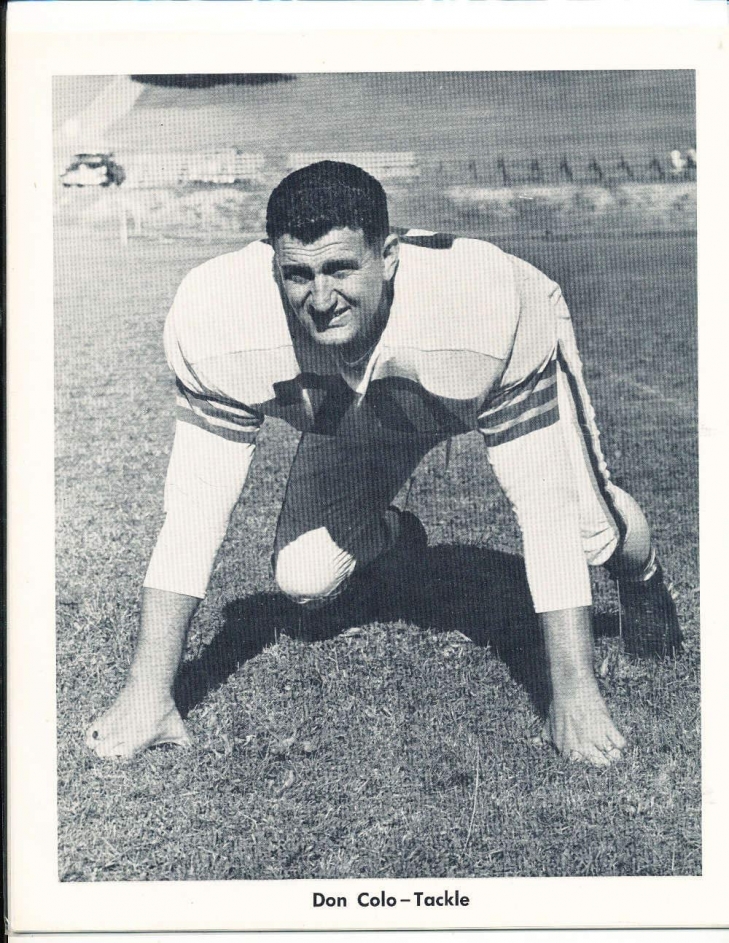
Acquired in 1953 after initial stops in Baltimore, New York, and Dallas, Don Colo finally found the ideal environment for his talents in Cleveland. Paul Brown immediately installed the powerful tackle into the starting lineup, where Colo became a cornerstone of one of the most stingy defensive fronts of the 1950s.
Colo's rare combination of size, leverage, and interior agility made him a matchup nightmare for opposing guards and centers. He served as an immovable force against the run while routinely collapsing pocket boundaries from the inside. His presence proved vital during back-to-back championship runs, as Cleveland’s defense suffocated opponents en route to dominant NFL Championship victories in 1954 and 1955.
His peak individual stretch arrived in the mid-1950s, when league-wide recognition matched his on-field impact. From 1954 through 1958, Colo earned three Pro Bowl nods (1954, 1955, and 1958) and was named a Second-Team All-Pro selection three times. Operating alongside line mates like Len Ford and Bill Willis, he helped maintain the high defensive standards that defined the peak of the Paul Brown dynasty.
Colo remained a durable, steady presence through the 1958 season before calling an end to his professional playing career. Many decades later, in 2015, Cleveland named Colo as one of its Legends.
20. Ray Renfro
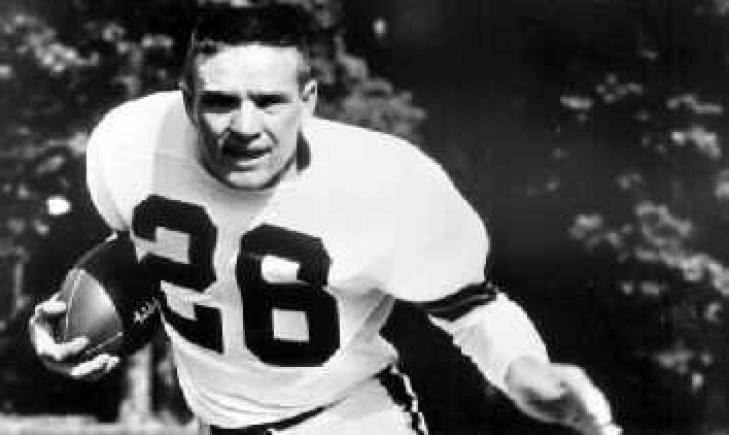
From North Texas State, Ray Renfro was drafted in the fourth round (48th overall) of the 1952 NFL Draft and emerged as one of Paul Brown's classic small-school discoveries. Armed with track-star sprinter speed and fluid open-field acceleration, Renfro stepped onto the field as a dual-threat weapon before evolving into one of the most explosive deep-ball flankers of the 1950s.
Renfro broke into the league as a halfback and kick returner, showcasing his game-breaking gear by leading the NFL with a 30.1-yard kickoff return average as a rookie. Once the coaching staff transitioned him full-time to flanker, his vertical speed unlocked a whole new dimension for Otto Graham's passing attack. He served as a primary perimeter target on back-to-back title squads, catching a 35-yard touchdown in the 1954 NFL Championship Game rout of Detroit and hauling in a 50-yard strike in the 1955 title victory over Los Angeles.
Renfro’s best season came in 1955, when he led the NFL with 60.3 receiving yards per game and averaged a staggering 21.3 yards per reception to earn his first Pro Bowl selection. He went on to collect two more Pro Bowl nods in 1957 and 1960, consistently blowing the top off defensive coverages and stretching the field for Milt Plum and the Cleveland offense.
After hanging up his pads following the 1963 season, Renfro transitioned into coaching and eventually earned a Super Bowl ring as the quarterbacks and wide receivers coach for Tom Landry's Dallas Cowboys.
Across 12 seasons spent entirely in Cleveland (1952–1963), Renfro appeared in 130 regular-season games and seven NFL Championship Games. He compiled 281 receptions, 5,508 receiving yards, and 50 receiving touchdowns, averaging a phenomenal 19.6 yards per catch for his career. The franchise officially recognized his place in team history by naming him a Cleveland Browns Legend in 2001.
32. Bernie Kosar
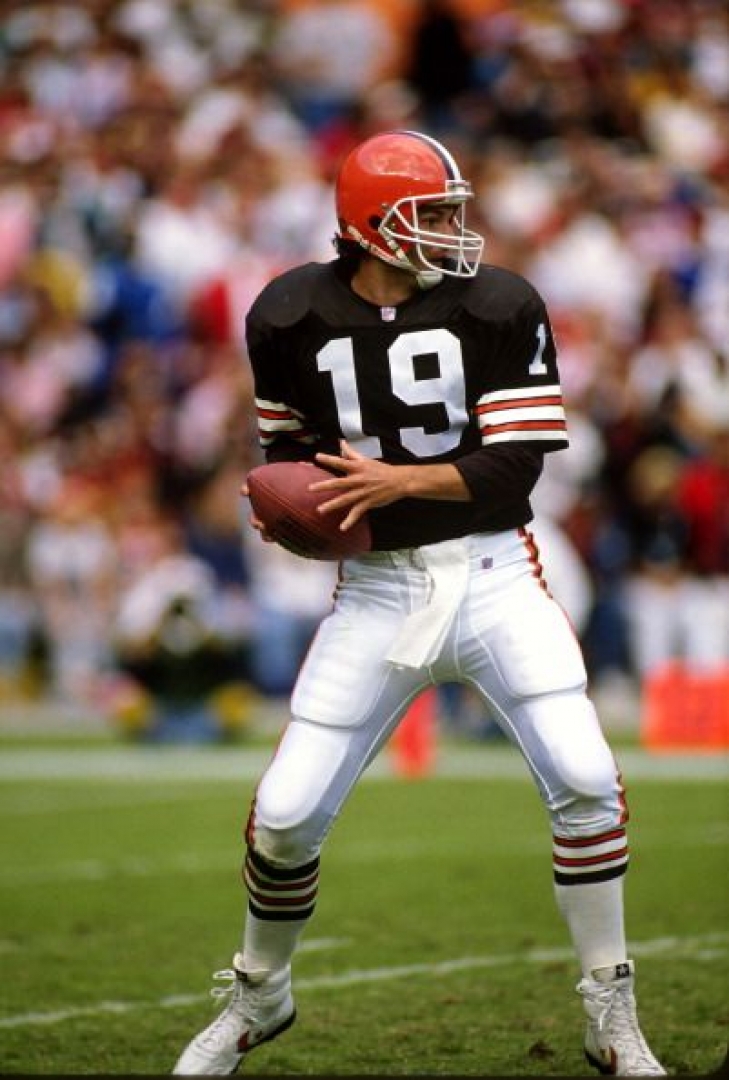
His arrival in 1985 wasn't just a football transaction; it was a cultural event in Northeast Ohio. By bypassing the traditional NFL draft to force his way home to Cleveland, the local kid from Boardman High School instantly became a symbol of hometown pride. Kosar’s mastery of the pre-snap line-of-scrimmage check—dubbed "Bernie-ball"—gave the Browns a cerebral edge that compensated for his lack of foot speed. He dissected defenses with an unorthodox sidearm delivery, throwing receivers open before they even broke. Under his stewardship, Municipal Stadium transformed into an electric venue, and Kosar’s signature No. 19 jersey became the undisputed uniform of the region.
Drafted out of Miami via the 1985 Supplemental Draft, Bernie Kosar arrived in Cleveland as the savior-in-waiting for his boyhood team. He sat behind veteran Gary Danielson for the first month of his rookie season, but an injury to Danielson in Week 5 thrust the 21-year-old into the starting spot. Despite a rigid pocket presence and awkward mechanics, Kosar processed coverage packages at lightning speed, steering the Browns to an 8-8 record and a playoff berth while establishing himself as the undisputed leader of the offense.
With Kosar at the helm, Cleveland transitioned into a pass-oriented power during the peak of the Marty Schottenheimer era. His finest individual campaign came in 1987, when he threw for 3,030 yards and a career-best 22 touchdowns in only 12 games during a strike-shortened season, earning his lone Pro Bowl selection and leading Cleveland back to the AFC Title Game. He posted two more 3,000-yard passing seasons in 1989 and 1991, cementing his reputation as one of the most intelligent field generals in football.
The emotional intensity of those late-1980s playoff games only strengthened the special bond between Kosar and the city. Fans fondly remember his thrilling matchups against John Elway’s Denver Broncos in the 1986, 1987, and 1989 AFC Championship Games. Even during tough losses—like the memorable 1986 "Drive" game, where Kosar threw for 259 yards, and the 1987 "Fumble" game, where he amazed everyone with 356 yards and three touchdowns—Kosar always played with remarkable composure and determination under huge pressure. He wasn’t just a quarterback managing the game; he was like an on-field coach, carrying the hopes of a city eager for a championship, in a time when quarterbacks didn’t often have that kind of influence.
His tenure in Cleveland ended abruptly and emotionally. Tensions flared after Bill Belichick took over as head coach in 1991, as Belichick's rigid, control-oriented system collided with Kosar's audibling style. After benching Kosar for Vinny Testaverde midway through the 1993 season, Belichick cut the veteran quarterback outright in November—a move that shocked the fan base. Kosar quickly caught on with the Dallas Cowboys, stepping in to win a crucial game in relief of an injured Troy Aikman and earning a Super Bowl XXVIII ring before closing out his career in Miami as Dan Marino's backup.
As a Brown, Kosar started 105 games, compiling 21,904 passing yards, 116 touchdowns, and 87 interceptions while bringing the franchise to five consecutive postseason appearances. The team inducted him into the inaugural class of the Cleveland Browns Legends in 2001.
29. Joe DeLamielleure
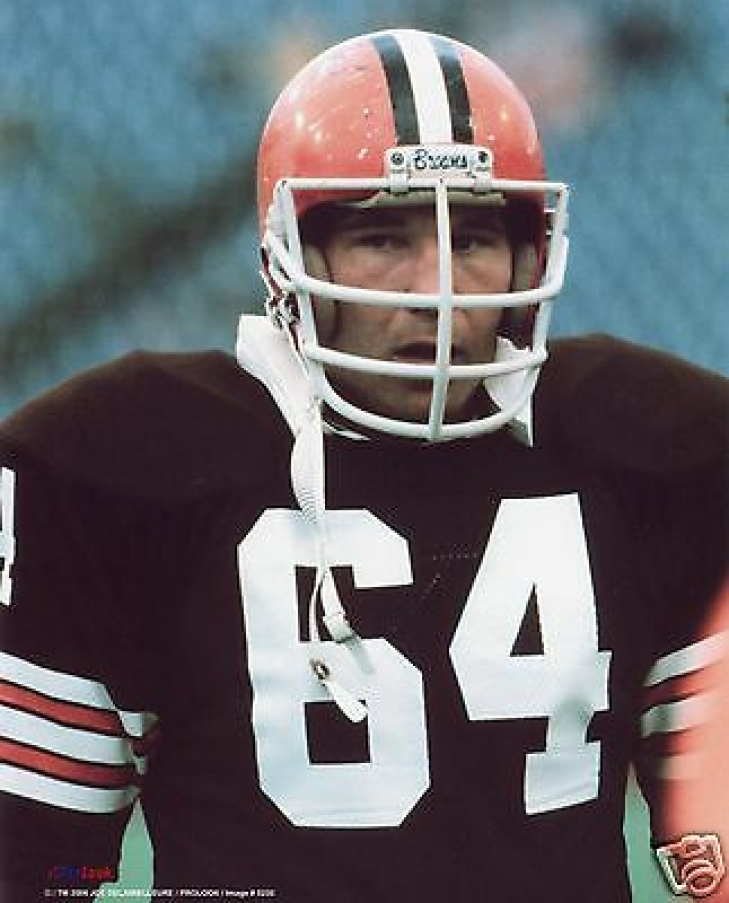
After building a Hall-of-Fame resume in the 1970s as a core member of Buffalo's famous "Electric Company" offensive line, Joe DeLamielleure headed west to Cleveland before the 1980 season in a high-profile trade.
The veteran guard made an immediate, history-making impact in his new uniform. In his first year with the Browns, DeLamielleure anchored the interior pass protection for Brian Sipe during his NFL MVP campaign. In doing so, he achieved a unique milestone in league history: becoming the first offensive lineman to block for both a 2,000-yard rusher (O.J. Simpson in 1973) and a 4,000-yard passer (Sipe in 1980). His elite play earned him his sixth consecutive Pro Bowl selection alongside a Second-Team All-Pro nod, helping push the "Kardiac Kids" to the AFC Central division title.
DeLamielleure’s blue-collar work ethic and durability fit seamlessly into Cleveland's football culture. He served as a steadying force on the offensive line over the next four seasons, earning another Second-Team All-Pro selection in 1983 while mentoring younger linemen in the locker room.
Following his release ahead of the 1985 season, DeLamielleure returned to Buffalo for one final year before retiring from professional football.
Across five seasons in Cleveland (1980–1984), he started all 73 regular-season games he appeared in, bringing an intense, steady presence to the Browns' offensive front. His combined legacy across both franchises culminated in his induction into the Pro Football Hall of Fame in 2003, and the Browns permanently recognized his contributions by inducting him into the Cleveland Browns Ring of Honor.
26. Frank Ryan
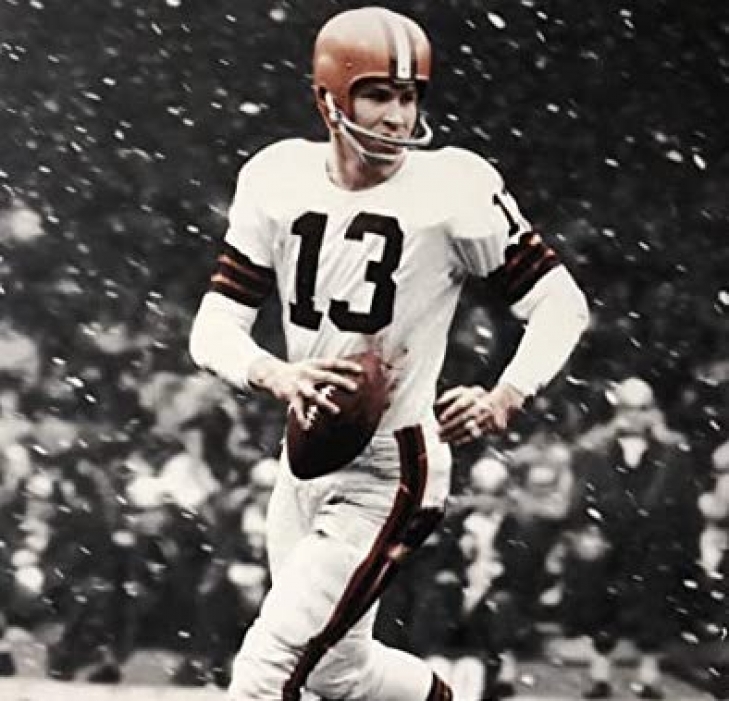
Acquired from the Los Angeles Rams in 1962, Frank Ryan came to Cleveland with a reputation as a brainy, talented backup waiting for an opportunity. Over four seasons in L.A., Ryan had flashed potential, but the Rams' decision to draft Roman Gabriel made him expendable. Cleveland traded for him, initially envisioning him as depth behind starter Jim Ninowski.
An injury to Ninowski midway through the 1962 season pushed Ryan into the starting huddle. He seized the job and never gave it back, developing into one of the most effective and efficient signal-callers of the 1960s. Armed with a doctorate in mathematics from Rice University—earning him the nickname "Dr. Frank"—Ryan brought an analytical sharpness to Paul Brown's and Blanton Collier's offenses, blending cerebral pre-snap reads with a deep, accurate throwing arm.
In 1964, Ryan achieved the pinnacle of his career, leading the NFL with 25 touchdown passes in the regular season, which helped Cleveland finish 10-3-1 and reach the NFL Championship Game. During the final against the favored Baltimore Colts, Ryan delivered a masterful performance, throwing three second-half touchdown passes to Gary Collins, resulting in an unexpected 27-0 shutout victory. This championship marked a high point of the era, making Ryan the second—and to this day, the last—quarterback to guide the Cleveland Browns to a league title, after Otto Graham.
He maintained his high level of play over the next several seasons, earning three consecutive Pro Bowl selections from 1964 to 1966. In 1966, Ryan again led the league in touchdown passes, throwing a career-high 29 touchdowns against just 14 interceptions—a remarkable ratio for an era defined by aggressive downfield passing and tough defensive-coverage rules.
A series of nagging injuries, including severe shoulder and knee issues, began to limit his availability toward the end of the decade, prompting his departure from Cleveland after the 1968 season. He spent his final three years as a backup in Washington before retiring in 1971.
As a Brown, Ryan compiled a 52-22-2 record as a starter, throwing for 13,361 yards, 134 touchdowns, and 88 interceptions. The organization officially named him a Cleveland Browns Legend in 2005.
25. Michael Dean Perry
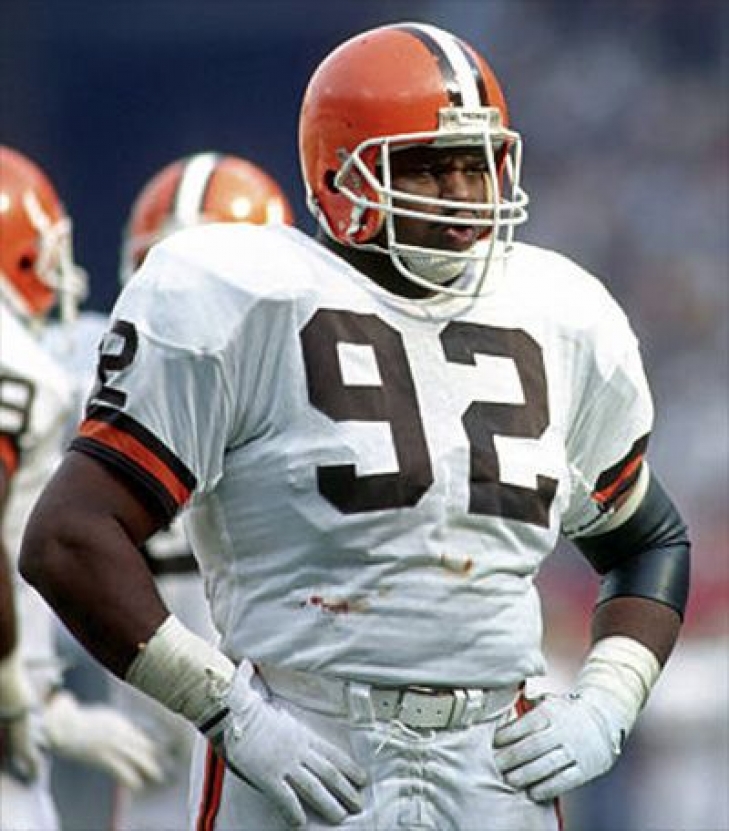
Few players captured the hearts of Cleveland fans in the late 1980s quite like Michael Dean Perry. Drafted out of Clemson in the second round of the 1988 NFL Draft, the younger brother of William "The Refrigerator" Perry quickly established a colossal identity all his own along the Browns' defensive front. His popularity exploded so fast that local McDonald's franchises in Northeast Ohio even named a multi-patty burger after him—the "MDP"—to match his larger-than-life persona.
On the field, Perry was a disruptive force at defensive tackle, blending explosive quickness off the snap with immense lower-body power. After earning All-Rookie honors in 1988, he delivered a transcendent sophomore campaign in 1989. Racking up a career-high seven sacks and collapsing pockets weekly, Perry was named the 1989 AFC Defensive Player of the Year, secured his first Pro Bowl selection, and earned a First-Team All-Pro nod.
That breakout season marked the start of a six-year period in which Perry was the cornerstone of Cleveland's defense. During his time in Ohio, he was chosen for five Pro Bowls (1989, 1990, 1991, 1993, and 1994), earned a First-Team All-Pro honor in 1990, and received two Second-Team All-Pro selections. His presence on the field forced opposing offensive lines to double-team him constantly, creating rushing opportunities for linebackers and playing a key role in Cleveland reaching the 1989 AFC Championship Game and making a playoff run in 1994 under coach Bill Belichick.
After the 1994 season, salary cap constraints and structural changes led to his departure, and he spent his remaining NFL years with Denver, where he added a sixth career Pro Bowl selection before retiring in 1997.
Across seven seasons in Cleveland (1988–1994), Perry played 109 games, with 42.5 sacks, becoming one of the franchise's top interior pass-rushers. In 2001, the organization honored him by naming him to the first class of Cleveland Browns Legends.
24. Bob Gain
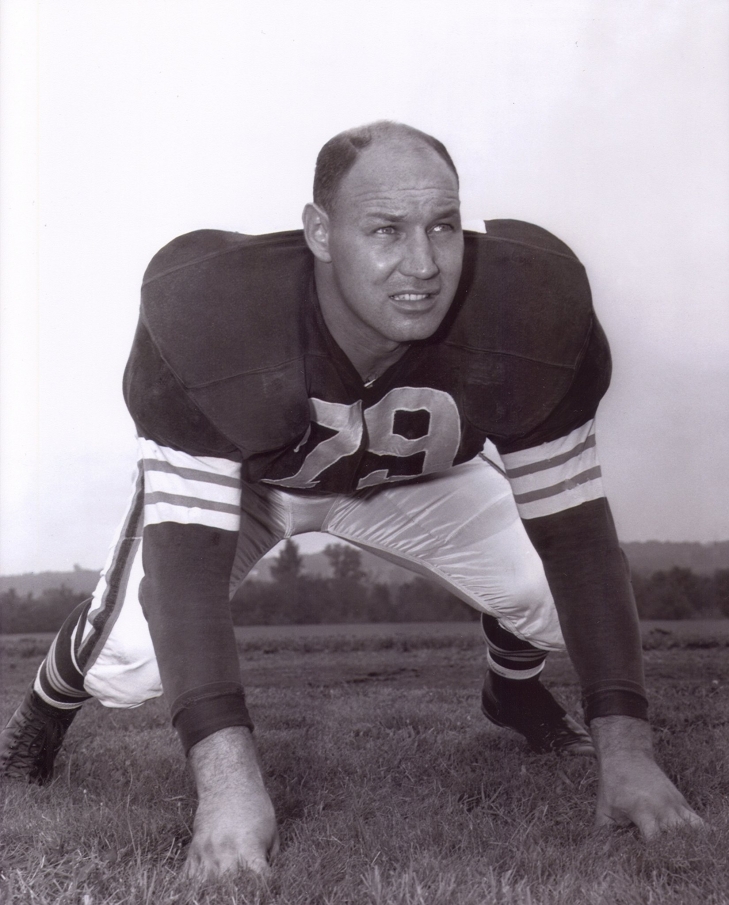
Taking a non-traditional route to the NFL, Kentucky standout and Outland Trophy winner Bob Gain was selected fifth overall in 1951 by Green Bay, but chose to spend his first pro season north of the border with the Ottawa Rough Riders. By 1952, the Cleveland Browns secured his NFL rights, bringing the Akron native back to his home state. Gain missed the entire 1953 season while serving as a First Lieutenant in the U.S. Air Force during the Korean War, but returned to the field in 1954 without missing a beat.
Plugging directly into the interior of Paul Brown’s defense, Gain established himself as an unyielding force at defensive tackle. He provided the physical muscle inside that helped propel Cleveland to back-to-back NFL Championships in 1954 and 1955. At 6 feet 3 inches and over 250 pounds, he controlled the line of scrimmage against the run while generating relentless push against opposing passers.
His individual recognition peaked during a dominant six-year stretch from 1957 through 1962, during which Gain earned five Pro Bowl selections and three Second-Team All-Pro honors. A broken leg derailed his 1963 campaign, but he battled back to play a crucial rotation role in 1964, helping the Browns secure another NFL Championship with a shutout victory over Baltimore.
Gain closed out his career after the 1964 title run, wrapping up a 12-season tenure spent entirely in Cleveland uniform colors. Across 126 regular-season games, he served as a cornerstone for three championship defenses. The franchise honored his decades of interior dominance by naming him to the Cleveland Browns Legends in 2003.
27. Walt Michaels
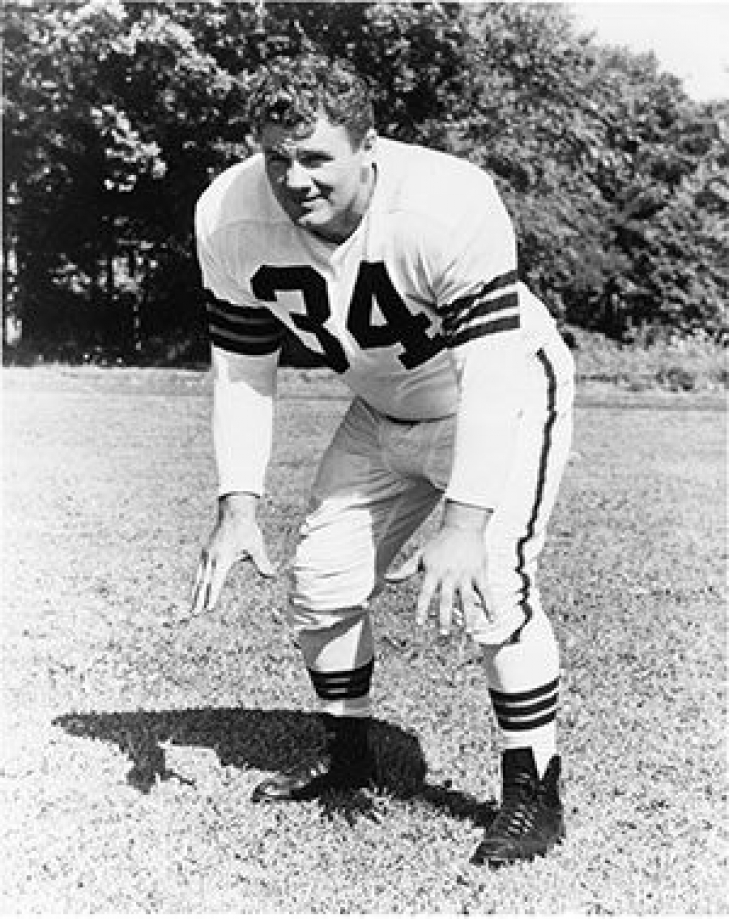
Drafted out of tiny Washington & Lee in the seventh round of the 1951 NFL Draft, Walt Michaels took a roundabout path to becoming a Cleveland icon. Before he ever played a down in the regular season, the Browns traded him to Green Bay. Michaels logged a solid rookie year with the Packers, but Paul Brown quickly realized he had let a talent slip away. Before the 1952 campaign, Brown traded three players back to Green Bay to re-acquire Michaels—a decision that paid massive dividends for the franchise.
Inserted into the middle of the defense, Michaels evolved into the cerebral leader and signal-caller for Paul Brown’s unit. Operating as a pre-snap coordinator on the field, he called the defensive plays with sharp instincts, combining tactical awareness with punishing tackle-to-tackle physical play.
Michaels anchored the defense through Cleveland's championship runs in 1954 and 1955. His relentless coverage and run defense helped shut down opponents’ game plans, including a memorable two-interception performance in the 1954 NFL Championship Game victory over Detroit.
His individual dominance gained league-wide recognition in the second half of the decade. Michaels rattled off five consecutive Pro Bowl selections from 1955 through 1959, consistently ranking among the game's premier linebackers. While official tackle statistics were not tracked during his era, film study and team records indicate he was regularly the team's leading tackler.
After ten seasons in Cleveland (1952–1961), Michaels stepped away from the team, later putting on the pads for one final season in 1963 with the AFL's New York Jets—a franchise he would eventually lead as head coach years later.
With Cleveland, Michaels appeared in 118 regular-season games, picking off 11 passes and recovering eight fumbles while playing in five NFL Championship Games. The organization inducted him into the Cleveland Browns Legends in 2006.
30. Brian Sipe
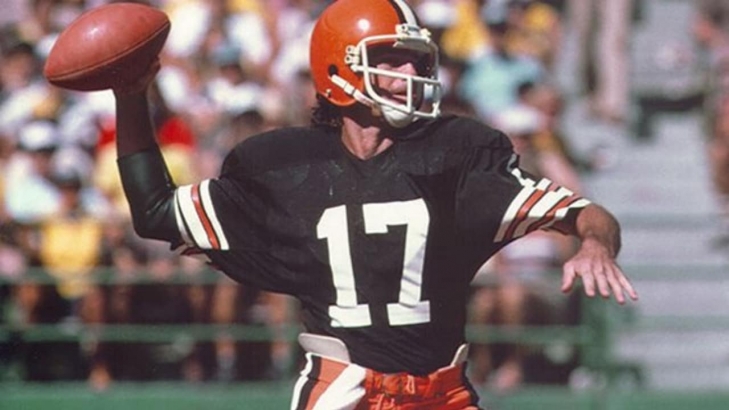
Selected in the 13th round of the 1972 NFL Draft out of San Diego State, Brian Sipe faced a long, unheralded path to NFL stardom. He spent his first two years tucked away on Cleveland's taxi squad before earning a spot on the active roster, serving strictly as a backup for two more seasons while making just seven sporadic starts.
Promoted to full-time starter status in 1976, Sipe endured several years of mid-table results before hitting his stride at age 30. His true breakout arrived in 1979, when he paced the NFL with 28 touchdown passes while throwing for 3,793 yards. Armed with a penchant for fourth-quarter magic, Sipe directed late-game comeback after late-game comeback, birthing the beloved "Kardiac Kids" era that electrified Northeast Ohio.
Everything clicked at a historical level in 1980. Sipe put together one of the finest passing seasons of his era, throwing for 4,132 yards, 30 touchdowns, and just 14 interceptions while leading the league with a 91.4 passer rating. Behind his calm demeanor in high-leverage moments, Cleveland captured the AFC Central crown, and Sipe was rewarded with First-Team All-Pro honors, a Pro Bowl selection, and the NFL Most Valuable Player award.
The team regressed over the next few seasons, and a strike-shortened 1982 campaign saw Sipe temporarily benched. He rebounded in 1983, throwing for 3,566 yards and 26 touchdowns, but contract negotiations stalled after the season. Sensing a shift within the organization, Sipe opted to sign with the New Jersey Generals of the upstart USFL, ending his decade-long run in Cleveland and retiring from football a year later.
Over 10 seasons in Cleveland (1974–1983), Sipe started 112 games and compiled 23,713 passing yards and 154 touchdown passes, retiring as the franchise's all-time leader in both categories. The Browns permanently celebrated his legacy by naming him a Cleveland Browns Legend in 2002.
23. Gary Collins
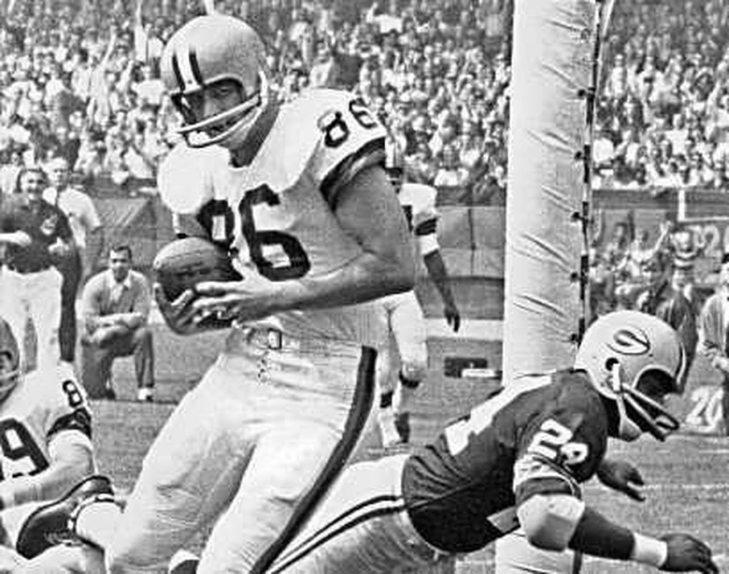
Fresh off an All-American run at Maryland, Gary Collins landed in Cleveland with high expectations when the team picked him fourth overall in 1962. His rookie season didn't feature a massive passing workload—he managed only 11 catches—because special teams needed him first. Collins immediately stepped in as the starting punter, establishing a dual role that peaked in 1965 when he topped the entire NFL with a 46.7-yard punting average.
The real offensive spark came in 1963. Collins grabbed 43 passes and paced the league with 13 receiving touchdowns, becoming Frank Ryan’s favorite target in tight quarters. That set up his iconic performance a year later in the 1964 NFL Championship Game against the Baltimore Colts. After a scoreless first half, Collins took over the game, catching three touchdown passes to break things open and power Cleveland to a 27-0 championship victory while earning game MVP honors.
He kept up that high-level play through the mid-1960s, pulling in back-to-back Pro Bowl selections in 1965 and 1966. Heavy usage eventually caught up to him, however. A severe shoulder injury in 1968 sidelined him for most of that year, though he bounced back with 54 catches and 11 touchdowns in 1969. By 1970, a rash of nagging injuries—particularly painful rib damage—hampered his movement and slashed his production to 26 receptions. He suited up for a final 13 games in 1971 before calling it a career.
When Collins left after ten seasons in Cleveland, he was the franchise's all-time leader with 70 touchdown catches, 331 receptions, 5,299 yards, and nearly 13,800 punting yards. He was inducted into the Cleveland Browns Legends in 2004.
