

Site Admin
Poor Little Fool

Ricky Nelson
Poor Little Fool
27. Willie Horton
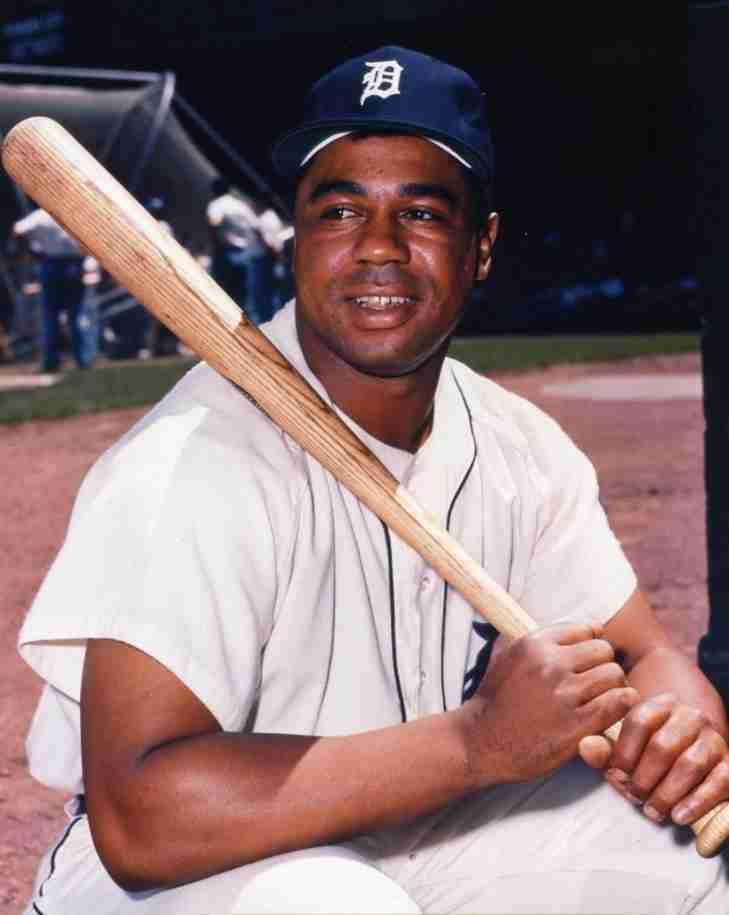
Willie Horton arrived in Detroit as a local hero, a graduate of Northwestern High School who signed with his hometown team at age 18. For parts of fifteen seasons, he served as the powerful left-field engine of the Tigers, a man whose strength was legendary and whose connection to the city went far beyond the box score. While he was a perennial threat in the heart of the order, it was his presence as a community pillar that cemented his status as one of the most significant figures in the history of the franchise.
Horton’s rise in Detroit reached a definitive peak during his first full season in 1965. After a few brief appearances in the early sixties, he seized the starting left-field job and responded with 29 home runs and 104 RBIs. This performance earned him the first of four All-Star selections and an eighth-place finish in the MVP race, signaling his transition from a local prospect to a premier power threat in the American League. He possessed a focused intensity at the plate, specialized in driving the ball into the Tiger Stadium seats with a frequency that few in the league could match.
The heart of his time in Detroit was defined by his role in the historic 1968 championship season. In a year where pitchers dominated the league, Horton was a statistical outlier, batting .285 and finishing second in the American League with 36 home runs. He finished fourth in the MVP voting that year, but his most iconic contribution occurred in Game 5 of the World Series. His perfect throw from left field to nab Lou Brock at the plate preserved a crucial lead and shifted the momentum of the series. He showed the organization that he was more than just a slugger; he was a championship-caliber competitor who delivered when the stakes were at their highest.
Everything culminated in a career total of 262 home runs for the Tigers, a mark of consistency that saw him reach the 20-homer milestone six times in a Detroit uniform. However, as the team transitioned into a rebuilding phase in the late seventies, the front office looked toward the future. In April 1977, the Tigers traded their long-time star to the Texas Rangers, an exit that marked the end of an era for the Detroit faithful. He spent the final years of his journey moving through several American League clubs, but his identity remained firmly rooted in Michigan.
The story in Detroit reached a final chapter in 2000, when the Tigers bestowed upon him their highest individual honor. Despite not having a plaque in Cooperstown, Horton saw his number 23 retired and a statue erected at Comerica Park, joining a select group of franchise legends.
39. Chet Lemon
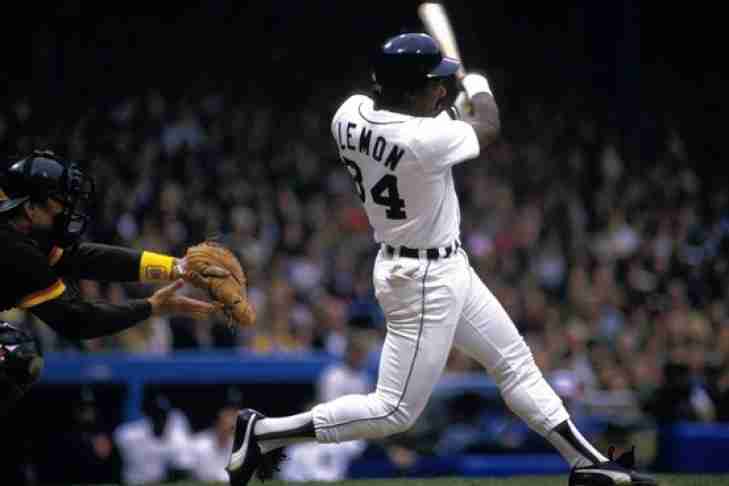
Chet Lemon arrived in Detroit through a 1981 trade with the White Sox, a seasoned outfielder known for an aggressive, nose-to-the-grindstone approach that immediately meshed with the Tigers' blue-collar identity. Rather than slowing down as he entered his thirties, he became a central fixture in a lineup that was building toward a historic peak.
Lemon’s tenure in a Detroit uniform reached a historic high during the legendary 1984 campaign. As the club sprinted to a 35-5 start and eventually secured the World Series title, he was an integral part of the roster, earning an All-Star selection and providing the steady production required of a championship starter. He demonstrated a specialized ability to drive the ball with authority, recording 20 home runs and 76 RBIs while covering the gaps in center field with a reckless abandon that often saw him diving for liners or colliding with the wall. He showed the organization that he was a foundational winner, delivering the veteran-like poise needed on the game's biggest stage.
The bulk of his Detroit years were defined by elite consistency and a knack for getting on base by any means necessary. Between 1982 and 1987, Lemon was a constant presence in the heart of the order, recording three separate seasons with at least 20 home runs.
He retired after the 1990 season, having compiled 1,071 hits and 141 taters.
34. Virgil Trucks
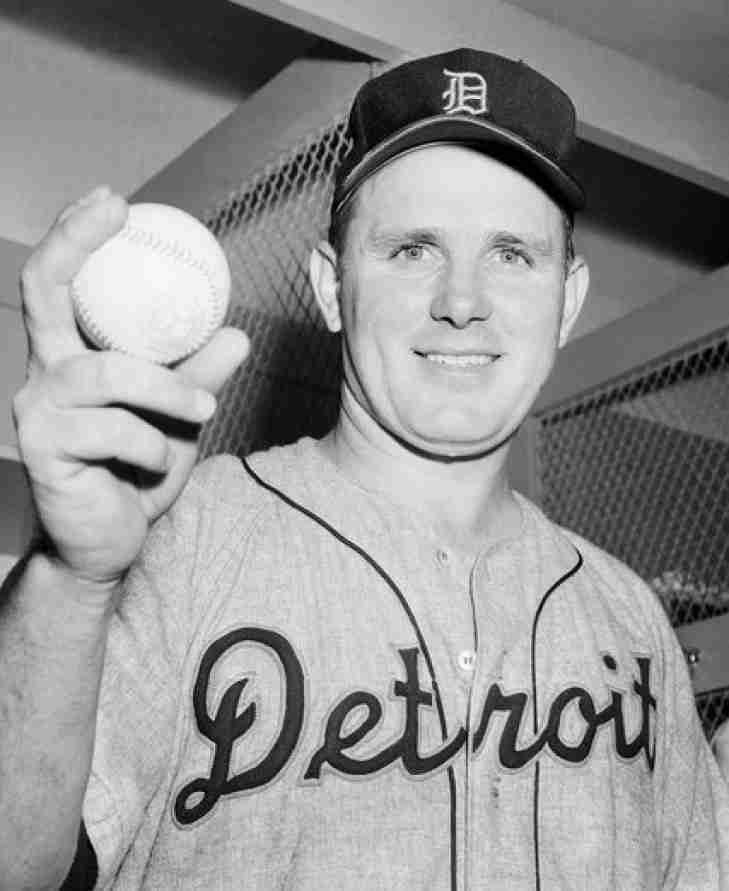
Virgil Trucks earned his "Fire" nickname in Detroit by overwhelming hitters with a high-velocity fastball that anchored the Tigers' rotation for over a decade. After debuting in 1941, he quickly became a centerpiece of the pitching staff, providing a gritty, power-pitching presence that helped define the post-war era in the Motor City. For 12 seasons, he served as a reliable cog in the Detroit rotation.
Trucks’ journey in a Detroit uniform reached an immediate championship high in 1945. After returning from military service late in the year, he was thrust into the heat of a pennant race and responded by helping the Tigers secure the World Series title. He demonstrated a focused intensity on the game's biggest stage, earning a crucial victory in Game 2 against the Cubs. This performance signaled his transition into a premier American League arm, showing the organization that he possessed the big-game temperament required to lead a staff toward a world championship.
In 1949, Trucks reached a career peak for individual dominance, leading the league with 153 strikeouts and earning an All-Star selection. However, it was the 1952 season that cemented his place in baseball lore; despite a low win total for a struggling team, he became only the third pitcher in history to hurl two no-hitters in a single campaign. He silenced the Washington Senators in May and repeated the feat against the New York Yankees in August.
Despite these historic individual achievements, the 1952 Tigers suffered through a miserable season, finishing in the cellar of the American League. Seeking to shake up the roster, the front office orchestrated a major multi-player trade in December of 1952, sending their no-hit specialist to the St. Louis Browns. After a few years spent pitching for the Browns and White Sox, the veteran hurler made a sentimental return to the Tigers for the 1956 season. While his high-velocity days were winding down, this final stint allowed him to conclude his Detroit journey where it began, though he did play afterward briefly with the Kansas City Athletics and New York Yankees.
As a Tiger, Trucks had a record of 114-96 and 1,046 strikeouts over 1,800.2 innings of work.