

Site Admin
8. Ferguson Jenkins
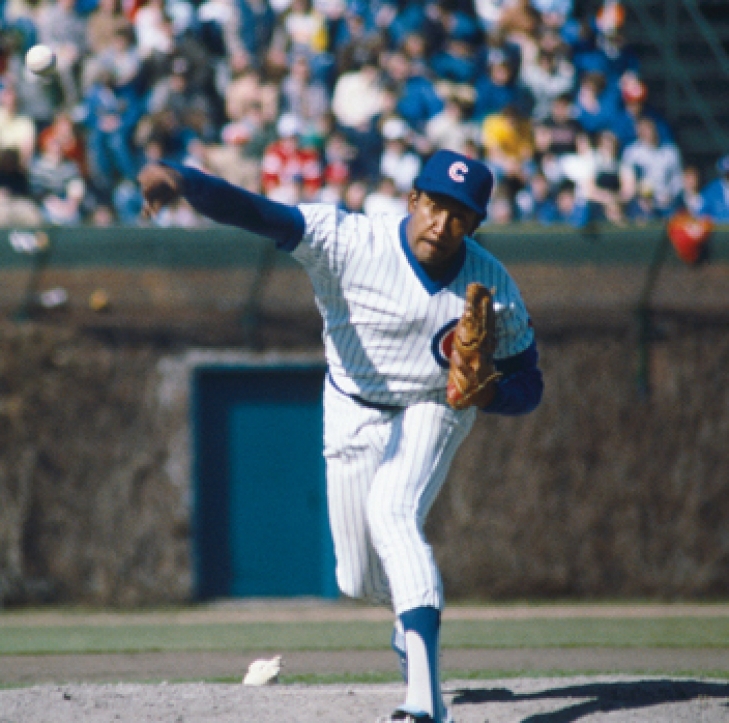
When Ferguson Jenkins arrived in Chicago in 1966, the Philadelphia Phillies thought they were trading away a spare part. Instead, they handed the Cubs the greatest pitcher in the history of the franchise. Jenkins didn’t just break out in 1967; he detonated, winning 20 games and signaling the start of a six-year reign of durability that has few parallels in the modern game. For a generation of Cubs fans, a Jenkins start meant one thing: the bullpen could take the afternoon off.
His run was defined by a surgical, almost defiant precision. In an era of flamethrowers, Fergie was a master of command. From 1967 to 1972, he rattled off six consecutive 20-win seasons, a feat of pure stamina that seems impossible by today’s standards. The apex of this "Workhorse Era" arrived in 1971, a season in which he led the league with 24 wins and 30 complete games, capturing the National League Cy Young Award. He wasn't just winning; he was embarrassing hitters with his control, leading the league in strikeout-to-walk ratio for three straight years. While he was occasionally susceptible to the long ball at Wrigley, it was a byproduct of his aggression; he challenged every hitter, every time, and more often than not, he won.
After a productive detour in Texas and Boston, the story came full circle in 1982. Jenkins returned to the North Side for a two-season encore, a veteran "statesman" run that allowed a new generation of fans to witness the tail end of his brilliance. He retired in 1983 as the franchise leader in strikeouts (2,038) and WHIP (1.123), a testament to his refusal to give away free passes.
The final chapters of the Jenkins epic were written in gold. He became the first Canadian-born player inducted into Cooperstown in 1991, and in 2009, the Cubs finally hoisted his number 31 to the foul pole, sharing the honor with fellow legend Greg Maddux. When the team unveiled a statue of him outside Wrigley Field in 2022, it was the final, permanent acknowledgement of what the record books already showed: Ferguson Jenkins was the standard by which all other Chicago hurlers are measured. He arrived as a trade-market afterthought and left as onr the finest hurlers in club history.
6. Sammy Sosa
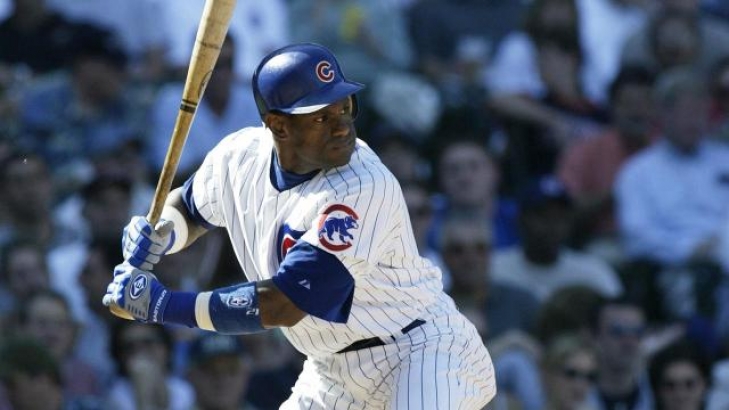
The Chicago Cubs’ acquisition of Sammy Sosa in 1992 remains one of the most lopsided "fleece" jobs in the history of the Crosstown Classic. While the White Sox received an aging George Bell, the North Side inherited a raw, chaotic ball of energy that would eventually transform into a global icon. He arrived as a high-strikeout enigma and evolved into "Slammin' Sammy”, a player who didn't just hit home runs; he staged a daily production in right field, complete with a heart-tap, a kiss to the camera, and a full-tilt sprint to the bleachers.
The story reached its crescendo in the summer of 1998. In a season that many credit with "saving" baseball, Sosa and Mark McGwire engaged in a mythic chase of Roger Maris’ single-season home run record. While McGwire took the title, Sosa took the city’s heart, launching 66 home runs and claiming the National League MVP. It was the start of an offensive deluge unlike anything the game had ever seen: five consecutive seasons of 40-plus homers, including three separate years surpassing the 60-homer mark. From 1998 to 2002, he was the most famous figure in the game, a run-producing machine who owned the Chicago skyline and dominated the highlight reels.
However, the "run with the team" took an unceremonious turn at the end. In 2004, the energy soured. An early exit from the season finale and a subsequent trade to Baltimore signaled a "fall from grace" that lasted for two decades. For years, the relationship between the franchise and its all-time home run leader was nonexistent, clouded by the complexities of the era’s "mistakes" and a fractured front-office dynamic.
But every great epic deserves a resolution. In late 2024, the silence finally broke with a public apology and a call for reconciliation. By early 2025, the prodigal son returned to a "roar" at the Cubs Convention, and in September 2025, he was officially inducted into the Cubs Hall of Fame. He arrived as a trade-market gamble, reached a peak that touched the sun, and after twenty years in the wilderness, finally returned to the Ivy to reclaim his place in franchise lore. He left Chicago with 545 home runs and a .569 slugging percentage, but more importantly, he left as a Cub once again.
The Buck Stops Here -- Interview with Koko B. Ware
The Buck Stops Here -- The First Week of NFL Free Agency 2020
