


Site Admin
12. Tommy John
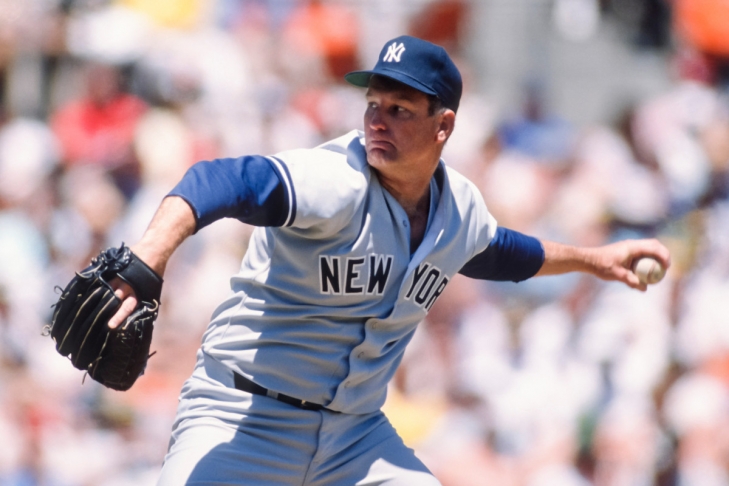
We imagine that there are younger baseball fans who are oblivious that there really was a Tommy John and that it was not just the name of a surgery. This would be unfortunate, as Tommy John has to go down as one of the most durable pitchers in baseball history.
Likely the most amazing statistic about Tommy John is that he lasted twenty-six seasons. Considering that he missed a season and a half due to arm trouble, it would have been expected that his career would not be a long one. Not only did he come back from revolutionary surgery to repair his tendon (what we become known as “Tommy John” surgery), but he would post the most productive period of his career, where he won twenty games three times in four years and was a Cy Young contender for that aforementioned four-year span
John was an effective sinkerball pitcher using his control to get batters out on the ground rather than put it past them. This isn’t to say that he couldn’t strike out batters, but he was not among the leaders in that category. Had Tommy John been more of a strikeout pitcher (which is a far sexier stat) or been part of a World Series win, he may have received more votes. As his overall career numbers are similar to those of Bert Blyleven, who finally made it to Cooperstown, a very strong case could be made by the Veterans Committee for Tommy John.
Should Tommy John be in the Hall of Fame?
14. Roger Maris
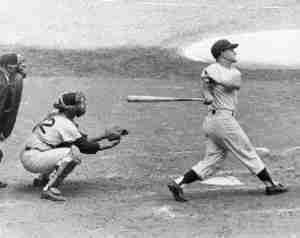
This one is a little tough. We recognize (and we are sure most people agree) that the overall career numbers of Roger Maris do not equate to a Hall of Fame Baseball player. However, many very good players have been excluded from Cooperstown because they lacked moments of greatness. Nobody could ever doubt that Roger Maris had a year that was part of baseball immortality.
Roger Maris was not a one-season wonder, as it is often forgotten that he won the 1960 AL MVP before his legendary season and helped the Cardinals win the World Series in 1967. However, it would be on the strength of that 1961 season that he shocked the entire sporting world with his assault on Babe Ruth’s Home Run record. Please consider the adversity Maris faced in accomplishing it. He broke the record in an era of no PEDs; he broke it with sportswriters constantly writing about how they didn’t want him to, and he did so when New York fans cheered against him and wanted the more popular Mickey Mantle to be the one to chase down the Bambino. Granted, the media attention was not the same as in this era of ESPN and the internet, but the pressure on the Midwest farm kid had to be unbearable. Maris would break one of the most coveted records in sports despite a nation cheering against him, and though he did not have the most statistically perfect season, it may have been the hardest ever.
Roger Maris had two great seasons, a couple of good ones, and an average career. He may not have had the career numbers the Hall covets, but what he did in 1961 was Hall of Fame worthy. Maris could very well remain the most immense Hall of Fame debate this side of Rose and Shoeless Joe.
Should Roger Maris be in the Hall of Fame?
16. Mark McGwire
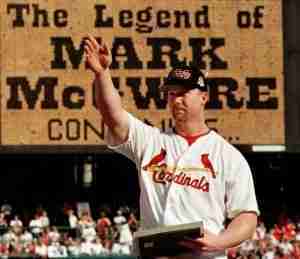
It is possible that this candidate is shrouded with more controversy than our top three candidates combined?
5. Shoeless Joe Jackson
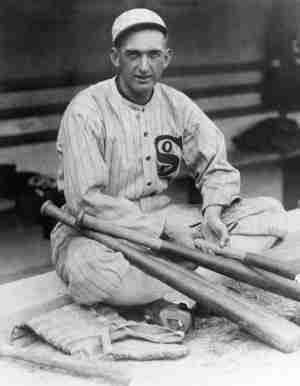
Did he or didn’t he conspire to fix the 1919 World Series? Over eighty years after the fact, there is still a sizable debate as to whether “Shoeless” Joe Jackson was involved in the “Black Sox” scandal that saw the Chicago White Sox throw the World Series for financial gain against the Cincinnati Reds.
Prior to his expulsion from baseball, Jackson had already proved himself Hall of Fame worthy. In ten full Major League seasons, Shoeless Joe had over 1,700 hits and had a career batting average of .356. The latter remains iconic as this puts him third all-time. Jackson was easily among the hardest workers in baseball, and his passion for the game was unequalled. He was in his prime when he was suspended, and he clearly had many more great seasons ahead of him.
Where it gets murky is his participation in throwing the Series. Evidence points to the fact that he was aware of it, but after his Grand Jury Testimony, in which he claimed involvement, he proclaimed his innocence for years thereafter. Jackson may have been a great player, but he was not an educated man and, by many accounts, naïve. It is very possible that he was unaware of the ramifications of testifying that he received $5,000 to help throw the Series.
As he claimed his innocence, he had the stats to back it up. He batted .375 in the Series and made no errors in the field. If anything, the box scores show the efforts of a man who played to win. As seen with Rose, Major League Baseball has a zero-tolerance policy for gambling, and there are many reasons to think that this will not change in the near or distant future. Saying that, Rose, Jackson, and all of the others who were associated with the “Black Sox” had the ban lifted, and this means Jackson is now eligible to appear on his first ballot (which will be the Veterans) since he was on the 1946 Nominating vote.
This does not guarantee that his name will appear, but now, it is possible