


Site Admin
12. Freddie Freeman
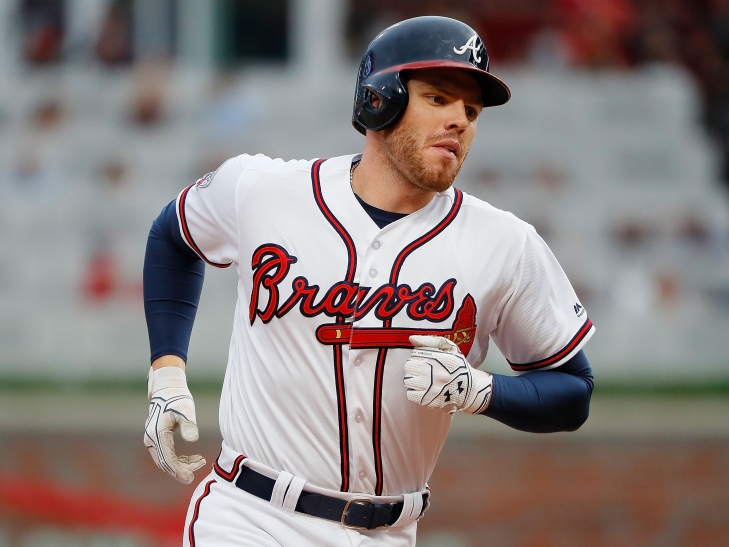
Freddie Freeman played his first dozen seasons with the Atlanta Braves, where he was shown to be one of the best First Basemen in the National League.
In 2011, Freeman was the runner-up for the National League Rookie of the Year (losing to teammate Craig Kimbrel), and in 2013, he was named an All-Star and finished fifth in MVP voting when he had a .319 Batting Average with a career-high 109 Runs Batted In. Again an All-Star in 2014, the First Baseman would have a 34 Home Run season in 2016 and would go on a three-year run in which he batted over .300 each year. In the year that was broken (2019), he posted career-bests in the power game with 38 Home Runs and 121 RBIs).
Freeman has finished in the top ten in MVP voting four times before the 2020 season, and in the COVID-19-impacted year, Freeman won the MVP while leading the National League in Doubles (23), and was second in all aspects of the Slash Line (.341/.462/.509). After finishing ninth in MVP voting in 2021 with 120 league-leading Runs and a third straight Silver Slugger, Freeman left the Braves for Los Angeles as a Free Agent
Freeman had 1,704 Hits and 271 Home Runs for Atlanta, and had he played a few more seasons for Atlanta, he would have made the top ten. Hell, we could make a case that he should have been!
16. Lew Burdette
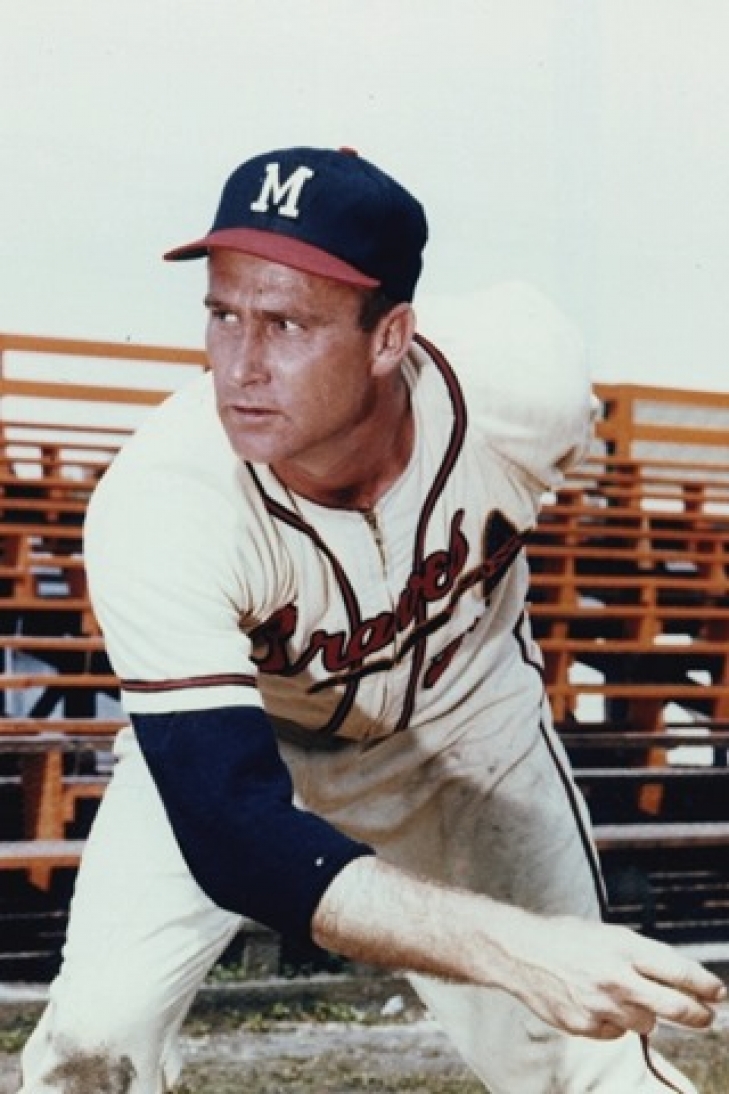
Lew Burdette was a consistent Pitcher for the Milwaukee Braves, where he would win 179 Games for the franchise. Burdette first came to notice in the 1953 season, going 15-5 and finishing 7th in ERA. The hurler remained solid for a couple of years, and in the last half of the 50’s, he would go on his best run, where from 1956 to 1961, he never had less than 17 Wins, and in three of those seasons, he was the National League leader in BB/9. Burdette would also win the ERA Title (1956) and the Wins leader in 1959.
An All-Star twice (1957 & 1959), Burdette would help Warren Spahn propel the Braves to the World Series, and Lew was at his absolute best, going 3-0 in the Fall Classic with a 0.67 ERA and a 0.926 WHIP. He would win the World Series MVP that year.
Despite his on-field accomplishments, Burdette might be best known for being a prankster and fun-loving individual who was popular with teammates and fans alike. If this list were based on overall likability, it would have been hard to supplant Lew Burdette.
21. Tommy Holmes
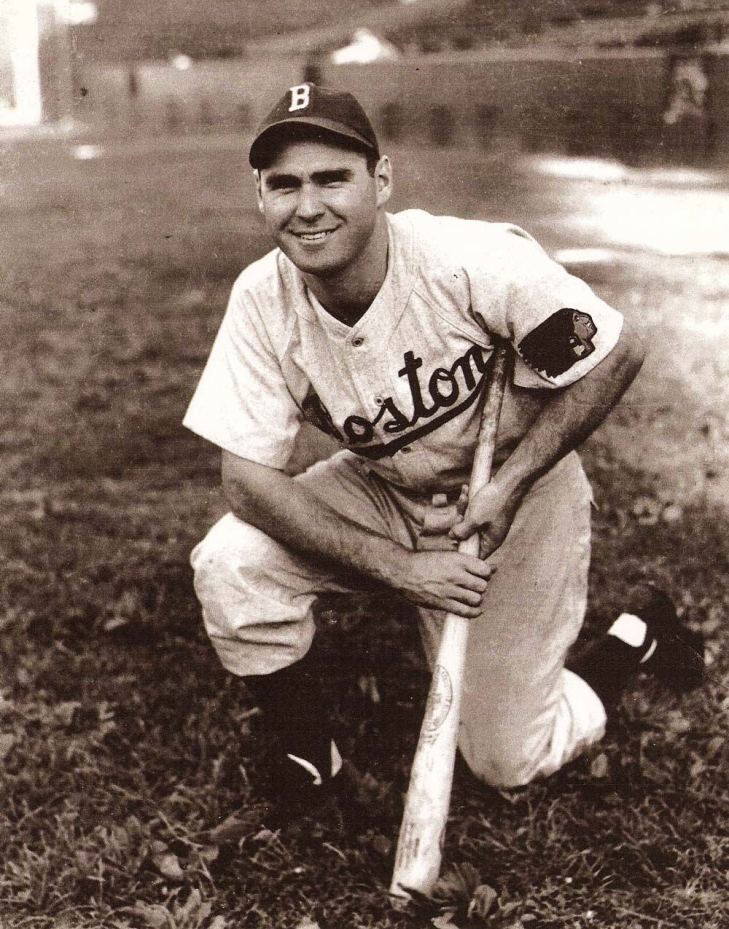
A member of the Boston Braves for his entire career except for the last one (which was with Brooklyn), Tommy Holmes was one of the most popular players when the team was in Boston.
As a rookie in 1942, Holmes had 155 Hits with a .278 Batting Average and repeated with similar numbers in ‘43. Holmes would have his first .300 season in ’44, and in 1945, he exploded with what would be by far his best season in Baseball. That season, he had a 37 Game Hitting Streak (the longest in 40 years in the NL) with league-leading 224 Hits, 47 Doubles, 28 Home Runs, and a .997 OPS. Holmes also finished first in bWAR and was the runner-up for the MVP to Phil Caravetta, though in retrospect, he should not have lost to him.
Holmes continued to play well with three more .300 seasons and an All-Star appearance in 1948. That season, he would take the Braves to the National League pennant, although they would lose to the Cleveland Indians.
Overall, as a Brave, Holmes had 1,503 Hits with a .303 Batting Average and entered the Braves Hall of Fame in 2004.
20. Wally Berger
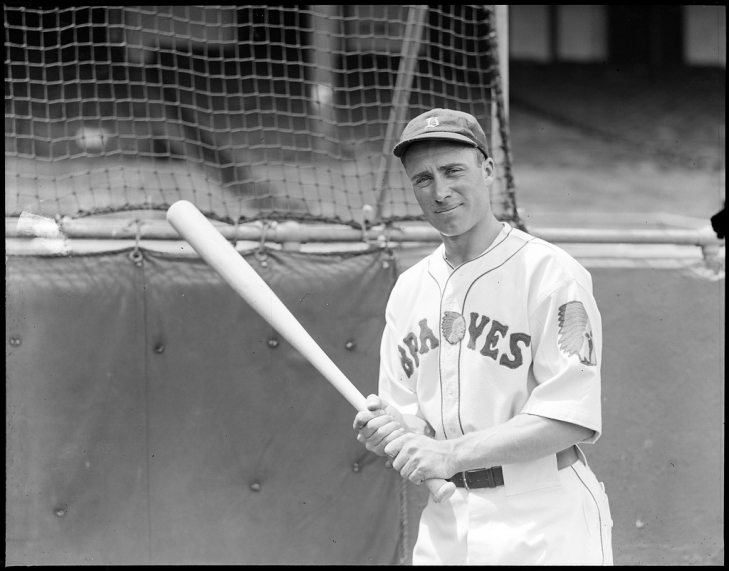
Wally Berger was one of 18 starters in the 1934 All-Star Game, and the other 17 are in the Hall of Fame. We aren’t necessarily saying that Berger is a Hall of Fame snub, but we will state that the Outfielder was a very good player who, at one time, was spoken of in the same breath as some elite talent.
As a rookie in 1930, Berger set the tone for what he would do as a Brave with 172 Hits, 38 Home Runs, 119 RBI, and a .310 Batting Average. He would slip in his second and third years in terms of power, but he still collected many hits and batted over .300. The All-Star Game began in 1933, and Berger played in the first four. His power game came back, and he hit 25 or more in each of those seasons, peaking with a National League leading 34 Home Runs and 130 RBIs in 1935. He was traded early in the 1937 season to the New York Giants.
Berger did not have the fortune of playing on many good Boston Braves teams and may not be remembered as the good a player as he was. After he was traded, he was never the same player because of shoulder injuries, but what he accomplished in Boston should be remembered in the Braves organization. He had 199 Home Runs with a .304 Batting Average for the team.