


Site Admin
23. Ken Boyer
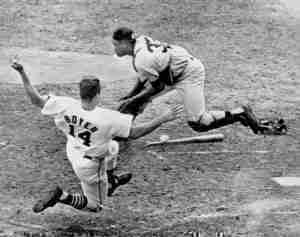
The position of third base holds the fewest Hall of Famers in Baseball. There, however, have been many great ballplayers at the “Hot Corner,” and some even won the MVP award. Ken Boyer was one such man, as he won that coveted trophy in 1964.
Boyer was not a one-season wonder. Prior to his MVP year, Boyer had been building up to that season, establishing himself as one of the top third basemen in the league. He was winning Gold Gloves and was hitting 20 or more home runs while keeping a batting average that rarely left the .300 range. Despite a quiet demeanor, Boyer was a clubhouse leader who did his talking on the field and led by example. Boyer led his Cardinals to the World Series, where his clutch hitting helped them win the Fall Classic.
Ken Boyer was not the same player after his stellar ’64 campaign. Every aspect of his game declined sharply, and he only had two more seasons as a regular. This rapid descent prevented him from padding career stats, which may have gained him enshrinement. His jersey was justifiably retired by the St. Louis Cardinals, though this appears to be as far as the honoring of Ken Boyer will go
Should Ken Boyer be in the Hall of Fame?
60. Roy Face
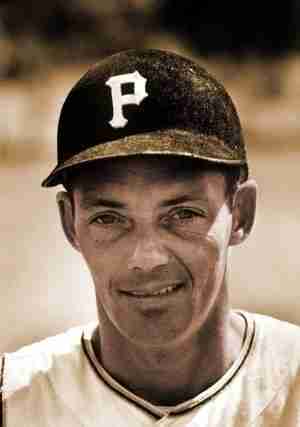
Hoyt Wilhelm generally receives credit for being the game’s first great reliever. History may eventually show that Wilhelm was not the only prototype for relievers, as Roy Face deserves to be included in that discussion as well.
Roy Face was the first pitcher to ever record twenty saves in a season. He would lead the senior circuit in that category three times. Roy Face still holds the record for the highest winning percentage in a season with a whopping .947 (18 wins to 1 loss). Face used his forkball to get Pirate teams out of jam after jam and racked up multiple wins and saves all in a relieving role.
The role of the closer is still being sorted out in Baseball’s Hall of Fame, but if a strong case was successfully made for Hoyt Wilhelm, should Roy Face have been this far behind him in consideration?
Should Roy Face be in the Hall of Fame?
27. Don Mattingly
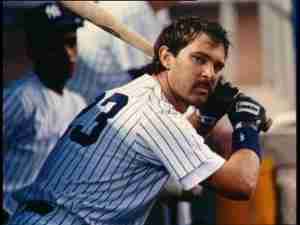
One of the most popular Yankees of all time was Don Mattingly. This was a very impressive reality considering that the year before he turned pro, the Bronx Bombers lost to the Dodgers in the World Series, and the year after he retired, they won the championship. During Mattingly’s entire tenure, the Yankees never went to the Fall Classic, the largest stretch of postseason futility in franchise history.
The failure of the Yanks to win the World Series was through no fault of Don Mattingly. He was easily amongst the best in the game in the last half of the ’80s, winning an MVP, multiple Gold Gloves, and churning out hits.
Once the 90’s hit, Mattingly’s production steadily declined (though his popularity in the Bronx remained high) due to constant back issues. He finally made it to the postseason in 1995, and though he performed admirably, the Yankees failed to make the World Series. He abruptly retired at the age of 34 after New York signed Tino Martinez, though he could still have contributed to a Major League Baseball team. Had he continued to play, he would not have been an All-Star anymore, but his career numbers may have been padded enough to make him a more serious contender for the Hall. As it is now, the bulk of career stats were generated from six of his years, and it appears that the Hall is looking down upon him. Regardless of whether “Donnie Baseball” is honored in Cooperstown, he will always be honored in the Big Apple.
Should Don Mattingly be in the Hall of Fame?
42. Sherry Magee

Luckily for Sherry Magee, there was no YouTube in 1911; otherwise, all that would ever be replayed of him was the time he decked an umpire with one punch after a called third strike. Of course, he played in the 1900s and 1910s, so there isn’t any footage of him on YouTube at all.
Magee should not be remembered for that moment; his intensity led to moments like that. Magee was a rare star of the deadball era and, for ten years, made multiple appearances at the top of every offensive category imaginable. Magee was also stellar in the outfield and hunted down fly balls the same way we hunted pitches with his bat. Magee’s intensity was matched by his unwavering principles. At the age of 34 (and still more than capable of playing in the Majors), Sherry Magee would finish out his playing career in the Minors to avoid playing for owners he despised. His legacy and wallet would have been enriched playing in the bigs, but his principles would not allow it.
Magee might have had more impressive career numbers had he stayed in the Majors, but he had great numbers for the number of seasons he played. He may have let his temper get the best of him often, but he always wanted to win. Most great athletes do.