

Top 50 Washington Nationals
The Nation’s Capital of Washington D.C. may have seen a World Series Championship but it was not from the current incarnation of their team, the Washington Nationals.The Nationals originally began in French Canada as the Montreal Expos in 1969, a team that finally made the MLB playoffs in 1981. In 1994, prior to the MLB strike, they had the best record in the game, but as imagined they would not have the opportunity to compete for the World Series.
The franchise would relocate to the Washington D.C. area, marking the third time that America's capital hosted a baseball team. After making the playoffs multiple times, the Nationals finally won their first World Series in 2019.
Note: Baseball lists are based on an amalgamation of tenure, traditional statistics, advanced statistics, playoff statistics, and post-season accolades.
This list is updated up until the end of the 2025 Season.
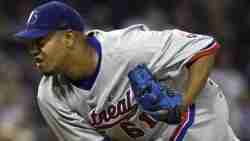
Livan Hernandez was already renowned as a Cuban defector who earned both the NLCS and World Series MVP awards as a 22-year-old rookie with the 1997 Florida Marlins. He joined Montreal before the 2003 season following a trade from San Francisco. While many saw the move as a salary dump, Hernández viewed it as an opportunity for a remarkable, career-changing resurgence. Over the next four years, he became both literally and metaphorically the bridge that helped the franchise transition from Montreal to Washington. His 2003 campaign for the Expos was a standout example of old-school volume pitching. During a time…
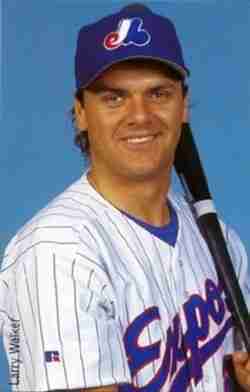
The rise of Larry Walker in Montreal remains one of the most brilliant chapters in the franchise's home-grown development. Discovered at a national training camp in Saskatchewan, the Maple Ridge, British Columbia, native was famously signed as an unheralded amateur free agent for a microscopic $1,500 bonus. Initially a raw athlete who had prioritized ice hockey for most of his youth, Walker underwent an extraordinary physical and technical transformation in the minor leagues. By the dawn of the 1990s, he had emerged as the gold standard for a true five-tool player, turning right field at Stade Olympique into his own…
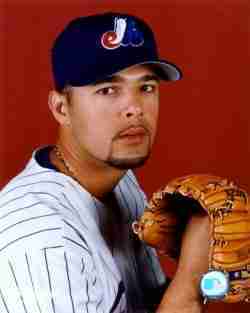
Javier Vázquez was picked by the Expos in the fifth round of the 1994 amateur draft from Puerto Rico and made his big-league debut as a 21-year-old rookie in 1998. With a consistent, smooth delivery, an explosive four-seam fastball, and a powerful slider, Vázquez quickly became a key frontline pitcher for a franchise that often faced challenges due to low payrolls and an unstable future in Quebec. His early years with the Expos were a tough mix of developmental challenges and significant promise. After enduring a difficult, high-pressure 5–15 start in his 1998 rookie season, Vázquez changed his career path…
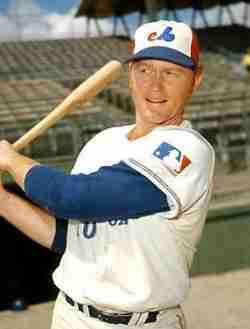
When the expansion Montreal Expos took the field for their inaugural season in 1969, they desperately needed an identity. They found it in Rusty Staub. With an unmistakable shock of red hair, an incredibly disciplined left-handed approach, and a genuine eagerness to learn French so he could converse directly with the fans, Staub didn't just become the young franchise’s first legitimate star—he became a cultural icon in Quebec. Completely embraced by the local faithful, who affectionately christened him Le Grande Orange, Staub turned Parc Jarry into his personal sanctuary during three of the most dazzling, high-volume offensive seasons the city…
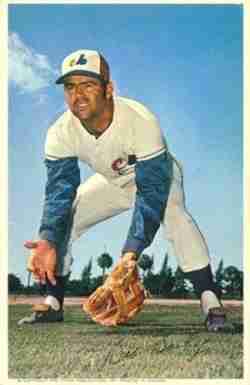
In 1961, the Pittsburgh Pirates signed high school star Bob Bailey from Woodrow Wilson High in Long Beach, California, with a hefty $175,000 "bonus baby" contract. This large sum set high expectations that the teenage Bailey struggled to meet in Pittsburgh. After seven years, split between Pittsburgh and the Dodgers, he was seen as a promising prospect whose power never translated to the major leagues. However, everything shifted when the expansion Montreal Expos purchased his contract from the Dodgers in late October 1968. In Montreal, Bailey didn't just rebuild his career—he became a foundational, historic pillar of the young franchise.…
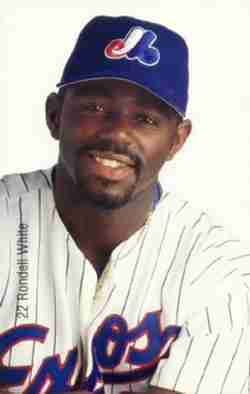
Rondell White spent the 1990’s with the Montreal Expos organization and was a productive Outfielder who nearly accumulated 20 for his Expos bWAR. White would have two seasons where he eclipsed the .300 Batting Average in Montreal and had over 100 Home Runs there.
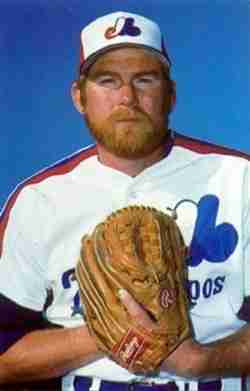
Bryn Smith spent the majority of his career as a starting pitcher with the Montreal Expos. He would finish his career with Montreal with a 81-71 record and his best season saw him go 18 and 5 with a 1.052 WHIP in 1985.
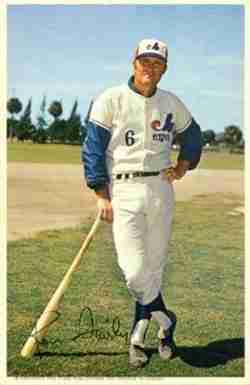
When the Montreal Expos traded for Ron Fairly in June of their inaugural 1969 season, they gained more than just a reliable hitter—they gained immediate credibility. With over ten years on the Los Angeles Dodgers, where he secured three World Series titles, the experienced first baseman and outfielder brought playoff experience and a steady presence to an expansion team navigating the tough National League. While some aging veterans find it difficult to shift from being perennial winners to leading a young expansion team, Fairly welcomed the challenge and made Jarry Park his personal launching pad. His elite, highly disciplined batting…
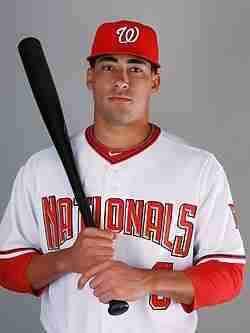
When the Montreal Expos moved to Washington in 2005 to become the Nationals, the franchise needed to develop a new wave of local talent to build its identity. Ian Desmond emerged as a key figure in this effort. Drafted in the third round of 2004, the athletic shortstop advanced through the minor leagues during the franchise’s transition and made his debut in late 2009. Over the following six seasons, Desmond became the dynamic, power-hitting centerpiece of the Nationals’ middle infield, pushing the offensive limits for the position in Washington. His ascent to prominence emerged as a true showcase of power…
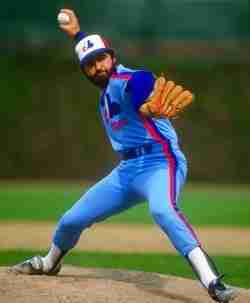
Known to hitters throughout the National League as "The Terminator," Jeff Reardon brought a menacing glare, a high-velocity fastball, and a signature thick beard to the back end of the Montreal bullpen. Acquired from the New York Mets in a trade-deadline swap for outfielder Ellis Valentine in May 1981, Reardon immediately took ownership of the late innings in Quebec. In an era when the multi-inning firemen were starting to evolve into specialized closers, he became one of the most reliable door-slammers of the 1980s. His debut in the Expos was a crucial factor in their only postseason appearance in 1981.…
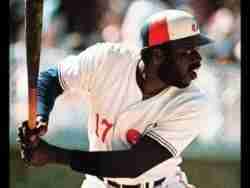
In the late 1970s, the Montreal Expos boasted an outfield that was the envy of baseball—a young, dynamic trio of Andre Dawson, Warren Cromartie, and Ellis Valentine. Among them, Valentine possessed perhaps the most tantalizing ceiling. Selected in the second round of the 1972 draft out of Los Angeles, he developed into a physical marvel who paired a fluid, high-velocity swing with what was universally considered the most feared throwing arm in the game. From his post in right field, Valentine turned throwing out tagging runners into a spectator sport, routinely unleashing absolute frozen ropes that defied belief. His peak…
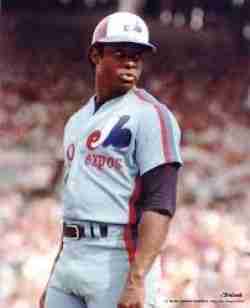
Prior to achieving recognition as an unprecedented cultural phenomenon and serving as the league MVP in Japan's Nippon Professional Baseball, Warren Cromartie was a fundamental pillar of the Montreal Expos' illustrious era. Drafted in the first round by the team in 1973, "Cro" exhibited a refined, high-contact left-handed swing that seamlessly complemented the speed and athleticism of Montreal's emerging young core. Through his association with Andre Dawson and Ellis Valentine, Cromartie contributed to one of the most dynamic, homegrown outfields in the history of baseball, playing an essential role in the transformation of Stade Olympique into a hub of excitement…
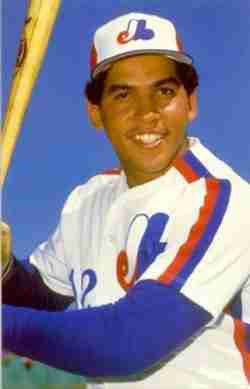
Long before he was launching tape-measure home runs into the thin air of Mile High Stadium, Andrés Galarraga was captivating fans in French Canada with a completely different brand of baseball. Signed out of Venezuela as an amateur free agent in 1979, the man globally known as "The Big Cat" initially made his mark not with jaw-dropping power, but with an impossibly agile glove. For a man of his imposing physical stature, Galarraga patrolled the first base bag with the grace of a shortstop, executing diving stops and picking low throws out of the Stade Olympique dirt with mesmerizing ease.…
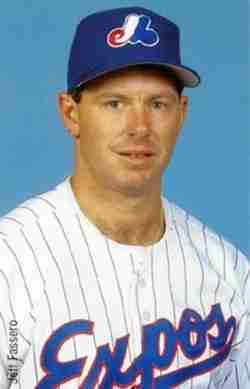
The journey of Jeff Fassero is one of the most remarkable stories of perseverance in modern baseball history. Selected in the 22nd round of the 1984 draft by the St. Louis Cardinals, the left-hander spent a grueling seven years grinding through the minor leagues, occasionally wondering if his big-league dream would ever materialize. By the time he finally made his major league debut with the Montreal Expos in 1991, he was already 28 years old. Yet, far from a late-career afterthought, Fassero quickly evolved from a reliable left-handed reliever into one of the most dominant, high-leverage starting pitchers of the…
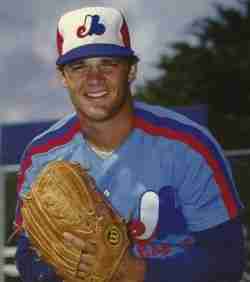
In the early 1980s, the Montreal Expos featured a young, powerful starting rotation that was among the best in the National League. Central to that group was Bill Gullickson. Picked second overall in the 1977 draft, the tall right-hander arrived in French Canada with high expectations. Unlike many top prospects of his time, Gullickson not only met these expectations but also became known for his durability and aggressive pitching, making him one of the most underrated pitchers of his era. His debut in the major leagues in 1980 was an exceptional example of rookie performance. Gullickson completely overwhelmed National League…
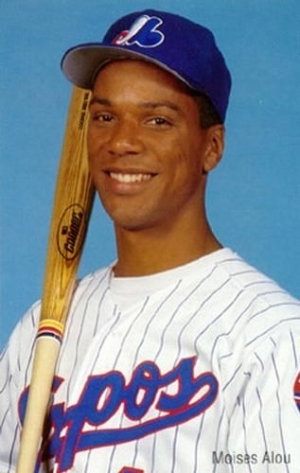
This transaction stands out as one of the most notable footnotes in franchise history. In August 1990, the Montreal Expos traded pitcher Zane Smith to the Pittsburgh Pirates for Moises Alou, who was initially listed as the "Player to be Named Later." At that moment, Alou was a promising but inexperienced prospect, having only played two major league games. By the time he left Montreal six years later, he had become widely known and had secured his role as the focal point of an exceptional, world-class outfield, guided directly by his father, legendary manager Felipe Alou. Alou’s rise in Montreal…
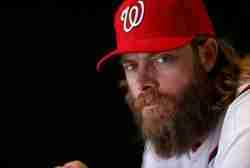
When the Washington Nationals signed Jayson Werth to a seven-year, $126 million deal in December 2010, it shocked the baseball community. Skeptics saw it as an excessive overpayment for an outfielder past 30, but GM Mike Rizzo understood exactly what he was getting. The Nationals weren't just adding a powerful hitter; they were acquiring attitude, postseason experience, and a key leader. With his mountain-man beard and long hair, Werth quickly became the emotional core of a burgeoning team, turning a young, struggling clubhouse into division champions. Werth's 2011 campaign in Washington was a tough adjustment period, but his subsequent seasons…
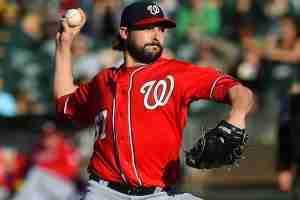
Every memorable pitching staff features its high-priced aces and highly touted prospects. However, a sustained championship run relies on underrated, gritty workhorses. In Washington, Tanner Roark exemplified that quiet dependability. Traded in 2010 from the Texas Rangers for Cristian Guzman, the right-hander was known for his heavy sinker, sharp slider, and no-nonsense attitude, earning him the nickname "The Diesel." Though often overshadowed by stars like Max Scherzer and Stephen Strasburg, Roark reliably took on vital innings to anchor the Nationals' rotation during their most successful period. His rise in Washington exemplifies a strategic opportunity turn. After a strong bullpen debut…
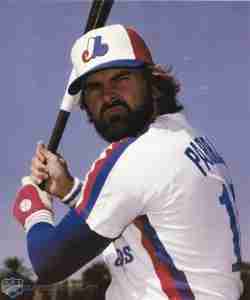
Larry Parrish's journey with Montreal is a tale of assertive authority dominating the hot corner amid high hopes in Quebec. Signed as an undrafted amateur free agent in 1972, this Florida native was a raw yet powerful athlete who rapidly developed in the minors. By 1975, he earned the regular third base position, showcasing a commanding physique and a forceful right-handed swing that embodied the tough, determined spirit of the emerging Expos team. His initial seasons in Montreal were characterized by a strenuous combination of notable offensive potential and developmental challenges in the defensive aspect. Parrish was a prolific run…
