

Our All Time Toronto Blue Jays have been revised to reflect the 2025 Season

Yes, we know that this is taking a while!
As many of you know, we at Notinhalloffame.com are slowly generating the top 50 of each major North American sports team. That being said, we maintain and update our existing Top 50 lists annually. We are pleased to present our pre-2026 revision of our top 50 Toronto Blue Jays.
As for all of our top 50 players in baseball, we look at the following:
1. Duration and Impact.
2. Traditional statistics and how they finished in Major League Baseball.
3. Advanced Statistics.
4. Playoff performance.
5. Their respective legacy on the team.
6. How successful the team was when he was there.
7. Respecting the era in which they played.
Criteria 1-4 will make up the lion’s share of the algorithm. Please note that we have implemented this for the first time. This has changed the rankings all throughout the board.
Last year, the Toronto Blue Jays shocked the baseball world with an unexpected run to the World Series, falling to the heavily favored Los Angeles Dodgers in seven games. There were two new entrants and two elevations as per last year’s season.
As always, we present our top five, which saw one change based on the new algorithm.
1. Dave Stieb
2. Roy Halladay
3. Jose Bautista
4. Carlos Delgado
5. Tony Fernandez
You can find the entire list here.
Within the top five, Carlos Delgado and Tony Fernandez flipped the #4 and #5 spots.
Vladimir Guerrero Jr. rocketed up from #12 to #6.
Bo Bichette, who is now a New York Met, moved up from #27 to #22.
Outfielder George Springer debuted at #34.
Pitcher Kevin Gausman debuted at #35.
We thank you for your continued support of our lists on Notinhalloffame.com.
Our All Time Top 50 Toronto Blue Jays have been revised to reflect the 2024 Season.
Yes, we know that this is taking a while!
As many of you know, we at Notinhalloffame.com are slowly generating the top 50 of each major North American sports team. That being said, we have existing Top 50 lists and consistently look to update them when necessary and based on necessity. As such, we are delighted to present our post-2024 revision of our top 50 Toronto Blue Jays.
As for all of our top 50 players in baseball, we look at the following:
1. Advanced Statistics.
2. Traditional statistics and how they finished in the American League.
3. Playoff accomplishments.
4. Their overall impact on the team and other intangibles that are not reflected in a stat sheet.
Please note that our algorithm has changed, which yielded minor changes throughout the baseball lists.
Last year, the Blue Jays had a disappointing campaign where they had a losing record. There were no new entrants, but two elevations
As always, we present our top five, which saw one change based on the new calculations.
1. Dave Stieb
2. Roy Halladay
You can find the entire list here.
First Baseman Vladimir Guerrero Jr. vaulted ten spots to #12.
Notably, Bo Bichette’s poor year dropped him two spots to #27.
The new algorithm brings Brett Lawrie at #45.
We thank you for your continued support of our lists on Notinhalloffame.com.
Our All-Time Top 50 Toronto Blue Jays have been revised to reflect the 2023 Season
Our All-Time Top 50 Toronto Blue Jays are now up
Yes, we know that this is taking a while!
As many of you know, we here at Notinhalloffame.com are slowly generating the 50 of each major North American sports team. We have a new one to unveil today, that of the Toronto Blue Jays, which means we have finally completed all of the MLB teams!
Our Top 50 lists in Baseball look at the following:
1. Advanced Statistics.
2. Traditional statistics and how they finished in the American League.
3. Playoff accomplishments.
4. Their overall impact on the team and other intangibles not reflected in a stat sheet.
Remember, this is ONLY based on what a player does on that particular team and not what he accomplished elsewhere and also note that we have placed an increased importance on the first two categories.
This list is updated up until the end of the 2022 Season.
The complete list can be found here, but as always, we announce our top five in this article. They are:
1. Dave Stieb
2. Roy Halladay
4. Carlos Delgado
We will continue our adjustments on our existing lists and will continue developing our new lists.
Look for our more material coming soon!
As always, we thank you for your support.
5. Tony Fernandez
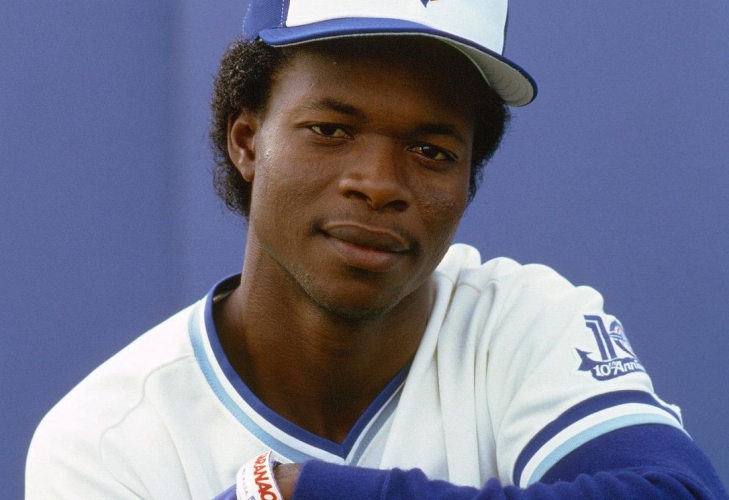
Having discovered and signed out of the renowned shortstop sanctuary of San Pedro de Macorís, Tony Fernandez arrived in Toronto as a slender, highly agile adolescent, destined to redefine the position for an ascending franchise. Making his Major League debut in late 1983, he spent a year in a part-time capacity before definitively assuming the everyday shortstop role in 1985. His timing was impeccable; his first full season at the helm coincided directly with the Blue Jays’ historic breakthrough to their first American League East division title, thereby immediately establishing him as a central figure in the team's transformation from an expansion underdog to a legitimate powerhouse.
From 1985 to 1988, Fernandez established a distinguished period of shortstop performance that garnered the attention of the entire baseball community, earning him consistent votes for the American League Most Valuable Player award. He exemplified exceptional consistency at the plate, achieving at least 160 hits and maintaining a batting average well above .280 in each of those four consecutive seasons. Notably, his 1986 season was extraordinary, during which he recorded a career-high 213 hits—a record for a shortstop in Major League Baseball at that time. His distinctive, low-hand stance and highly disciplined approach rendered him a formidable challenge for opposing pitchers seeking to complete innings.
Although his batting was impressive, it was his defensive prowess on the artificial turf of Exhibition Stadium that elevated his status to that of an icon. Equipped with exceptional flexibility and a unique, sidearm flick throwing motion, Fernandez demonstrated an extraordinary range that enabled him to field ground balls deep in the hole and execute throws across his body with ease. This exceptional defensive skill earned him four consecutive Gold Glove Awards from 1986 to 1989, marking him as the first infielder in Blue Jays history to receive this accolade and supporting a sophisticated defensive strategy that contributed significantly to the success of Toronto's pitching staff.
Fernandez, a three-time All-Star during his initial tenure in Canada, was reluctantly transferred to San Diego following the 1990 season in a major trade intended to reacquire Roberto Alomar and Joe Carter. Nonetheless, his career remained profoundly connected to Ontario. In June 1993, the Toronto Blue Jays orchestrated a mid-season trade to reinstate their cherished shortstop for the final stages of the season. Fernandez responded positively by batting .306 during the concluding period and delivered an exceptional performance in the 1993 World Series, where he set a shortstop record with nine runs batted in, culminating in his first championship victory.
The later stages of his career turned into a nomadic journey through Cincinnati, New York, and Cleveland, but the pull of the True North always brought him back. Fernandez returned for a third stint in 1998, defying Father Time by batting a brilliant .321, followed by a sizzling .328 mark in 1999 that earned him his fifth and final career All-Star appearance. After a brief foray into Japanese baseball, he came full circle in 2001, returning to Toronto one last time to finish his 17-year major league journey exactly where it began, wearing his iconic number 1 uniform.
The Infielder compiled 1,583 Hits, 172 Stolen Bases, and a .297 Batting Average as a Blue Jay and would later be inducted into the Canadian Baseball Hall of Fame. Fernandez is also a member of the Blue Jays Level of Excellence.
202. Tony Fernandez

Does the city of San Pedro de Macorís in the Dominican Republic have a formula to create infielders for Major League Baseball?
If they do, one of the best ones they ever gave us is Tony Fernandez.
Fernandez was scouted and signed by the Toronto Blue Jays and made his Major League debut in 1983. As the Jays improved in the mid-80s, the Dominican Shortstop was one of their stalwarts. From 1985 to 1988, he would receive MVP votes, showing off strong contact, hitting, and defense. In all of those four seasons, Fernandez was named a Gold Glove winner, and he would at least bat .280 with 160 Hits.
An All-Star for the Blue Jays three times, he was dealt to the San Diego Padres in a major trade after the 1990 season, and Fernandez was an All-Star for the fourth time in 1992. The Shortstop again was a Blue Jay in 1993, when he was part of their first World Series Title.
Following that collection of the ring, he was a Cincinnati Red, New York Yankee, and Cleveland Indian before going back north as a Blue Jay and going to his fifth and last All-Star Game. Fernandez went to Milwaukee and returned to Toronto before retiring in 2001.
The Infielder compiled 2,276 Hits, 246 Stolen Bases, and a .288 Batting Average.
455. Strawbs
Another of the Progressive Rock groups from England, the Strawbs drew more from Folk Rock than their contemporaries did. They had a poetic sound that seemed traditional and modern at the same time. It could have been that traditional British Folk influence that kept them anonymous in the States. Even if they were known, the Progressive Rock angle earns them no love from Cleveland’s voters.
