

8. Ian Kinsler
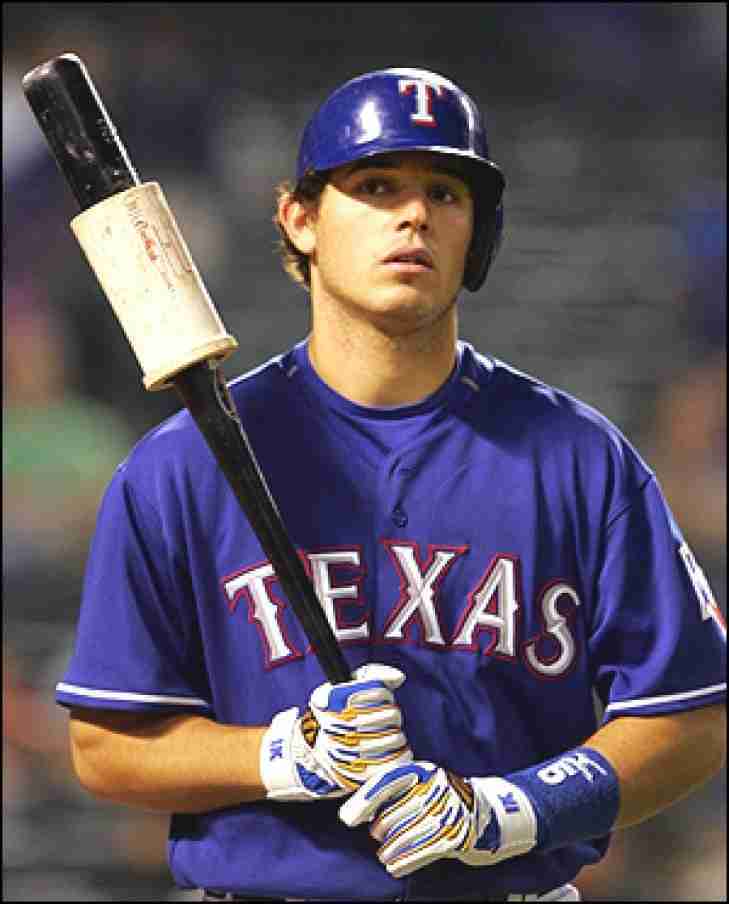
The ascent of Ian Kinsler from a 17th-round draft pick in 2003 to the influential catalyst of the most illustrious period in Texas Rangers history exemplifies his unwavering competitive drive. Upon debuting in Major League Baseball in 2006, Kinsler promptly secured the starting second baseman position, succeeding Alfonso Soriano and infusing a vigorous, high-energy presence into the Arlington infield. He swiftly demonstrated his impact, establishing himself as a foundational member of a young, rising core aimed at significantly transforming the franchise’s competitive stature.
Kinsler’s defining characteristic was his ability to excel at everything, avoiding the pitfalls of a one-dimensional profile. He paired a fundamentally sound, high-coverage glove at second base with rare, explosive pop for a middle infielder. Standing wide open at the plate and aggressively looking to launch, he became the most prolific leadoff threat in club history, setting franchise records for games started and home runs from the number one slot—including a staggering 29 leadoff longballs that instantly put opposing pitchers on their heels.
That unique power-speed combination culminated in historic statistical peaks during the 2009 and 2011 campaigns. Kinsler joined the ultra-exclusive 30-30 club in both seasons, demonstrating an exceptionally advanced understanding of base-stealing efficiency alongside his 30-home run performance. His 2009 season also featured a legendary single-day masterclass on Jackie Robinson Day, when he went a perfect 6-for-6 at the plate and hit for the cycle, thereby establishing his reputation as a player capable of dominating a baseball game.
While his high-intent swing left him prone to stretches of elevated strikeouts, his overall value remained remarkably stable throughout his seven-year run in Arlington. From 2006 through 2012, Kinsler collected 1,145 hits, 156 home runs, and a sharp .273 batting average. He wasn't just a regular-season compiler; he was the emotional sparkplug for the back-to-back American League pennant-winning squads of 2010 and 2011, bringing a fierce, borderline-arrogant confidence that defined those historic World Series teams.
Defensively, Kinsler provided a remarkably steady hand, routinely placing near the top of the league in range factor and total putouts. He worked seamlessly alongside shortstop Elvis Andrus to lock down the middle of the diamond, ensuring that a sophisticated Rangers pitching staff had a premium safety net behind them. Though he would later move on to Detroit and eventually capture an elusive World Series championship ring with the Boston Red Sox in 2018, his absolute physical prime and baseline identity were forged in the Texas heat.
In 2022, Kinsler received the ultimate franchise honor when he was inducted into the franchise Hall of Fame.
6. Frank Howard
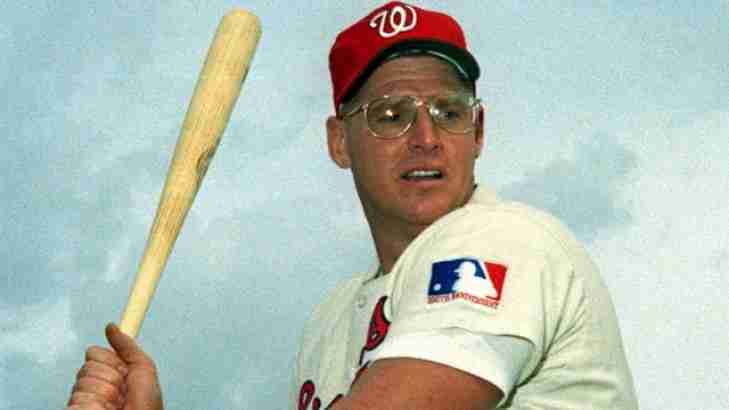
In examining the foundational history of the Texas Rangers franchise, distinguished baseball historians must consciously distinguish the organization's geographical origins from its chronological record. Prior to relocating to Arlington amidst the intense heat of summer, the franchise operated as the second iteration of the expansion Washington Senators. During those challenging and low-leverage years in the nation's capital, the team consistently finished at the bottom of the standings. Nonetheless, they were supported by an exceptionally formidable individual who provided the local fanbase with a compelling reason to attend the ballpark each afternoon. Standing at an imposing 6'7" and weighing over 250 pounds, Frank Oliver Howard was a physically commanding and high-velocity presence in an era characterized by defensive play. Throughout his illustrious career, which encompassed the club's historic relocation, the celebrated slugger, aptly nicknamed “The Capital Punisher,” served as a key middle-of-the-order batter and power hitter.
His initial arrival prior to the 1965 season was the highlight of a significant, multi-team trade with the Los Angeles Dodgers, where he had previously received the National League Rookie of the Year award and a World Series championship ring. In Washington, Howard did not merely assume a position in the middle of the batting order; he also converted the expansive dimensions of RFK Stadium into his personal proving ground for extraordinary power.
He made hitting towering home runs a daily habit, with balls landing so far that stadium officials marked their landing spots by painting three seats white. His peak of dominance occurred during an extraordinary three-year period from 1968 to 1970, a time when baseball was struggling with a low-scoring, dead-ball era. Howard ignored this offensive downturn and belted over 40 home runs for three straight seasons. In 1968, he led the league with 44 home runs, then set a career high with 48 round-trippers in 1969.
His peak season was a stunning 1970 regular season, showcasing a masterful balance in his hitting. That summer, he led the American League with 44 home runs, 126 RBIs, and an impressive 132 walks, combining raw power with an exceptional .416 on-base percentage. This performance secured his third top-five finish in the American League MVP voting.
Following the conclusion of a highly productive summer in 1971, during which he hit 26 home runs, the franchise carried out its long-anticipated and somewhat contentious relocation to the Dallas-Fort Worth area prior to the 1972 season, rebranding itself as the Texas Rangers. Demonstrating his steadfast dedication, the veteran icon permanently engraved his name in local history by hitting the inaugural home run in Texas Rangers history during the team's first home game at Arlington Stadium.
The heavy physical strain of supporting such a large frame over nearly fifteen summers took a toll on his lower body, leading to declines in his power and contact rates. Acknowledging this natural decline and embracing a youth-focused strategy, the front office quietly sold his contract to the Detroit Tigers in August 1972 for the waiver price, marking the end of his iconic era with the team.
Across his 1,172 total games representing the Senators and Rangers, he accumulated exactly 1,141 hits, 155 doubles, 246 home runs, and 701 runs batted in, entirely validated by a stellar .503 slugging percentage and an exceptional 142 career OPS+.
2. Rafael Palmeiro
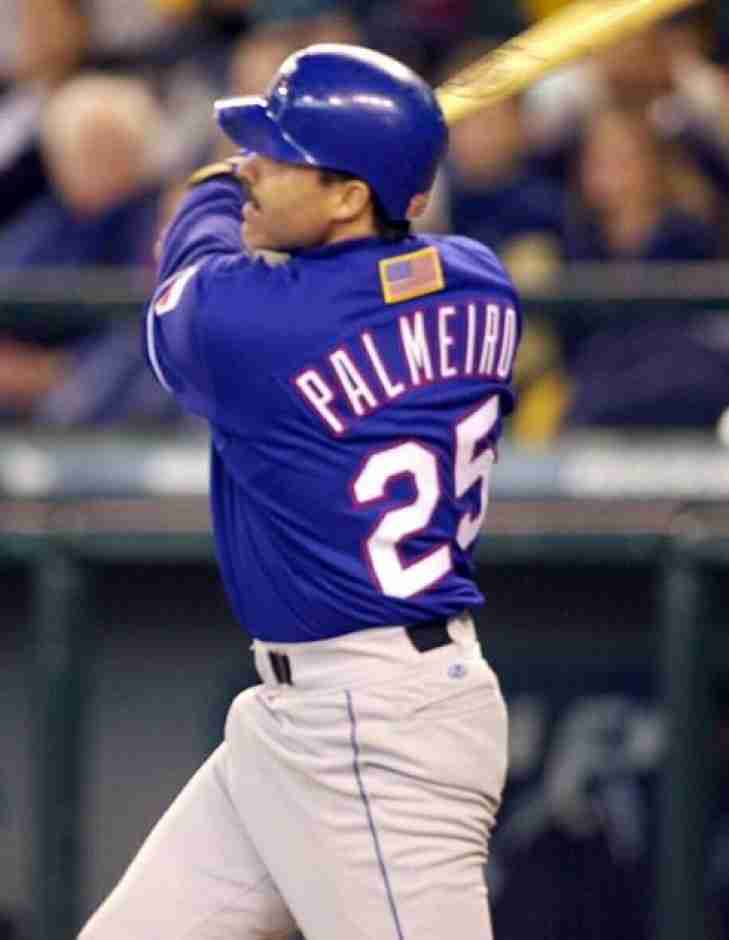
When assessing the purely mechanical precision of a left-handed swing, very few hitters in the modern expansion era have matched the metronomic, smooth-operating consistency of the Cuban-born first baseman. Rafael Palmeiro was never a flamboyant or eccentric figure on the field; instead, he approached the act of producing high-caliber offensive output as a mandatory routine. Throughout two distinct, highly productive multi-year periods in Arlington, the exceptionally durable slugger quietly compiled some of the most remarkable, volume-rich statistics in the franchise's history. However, while his performance at the plate clearly demonstrates elite, mid-lineup capability, his legacy remains disconnected from the sport’s formal honors—traumatized by a sudden, late-career decline that permanently reshaped his standing in the historical record.
His arrival before 1989 was the result of an exciting, big trade with the Chicago Cubs that brought fresh energy and a talented group to Texas. Palmeiro made consistently powerful contact a daily habit, quickly becoming a standout player in the American League. In 1990, he passionately took on junior circuit pitching, leading the major leagues with 191 hits and achieving an impressive .319 batting average.
He substantiated this assertion during a remarkable 1991 All-Star campaign, leading the league with 49 doubles, while accumulating 203 hits and hitting 26 home runs. His career progression peaked notably in the 1993 season when he hit a career-high 37 home runs and led the league with 124 runs scored, thereby establishing himself as one of the premier positional assets nationwide.
Following the conclusion of that remarkable 1993 campaign, a highly publicized and progressively contentious contractual dispute arose between Palmeiro's representatives and the Texas front office concerning his long-term market valuation. Rather than offering a lucrative extension to their domestic star, the management made a decisive strategic shift that winter, allowing him to depart in free agency and sign with Baltimore. Concurrently, Texas replaced him at first base by signing Will Clark.
The move significantly heightened Palmeiro's determination, leading to five exceptional years on the East Coast. However, the appeal of Arlington remained irresistible, prompting a substantial five-year contract upon his return through free agency prior to the 1999 regular season. This second stint was when his innate physical strength truly reached its peak.
In 1999, Palmeiro delivered an exemplary offensive performance, recording a career-high 47 home runs and generating 148 runs batted in. His impressive slash line of .324/.420/630 earned him a Silver Slugger Award and a commendable fifth-place finish in the Most Valuable Player (MVP) voting. Notably, he also received a Gold Glove Award that summer, despite participating in only 128 games as the designated hitter and 28 games at first base. Had he been positioned as an outfielder demonstrating comparable offensive productivity, rather than occupying the constricted roles of first baseman and designated hitter, his record would likely have included double the number of All-Star selections, totaling eight.
He sustained that thunderous output with consecutive 43-homer, 39-homer, and 38-homer campaigns, maintaining a relentless pace through the conclusion of his second Texas departure in 2003. Across his 1,573 games with the Rangers, he accumulated exactly 1,692 hits, 321 home runs, 335 doubles, and 1,039 runs batted in, all backed by an exceptional .290 batting average and a lethal .519 slugging percentage. Advanced analytics strongly reinforce the sheer density of his localized peak, anchoring his magnificent footprint with a spectacular 44.6 franchise position bWAR—a total that ranks among the absolute highest in club history.
Naturally, the broader historical narrative faces a massive, legacy-tarnishing controversy. Following a return to the Orioles late in his active journey, where he joined the ultra-exclusive 3,000-hit and 500-home run clubs, Palmeiro notoriously wagged his finger at a congressional hearing while denying performance-enhancing drug use, only to test positive for stanozolol just months later. The severe fallout completely crushed his public image, resulting in a strict, permanent exclusion from both the National Baseball Hall of Fame and the official Texas Rangers Hall of Fame.
14. Charlie Hough
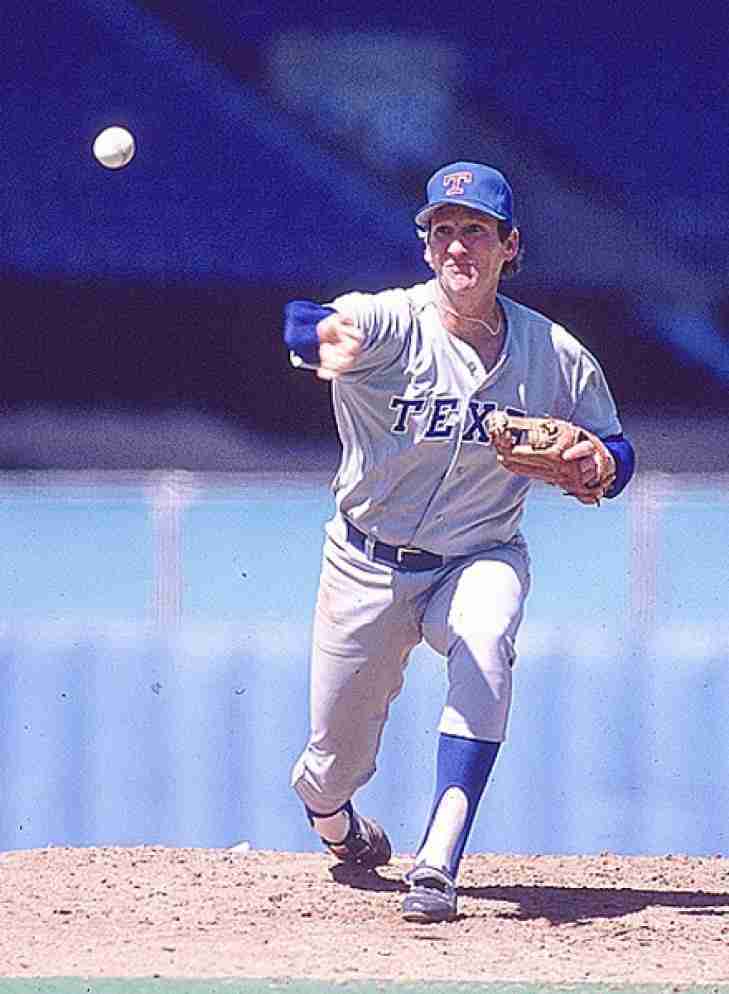
When Charlie Hough was acquired by the Texas Rangers from the Los Angeles Dodgers in July 1980, he was considered just a 32-year-old relief pitcher known for his dancing knuckleball. By then, he had spent ten years working out of California's bullpen. However, the Rangers, facing a lack of stable pitching, made a surprising decision: they transitioned the veteran reliever into a starting pitcher. This move sparked an unprecedented ten-year period of remarkable durability, challenging conventional ideas of pitching longevity in Arlington.
Operating with a specialized pitch that minimized arm strain, Hough became a top, high-volume baseline anchor for a franchise enduring tough years. He maintained an impressive run from 1982 to 1990, surpassing 200 innings in eight of those nine seasons. Equipped with a tricky, unpredictable knuckleball complemented by a rare fastball and slider, his workload peaked in 1984 when he led the American League with 36 starts and 17 complete games. Unlike typical pitchers who needed careful rest, Hough managed his arm effectively, often allowing the bullpen full nights off, all while maintaining a legendary pregame routine of smoking a cigarette and solving a crossword.
This consistent performance led to a remarkable individual achievement in 1986. With a 17–10 record and a 3.79 ERA, Hough secured his only All-Star Game selection. That summer, he almost pitched a no-hitter against the Angels, reaching the ninth inning before a costly outfield error ended the attempt. Despite this, his skill at confusing hitters remained strong as he aged, especially highlighted by a standout 1987 season where he pitched an impressive 285.1 innings and struck out a career-high 200 batters.
By the time his remarkable 11-year run with the team concluded following the 1990 season, Hough had firmly rewritten the organization's record books. Though his heavy reliance on the knuckleball naturally produced its share of wild pitches and occasional losses, his sheer availability turned him into a Texas institution.
Hough appeared in 344 games (313 starts). He compiled a 139–123 record with a 3.68 ERA and a 1.32 WHIP, throwing a franchise-record 2,308 innings. He recorded 98 complete games, 12 shutouts, and tallied 1,452 strikeouts. He was formally enshrined as a member of the inaugural class of the Texas Rangers Hall of Fame in 2003.
4. Adrian Beltre
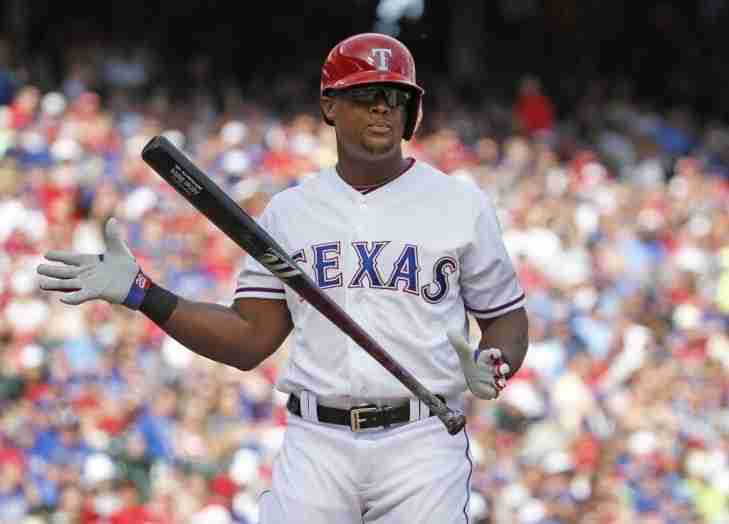
Adrián Beltré had previously assembled highly productive and outstanding seasons across the West Coast, the Pacific Northwest, and a remarkable one-year tenure in Boston before making the decision to settle in Arlington. Signing a significant free-agent agreement with the Texas Rangers prior to the 2011 season, the highly skilled Dominican third baseman did not merely fill a positional vacancy; he immediately became the moral compass of competitiveness, the foremost voice, and the defensive benchmark of a championship-winning team. Throughout an eminent eight-season concluding chapter of his active career, he established an elite standard of run production and exceptional infield proficiency that ranks among the most distinguished chapters in the history of sports in Texas.
His 2011 debut with the Rangers showcased an impressive display of instant front-line dominance, nearly elevating the team to legendary status. Beltré made defensive skills and clutch hitting a hallmark of his routine, hitting 33 home runs and driving in 105 runs, leading the Rangers directly to the American League pennant.
He maintained that dynamic, hardware-certified baseline over the subsequent five years, demonstrating that his elite batting and exceptional defensive skills remained unaffected by aging. He methodically dominated junior league pitching to secure a well-earned American League batting title during a distinguished 2013 season, while consistently performing at a high level at third base.
He captured two Gold Gloves, a highly prestigious Platinum Glove Award as the finest overall defender in the league, and a Wilson Defensive Player of the Year honor while representing Texas, famously pairing his elite lateral reflexes with a playful, flat-out refusal to ever let his teammates touch his head during celebrations.
Far from a one-dimensional specialist, his pristine zone discipline and immense structural power kept him locked firmly into the absolute center of the American League hierarchy. Beltré was a metronomic force in the middle of the order, commanding three All-Star selections in a Texas uniform while anchoring four separate top-ten finishes in the AL Most Valuable Player balloting (2012, 2013, 2014, and 2016).
The absolute individual pinnacle of his late-stage Texas run erupted on a historic afternoon in July 2017 against Baltimore. Lashing a high-velocity double down the left-field line at Globe Life Park, Beltré became the 31st player in Major League Baseball history—and the first-ever native of the Dominican Republic—to join the ultra-exclusive 3,000-hit club, sending the home crowd into an absolute frenzy.
Recognizing the onset of a natural physical crossroads, the veteran icon maintained his elite dignity, completing a final 15-homer summer in 2018 before orchestrating a definitive, highly peaceful career exit by announcing his retirement that November, drawing a curtain on an incredible 21-year journey in professional sports.
Adrián Beltré's legendary career with the Texas Rangers is truly inspiring. He played 1,098 games solely for Texas, earning 1,277 hits, 239 doubles, 199 home runs, and 699 RBIs with a fantastic .304/.357/509 slash line. The organization took great pride in honoring his local impact by retiring his iconic number 29 in the stadium rafters in June 2019. Additionally, he was inducted into the Texas Rangers Hall of Fame in 2021, celebrating his remarkable contribution to the team. In 2024, the BBWAA honored him by inducting Adrián Beltré into the National Baseball Hall of Fame, where he received an impressive 95.1 percent of the ballots on his first year of eligibility.
9. Alex Rodriguez
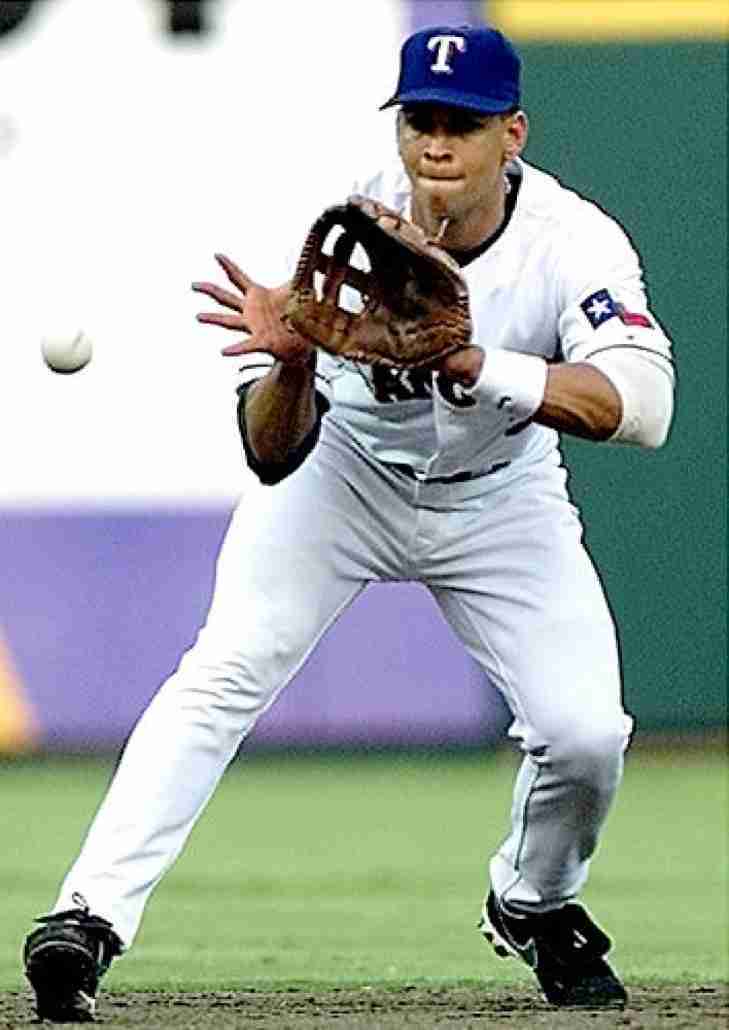
The decade-long, $250 million contract that brought Alex Rodriguez to Arlington before the 2001 season remains one of the most controversial moments in sports. It significantly limited the Texas Rangers' financial freedom. Although the front office failed to create a winning team around him, Rodriguez's three-year period of individual excellence ranks among the best in baseball history. From the moment he took the field as Texas's shortstop, he played at a level far above his peers, turning the Ballpark in Arlington into his own personal launching pad.
Rodriguez was a statistical powerhouse, excelling with elite shortstop defense and extraordinary power. During his three seasons, he led the American League in home runs, hitting 52 in 2001, an impressive 57 in 2002, and 47 in 2003. He also earned three consecutive Silver Slugger Awards, two Gold Gloves, and secured the AL home run and RBI titles, making his spot in the lineup a daunting challenge for opposing pitchers.
The extent of his offensive impact was emphasized by his remarkable consistency in producing extra-base hits. Ironically, the 2003 season—the year he officially received his inaugural American League Most Valuable Player Award—recorded his lowest slugging percentage as a Ranger at an exceptionally high .600. His capacity to sustain this level of offensive production while occupying the most challenging position on the infield set a precedent for the value of positional scarcity, fundamentally challenging contemporary sabermetric projection models.
The relationship reached an unavoidable breaking point following his 2003 Most Valuable Player (MVP) campaign, as the front office publicly acknowledged their inability to continue subsidizing his contractual obligations while maintaining a competitive roster. Subsequently, a highly publicized and dramatic winter saga unfolded; an initial blockbuster trade to the Boston Red Sox spectacularly collapsed when the players' union declined to permit Rodriguez to accept a voluntary salary reduction to facilitate the transfer. Motivated by an off-season injury sustained by Aaron Boone, the rival New York Yankees swiftly capitalized on the opportunity, finalizing a historic transaction in February 2004 that sent second baseman Alfonso Soriano and prospect Joaquín Arias to Texas, with the Rangers compelled to absorb a substantial $67 million of the remaining salary to secure financial relief.
Across his 485 games in Texas, Rodriguez accumulated a staggering 25.5 bWAR, meaning he essentially operated at an average of an 8.5-win player per season. He departed Texas with 569 hits, 156 home runs, and a blistering .305 batting average.
3. Juan Gonzalez
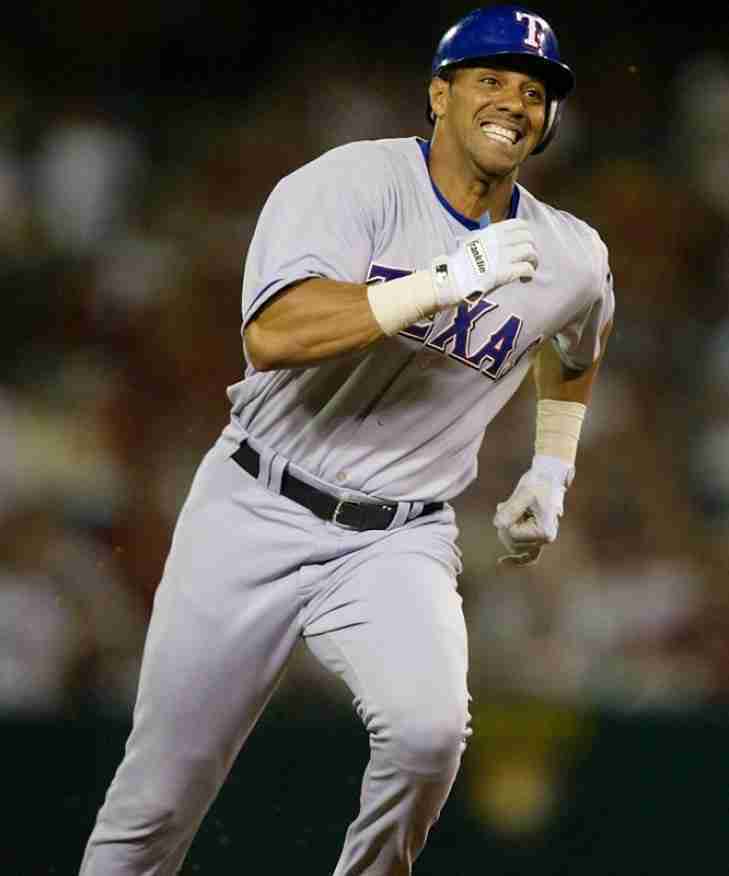
Signed by the Texas Rangers as a 16-year-old free agent, Juan González quickly made a big impact in the major leagues, earning a reputation as a formidable player. Known as “Juan Gone,” he set the pace for the franchise's first modern championship era with powerful, high-velocity line drives during Texas summers. During his two tenures in Arlington, the tall slugger consistently elevated the organization’s power stats, blending raw strength with a keen ability to drive in runners, cementing his status as a legendary power hitter.
His debut in the early 1990s marked a shift in leadership within the junior circuit. González made his towering home runs a personal trademark, winning back-to-back American League home run titles with 43 homers in 1992 and then an impressive 46 during a standout 1993 All-Star season. He dominated opposing pitchers with an aggressive, powerful right-handed swing, effortlessly clearing the fences and posting seven seasons with at least 100 RBIs for the team.
In 1996, González delivered an exemplary display of high-leverage hitting, recording 47 home runs and 144 RBIs while achieving an impressive .314/.368/643 slash line over 134 games. This performance earned him his first American League Most Valuable Player Award and contributed significantly to Texas’s inaugural postseason appearance. He continued this exceptional performance in 1998, establishing a historic dominance in run production. Demonstrating systematic dismantling of major-league pitching, he drove in an extraordinary league-leading 101 runs before the All-Star break. He concluded the season with 42 home runs and a career-high 157 RBIs, thereby securing his second American League MVP award.
After the 1999 season, González was in the final year of his contract and increasingly demanded a lucrative extension reflecting his top-tier value. Management, wary of committing long-term and significant money to a hitter with growing back issues, feared losing their star for nothing. Consequently, in November, they executed a bold trade, sending the two-time MVP to the Detroit Tigers in a nine-player deal for a promising group led by Gabe Kapler and Francisco Cordero.
While he would eventually return to Arlington via free agency for a highly productive two-year encore from 2002 through 2003, injuries severely limited his playing time, drawing a quiet curtain over his peak years.
Over his 1,400 games with Texas, he achieved exactly 1,592 hits, 296 doubles, and a strong .293 batting average, complemented by a remarkable .565 slugging percentage. He is the all-time leader for the Rangers in both home runs (372) and runs batted in (1,180), solidifying his key value within a detailed algorithmic assessment. In 2015, the organization honored his legacy by inducting Juan "Juan Gone" González into the Texas Rangers Hall of Fame.
11. Jim Sundberg
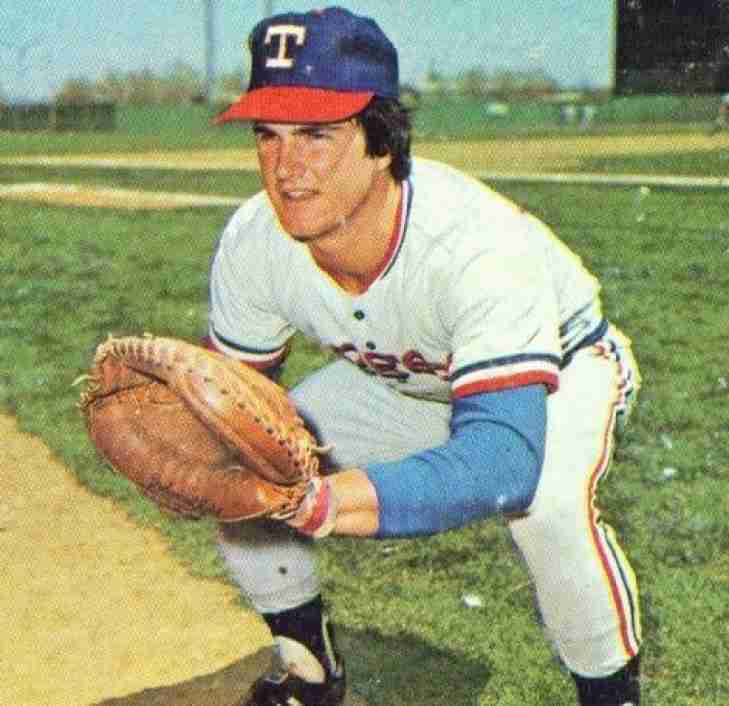
Long before the Texas Rangers became known for their explosive offense, the young franchise's identity was rooted in exceptional run prevention behind the plate. Jim Sundberg didn't just play catcher; he dominated it, establishing himself as the top defensive backstop of the late 1970s. Remarkably jumping from Class-A to the majors as a 22-year-old rookie in 1974, the intelligent right-hander instantly improved manager Billy Martin’s defense, earning an unexpected All-Star nod in his first summer and stabilizing the pitching staff with remarkable maturity.
Sundberg was renowned for his relentless defensive presence and exceptional durability. During a time when catching 100 games was notable, he regarded the position as a regular task, setting an American League record with 155 games caught in 1975. His swift lateral moves and powerful throwing arm allowed him to frequently neutralize opposing base runners, earning him six straight Gold Glove Awards from 1976 to 1981—the first for a Texas Rangers player. Modern defensive metrics confirm his dominance, as Sundberg led all American League catchers in Total Zone Runs seven times in his first decade in Arlington, consistently executing flawless pitch-blocking and game-calling to create a top-tier defensive foundation.
Although his defensive skills often stole the spotlight, Sundberg was a consistently reliable presence at the bottom of the batting order. Not an elite power hitter, he still demonstrated excellent plate discipline, consistently working tough at-bats and ranking high in sacrifice hits to move runners along. His best offensive season was in 1977, when he hit .291, with 132 hits and 65 RBIs, finishing 15th in the American League MVP voting.
By the early 1980s, a shift in front office philosophy and an effort to reduce payroll friction signaled the end of his initial tenure. His first departure from Arlington was prolonged; a major winter 1982 trade aimed to send him to the Los Angeles Dodgers with prospects like Orel Hershiser and Dave Stewart, but it collapsed at the last moment when Sundberg invoked his no-trade clause over contract issues. The inevitable trade finally happened in December 1983, when the Rangers sent their legendary catcher to the Milwaukee Brewers in exchange for Ned Yost and Dan Scarpetta.
After a highly successful mid-career journey away from Texas—which included an All-Star nod in Milwaukee and a starring role in the Kansas City Royals' 1985 World Series championship—Sundberg returned home to Arlington in the summer of 1988 to conclude his 16-year career where it all began, officially retiring after the 1989 season.
Sundberg completed his Texas residency, playing 1,512 games as a Ranger with 1,180 hits, 200 doubles, and 480 RBIs. In 2003, he was named to the Rangers' inaugural Hall of Fame class.
1. Ivan Rodriguez
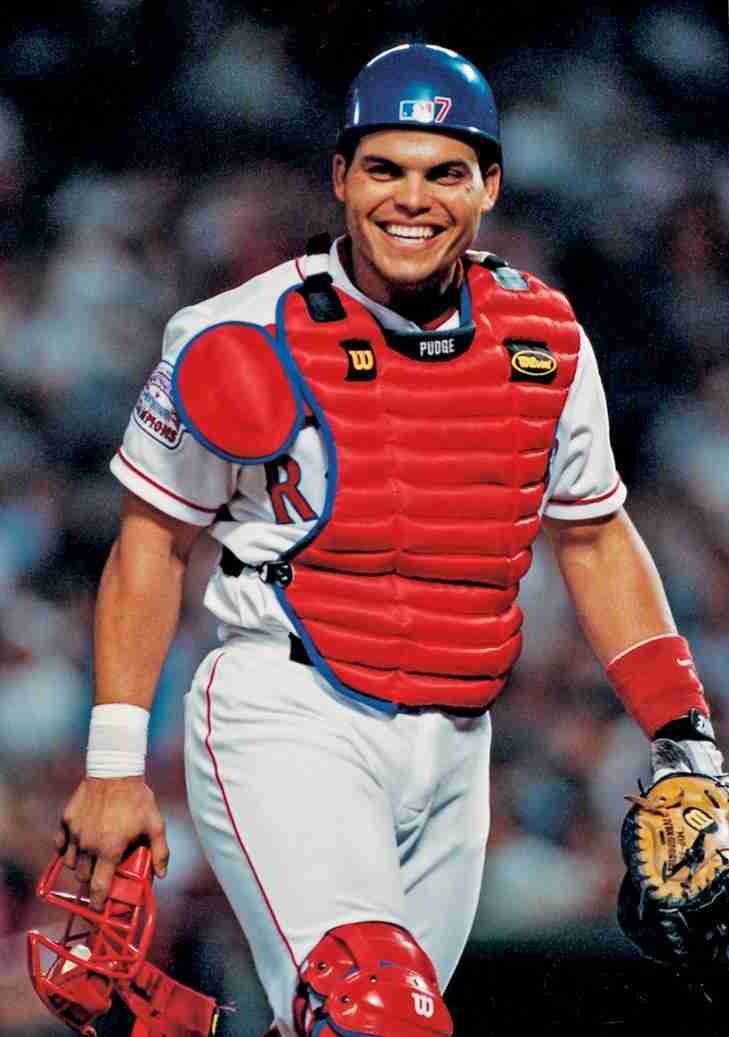
When examining the most comprehensive and physically formidable forces to have ever directed the game from behind the plate, there exists an unparalleled, gold-standard benchmark that exceeds the scope of modern archives within the junior circuit. Signed out of Puerto Rico as a teenager, Iván “Pudge” Rodríguez did not merely occupy a premium defensive position for the Texas Rangers; he fundamentally redefined it as a platform for innovative athletic excellence. Making his highly anticipated Major League debut in June 1991 at the age of 19, the compact and swift catcher rapidly established himself as the definitive face of the franchise. During an illustrious initial twelve-season tenure in Arlington, "I-Rod" combined a lethal, high-velocity arm that effectively neutralized opposing running games with a potent, free-swinging bat, thereby cementing his reputation as the premier catcher of his generation and the undisputed greatest Texas Ranger of all time.
His introductory period in the American League immediately transformed the manner in which opposing managers devised their offensive strategies. Equipped with a predatory release and exceptional footwork, Rodríguez made erasing baserunners a personal discipline. He secured ten consecutive American League Gold Glove Awards from 1992 to 2001, consistently throwing out over fifty percent of potential base stealers, thereby instilling considerable apprehension among baseline tacticians.
Nonetheless, while his extraterrestrial defensive presence redefined the position, his rapid offensive development is what truly propelled him into the highest echelons of baseball immortality. He systematically dismantled Major League Baseball pitching staffs to achieve eight individual seasons with a batting average significantly exceeding the .300 threshold for Texas, demonstrating an uncommon combination of exceptional contact proficiency and sustained power that earned him six Silver Slugger Awards and five seasons with at least 20 home runs.
Rodríguez's 1999 season was truly remarkable, marking the peak of his career. He delivered an outstanding offensive performance that set new standards for modern catchers. Throughout the season, he consistently outdid other American League pitchers, achieving career highs with 35 home runs and 113 RBIs. He also contributed 199 hits, scored 116 runs, and stole 25 bases in 144 games. His efficiency was outstanding, with a impressive .332/.356/558 slash line and a bWAR of 6.4, earning him the 1999 American League Most Valuable Player Award and helping Texas secure a division title.
By the end of the 2002 campaign, injuries like a broken thumb, knee tendonitis, and herniated disc limited the franchise catcher to an average of 103 games over three years. With the team in a rebuilding phase and burdened by hefty payrolls elsewhere, management hesitated to commit long-term to a catcher with durability issues. After a public, tense salary dispute over his market value, they let him go into free agency, marking their first significant departure that winter. Rodríguez used this move to rebound, signing a one-year deal with the Florida Marlins and helping them win the 2003 World Series.
Following subsequent, highly productive years that included a stellar run in Detroit and a brief, deeply nostalgic 28-game return to Arlington in 2009, he left behind a volume-dense statistical fortress that dominates the bedrock of local history.
Across his 1,507 games strictly representing the Rangers, Rodríguez accumulated exactly 1,747 hits, 352 doubles, 217 home runs, 842 runs batted in, and 866 runs scored, entirely validated by a stellar .304 career average with the club. Advanced analytical filters heavily reinforce the sheer density of his peak on the Texas turf, anchoring his magnificent localized footprint with an exceptional, franchise-best 50.0 position bWAR.
For a solid decade, if you asked any fan, coach, or executive in the sport which catcher they would choose to build a franchise around, his name was the only acceptable answer.
The definitive, final punctuations on his immortal life on the diamond arrived exactly as deserved for an inner-circle legend: the BBWAA officially righted the historical ledger by electing Rodríguez into the National Baseball Hall of Fame in 2017 on his very first year of eligibility, followed immediately by the organization beautifully hanging his iconic number 7 in the stadium rafters—punctuating a legendary journey that began with a 2013 induction into the Texas Rangers Hall of Fame
7. Buddy Bell
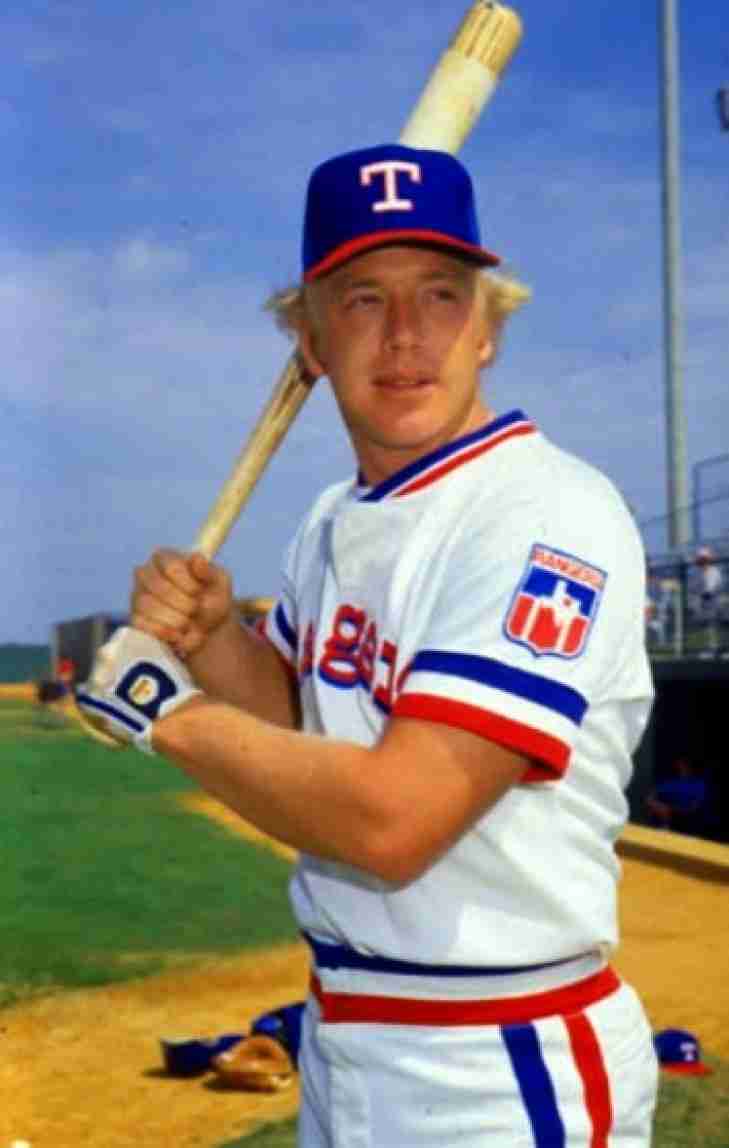
When the Texas Rangers acquired Buddy Bell prior to the 1979 season, they recognized him as a reliable veteran, yet few anticipated the exceptional defensive mastery and offensive performance that would soon manifest in Arlington. Assuming the responsibilities at third base for a franchise still establishing its presence within the American League, Bell immediately revolutionized the left side of the field. His arrival signified the commencement of a distinguished individual era, characterized by his soft hands, superior reflexes, and exceptional positional authority, establishing him as the foremost defensive third baseman of his generation.
Bell’s first season in Texas in 1979 is regarded as one of the franchise's best. He appeared in all 162 games, setting club records with 670 at-bats and 200 hits, including 42 doubles and 101 RBIs. This season clearly demonstrated Bell’s importance, showing he was not just a supporting player but a key leader who could lead a major-league lineup and effectively neutralize the opposing team's running game.
Bell's spectacular debut triggered an exceptional streak of defensive excellence. Over seven seasons in Arlington, he was an unstoppable force on defense, winning six straight Gold Glove Awards from 1979 to 1984. He made challenging cross-body throws seem effortless and regularly robbed opponents of extra-base hits down the line, amassing an impressive 15.7 defensive bWAR with the Rangers—placing him third in franchise history after Iván Rodríguez and Jim Sundberg.
While his glove earned him national acclaim, his bat remained a model of lethal consistency. Bell was an advanced contact hitter who routinely hit near or above .300, peaking with a blistering .329 average in 1980 and a .315 mark in 1984. Across his primary tenure with Texas, he accumulated 1,060 hits and maintained a stellar .293 batting average, providing a steady, high-leverage presence even as the teams around him frequently struggled to reach .500.
His sustained excellence earned him four American League All-Star selections as a Ranger, making him the proud face of a franchise starved for national recognition. Though he was eventually traded back to his hometown Cincinnati Reds during the 1985 season—before returning briefly for a 34-game swan song to close his career in 1989—his peak years were defined by the fans in Arlington who watched him dominate the hot corner daily.
In 2004, the Rangers inducted Bell into their Hall of Fame.
18. Rafael Palmeiro
At the time of the infamous steroids trial, Rafael Palmeiro seemed to come off so well. Of course, when you are sitting next to a man who suddenly suffered from amnesia (Mark McGwire), a man who suddenly forgot the English language (Sammy Sosa), and the man who broke the “bro code” (Jose Canseco), a defiant and confident-sounding Rafael Palmeiro could not help but look good. A few months later, Palmeiro was suspended by Major League Baseball for testing positive for steroids.
Ironically, this could hurt Palmeiro’s chances more than anyone else who testified at Congress. At that point, he had reached 500 home runs, quieter than anyone else ever had, and was knocking on the door of 3,000 hits. Seemingly, anyone else with those numbers would be a celebrated figure beset with endorsements and rabid fans. Palmeiro had neither, as he was playing in the shadow of flashier and more successful power hitters. As such, he was not regularly in the hunt for MVPs and only appeared in four All-Star games, which, considering his career numbers, was relatively low. Subsequently, he was rarely with great teams and holds the dubious record of having played the most games without a World Series appearance.
Prior to the steroid stigmatism, Palmeiro had the Hall of Fame locked numbers of 500 Home Runs and 3,000 Hits. Without the allegations, he may not have even been a lock for first-ballot induction. With the PED label, a look at his offence showed a massive upswing at age 34. McGwire may one day be forgiven, as might Sosa. Palmeiro likely won’t. As unfathomable as it seemed a decade ago, he was almost a one-and-done Hall of Fame candidate, and his years on the ballot fell well short of the maximum as he fell off after his fourth year. This could be a sad reality for one of his day's most consistent offensive performers.
Should Rafael Palmeiro be in the Hall of Fame?
43. Al Oliver
Al Oliver came to the league in 1969 as a line-drive hitter and, for eighteen years, consistently smacked the ball for hits. He had over 2,700 hits in his career, and despite not being a genuine power hitter, he had a plethora of RBI’s.
Oliver’s main gift was hitting for average. In addition to his 1982 Batting Title, he had ten other seasons where he hit the .300 plateau. Oliver wasn’t known for hitting home runs (though he did over 200 in his career), but he found the gap often and was perennially among the league leaders in doubles. As he was a decent clutch hitter and was always in the hunt for Batting Titles, it would have been thought that Al Oliver would have had more support for the Hall of Fame.
37. Kevin Brown
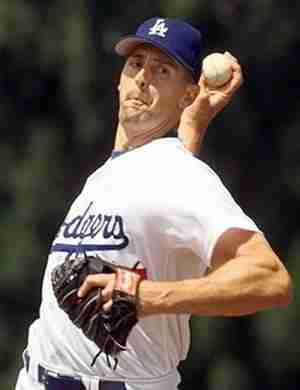
A lot of baseball players take flak for their high salaries. One of those who did was Kevin Brown, who was the first man in professional baseball to sign a contract worth $100 Million. Sadly for Brown, his deterioration made that one of the worst contracts, as in the final years of his career, he was not a player who should have been among the game’s highest-paid.
This isn’t to say that Kevin Brown didn’t have flashes of brilliance because he certainly had enough of them to warrant such a huge contract in the first place. He was regarded as one of the most intense pitchers, and as much as his temper served to fuel his unparalleled competitiveness, it also would cause his unraveling on occasion. Nevertheless, Kevin Brown was a major reason that the Florida Marlins won their surprise World Series in 1997 and the Padres’ 1998 World Series appearance. He had a brilliant fastball and forkball and rarely gave up the longball.
Unfortunately, Kevin Brown was unable to maintain his skill set, and his production dropped off during his final years with the Dodgers and during his American League return to the Yankees. Had Kevin Brown lived up to the years leading up to his nine-digit contract, he would be a serious contender for induction. As it stands now, it doesn’t look good.
Should Kevin Brown be in the Hall of Fame?
110. Frank Tanana
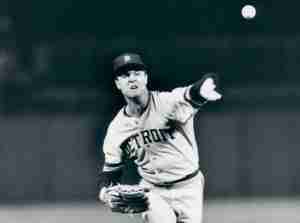
Frank Tanana won 240 career games, yet never seemed to be on the tip of the tongue when you think of all-time great pitchers, or even really good ones. Yet, a closer look at the Michigan native shows a Pitcher whose career was a lot better than you may initially think.
Tanana began his career as a flame-throwing pitcher who, in the mid to late 70’s, had been a Cy Young threat and led the AL in Strikeouts in 1975. His control was solid, too, as his WHIP and ERA were among the top ten during that time frame. Like many pitchers, Frank Tanana’s arm gave out, and at the age of 25, he had to reinvent himself as a junkball pitcher. It wasn’t the quickest transformation, but he would emerge as a dependable starter for Texas and later his hometown Detroit Tigers.
The man who “threw in the 90’s in the 70’s, and threw in the 70’s in the 90’s” may not be a Hall of Fame Pitcher, but he deserved to have gotten a better total than the zero he received in his lone year of eligibility. 240 wins have never seemed so undervalued.
Should Frank Tanana be in the Hall of Fame?
97. Julio Franco
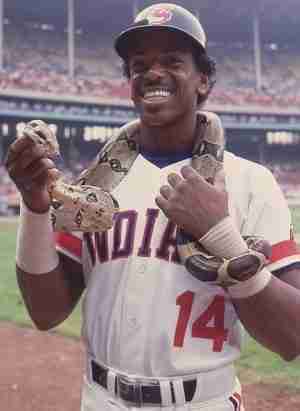
If Baseball truly is an International game, then we would like to name Julio Franco as its Global Ambassador.
The Dominican-born Franco played professional baseball until age 47 in the United States, Japan, Mexico, South Korea, and his home country. Cooperstown does not recognize accomplishments abroad, but despite playing outside the Majors for an extended period, he still amassed over 2,500 hits. Franco had a strange batting stance, but considering he batted over .300 eight times, a Batting Title, and five Silver Sluggers, it had to be considered effective.
Julio Franco may be the ultimate test of whether the Baseball Hall of Fame would reward durability over what is considered traditionally great by Baseball standards.
