

2. Carl Crawford
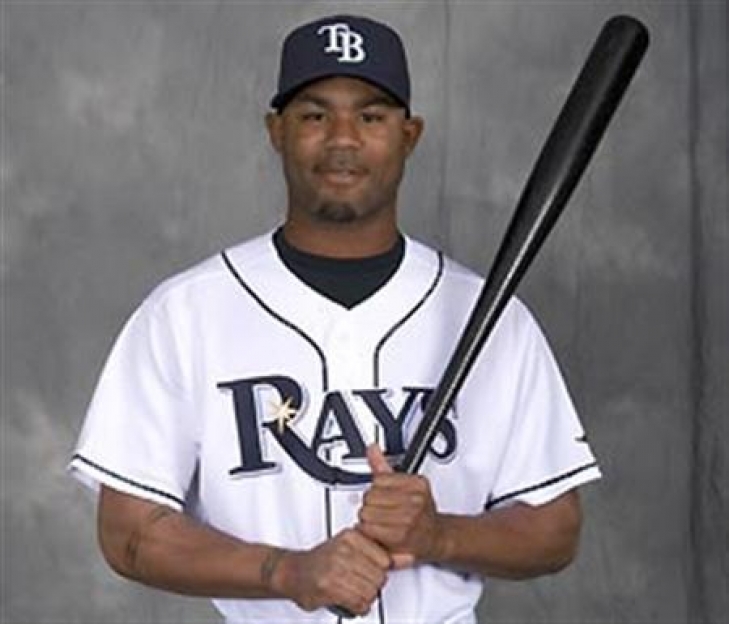
When evaluating the foundational catalyst who first injected pure, electric athleticism into the modern Tampa Bay roster, long before the club became an analytical powerhouse, you have to look directly at the turf-shredding velocity of their premier home-grown speedster. Selected in the second round of the 1999 amateur draft out of high school in Houston, Carl Crawford didn't just climb the minor league ranks; he completely redefined the offensive tempo of the young organization. Making his big-league introduction in the summer of 2002 at just 20 years old, the blazingly fast left fielder embarked on a stellar nine-season residency that fundamentally altered how opponents defended the cavernous outfield grass of St. Petersburg.
His introductory experience in Major League Baseball during 2002 was a brief 63-game period, serving as an initial exposure. However, his subsequent performance in 2003 represented a remarkable and high-velocity breakthrough. Crawford transformed stealing bases and hitting line drives into a disciplined daily routine, recording 177 hits, nine triples, and leading the entire American League with 55 stolen bases. He maintained this vigorous, frontline presence over the following summers, establishing himself as one of the premier high-volume hitters and elite base stealers in all of professional baseball.
From 2004 through 2010, Crawford turned compiling 180-plus hits into an absolute annual certainty, missing the mark only during a frustrating 2008 campaign where an injury restricted him to 109 games. Even in that truncated summer, his high-octane speed remained crucial, helping anchor the outfield during the Rays' improbable, historic run to their first-ever American League pennant and division title.
He was an absolute nightmare for opposing batteries and defensive alignments under the dome, weaponizing his world-class acceleration to lead the American League in triples four separate times (2004, 2005, 2006, and 2010) and topping the junior circuit in stolen bases in three additional campaigns following his rookie breakout.
Crawford’s standout season was in 2010, when he reached career highs with 30 doubles, 13 triples, and 19 home runs. He also drove in 90 runs, scored 110—setting a franchise record—and combined his powerful hitting with excellent defense, earning both an American League Silver Slugger and a Gold Glove. Additionally, he stole 47 bases, helping him secure a seventh-place finish in the league's MVP voting. That rare blend of blistering speed and top-of-the-order hitting earned him massive national reverence, commanding four separate American League All-Star selections—highlighted by an iconic 2009 midsummer showcase where his gravity-defying home run robbery earned him the game's MVP trophy.
This campaign landed him a monumental, $142 million free-agent contract with the Boston Red Sox ahead of the 2011 season.
The transition away from the comfortable marine environment of Florida brought a highly turbulent, painful crossroads; unable to match the skyrocketing performance pressure of New England, severe injuries and debilitating depression took a heavy toll on his mechanics, rendering him a fraction of his former self during subsequent stops in Boston and Los Angeles. While he may never anchor a top historical ranking for the Red Sox or the Dodgers, his monumental legacy with the Rays is completely unassailable. Crawford walked away from St. Petersburg, leaving behind a volume-dense statistical fortress that dominates the organization's archives: a stellar .296 batting average, 765 runs scored, 592 runs batted in, and an incredible 35.6 franchise bWAR, which ranks second behind only Evan Longoria. He remains the all-time, undisputed franchise leader in hits (1,480), triples (105), and stolen bases (409).
10. Blake Snell
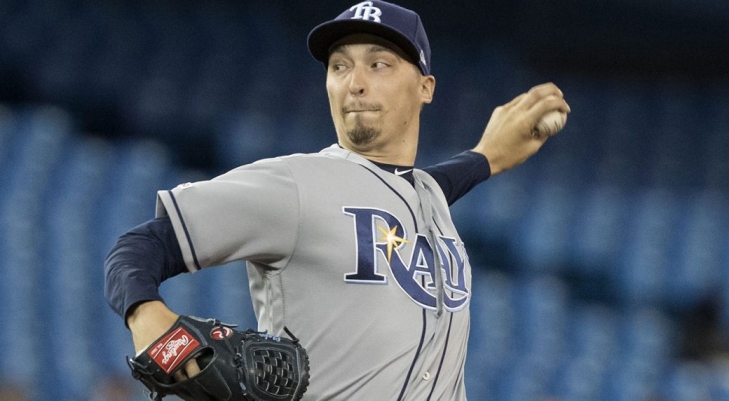
When mapping out the history of modern pitching within the American League East, it becomes evident that the Tampa Bay Rays manage frontline arms in a manner distinct from any other organization in professional baseball. For the Rays, outstanding velocity and award-winning execution are never grounds for abandoning their disciplined, data-driven roster strategy. No single career trajectory exemplifies this analytical approach more than that of left-hander Blake Snell. Selected by the front office in the first round of the 2011 draft, the Seattle-born southpaw possessed an electrifying, high-velocity pitch repertoire featuring a blazing fastball and a penetrating, sharp-breaking curveball. Over five seasons representing the franchise, "Snellzilla" established himself as one of the most exceptional and highly variable strikeout artists of his generation. He demonstrated that when his command was fully optimized, he could attain a peak level of efficiency that nearly transcended the principles of modern pitching.
His initial performances across 2016 and 2017 featured an impressive display of raw talent; however, it was during the 2018 season that everything fully converged to produce a quintessential regular-season performance. Snell consistently dominated junior circuit lineups, transforming them into a routine occurrence. That season, he demonstrated an exemplary level of pitching, leading the American League with a remarkable 21 wins against only 5 losses and an outstanding 1.89 ERA over 31 starts. Advanced analytical metrics substantiate the extraordinary caliber of this peak, as evidenced by his impressive 217 ERA+ and an exceptionally low 5.6 hits allowed per nine innings, securing his first American League Cy Young Award and a top-ten placement in the AL MVP voting.
While his 2019 follow-up campaign was hindered by minor injury-induced leaks and an elevated 4.29 ERA, his value-dense high-leverage profile reached its apex during the pandemic-shortened 2020 regular season. Snell led the pitching staff with a robust 3.24 ERA, guiding the young, ambitious Rays roster to a historic American League pennant.
Yet his entire Tampa legacy is defined by the explosive, controversial milestone that erupted on a national stage during Game 6 of the 2020 World Series against the Los Angeles Dodgers. Dominating the Dodgers' powerhouse lineup, Snell had thrown 5.1 innings of brilliant, one-hit shutout ball, striking out nine on just 73 pitches. Operating under strict, analytical organizational directives to never let a starter face a lineup for a third time, manager Kevin Cash walked to the mound and pulled his cruising ace from the game.
The Dodgers rallied against the Tampa bullpen to win the game and title, creating an emotional moment still felt in baseball. True to their cost-effective approach, the franchise’s front office traded the 28-year-old pennant hero to the Padres in a lopsided, multi-player blockbuster that December, fearing his financial leverage would rise under his contract extension.
