

23. Matt Williams
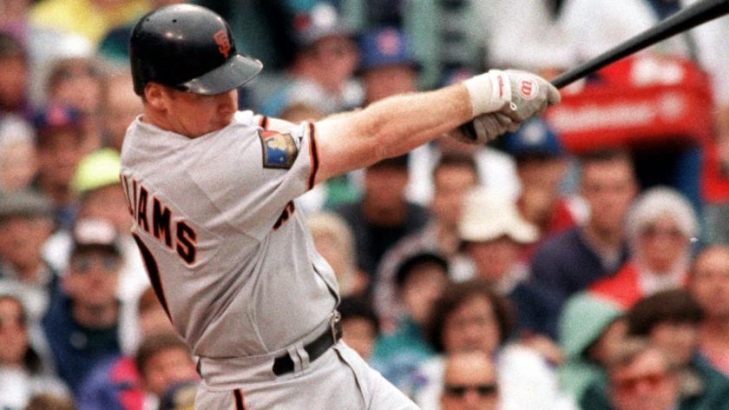
Before establishing himself as a top middle-of-the-order power hitter, Matt Williams was a highly regarded amateur talent from UNLV, so sought after that the front office used the third overall pick in the 1986 draft to acquire his rights. While his defensive skills at shortstop and third base immediately stood out when he quickly moved up to the majors in 1987, his early at-bats were quite rough. In his first three partial summers at Candlestick Park, he struggled with contact issues, batting below .200 despite hitting 34 home runs in 747 plate appearances. Although his sudden muscular gains helped the team reach the 1989 National League pennant, he was in dire need of a technical overhaul—and before the 1990 season, he responded with an impressive, award-winning breakout.
Williams has been a dedicated presence at the hot corner, turning hitting against National League pitchers into a consistent part of his daily routine. His incredible 1990 season saw him demolish senior circuit pitchers, hitting 33 home runs and driving in a league-leading 122 RBIs, all while raising his batting average to a solid .277. This outstanding performance earned him his first career All-Star nod and a Silver Slugger Award, cementing his nickname as "Matt the Bat."
Williams consistently showcased his power over six summers, surpassing 20 home runs each year. His peak came during the strike-shortened 1994 season, where he hit an incredible 43 home runs in just 112 games, showing a historic pace to challenge the single-season record. These achievements earned him his second Silver Slugger, a second All-Star selection, and a close second in the NL MVP voting, behind teammate Barry Bonds.
Apart from his typical offensive power, Williams's exceptional spatial awareness on the field cemented his overall value. He showcased remarkable lateral range combined with a strong throwing arm, earning three National League Gold Glove Awards (1991, 1993, 1994) and establishing himself as a versatile, two-way superstar.
After a 1996 season interrupted by a fractured foot that limited his play, the front office underwent a significant organizational change. In November 1996, GM Brian Sabean made a surprise blockbuster trade, sending their legendary third baseman to the Cleveland Indians in a major multi-player deal involving Jeff Kent and Jose Vizcaino. Although initially met with strong local outrage, the trade ultimately improved the team's roster structure, laying the groundwork for the late-90s comeback, even as Williams continued his powerful hitting with Cleveland and Arizona.
In San Francisco, he accumulated exactly 1,092 hits, 205 doubles, 247 home runs, and 732 runs batted in.
164. Matt Williams
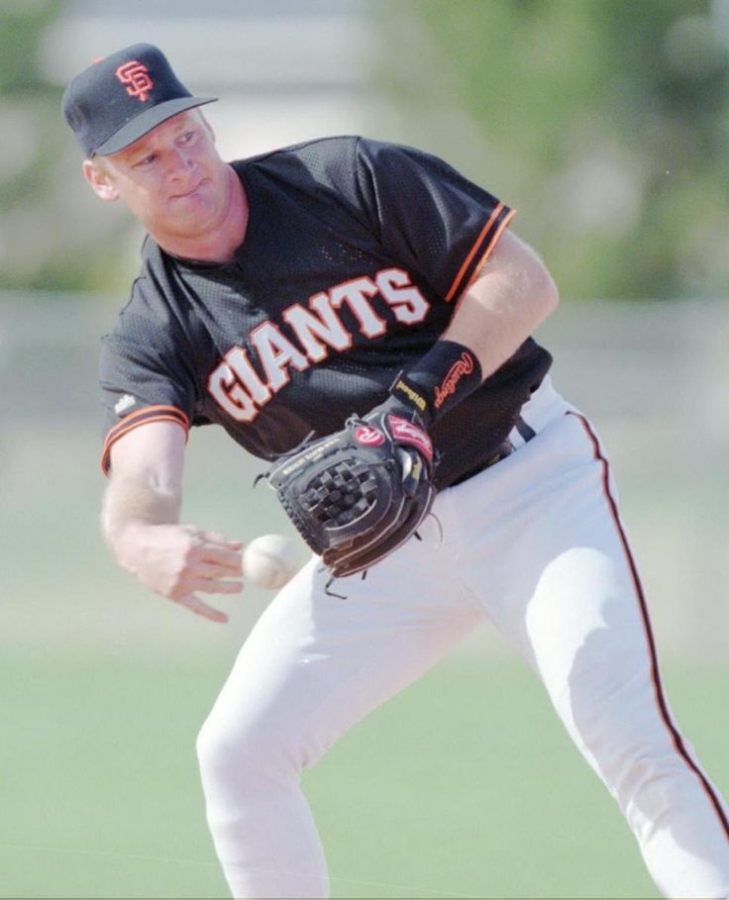
Matt Williams was a cornerstone of the San Francisco Giants for a decade (1987-96), during which he played in the infield, alternating between Third Base and Shortstop.
Williams broke out in 1990 when he had 33 Home Runs, a league-leading 122 Runs Batted In, and he went to his first All-Star Game. 1990 also marked the start of a 10-year streak of at least 20 Home Runs, and he won the Home Run Title in 1994, which also began a three-year run of All-Star Game appearances. In 1991, 1993, 1994, and 1997, Williams won both the Gold Glove and the Silver Slugger, the latter year being his only season with Cleveland.
Williams later signed with the Arizona Diamondbacks for their inaugural season in 1998, bringing a veteran presence to the expansion team. It led to Williams winning his only World Series Ring when the D-Backs won it all in 2001. He retired in 2003 with 378 Home Runs and 1,878 Hits
Williams would later win the Manager of the Year award in 2014 when he took the Washington Nationals to the playoffs.
21. Matt Williams
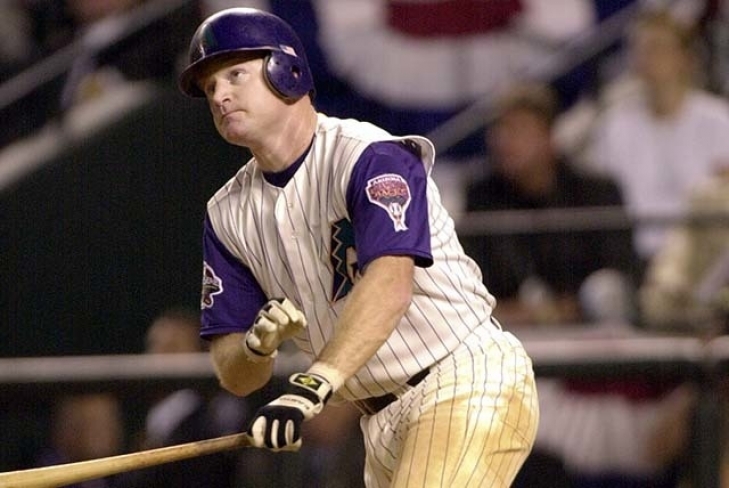
While the best years were well behind him by the time Matt Williams arrived in Arizona, he proved to be very popular among Diamondbacks fans as one of the team’s original members and instantly brought gravitas before the team ever played a game.
This is not to say that Williams still did not have some great moments left in him. In 1999, Williams would blast 35 Home Runs, 142 Runs Batted In (a career high) with a .303 Batting Average, which was enough for him to finish third in National League MVP voting. Williams would later help Arizona win the 2001 World Series, notably with a three-run Game 2 blast.
Overall, as a Diamondback, Williams had 629 Hits, 99 Home Runs with a Batting Average of .278, and the lunch pail work ethic made him the perfect man to bring attention to a winning attitude to the state of Arizona.
