

21. Frankie Frisch
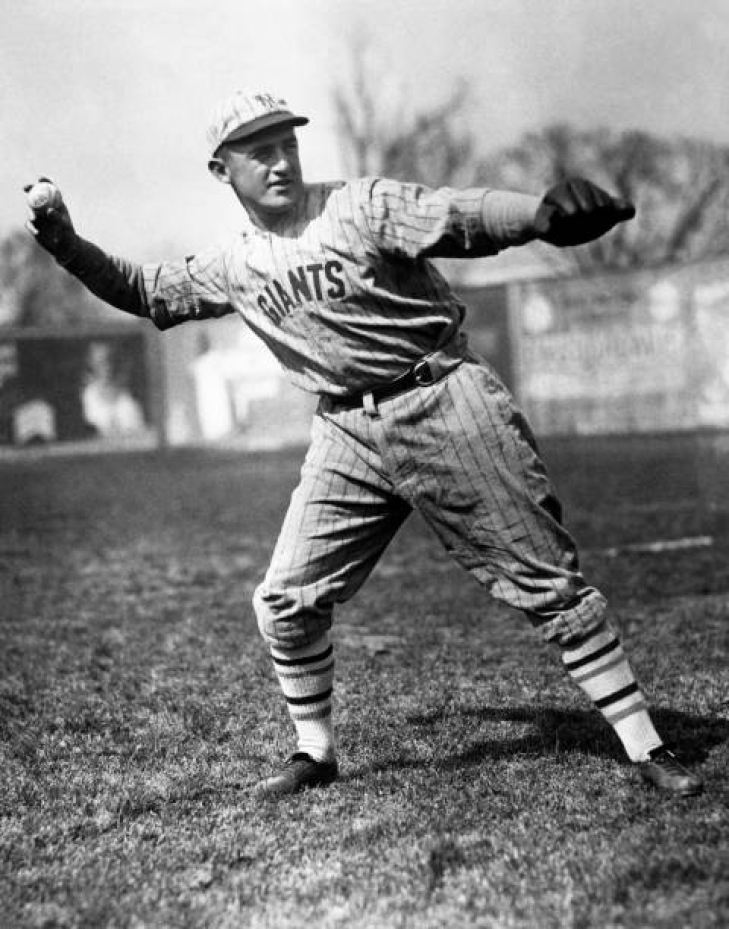
While baseball history rightfully lauds him as the fiery, dirt-stained general who marshaled the "Gashouse Gang" in St. Louis, it is a fascinating analytical truth that Frank Francis Frisch executed his absolute statistical and athletic apex in a New York Giants uniform. Discovered by legendary skipper John McGraw while starring as an unprecedented four-sport titan at Fordham University, the blindingly fast switch-hitter famously bypassed minor-league development entirely to step directly onto the Polo Grounds diamond in June 1919. Universally celebrated as the "Fordham Flash," Frisch did not merely adjust to the major-league learning curve; he weaponized a rare blend of blistering lateral range, high-contact barrel control, and relentless instincts to become the gold standard of McGraw’s modern infield machinery.
His debut as a full-time player in 1920 marked the start of a remarkable career, as he stole 34 bases and drove in 77 runs, helping to stabilize a team in transition. But that solid beginning was only a teaser for the incredible, award-winning performances he would deliver in the summers that followed. Frisch made collecting over 200 hits and challenging senior league pitchers his personal routine. In a stunning breakout in 1921, he had 211 hits with a fantastic .341 batting average and led the league with 49 stolen bases.
He convincingly supported his reputation with an even more formidable performance during the Fall Classic against the cross-town rival Yankees, dominating American League pitchers to achieve a remarkable .471 batting average and acquire his first World Series championship. Far from a transient anomaly, his exceptional accuracy at the plate persisted throughout the decade. Frisch demonstrated exemplary leadership in top-of-the-order execution, securing the league hit crown with an impressive, career-high 223 hits in 1923 while batting an impressive .348.
He followed that by leading the National League with 121 runs scored in 1924, a summer where he famously went 6-for-7 in a single 22–1 demolition of the Boston Braves. Remarkably, after his 1921 breakout, he never once batted under the .300 threshold nor recorded fewer than 20 stolen bases in any full season as a Giant, serving as the highly decorated captain of a squad that captured four consecutive National League pennants.
Despite Frisch’s status as a superstar and his considerable influence within the clubhouse, he was entirely subject to the tyrannical and volatile temperament of John McGraw. The catastrophic breaking point occurred late in a highly frustrating campaign in 1926; after a missed sign during an August road game, McGraw severely and publicly admonished his star captain in front of the entire roster. Deeply offended, Frisch effectively discontinued his participation with the team and departed via train to New York. Although he eventually returned to complete the summer, the personal relationship was irreparably fractured.
Seeking a dramatic structural reset, management orchestrated the most stunning, earth-shaking blockbuster trade of the decade that December. They executed a direct superstar swap, shipping their iconic 29-year-old captain to the St. Louis Cardinals in exchange for fellow future Hall of Famer Rogers Hornsby, who had similarly worn out his welcome with his own front office.
As a Giant, Frisch accumulated exactly 1,306 hits, 171 doubles, 64 triples, and 224 stolen bases, entirely validated by a spectacular .321 career batting average and a robust 38.0 franchise position bWAR. He entered the Baseball Hall of Fame in 1947.
25. Frankie Frisch
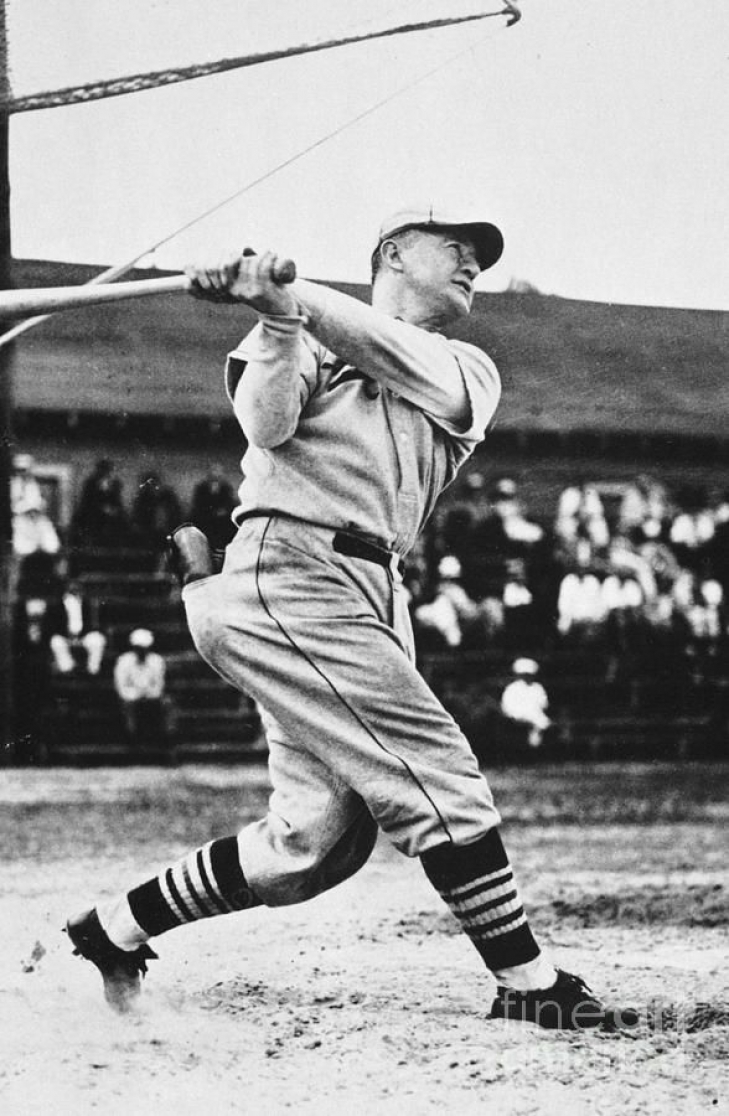
The fiery, dirt-kicking catalyst truly found its shining expression in a lively switch-hitter from the Bronx. Frankie Frisch arrived in St. Louis not just as a star but as a major turning point in the franchise’s history. A versatile athlete at Fordham University whose incredible speed earned him the nickname "The Fordham Flash," Frisch made the jump straight into the majors with the New York Giants in 1919. He quickly became the heart of John McGraw’s successful teams in the early 1920s, helping secure four straight pennants. Yet, a well-known clash of willpower between the talented infielder and his tough-minded manager eventually tore their relationship apart. Before the 1927 season, the front office made a bold move, trading Frisch to the Cardinals in exchange for another legendary player, Rogers Hornsby, who would go on to be a Hall of Famer.
Frisch arrived in St. Louis with plenty of energy left, quickly embedding his aggressive playstyle into the team's core. His debut 1927 season with the Redbirds was a remarkable display of individual talent: he led the Senior Circuit with 48 stolen bases, ranked sixth in batting average at .337, and amassed 208 hits. Defensively, he excelled at second base, leading all National League fielders in Defensive bWAR and setting a major-league record with 641 assists. His dynamic presence transformed a team that had only one pennant before his arrival into a consistent National League contender.
Frisch was more than just a player for the Cardinals; he shaped their entire identity. He served as the emotional core and spiritual symbol of the famous "Gashouse Gang" of the early 1930s—a lively, down-to-earth group of fighters whose tough, fearless attitude matched Frisch's own competitive nature.
His peak in individual hardware came in 1931 when he was named the National League Most Valuable Player, hitting .311 and leading in steals. Although modern stats critics argue that MVP was somewhat inflated, considering his efficiency metrics aligned more with a consistent contributor rather than a league-wide star, his leadership was clear. He guided the team to World Series wins in 1931 and 1934, earning his fourth championship ring.
His responsibilities expanded significantly in July 1933, when he accepted the dual role of player/manager. He beautifully balanced both burdens during the magical 1934 run, hitting .305 over 134 regular-season games while simultaneously managing the club to a dramatic, seven-game Fall Classic victory over the Detroit Tigers. As the physical toll of a grueling 19-year career caught up to him, his regular-season availability naturally diminished, leading to his retirement as an active player in 1937, though he maintained his seat at the top of the dugout steps until late 1938.
With the Cardinals, Frisch collected 1,557 hits, 195 stolen bases, and a .312 batting average. He was inducted into the Baseball Hall of Fame in 1947, and in 2014, Frisch was inducted as part of the Cardinals’ inaugural Hall of Fame Class.
