


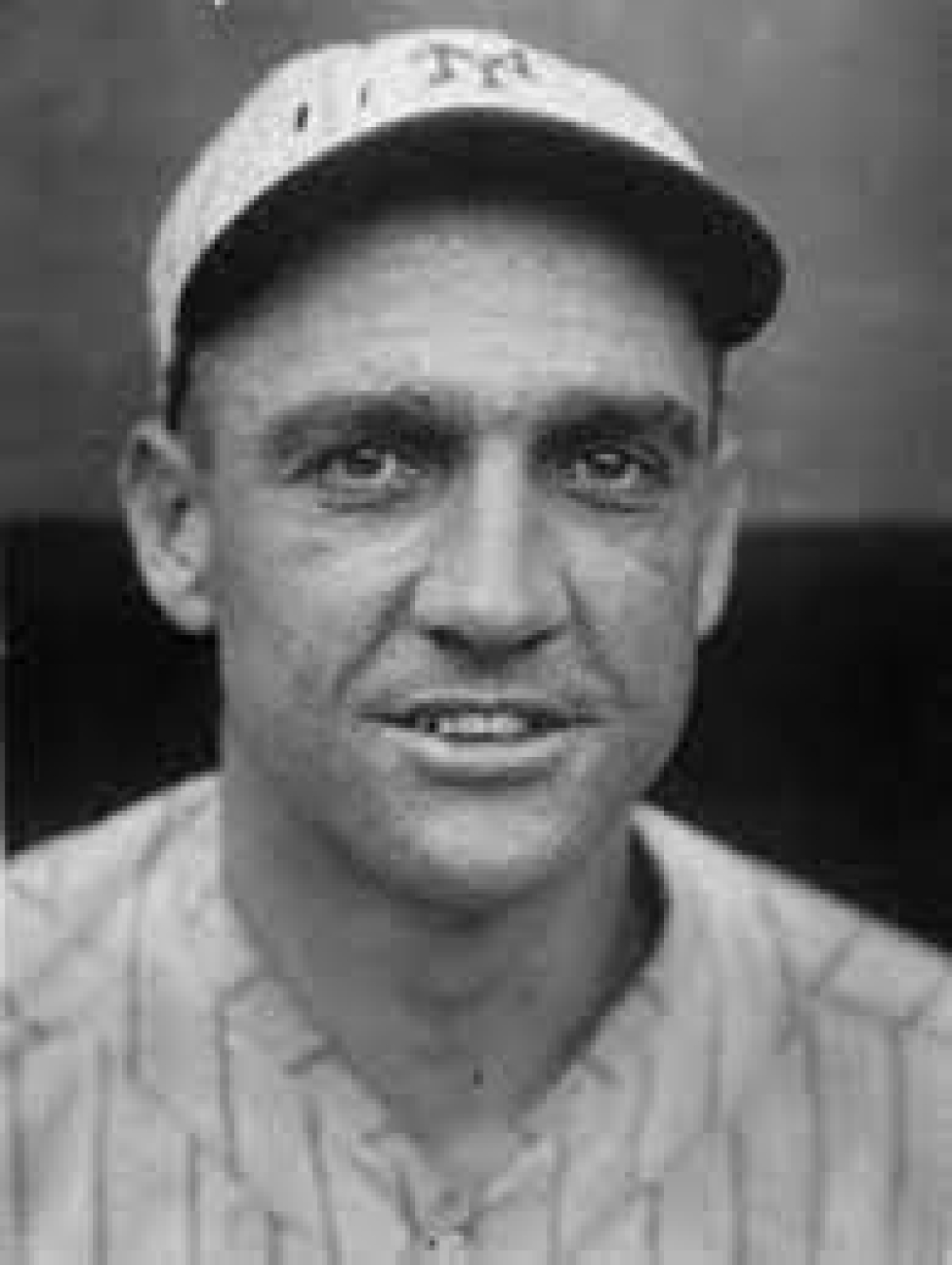




















The story of George "High Pockets" Kelly is a fascinating study in baseball eras. Standing a towering 6'4" in a time when the average player was considerably shorter, the long-limbed first baseman became a premier run producer of the early live-ball era. Yet, playing in Manhattan at the exact same moment Babe Ruth was completely rewriting the sport's offensive playbook across the river meant that Kelly’s prodigious output was routinely overshadowed by the Bambino’s historic long-ball explosions.
Kelly’s road to stability in New York was anything but linear. He made brief cameos for John McGraw’s club in 1915 and 1916, but struggled to find his footing, leading to a bizarre waiver wire saga in the summer of 1917. The Pittsburgh Pirates claimed the young infielder, only for McGraw to realize he had made a premature calculation and claim Kelly right back off waivers less than a month later. Following a brief developmental detour and a stint serving in World War I, Kelly returned to the Polo Grounds ready to anchor the middle of the lineup.
The moment he secured the everyday first-base job in 1920, Kelly turned into a highly efficient RBI machine. He immediately paced the National League with 94 runs batted in during his first full summer, following it up with an exceptional 1921 campaign where he led the league with 23 home runs. That performance ignited a spectacular streak of four consecutive seasons, eclipsing the 100-RBI threshold. While Ruth grabbed the headlines with solo fireworks, Kelly brought the silver home. He served as the clutch-hitting engine that propelled the Giants to four consecutive National League pennants and back-to-back World Series championships over the Yankees in 1921 and 1922.
Kelly put together his absolute professional masterpiece during the 1924 campaign. Weaponizing a smooth, powerful swing that took full advantage of the Polo Grounds' cozy lines, he captured his second National League RBI crown by driving in a career-high 136 runs while clubbing 21 homers. He beautifully replicated that power output with another 20-homer summer in 1925, solidifying his reputation as one of the most feared run-producers in the Senior Circuit. Beyond his bat, his massive reach gave the Giants an elite defensive safety net at first base, frequently bailing out his legendary infield teammates with his vacuum-like scooping ability.
As the decade progressed, a youth movement in New York and the roster’s natural evolution led to his departure. Prior to the 1927 season, the Giants traded the veteran star to the Cincinnati Reds, closing out an incredibly productive chapter in New York baseball history. Kelly completed his memorable 11-year Giants residency, having compiled 1,174 hits, 123 home runs, and 762 RBIs with a .301 batting average.

Comments powered by CComment