
21. Eric Show
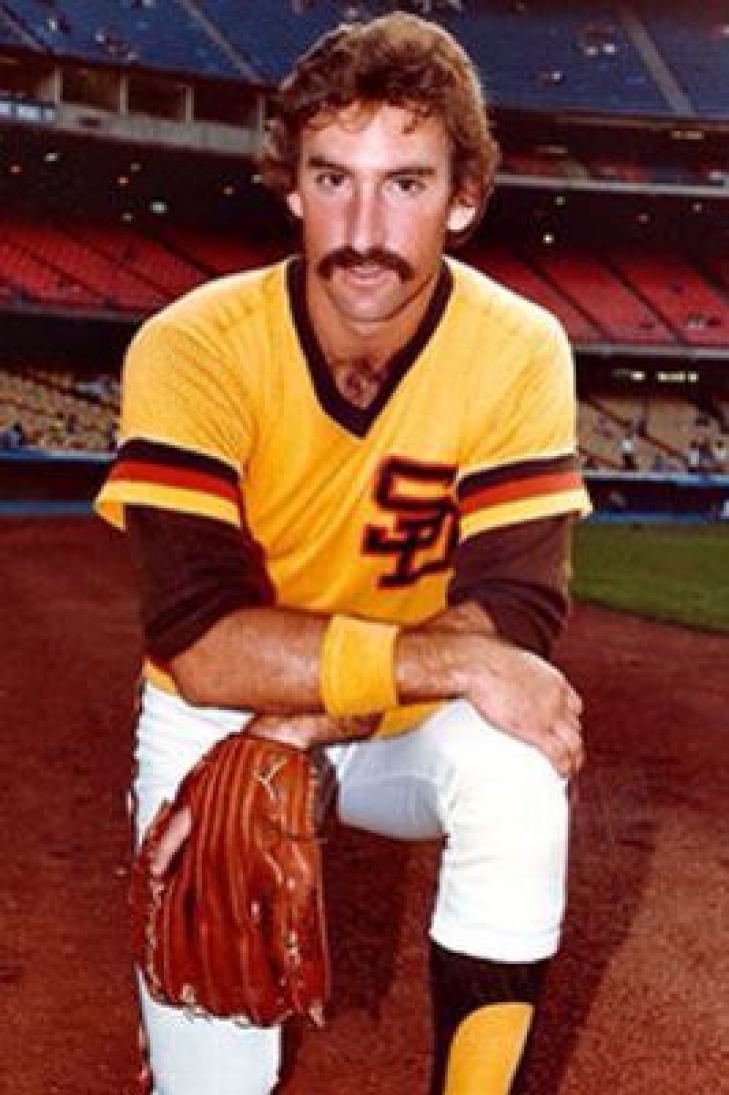
While some baseball narratives are characterized by smooth, unblemished trajectories towards legendary status, the history of the 1980s San Diego Padres pitching staff cannot be told without considering a deeply complex and highly polarizing figure. Eric Show did not conform to the conventional mold of a major league baseball player. An eccentric jazz guitarist, a born-again Christian, and an openly affiliated member of the far-right John Birch Society, his intellectual and political leanings often estranged him from his own clubhouse. Nevertheless, despite ongoing friction, mood swings, and a career overshadowed by a tragic conclusion, the right-handed pitcher served as the reliable and unwavering engine of the San Diego rotation for an entire decade.
His brief debut in September 1981 led to a impactful 1982 season, splitting time between relief and starting with a 10–6 record and 2.64 ERA over 150 innings. By spring 1983, he secured a permanent spot in the starting rotation, beginning a period of consistent durability. Show achieved consecutive 15-win seasons in 1983 and 1984, moving away from his bullpen duties to become an essential part of the middle rotation. His 15–9 record in the impressive 1984 regular season contributed significantly to the Padres’ first-ever National League pennant, providing the small-market team with reliable support during their critical moment.
To be fair, Show was seldom viewed as an elite, top-tier superstar, and he was never selected for an All-Star game. His role was mainly as a dependable, middle-of-the-rotation pitcher, with five seasons pitching at least 200 innings. His best individual season came in 1988, when he achieved a career-high 16 wins, maintained a solid 3.26 ERA, and pitched an impressive 13 complete games.
Despite his on-field skills, his performance was often overshadowed by unfortunate events and clubhouse instability. On September 11, 1985, Show made a lasting mark in baseball history by giving up Pete Rose's 4,192nd career hit, a record that came with a bittersweet sense of closure. The extended, circus-like delay afterward annoyed everyone, and the pitcher sat on the mound with crossed arms, a move that attracted harsh public criticism and irritated teammates who saw it as unprofessional. His combative nature boiled over again in 1987 when he beaned Chicago star Andre Dawson in the face, spiking a violent, bench-clearing brawl that required umpires to remove Show from the field for his own physical safety.
The unavoidable end to his career came in 1990. Suffering from chronic back pain and early signs of substance abuse that would later derail his life, his mechanics worsened considerably, resulting in a buyout from the Padres management. He then signed as a free agent with the Oakland Athletics for the 1991 season, but after a brief and forgettable relief appearance with a high 5.92 ERA, he was released the next spring and never pitched in the majors again.
Tragically, his post-baseball life unraveled into a severe, high-velocity downward spiral. On March 16, 1994, just three years after throwing his final big-league pitch, Show suffered a fatal drug overdose at a rehabilitation facility in Dulzura, California, cutting his life short at the age of 37.
Show compiled exactly 100 wins against 73 losses, a steady 3.59 ERA, and 951 strikeouts across 1,603.1 innings.
