

48. Chris Young
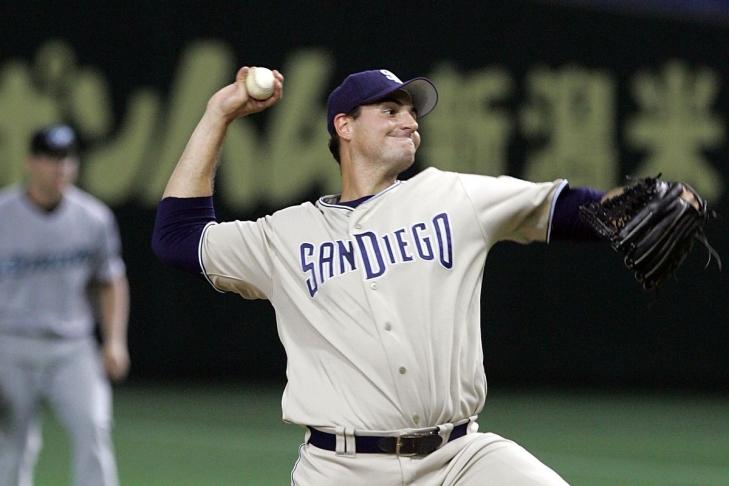
In January 2006, the San Diego Padres executed a franchise-changing six-player trade with the Texas Rangers, trading away starting pitcher Adam Eaton and reliever Akinori Otsuka. While the primary return for San Diego was future All-Star first baseman Adrian Gonzalez, the inclusion of the exceptionally tall Ivy League right-hander, Chris Young, proved to be an astute strategic move for the team’s pitching rotation. Standing an impressive 6-foot-10, the Princeton alumnus took the mound at Petco Park and promptly utilized his remarkable height and deceptive, high-release fastball to establish himself as one of the most distinctive pitching profiles in the National League.
Young’s transition to the National League West was a resounding success, as he immediately flourished in the vast, pitcher-friendly confines of his new home stadium. During his first two seasons in San Diego, he established himself as a durable, front-line anchor, exceeding the 170-innings threshold and punching out at least 160 batters in both the 2006 and 2007 campaigns. He was particularly lethal at baffling opposing hitters, leading the entire National League in lowest opponent batting average in back-to-back seasons, including a microscopic .206 mark during his debut summer with the club.
His individual peak arrived during the 2007 season, when he earned a well-deserved selection to the National League All-Star team. Young was nearly unhittable during the first half of that summer, ultimately finishing the year with a 9–8 record, a stellar 3.12 ERA, and a career-high 167 strikeouts over 30 high-intensity starts. His extreme downward plane and uncanny ability to generate high-in-the-zone swings-and-misses made him a central component of a highly sophisticated Padres pitching staff that routinely suffocated opposing offenses.
Nonetheless, the extreme physical demands of his unique mechanics eventually severely impacted his upper body. After his impressive All-Star season, Young faced three more years of ongoing struggles with shoulder capsular tears and chronic inflammation. Between 2008 and 2010, he was frequently sidelined, with only 36 sporadic appearances during that period, as his body consistently failed to keep up with his competitive spirit.
Despite ongoing health challenges, Young proved highly effective when he pitched, notably delivering a brief yet outstanding four-start stint in 2010, where he posted a stellar 0.90 ERA over 20 innings. Aware that his long-term health was uncertain, the budget-conscious Padres front office decided to let the tall right-hander explore free agency, resulting in his signing with the New York Mets before the 2011 season.
Young walked away from Southern California having logged his longest and most impactful major league tenure with a single franchise. He left the Padres organization with a highly respectable 33–25 record, 489 strikeouts, and a sharp 3.60 ERA across his 97 career starts.
18. Chris Young
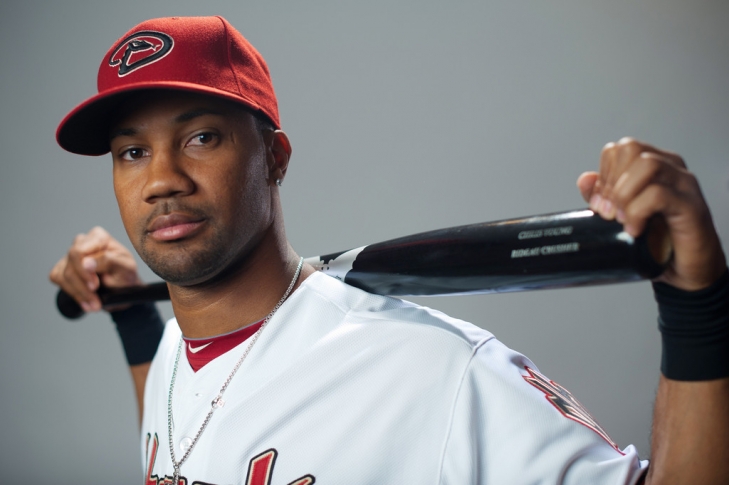
While Chris Young was never known for having a great Batting Average, he would bring some good power numbers to the Diamondbacks lineup. In his rookie season (2007), Young went yard 32 times, swiped 27 bases, and finished fourth in Rookie of the Year balloting. He would have three other seasons with 20 or more Home Runs, and three 20-Stolen Bases years for the D-Backs, but as good as the Power-Speed combo was, he did not take that consistent leap to the next level, which was the initial expectation for a number one overall pick..
Young was named an All-Star in 2010 and was also a solid defensive presence at Centerfield for the club. Traded to the Oakland A’s in 2013, Young belted 132 Home Runs with 112 Stolen Bases and 758 Hits, though only batted .239 and had five years with over 130 Strikeouts. That knocks him down a few spots.
