


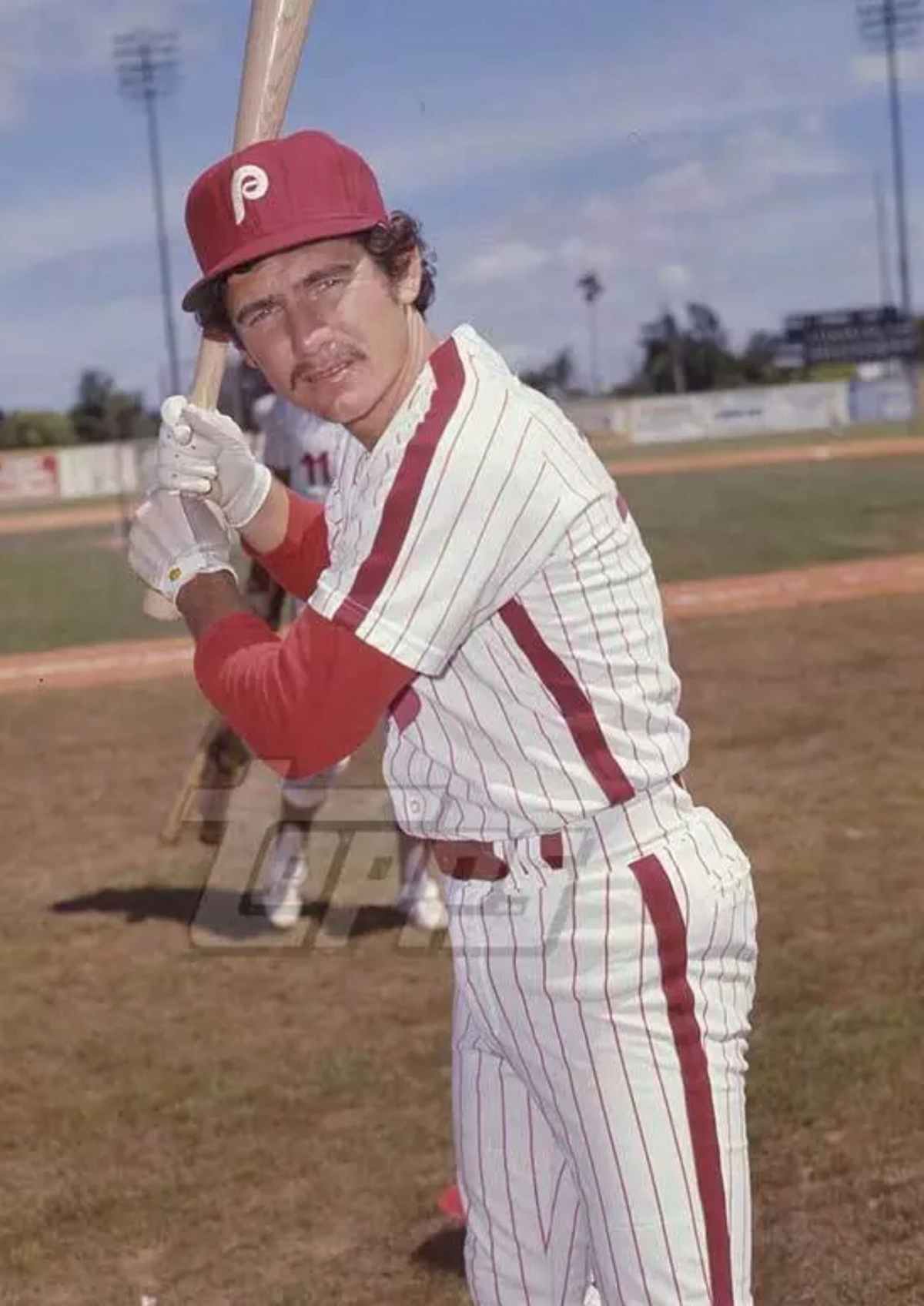

Surviving twelve tough seasons as the Phillies' starting shortstop demands exceptional defensive skills. For Larry Bowa, this was the only way to succeed. Known for his fiery, ultra-competitive nature, which earned him the nickname "The Gnat,” he turned the shortstop role into a showcase of precise positioning and relentless coverage. Although his power at the plate was modest, his glove was a top-tier, era-defining defense that anchored the infield during the team’s golden era.
From a run prevention standpoint, Bowa was an exceptionally efficient player with low variability. He led all National League shortstops in fielding percentage five times, thanks to his quick first step and flawless glove work, which helped him reliably cover the turf at Veterans Stadium.
His advanced spatial metrics were extremely impressive, far exceeding a simple regional favorite. He ranked in the top ten in the National League for defensive bWAR five times, peaking in 1978 when he led all Senior Circuit position players with a remarkable 2.9 defensive WAR.
Evaluating Bowa solely as a defensive player overlooks his highly productive role as a table-setter in the lineup’s bottom half. Despite lacking power—hitting only 13 home runs over 1,739 games in Philadelphia, he consistently found ways to prolong innings. Bowa achieved three summers hitting over .280 and amassed 1,798 hits while with Philadelphia. His exceptional speed allowed him to disrupt catchers, securing nine straight seasons with at least 20 stolen bases.
The peak of his regular-season efforts and national acclaim occurred during the iconic 1978 year. Bowa delivered an outstanding display on both offense and defense, achieving a career-high 192 hits and posting a impressive .294 batting average, which earned him a well-deserved third place in the National League Most Valuable Player voting.
That impressive pedigree remained completely unbreakable when the spotlight was brightest during the remarkable 1980 championship run. He made the Fall Classic his personal stage, batting an impressive .375 against the Kansas City Royals and playing a key role in securing the franchise's first-ever world title.
After being traded to the Chicago Cubs before the 1982 season, he eventually became a prominent, passionate presence in the dugout. In 2001, he rejoined his true baseball home, taking charge of a rebuilding team and leading an unexpected turnaround of 86 wins, which earned him the National League Manager of the Year award, demonstrating that his emotional core was forever linked to Broad Street.
Of course, the primary reason his overall historical valuation faces stiff resistance from modern spreadsheet analysts lies in the final two-thirds of his slash line. With a career franchise on-base percentage of .301 and a slugging metric of .324, his low-efficiency approach at the plate was a persistent drag on offensive run creation. Saying that, he was beloved in his heyday in Philly.
He was later inducted into the Philadelphia Baseball Wall of Fame in 1990.

Comments powered by CComment