


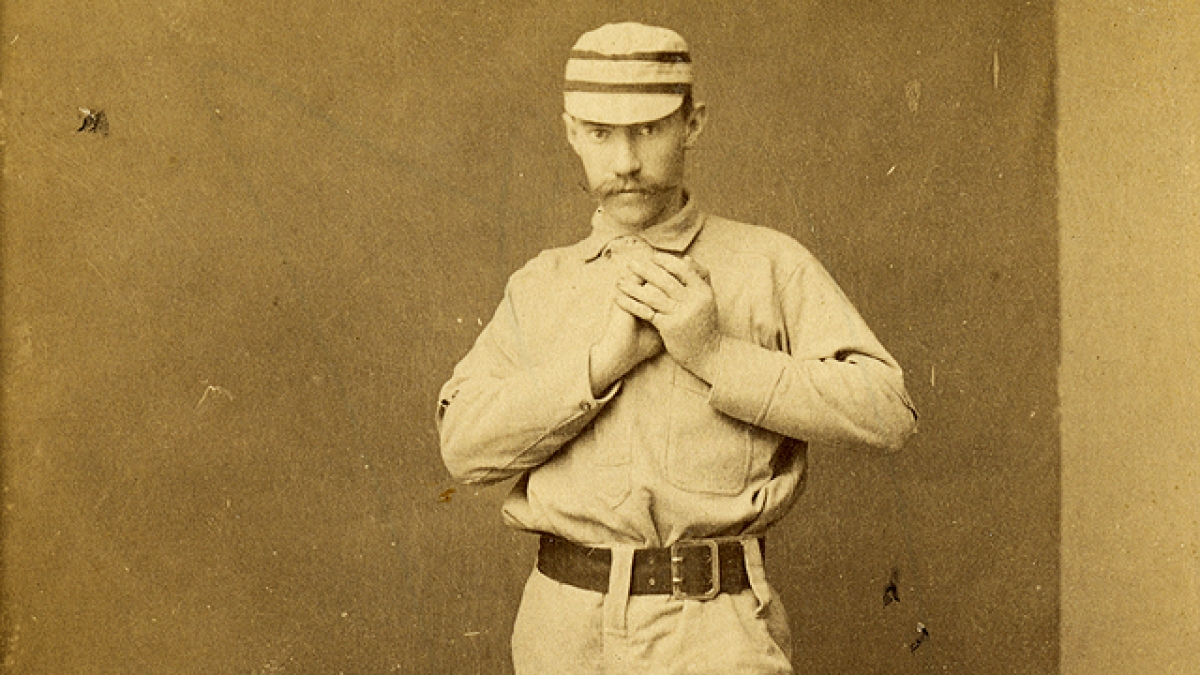
The history of professional baseball is rich with legendary figures whose contributions are etched in history, yet some, like Charlie Ferguson, occupy a more bittersweet, frozen-in-time place. Ferguson, a Charlottesville native, was a standout for the 19th-century Philadelphia Quakers, long before the team officially became the Phillies. He quickly proved himself as a versatile and exceptional Player, not only participating in the game but also excelling at it from the pitcher’s mound and the middle of the batting order. Ferguson exemplified qualities of a modern elite athlete well before baseball fully evolved.
His debut in the National League in 1884 marked the emergence of a reliable workhorse. Ferguson took on the demanding physical role of the era, pitching 416.2 innings as a 21-year-old rookie and earning 21 wins. By the 1985 season, his control improved significantly, culminating in a memorable August afternoon when he pitched a perfect 1-0 no-hitter against the Providence Grays, the first no-hit game in franchise history.
His peak pitching achievement occurred in a remarkable 1886 showcase. Ferguson delivered a historic regular season, finishing with a 30-9 record, a tiny 1.98 ERA, and a stellar 0.976 WHIP. With a blazing fastball and a consistent, low-variance delivery, he led the pitching staff and cemented his reputation as one of the top right-handed pitchers in the nation.
What set Ferguson apart as a true unicorn of the Deadball Era was his remarkable versatility. Recognizing his exceptional bat speed and soft hands, legendary manager Harry Wright consistently used him as a key position player on days when he wasn't pitching. Ferguson mastered both patrolling center field and playing second base in the infield, turning both into a refined skill. During his four years with Philadelphia, he achieved an impressive career batting average of .288.
His multi-dimensional peak culminated dramatically during the 1887 pennant race, when he delivered an exceptional individual performance. While securing 22 wins as a pitcher to help the Quakers achieve a strong second-place finish, he also became the regular second baseman late in the season. He posted an impressive .337/.417/470 slash line and led the team with 85 RBIs in only 264 at-bats.
The reason there was no fifth season is that in April 1888, Ferguson contracted typhoid fever and died within a month, depriving the game of what many regarded as the best all-around player at the time. It is only speculation to imagine that Charlie Ferguson could have been a Hall of Famer if tragedy had not intervened.
Tragically, the baseball world would never see a fifth season of his groundbreaking career. During spring training before the 1888 season, Ferguson suddenly contracted a severe case of typhoid fever. The illness quickly worsened, taking a heavy toll on his young body, and he died on April 29, 1888, just twelve days after turning 25. This devastating news plunged the baseball community into deep mourning; in his memory, the Quakers and several rival teams wore black crepe on their left sleeves throughout the summer.
He ended his career prematurely, winning nearly 61% of his decisions with a remarkable 99-64 record, 165 complete games, and a 2.67 ERA, all while delivering elite offensive performance.

Comments powered by CComment