

17. Mike Piazza
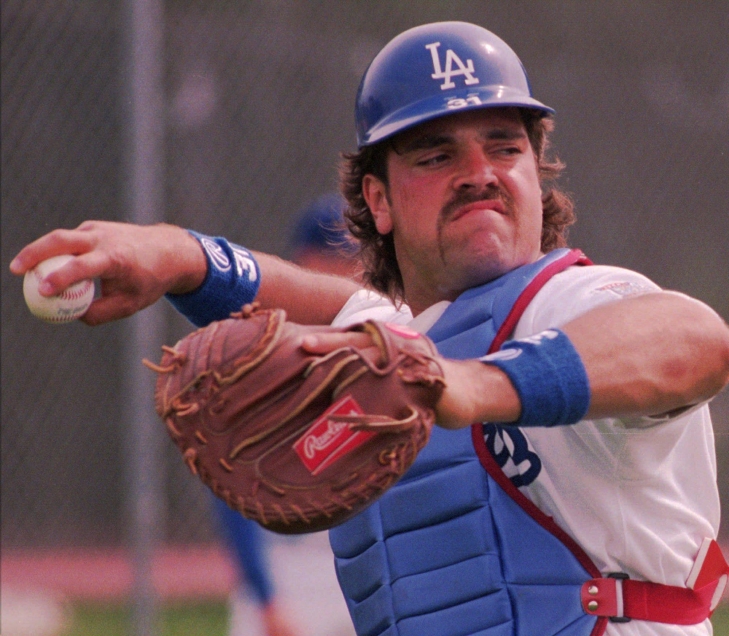
Mike Piazza’s story is a baseball impossibility, a 62nd-round draft pick whose entry into the professional ranks was a personal favor from Tommy Lasorda to his father. Initially a first baseman with a specialized bat but no defensive home, he made a tactical switch to catcher in the minors, a move that ultimately made him the greatest offensive force to ever play the position.
After a brief stint in 1992, Piazza took over the starting role in 1993 and delivered one of the most impressive debut seasons ever. He showed a rare ability to consistently hit to all fields, finishing with a .318 average, 35 home runs, and 112 RBIs, earning the National League Rookie of the Year Award unanimously. This breakout season set a new standard for a Dodger catcher, indicating that the organization had unintentionally discovered a once-in-a-generation talent with immense potential.
Between 1996 and 1997, Piazza achieved a historic surge in offensive efficiency, earning back-to-back second-place MVP finishes. His 1997 season stands out as a unique anomaly in franchise history; he hit an astonishing .362 with 40 home runs and 124 RBIs—a statistical feat that seems almost mythical for a full-time catcher. During this period, he was a regular All-Star and Silver Slugger, demonstrating his ability to anchor the middle of the lineup while managing a pitching staff featuring legends like Hideo Nomo and Pedro Martinez. Although some criticized his defensive skills, his offensive contributions largely made those concerns irrelevant.
As a Dodger, he posted a remarkable .966 OPS, a high-volume achievement that still stands as a franchise record for catchers. He demonstrated exceptional durability for the organization, regularly catching over 130 games annually while delivering a powerful bat that compelled opposing managers to adjust their entire game plan.
The departure from Los Angeles in May 1998 is one of the most divisive moments in the franchise's recent history. After a tense contract dispute and a change in team ownership to Fox, the Dodgers traded their star player to the Florida Marlins. This move was a bold sign of a rebuilding phase, although Piazza only spent a week in Florida before being traded again to the Mets.
Piazza compiled 177 home runs, a .331 average, and a .966 OPS in Dodger blue.
7. Mike Piazza
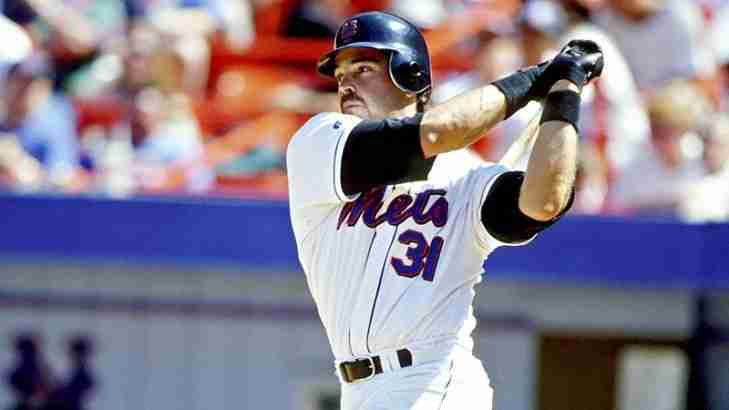
Mike Piazza arrived in Queens in 1998 following a whirlwind week that saw him traded twice in eight days, first from the Dodgers to the Marlins, and then finally to the Mets. While he had already established himself as a superstar in Los Angeles, his arrival in New York fundamentally shifted the trajectory of the franchise, giving them a Hall of Fame centerpiece and a powerhouse offensive engine they hadn't seen since the 1980s
In 1999, during his first full season with the club, Piazza delivered an incredible performance, smashing 40 home runs and driving in 124 runs while maintaining a .303 batting average. His stellar play helped lead the Mets to their first postseason appearance in eleven years, providing clutch moments that allowed the "Amazin's" to secure the National League Wild Card. This season truly showed that he was a top-tier run producer capable of carrying an entire lineup on his back, demonstrating that he could excel even under the intense pressure of the New York media spotlight.
His next season (2000) was even better. He finished the year with a 1.012 OPS, 38 home runs, and 113 RBIs, finishing third in the National League MVP voting. He spearheaded the Mets' charge to the National League Pennant, famously helping the team navigate the "Subway Series" against the Yankees. During this peak, he was a giant at the plate whose presence alone forced opposing managers to alter their entire pitching strategy, eventually leading to his third Silver Slugger Award in a Mets uniform.
Beyond the box score, his residency reached a historic emotional plateau on September 21, 2001. In the first sporting event held in New York City after the 9/11 attacks, Piazza hit a go-ahead, two-run home run in the eighth inning that lifted the spirits of an entire city and country.
After eight years as the face of the franchise, his tenure ended at the end of the 2005 season, when his seven-year contract expired, and the organization opted to move in a younger direction under new leadership. His final game at Shea Stadium was an emotional farewell, capped by an eight-minute standing ovation from the Flushing faithful. Piazza departed with 1,028 hits, 220 home runs, and a .542 slugging percentage for the Mets.
After his playing career ended, he proved his heart belonged in Flushing by entering the National Baseball Hall of Fame in 2016 as a Met rather than as a Dodger. The organization retired his No. 31 that same year.
2016 Baseball HOF Weekend is over
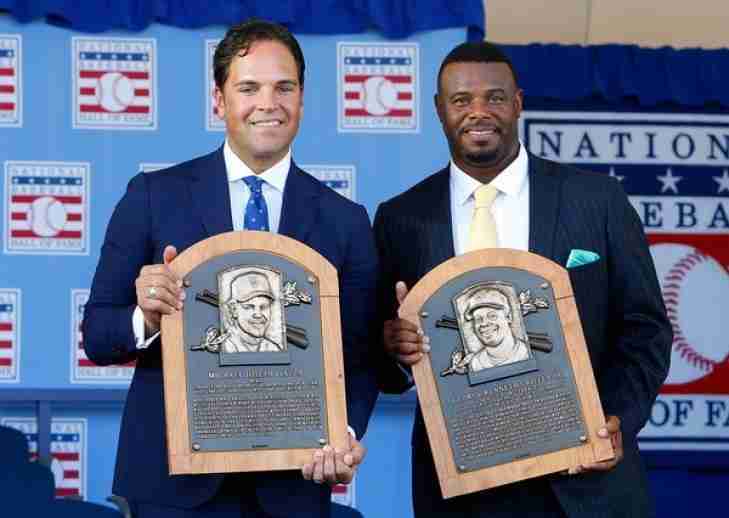
For Griffey Jr., this seemed to be almost automatic from the start. The son of former star, Ken Griffey Sr., was the first ever pick in the 1987 Amateur Draft and became the first overall pick to enter the Hall of Fame. He would join the Seattle Mariners at 19 years old and was a legitimate five tool player. His overall 22 year career saw Griffey Jr. smack 630 Home Runs, go to 13 All Star Games and win 10 Gold Gloves. He made history by receiving 99.3% of the votes, the highest ever by anyone.
For Catcher, Mike Piazza, the road wasn’t so easy.
Piazza was drafted in 1988, 1,390th overall, making him the lowest drafted player to make the Baseball Hall of Fame. He was lucky to even be drafted at all, as the choice was based on a good word from Tommy Lasorda, who was a friend of Piazza’s father. Switching from First Base to Catcher, Mike Piazza would eventually hit 427 Home Runs with a .306 Batting Average and went to 12 All Star Games.
It would take Piazza four times to make the Hall.
Worth noting, is that over 50,000 people attended the ceremony, the highest amount since 1999.
We here at Notinhalloffame.com would like to congratulate Ken Griffey Jr. and Mike Piazza for earning this prestigious honor.
The New York Mets Will Retire Mike Piazza's Number.

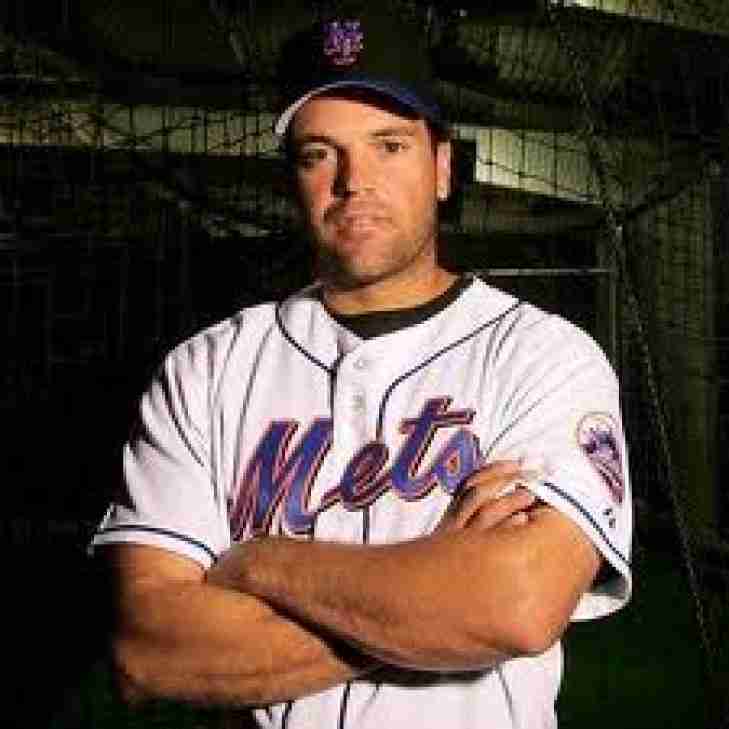
Piazza joined the New York Mets following a trade from the Florida Marlins in 1998 and over a nearly 1,000 Game Career with the Mets, Piazza earned six All Star nods and three Silver Slugger Awards. He would accumulate 1,028 Hits, 220 Home Runs, with a Slash Line of .296/.373/.542 Slash Line with a bWAR of 30.5.
The retirement of Mike Piazza’s number #31 will be the fourth Met to have his number retired. This follows Tom Seaver, Gil Hodges and Casey Stengel to have this accolade.
The ceremony will take place prior to a game against the Colorado Rockies on July 30th.
We would like to congratulate Mike Piazza for achieving this latest accolade.
Awards = HOF? Part Five: The Silver Slugger (Catcher) (MLB)
Needless to say, different awards in different sports yield hall of fame potential. In basketball, the team sport with the least amount of players on a roster, the dividend for greatness much higher. In baseball, it is not as much as a great individual season does not have the same impact.
Awards = HOF? Part Three: The Rookie of the Year (MLB)
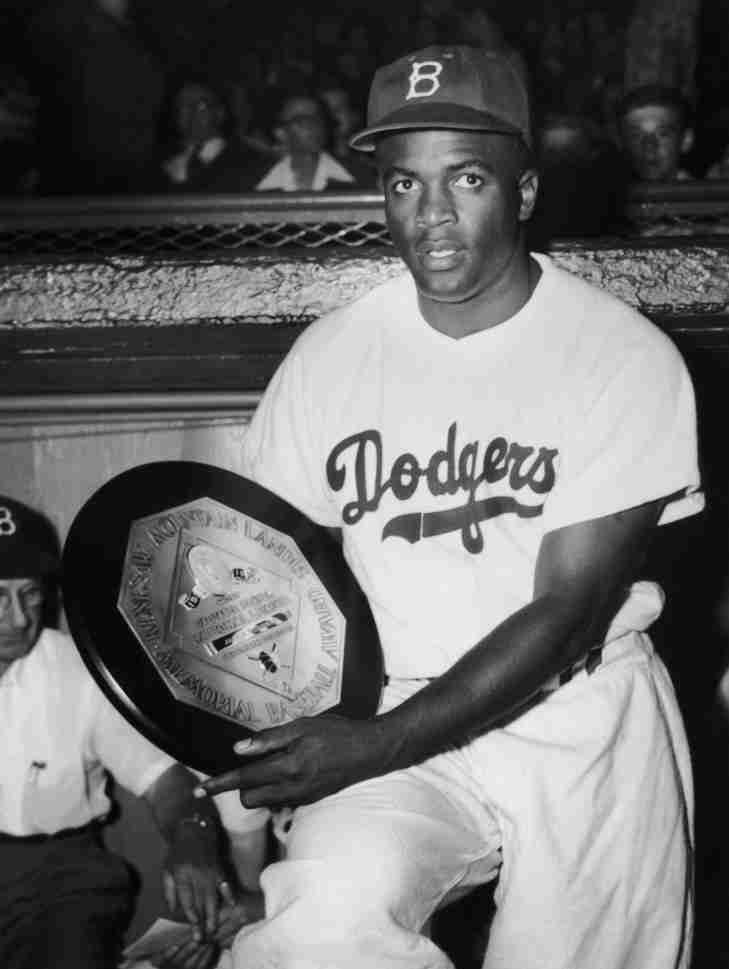
We here at Notinhalloffame.com thought it would be fun to take a look at the major awards in North American team sports and see how it translates into Hall of Fame potential.
The 2016 Baseball HOF Ballot is officially out!
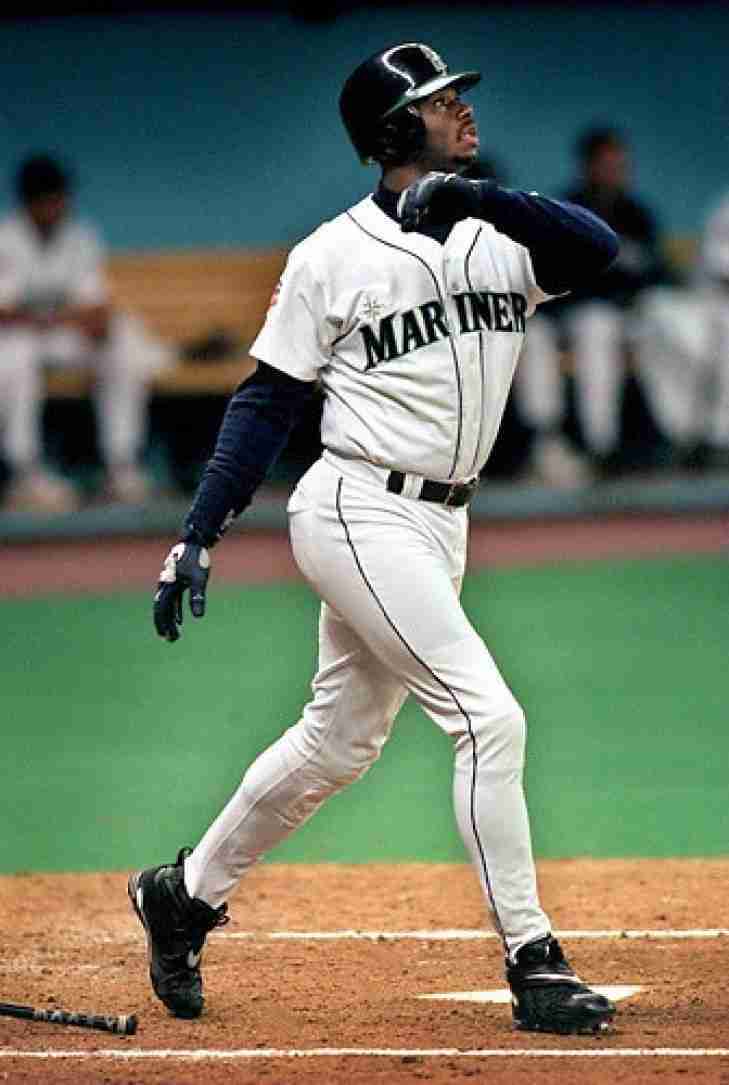
Let’s go through the ballot and take a quick look shall we?
IF I HAD A VOTE IN THE 2013 BASEBALL HALL OF FAME ELECTION, PART 1: A HISTORIC REFERENDUM
Note: Part 1 of this two-part series goes into detail—considerable detail—to examine both the overstuffed ballot and, more comprehensively, the atmosphere of moral dudgeon surrounding the suspected and admitted usage of PEDs by players on previous ballots and especially by players eligible for the Hall for the first time this year. If you want only to read the players' evaluations, skip to Part 2.
