

259. Jon Matlack
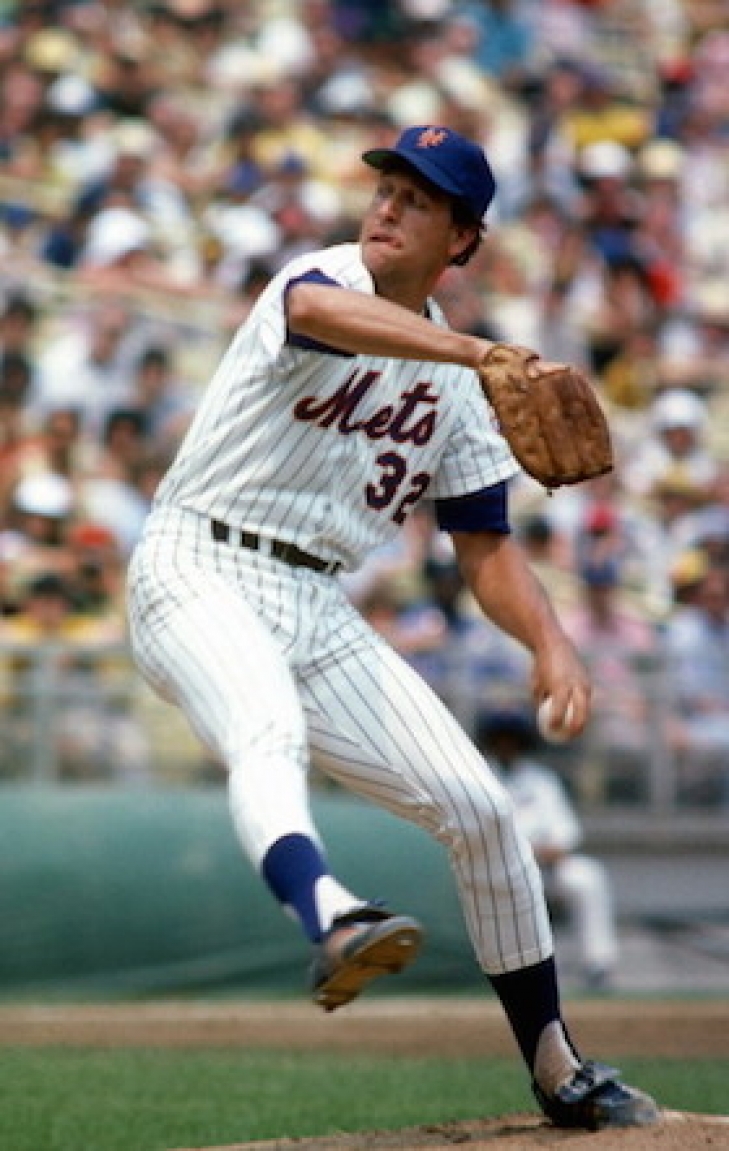
Jon Matlack debuted for the New York Mets two years after their “Miracle Season” of 1969, but the southpaw found a home as part of a powerful Mets rotation of the 1970s.
9. Jon Matlack
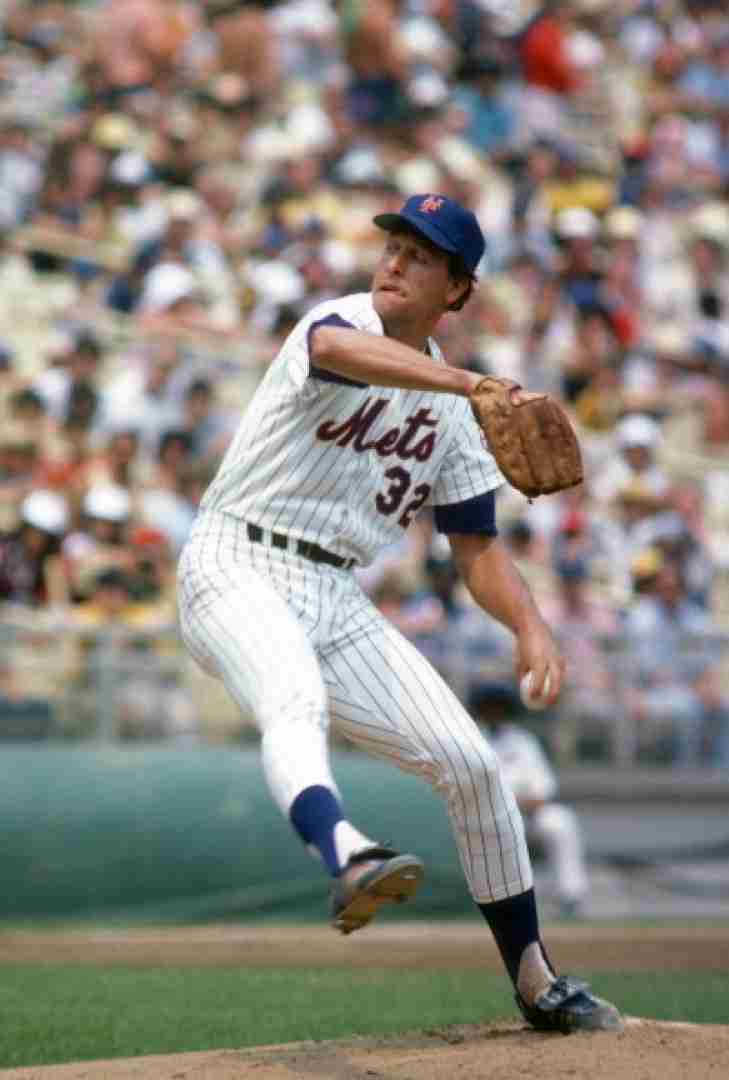
A first-round draft pick in 1967, Jon Matlack was a left-hander whose arrival signaled the birth of the "Big Three" alongside Tom Seaver and Jerry Koosman. While he wasn't on the active roster for the 1969 miracle, he served as the crucial final piece of the rotation that would define the franchise's excellence over the next decade.
Matlack appeared in 1971 for a few games, but in 1972, Matlack delivered a brilliant debut campaign, winning 15 games with a 2.32 ERA to secure the National League Rookie of the Year award. He reached a historic summit during the 1973 "Ya Gotta Believe" season, authoring a legendary postseason performance. After helping the club capture the NL East, he dominated the Reds in the NLCS and famously outpitched the Oakland A’s in the World Series, throwing a complete-game three-hitter in Game 4. The Mets lost the Fall Classic, but Matlack had arrived.
Between 1974 and 1976, Matlack was statistically one of the top pitchers despite receiving little run support. In 1974, he demonstrated a relentless ability to shut down opponents, leading the National League with seven shutouts and posting a 2.36 FIP. He continued this trend by leading the league in shutouts again in 1975 and earning three straight All-Star selections. His dominance was particularly evident in the 1975 All-Star Game, where he shared MVP honors after striking out the side in his appearance.
His run in Queens ended in the winter of 1977 following a difficult season for a struggling Mets squad. In a complex, four-team blockbuster trade, the organization sent him to the Texas Rangers. Matlack overall went 82- 81 with a 3.03 ERA with the Mets. The team inducted Matlack into their Hall of Fame in 2021.
41. Jon Matlack
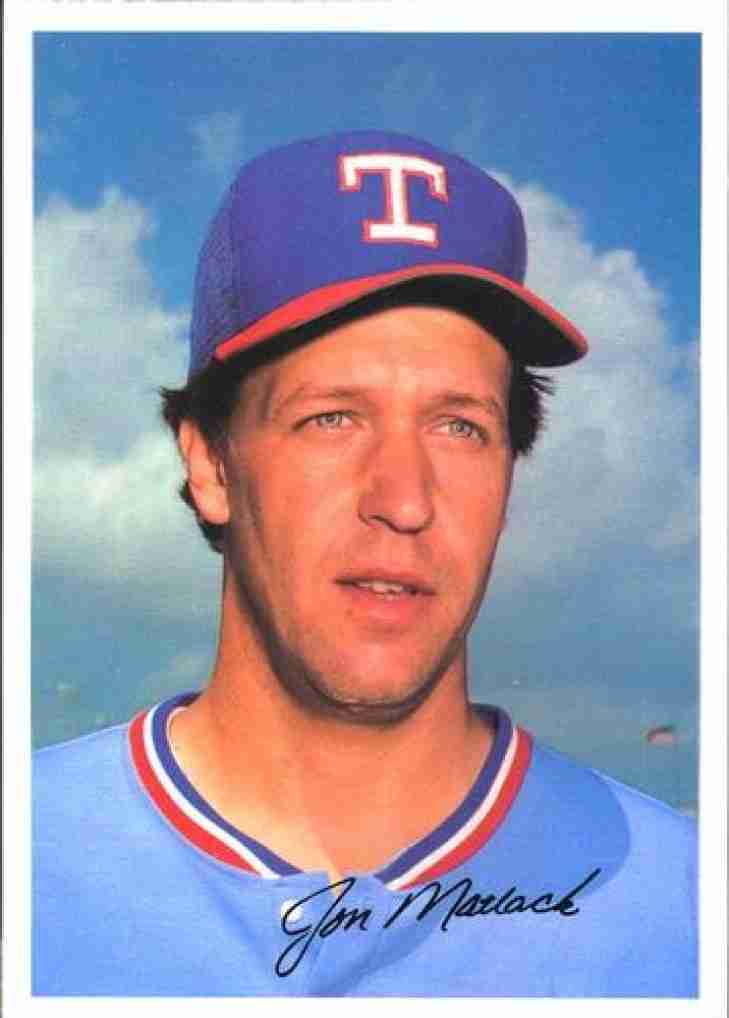
When Jon Matlack arrived in Arlington ahead of the 1978 season, he did so as part of one of the most complex, history-making blockbusters ever executed—the first four-team trade in major league history. Having already established himself as a three-time National League All-Star, a Rookie of the Year, and a pennant-winning co-ace with the New York Mets, the smooth-throwing left-hander brought an exceptional, top-tier pedigree to the Texas Rangers' pitching staff.
Although no longer at his peak of early-1970s National League dominance, Matlack quickly became a reliable, high-leverage asset for a Texas team striving to climb the competitive American League West. He adapted effortlessly to the intense summer heat at Arlington Stadium, using his excellent control, a sharp breaking ball, and strong pitching instincts to consistently keep batters guessing.
His early years with the team showcased reliable durability in the starting rotation. In his debut 1978 season, Matlack pitched 226.1 tough innings, recording 15 wins, 12 complete games, and 3 shutouts—just what the Rangers expected. He continued to perform well in 1979, with another 15 complete games and a solid 3.30 ERA, demonstrating that his move to the American League was smooth and successful.
As he entered his thirties and the Rangers began to reshuffle their pitching staff, Matlack showcased a remarkable, unheralded level of versatility. Over his final three summers in Texas, he masterfully alternated between the starting rotation and the bullpen. Whether he was taking the ball for a Sunday start or coming out of the bullpen as a late-inning fireman to preserve a slim lead, he executed his assignments with quiet, level-headed professionalism. His multi-dimensional efficiency peaked in 1980, when he split 34 appearances between starts and relief outings to log 10 wins and a tidy 3.68 ERA over 164.0 innings.
Matlack played three more seasons before retiring after the 1983 campaign. With Texas, he posted a 43–45 record, a 3.42 ERA, and a 1.25 WHIP. He compiled 828.0 innings, striking out 493 batters.
