
gold star for USAHOF

Top 50 Los Angeles Dodgers

One of the most celebrated franchises in all sports, the Los Angeles Dodgers were initially the Brooklyn Grays in 1883, but it was a long time before they found an identity.

The organization changed its name multiple times since its origin, the Atlantics (1884), back to the Grays (1885-87), then the Bridegrooms (1888-90), the Grooms (1991-95), the Bridegrooms again (1895-98, the Superbas (1899-1910), the Trolley Dodgers (1911-12), then the Dodgers (1913), the Robins (1914-1931), before settling on the Dodgers again in 1932.  

The Brooklyn Dodgers would sign Jackie Robinson to integrate baseball, and in 1955, on their eighth attempt, they finally won their first World Series.

The fans of Brooklyn were not rewarded for their loyalty and patience, and like the crosstown New York Giants, westward the Dodgers went in 1957, where they remain to this day.

In Los Angeles, the Dodgers won three World Series Titles in their first ten years in the new environment, capturing it all in 1959, 1963, and 1965.  The 1970s saw them competitive at the decade's end, and they won two more Championships in the 1980s (1981 and 1988).  

In recent years, the Dodgers have been a top team, winning the World Series in 2020, 2024 & 2025, and enter this year with the defending two-time MVP, Shohei Ohtani who leads the most loaded organization in baseball.

This list is up to the end of the 2025 regular season.

Note: Baseball lists are based on an amalgamation of tenure, traditional statistics, advanced statistics, playoff statistics, and post-season accolades.
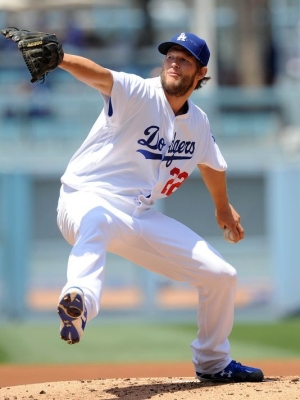
When making these lists, they are supposed to be fun and to use the proverbial number 99.9, which is the percentage they are.  With the Los Angeles Dodgers, it was so hard, and there were so many people we could choose from within the top tier that choosing amongst icons was befuddling.  Especially considering the man we decided at the top is not who you might think. Clayton Kershaw arrived in Los Angeles as the seventh overall pick in the 2006 draft, a Texas high school phenom whose looping curveball and high-velocity heater immediately invited comparisons to the great Sandy Koufax. He…
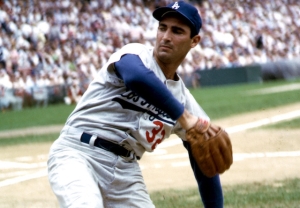
Sandy Koufax arrived in Brooklyn in late 1954 as a "Bonus Baby," a local product from the University of Cincinnati with a fastball that crackled but a compass that often failed him. Because of the rules at the time, his signing bonus forced him directly onto the major league roster, bypassing the seasoning of the minor leagues. For the first six years of his career, he delivered a brand of erratic brilliance, standing as a tantalizing talent who frequently walked as many batters as he struck out. The early portion of his tenure was defined by a frustrating struggle with…
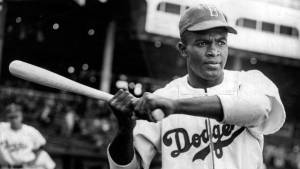
Jackie Robinson arrived in Brooklyn in 1947 as the hand-picked pioneer of Branch Rickey, a 28-year-old rookie carrying the weight of a fractured nation on his shoulders. While his arrival was a seismic social event, he quickly established that his presence was justified by elite, multi-dimensional talent. For ten seasons in a Dodger uniform, he provided a brand of high-stakes play that blended a crisp batting average with aggressive baserunning, standing as a foundational cornerstone for the most successful era in the franchise's Brooklyn history. The initial chapter of his tenure was a masterclass in mental and physical fortitude. Debuting…
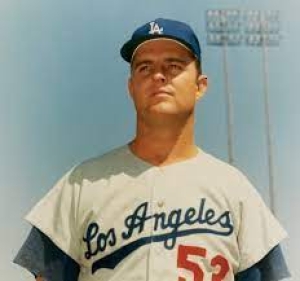
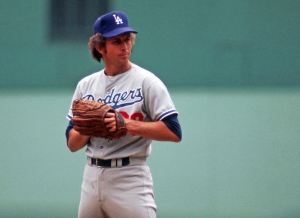
Don Drysdale arrived in Brooklyn in 1956 as a towering presence from Van Nuys, a local product who traded a promising basketball future for a seat on the Dodgers' flight to Los Angeles. While he spent much of the 1960s as a formidable counterpart to Sandy Koufax, he carved out a legacy defined by an aggressive, sidearm delivery and a refusal to yield even an inch of the inner half of the plate. The initial chapter of his tenure saw him secure a rotation spot at just 20 years old, navigating the pressure of a championship-caliber clubhouse with veteran poise.…
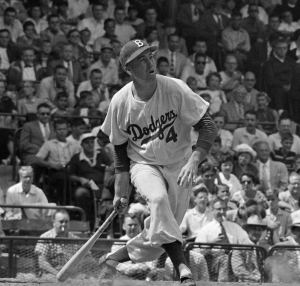
A raw, high-upside talent from Compton, Duke Snider was a local California kid who would eventually become the definitive power source for the legendary "Boys of Summer." While he navigated the immense pressure of batting third in a lineup filled with future Hall of Famers, he quickly established that his left-handed stroke was the primary engine of the franchise’s offensive output. The initial chapter of his tenure was defined by a steady ascent alongside fellow pioneer Jackie Robinson, securing a permanent spot in the starting outfield by 1949. Though he faced early criticism for his strikeout totals and a late-season…
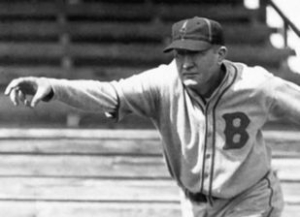
The incredible MLB career of Dazzy Vance began in Brooklyn in 1922 as a 31-year-old rookie, a veteran of the minor league grind who finally found his footing at an age when most of his contemporaries were considering retirement. Despite his late start, he immediately established himself as the premier flamethrower of his era, possessing a high-velocity fastball that looked entirely alien to hitters in the early live-ball years. After bouncing around for nearly a decade, Vance showed the organization he was a professional mainstay by leading the National League in strikeouts during his first full season in 1922. This…
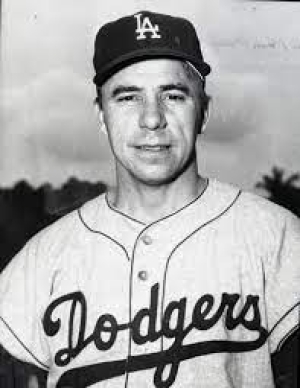
Pee Wee Reese arrived in Brooklyn in 1940 via a franchise-altering trade with the Red Sox, a transaction necessitated by a legendary logjam in Boston. Hall of Fame shortstop Joe Cronin was serving as the Red Sox player-manager at the time and, unwilling to yield his spot on the dirt to a rookie, suggested the young prospect be moved. While his moniker suggested a small stature, Reese quickly developed into a giant of the organization, providing a brand of steady, high-IQ baseball that anchored the most celebrated era in Brooklyn’s history. The first part of his tenure was defined by…
In 1966, a 21-year-old rookie named Don Sutton joined a rotation that already featured the legendary duo of Koufax and Drysdale. While he lacked the overwhelming velocity of his peers, he possessed a cerebral approach and a durable arm that would anchor the staff for a decade and a half. Debuting just two years after signing, he secured a spot in the rotation and proved he belonged by navigating his rookie season with double-digit wins and a stellar strikeout rate. He remained a professional mainstay throughout the late sixties, beginning a remarkable streak in which he recorded at least 15…
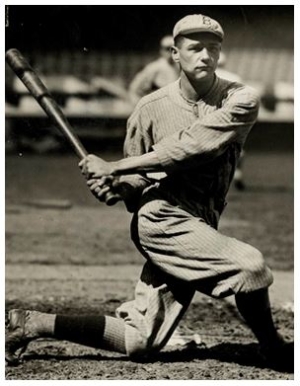
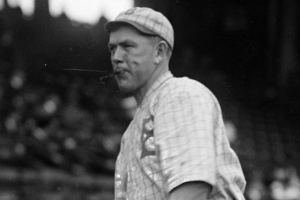
Zack Wheat arrived in Brooklyn in 1909, a graceful left-hander whose swing was described as "poetry in motion" during an era of the game that was anything but. While the franchise cycled through names like the Superbas, the Robins, and finally the Dodgers, Wheat remained the one constant, a quiet professional who anchored left field for nearly two decades. The opening chapter of his career really showed how well he adapted to the "Small Ball" style of the Deadball Era. Wheat showed a special talent for hitting the ball into the gaps, quickly becoming a key player known for his…
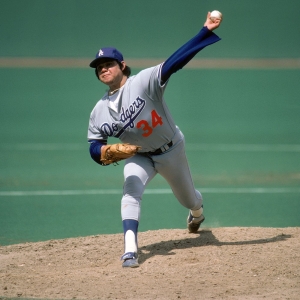
Fernando Valenzuela arrived in Los Angeles in 1980, a nineteen-year-old left-hander who spoke no English but communicated through a specialized screwball that looked like magic. Discovered by accident while scouts were looking at a shortstop, he stood as a high-voltage phenomenon who didn't just play for the Dodgers; he transformed the culture of the city. The first chapter of his career was a rare story in baseball that probably won't happen again. After a quiet September call-up in 1980, Valenzuela was suddenly chosen to start on Opening Day in 1981 because Jerry Reuss was injured. He made a great impression…
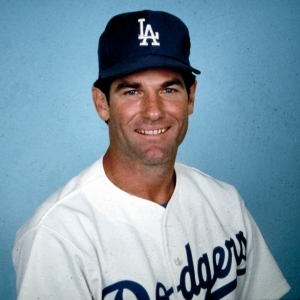
Steve Garvey first made the Los Angeles roster in 1969, a first-round draft pick with a tireless work ethic and Popeye-like forearms that seemed designed for the Southern California spotlight. While he initially spent a few years searching for his defensive home, he eventually anchored first base for over a decade. After shifting positions on the diamond, he secured the starting role at first base in 1973, transforming it into a stronghold. Garvey maintained frequent contact at the plate, batting .304 during his first full season as a starter. His standout year came in 1974, when he achieved 200 hits…
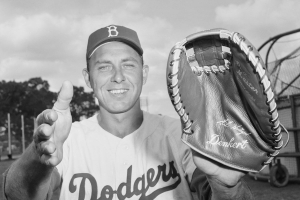
The beginning of Gil Hodges’s career was in Brooklyn in 1943 as a raw, talented catcher, but his journey was immediately interrupted by a two-year commitment to the U.S. Marine Corps during World War II. Returning in 1947, the same historic season Jackie Robinson broke the color barrier, Hodges eventually shifted from behind the plate to first base, a tactical move that solidified the "Boys of Summer" infield. Hodges enjoyed a rapid evolution from a utility player to a premier specialized slugger. By 1949, Hodges demonstrated a high-frequency ability to drive in runs, beginning a staggering run of seven consecutive…
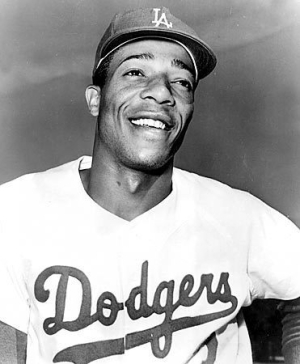
Willie Davis was a local high school track star whose gear for speed that few in the history of the sport have ever matched. Taking over center field from the legendary Duke Snider, he stepped into a role that demanded both elite production and a massive personality to match the Hollywood backdrop.  It was a rapid ascent from raw prospect to run-scoring catalyst.  Davis demonstrated a specialized ability to manufacture runs alongside Maury Wills, forming a high-caliber "table-setting" duo that helped pave the way for the Dodgers' success. By 1962, he had already established a high ceiling, recording 21 home…
The MLB career of Nap Rucker began in 1907, a high-velocity southpaw who stepped onto the mound for a franchise still searching for its footing. Pitching for teams known as the Superbas and the Robins, Rucker operated as a specialized workhorse during the Deadball Era, frequently outclassing the struggling squads behind him. For a decade in Brooklyn, he provided a dominant arm that was often obscured by a lack of run support, standing as a high-quality pillar for a franchise that was nearly 180 games below .500 during his tenure, even when he wasn't involved in the decision. In 1908,…
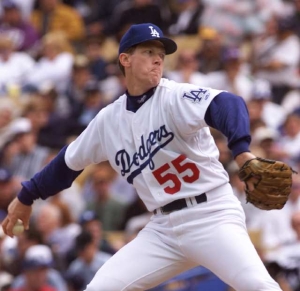
Orel Hershiser debuted in Los Angeles in 1983 as a 17th-round pick who was never supposed to be the "Bulldog" of a major league rotation. Initially viewed as a lean, cerebral pitcher with limited upside, he underwent a physical and mental transformation under the guidance of Tommy Lasorda, who demanded he pitch with a more aggressive, high-stakes intensity. By 1985, Hershiser posted a 19-3 record, a 2.03 ERA, and finished third in Cy Young voting. He became a key player, surpassing Valenzuela as the Dodgers' go-to in high-pressure situations. In 1988, Hershiser crafted a season that remains legendary in baseball…
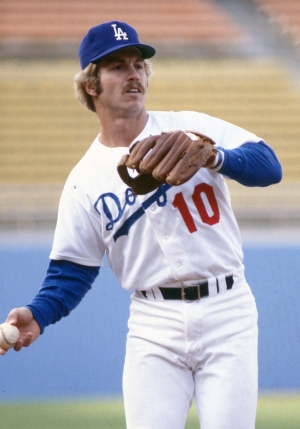
Ron Cey made his first MLB appearance in Los Angeles in 1971 as a stocky third baseman with a waddling walk, earning him the nickname "Penguin." However, his exceptional power and strategic dependability were serious assets. By 1973, he had established himself as the key figure at third base, forming a crucial part of what became the most resilient infield in baseball history. Once he took on the starting role, Cey quickly proved his ability to hit balls into the seats repeatedly, a rare skill for a Dodgers team known for pitching and small ball tactics. By 1974, he had…
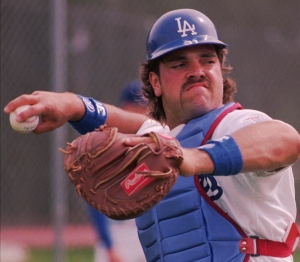
Mike Piazza’s story is a baseball impossibility, a 62nd-round draft pick whose entry into the professional ranks was a personal favor from Tommy Lasorda to his father. Initially a first baseman with a specialized bat but no defensive home, he made a tactical switch to catcher in the minors, a move that ultimately made him the greatest offensive force to ever play the position. After a brief stint in 1992, Piazza took over the starting role in 1993 and delivered one of the most impressive debut seasons ever. He showed a rare ability to consistently hit to all fields, finishing…
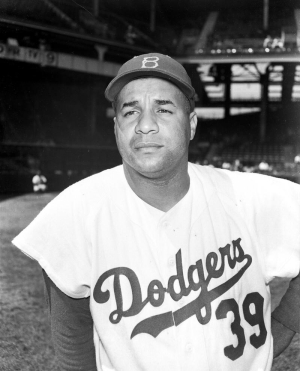
There is always one player on these top 50 lists that seems impossible to lock down.  For the Dodgers, that man is Roy Campanella, a three-time MVP, but had they been judged by current metrics, he likely would not have won any. Roy Campanella joined Brooklyn in 1948 after playing in the Negro Leagues. He was a stocky catcher with a unique combination of agility and power. Although Jackie Robinson broke the color barrier in 1947, Campanella joined him a year later to form a resilient and emotional pairing on the team, known as the "Boys of Summer.” By 1949, Campanella…
In 1939, the Brooklyn Dodgers signed Dixie Walker as a waiver-wire reclamation project, a player whose early promise in the Yankees' organization had been sidetracked by recurring injuries. Once touted as the heir to Babe Ruth in the Bronx, he had bounced around from Detroit to Chicago before finding his footing at Ebbets Field, and boy, did he find his footing! Following a strong debut in 1939, Walker showed a remarkable talent for spotting gaps, batting .308 in 1940 and .311 in 1941. He quickly established himself as a key player, finishing in the top ten of MVP voting two…