


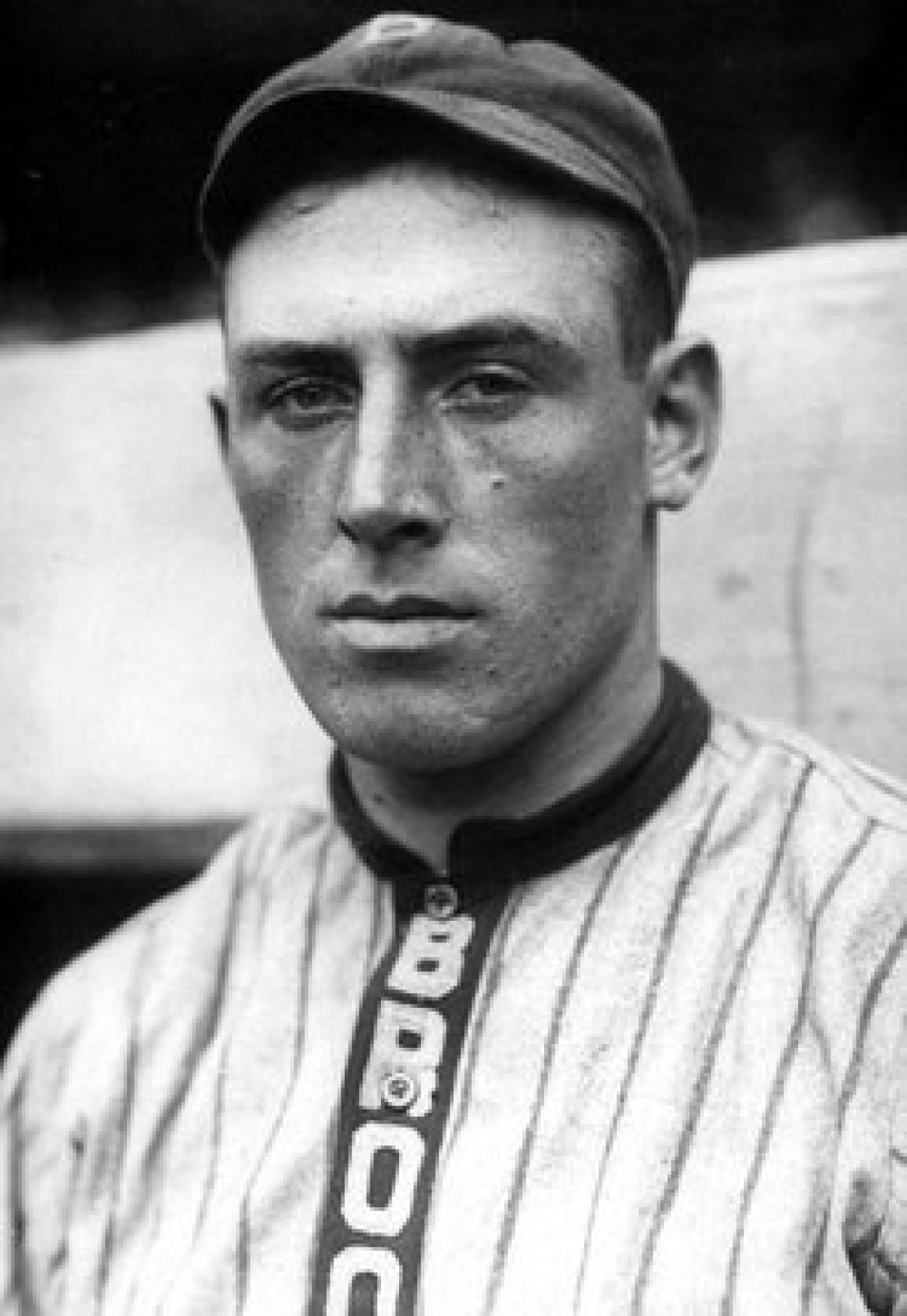
After a cup of coffee with the St. Louis Browns in 1911, Jeff Pfeffer made it to Brooklyn in 1913, where the righthander became one of the most durable arms of the Deadball Era.
Pfeffer reached an absolute summit of efficiency in 1914. He authored a brilliant 23-12 record with a 1.97 ERA over 315 innings, a performance that surely would have made him the Rookie of the Year had the award existed then. He also had a career-high 135 strikeouts
Pfeffer reached his peak during the memorable 1916 season. He delivered an incredible performance, winning 25 games with a fantastic 1.92 ERA as the Robins proudly took the National League crown. He was a key player on the team, finishing among the top five in wins and innings pitched, and he proved to be a versatile asset during the postseason. In the 1916 World Series against the Boston Red Sox, he made a crucial save in Game 3 and pitched a tough seven innings in the Game 5 finale. Although the Robins fell short in the series, Pfeffer’s stellar statistics from 1914 to 1916—67 wins and a remarkably low ERA, stand out as one of the most impressive three-year stretches in franchise history.
Pfeffer’s baseball journey took an unexpected pause in 1918 when he enlisted in the U.S. Navy during World War I. When he returned in 1919, he scored a fresh wave of success, recording two consecutive 16-win seasons and playing a key role in helping Brooklyn clinch another pennant in 1920. However, after facing some challenges at the start of the 1921 season, the team decided to trade him to the St. Louis Cardinals.
With the Robins, Pfeffer had a 2.31 ERA with a record of 113- 80.

Comments powered by CComment