
gold star for USAHOF

Top 50 Kansas City Royals

An expansion team in 1969, the Kansas City Royals brought baseball back to KC after the Athletics relocated to Oakland in 1967.  The Royals struggled early as expected of any expansion team but they would make their first playoff in 1976 and return in ’77, ’78, and 1980.  The latter year would see the Royals make their first World Series although they would go down in defeat to the Philadelphia Phillies.

The first half of the 1980s was good to the Royals and in 1985 they would put it all together and win the World Series by defeating their cross-state rival, the St. Louis Cardinals in 1985.  The Royals would remain decent for the next ten years (although they did not reach the playoffs) but from the mid 90’s to the early 2010’s organizations did not perform very well and more often than not found themselves in the bottom half of the standings.

After 29 years, the Royals returned to the postseason as a wild card team and advanced to the World Series but were beaten by the San Francisco Giants.  The next year they would return to the World Series but this time they would beat the New York Mets to take their second championship.

Note: Baseball lists are based on an amalgamation of tenure, traditional statistics, advanced statistics, playoff statistics, and post-season accolades. 

This list is updated up until the end of the 2025 Season.
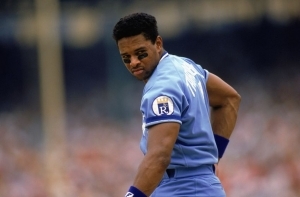
Danny Tartabull arrived in the Kansas City organization via a December 1986 trade with the Seattle Mariners, a deal that sent Scott Bankhead and Mike Kingery to Seattle. A second-generation big leaguer, Tartabull possessed a specialized, violent swing that generated some of the highest exit velocities of the late 1980s. Tartabull had his best season in 1991; he led the major leagues with a .593 slugging percentage and recorded a career-high 31 home runs. He also had 100 RBIs and a career-best .316 batting average, was 12th in MVP voting, and earned his only All-Star game appearance. Between 1987 and…
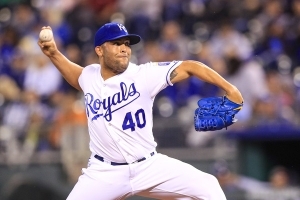
Signed as an amateur free agent in 2006, Kelvin Herrera was a fire-balling right-hander from the Dominican Republic who would eventually become a foundational pillar of the most dominant bullpen in modern baseball history.  Known for a specialized triple-digit fastball that appeared effortless, he transitioned from a young prospect into a high-leverage weapon. Herrera was at his best during the back-to-back World Series runs of 2014 and 2015. He demonstrated a specialized ability to bridge the gap to the ninth inning as the seventh-inning anchor of the legendary "HDH" trio alongside Wade Davis and Greg Holland. He showed the organization…
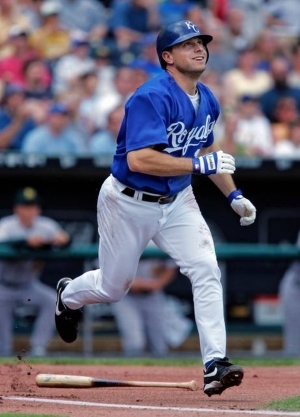
Joe Randa arrived in the Kansas City organization as an 11th-round selection in 1991, but his path to becoming a franchise fixture was anything but linear. After debuting in 1995 and appearing to be a casualty of the team's high-frequency roster turnover, moving through Pittsburgh, Detroit, and the Mets in short order, he returned to the Heartland in 1999. In his first year back in Kansas City, he demonstrated a specialized ability to spray the ball across the turf at Kauffman Stadium, recording a career-high 197 hits and a .314 batting average, along with 16 home runs and 84 RBIs. …
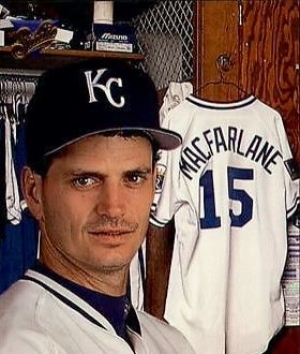
Mike Macfarlane arrived in the Kansas City organization as a fourth-round selection in 1985, a physically sturdy catcher with a reputation for intense preparation and a "blue-collar" approach to the game. He debuted in 1987 and eventually outlasted several high-profile competitors to become the team’s primary signal-caller. Known mostly for his defensive ability, Macfarlane could occasionally help with his bat.  During the 1993 campaign, a season in which he emerged as one of the premier power-hitting catchers in the American League, he belted a career-high 20 home runs and recorded 67 RBIs.  He was also willing to sacrifice his body…
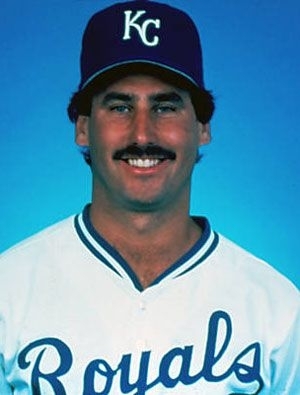
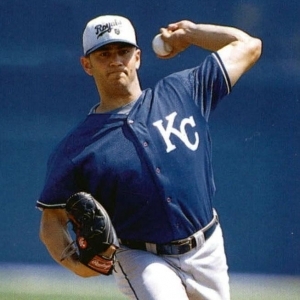
Bud Black arrived in the Kansas City organization in 1982 via a trade with the Seattle Mariners, a move that initially aimed to bolster the bullpen but instead unearthed a dependable left-handed rotation piece. Known for his technical precision and smooth delivery, he became a fixture of the Royals' pitching staff during the most successful era in franchise history. Black became a full-time starter in 1983, and the season after, he had a coming-of-age campaign.  He led the American League with a 1.128 WHIP and recorded a career-high 17 wins. Tossing 257 innings across 35 starts, proving to be the…
Al Cowens arrived in the Kansas City organization as a 75th-round draft pick in 1969, a staggering underdog story for a player who would eventually become a cornerstone of the franchise's first great era. He secured the starting right-field job by 1974, and in 1977, Cowens exploded with one of the best offensive seasons in franchise history of the 1970s. That year, Cowens recorded career highs in home runs (23), RBIs (112), and batting average (.312). He showed the organization he was a foundational superstar by finishing as the runner-up for the American League MVP, falling just short of Rod…
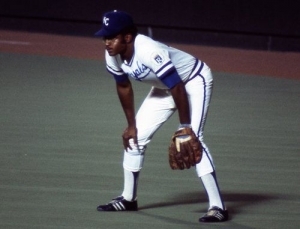
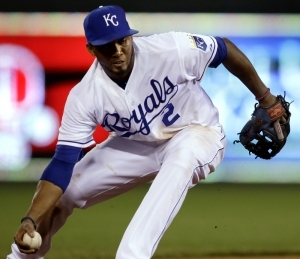
Alcides Escobar arrived in the Kansas City organization via a December 2010 blockbuster trade with the Milwaukee Brewers, a deal that sent Zack Greinke to the NL in exchange for a package of young talent. While he arrived as a highly touted defensive prospect, he evolved into the literal iron man of the franchise's most successful era. After arriving in the 2010 trade, Escobar immediately took over the starting shortstop duties in 2011, providing a foundational defensive stability the organization had lacked for years. He showed the organization he was a specialized professional by batting .293 with 35 stolen bases…
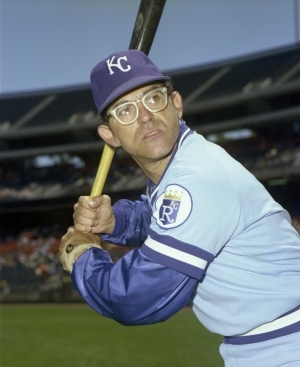
Cookie Rojas arrived in Kansas City via a June 1970 trade with the Philadelphia Phillies, a veteran infielder brought in to provide a stabilizing presence for a franchise still in its infancy. While he had already established himself as a versatile defender in the National League, it was with the Royals where he matured into a perennial All-Star and a foundational leader. Rojas found an immediate rhythm upon his arrival, especially in his first full season (1971) with the club. That year, he demonstrated a specialized ability to manipulate the bat, recording a .300 batting average and earning the first…
Jose Rosado arrived in the Kansas City organization as a 12th-round selection in 1994, a left-hander whose deceptive delivery and poised mound presence propelled him through the system at a breakneck pace. He debuted in 1996 and immediately looked like the specialized ace the franchise had been searching for since the departure of Kevin Appier. Right out of the gate, when he was called up in 1996, Rosado proved he belonged in the Majors. He only made 16 starts that summer, but posted a 3.21 ERA and a 1.114 WHIP and finished fourth in the American League Rookie of the…
Steve Farr arrived in the Kansas City organization in 1985 via a minor trade with the Cleveland Indians, a right-hander whose specialized, high-velocity sinker and deceptive delivery made him an immediate asset for the bullpen. While he was a member of the World Series championship squad that October, his role during that run was modest as he adjusted to the pressure of a pennant race. Farr’s specialty was inducing ground balls and escaping late-inning jams. Between 1987 and 1989, he showed the organization that he was a foundational professional by maintaining a sub-4.00 ERA while logging significant innings, often pitching…

2026 SEATTLE MARINERS FLEX MEMBERSHIPS

Jan 01, 1970

Buy your Tickets to see 2026 Seattle Mariners Flex Memberships HERE!

BALTIMORE ORIOLES VS. SEATTLE MARINERS

Jun 08, 2026

Buy your Tickets to see Baltimore Orioles vs. Seattle Mariners HERE!

TAMPA BAY RAYS VS. BOSTON RED SOX

Jun 08, 2026

Buy your Tickets to see Tampa Bay Rays vs. Boston Red Sox HERE!

CLEVELAND GUARDIANS VS NEW YORK YANKEES: PRIDE CELEBRATION

Jun 08, 2026

Buy your Tickets to see Cleveland Guardians vs New York Yankees: Pride Celebration HERE!

 
Dick Drago arrived in the Kansas City organization via the 1968 Expansion Draft, a right-hander plucked from the Detroit Tigers system before he had ever thrown a pitch in the big leagues. While the move thrust him into a foundational role earlier than expected, he proved to be a nice find for the fledgling franchise. Drago’s best year by far was in 1971.  He was manipulating the strike zone at will, recording 17 wins and a localized best 2.98 ERA. He showed the organization he was a foundational professional by tossing 241 innings and leading the staff with 15 complete…
Jarrod Dyson arrived in the Kansas City organization as a 50th-round draft pick in 2006, a position that usually suggests a short professional shelf life. However, he possessed a specialized, game-breaking speed that eventually made him one of the most tactical weapons in franchise history. While he never commanded a traditional full-time role, he provided a foundational level of late-inning pressure, proving that elite athleticism could impact a game just as much as a home run. Though he rarely exceeded 300 plate appearances in a season, he demonstrated a localized ability to transform the tempo of a game the moment…