

33. David Cone
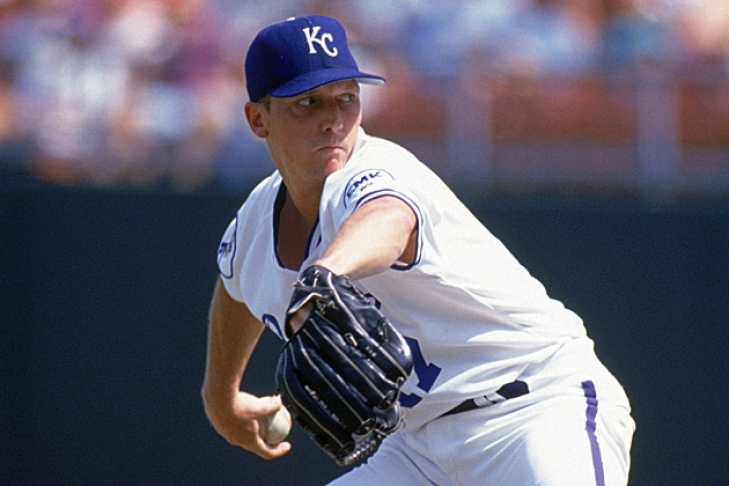
David Cone was the "hometown boy" who became one of the most surgical arms in baseball history. A Kansas City native, he was drafted by the Royals in 1981 and debuted as a reliever in 1986 before the organization made a historic tactical error by trading him to the Mets for catcher Ed Hearn. While his "gun for hire" reputation was forged in New York and Toronto, he returned to the Royals in 1993 to deliver the most efficient individual pitching stretch in franchise history, proving that he was much more than a postseason specialist.
Upon returning as a high-profile free agent, he demonstrated a specialized ability to dominate the American League despite a deceptive 11-14 record in his first year back. He led the league in innings pitched (254.0) and finished third in the AL in bWAR (6.7), showing the organization that he was a foundational ace who simply lacked run support.
The season after was a bittersweet one for Cone, and for MLB in general, as the players’ strike ended the season in August. That summer, Cone demonstrated a focused intensity, posting a 16-5 record with a 2.94 ERA and a league-leading 7.1 bWAR for pitchers. He showed the organization he was a foundational superstar by securing the 1994 AL Cy Young Award and finishing ninth in the MVP voting, marking the first and only time a Royal had won the award since Bret Saberhagen.
In a cost-cutting move, Kansas City traded Cone to the Blue Jays before the 1995 Season. Cone compiled 27 wins, 355 strikeouts, and the 1994 AL Cy Young Award as a Royal.
16. David Cone
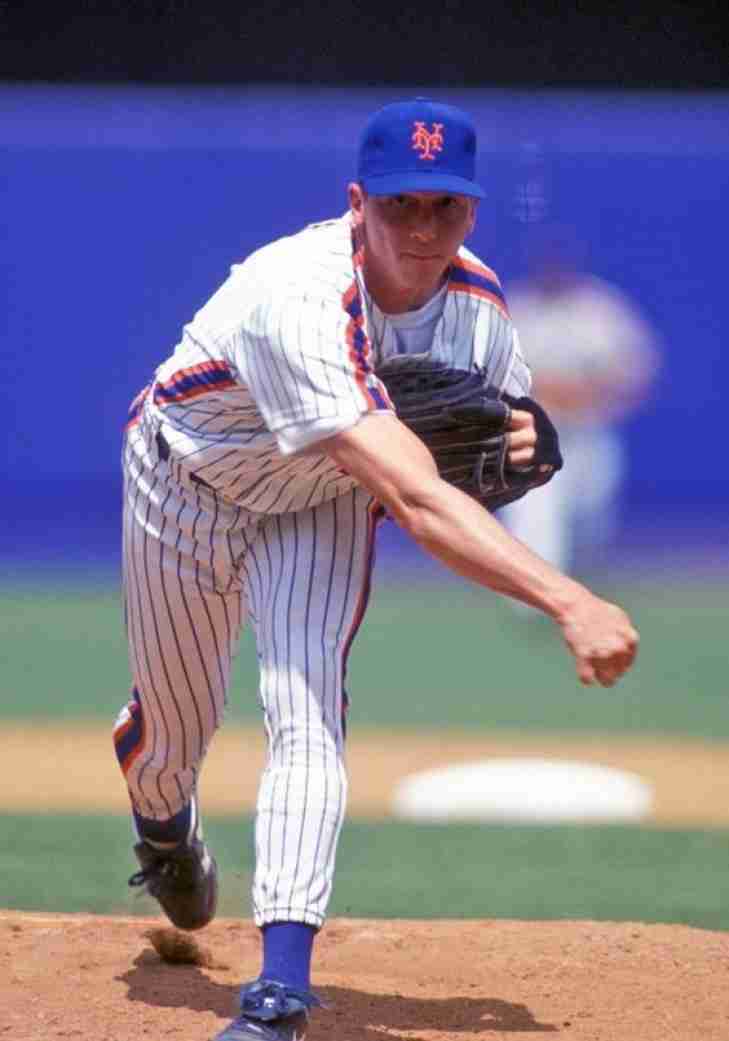
David Cone first arrived in Flushing in March 1987 through a significant trade with the Kansas City Royals, where he joined Chris Jelic in exchange for Ed Hearn, Rick Anderson, and Mauro Gozzo. Equipped with a deceptive multi-angle delivery and a deadly split-finger fastball, Cone rapidly secured a spot in the starting rotation. Alongside Doc Gooden, he helped build a powerful pitching duo that dominated National League hitters for nearly five years.
Cone achieved a historic milestone by winning consecutive National League strikeout titles in 1990 with 233 strikeouts and in 1991 with 241 strikeouts. This period included a legendary, record-tying 19-strikeout game against the Phillies on the last day of the 1991 season. His exceptional, swing-and-miss ability was unmatched, making him a top-tier pitcher for the Mets who regularly surpassed 200 innings with ease.
His 1992 campaign authored a truly bizarre and historic masterpiece of era dominance. Before the cash-strapped Mets moved him, Cone struck out 214 batters in 196.2 frames, leading the league in strikeout rate and tossing five shutouts. Even though he was dealt to the Toronto Blue Jays in late August, his National League body of work was so overwhelming that he still finished second in the NL strikeout race from another country. Combined with his Toronto output, his 261 punchouts paced all of Major League Baseball. Cone continued that excellent year by helping the Jays win their first World Series. Incidentally, he won four more as a New York Yankee.
He would return to New York briefly for one more attempt at baseball in 2003, though that would be only for five contests. Over his two runs with the Mets, he would compile a record of 81-51 with 1,172 strikeouts.
33. David Cone
David Cone may not be best remembered for winning a Cy Young Award. He may be best known as a true hired gun that baseball teams coveted in their stretch drives.
Cone had the coveted label as a big game pitcher. Cone was at his best during high-pressure situations and showcased his abilities as a member of five World Series-winning teams. He was a very smart pitcher who used a variety of skills to defeat opposing batters. Cone was the subject of various sex scandals, yet was able to shut out those distractions and often had his best outings while the target of public ridicule. As such, he shook off those labels and kept only one: winner.
What prevented David Cone from making a serious run at the Hall of Fame was a few bad seasons that really brought down his overall career numbers. He failed to make the 200-win milestone, though had he had more offensive run support, he could have made it. His “hired gun” status also gave him a label that was unsatisfactory to some, though he was one of many to receive it. Flat out, David Cone was one of the top pitchers of the ’90s, and that should not be denied.
