


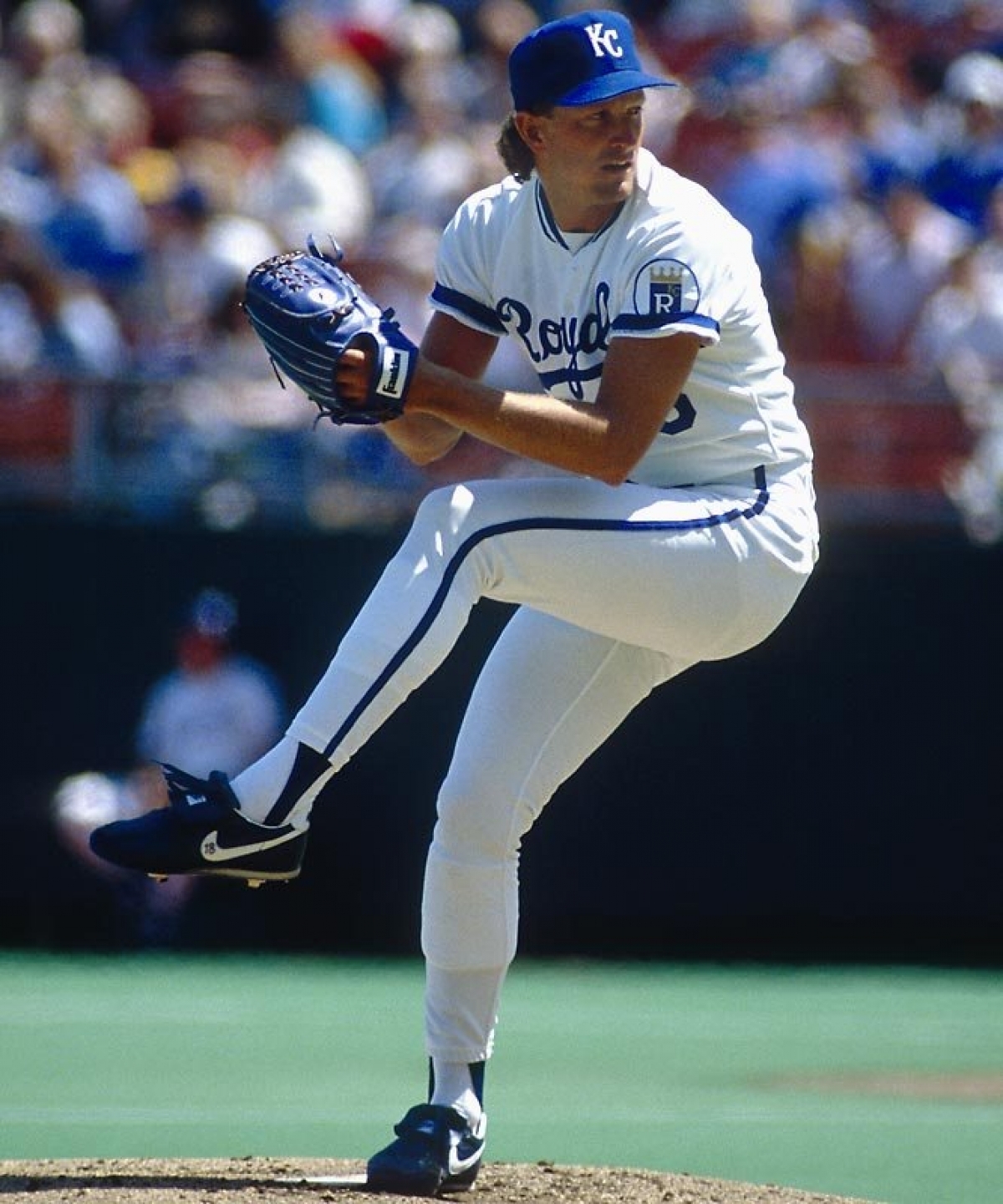





For a decade in Kansas City, following the "Saberhagen Cycle" was the most reliable way to predict the American League pennant race. A slender right-hander with a repeatable, athletic delivery, Bret Saberhagen possessed a specialized command that made him the tactical focal point of the Royals' rotation. While his career was famously defined by an "odd-year" phenomenon, in which he alternated between human fallibility and untouchable dominance, his peaks were so high that they reshaped the franchise's history.
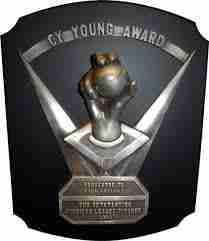
In 1985, at just 21 years old, he displayed a professional resilience far beyond his years, capturing his first Cy Young Award with 20 wins and a 2.87 ERA. However, it was in the postseason that he achieved legendary outlier status. During the "I-70 Series" against St. Louis, Saberhagen authored a masterpiece of high-leverage efficiency, pitching two complete games—including a shutout in the decisive Game 7- to secure the World Series MVP and the Royals' first world title. He proved that a young pitcher could anchor a championship staff by prioritizing location and veteran-like poise over raw velocity.
The hallmark of his craftsmanship returned with a vengeance in 1989, a season that remains a statistical monument in Kansas City lore. After navigating the expected "even-year" dip, Saberhagen had another phenomenal year, going 23-6 and leading the American League in wins, ERA (2.16), WHIP (0.961), and FIP. He captured his second Cy Young Award by mastering the subtle art of the strike zone, leading the circuit in strikeout-to-walk ratio while providing the steady-state reliability of 262 innings. He was a model of specialized control, a pitcher who didn't just throw strikes but dictated exactly where the hitter would make contact.
In 1991, Saberhagen was traded to the New York Mets. With the Royals, Saberhagen compiled 110 wins, 1,093 strikeouts, and two Cy Young Awards, and in 2005, he was inducted into the Royals Hall of Fame.








Comments powered by CComment