

Top 50 Colorado Rockies
Denver had been established long before as a major city worthy of being the center of Rocky Mountain area for some time in every major category, sports of course included. As such it was a long-desired place for MLB expansion and in 1993 it finally happened bringing Denver to the “4” club, in that they house a franchise from all major North American sports leagues.With its thin air, Colorado became the home of inflated offense, but exciting baseball. This has since been corrected through the use of humidors however the ’90s saw players routinely have higher averages at Coors Field than they would anywhere else.
Despite the talented hitters that have graced the Colorado Rockies over the years, they have not been able to say the same in terms of Pitchers and they have only been in the playoffs three times. One of those playoffs, was a World Series loss in 2007.
This list is up to the end of the 2025 Season.
Note: Baseball lists are based on an amalgamation of tenure, traditional statistics, advanced statistics, playoff statistics, and post-season accolades.
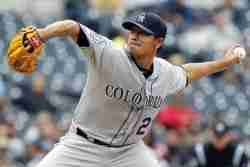
In the thin, unforgiving air of Denver, Jorge De La Rosa achieved what many thought impossible: he became a consistent winner in a ballpark built for hitters. Arriving in 2008 as a left-hander with a power arsenal and a checkered injury history, the Monterrey native developed into the most statistically successful pitcher to ever call Coors Field home. While the "altitude tax" broke many of his peers, De La Rosa utilized professional resilience and a devastating split-finger fastball to anchor the rotation for nearly a decade, eventually leaving as the franchise’s all-time leader in wins and strikeouts. De La Rosa’s…
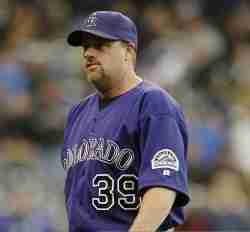
A side-arming right-hander with a specialized sinker, Reed arrived as an original member of the franchise via the 1992 Expansion Draft and proceeded to become the gold standard for bullpen durability in the thin air. For most of the 1990s, he was the man the Rockies turned to when the lead was slim, and the altitude was threatening to turn a routine fly ball into a disaster. Reed’s tenure in Denver was defined by remarkable professional resilience, as he took the ball more often than any of his peers. He established a level-headed consistency that was rare for a pitcher…

The career of Jhoulys Chacín in Colorado was a study in high-altitude survival, defined by a heavy sinker and a professional resilience that allowed him to bridge two very different eras of Rockies baseball. While his journey was often a tug-of-war with inconsistency and injury, the Venezuelan right-hander established himself as one of the most statistically significant hurlers to ever navigate the thin air of Coors Field. Whether he was acting as the young, frontline ace of the rotation or returning a decade later as a veteran presence in the bullpen, Chacín provided a steady-state reliability that often belied the…
Jason Jennings’ stay in Colorado began with a high-velocity entrance in late 2001, but it was his 2002 campaign that remains a pillar of franchise history. He became the first, and still only, Rockie to capture the National League Rookie of the Year award, navigating a massive workload to secure 16 victories. He was a model of specialized efficiency from the jump, utilizing a heavy sinker and a competitive grit to post a winning record in a season where the league batting average was soaring. He possessed a rare, high-leverage durability, serving as the primary engine for a rotation that…

Dexter Fowler’s stay in Colorado was defined by an immediate and relentless offensive efficiency. After a foundational debut in late 2008, he established himself as a model of specialized versatility, utilizing his elite speed to pressure opposing defenses from the leadoff spot. In between 2009 and 2012, a four-year run in which he recorded at least 10 triples annually. This stretch was highlighted by a 2010 campaign where he led the National League with 14 triples, a feat that perfectly illustrated his ability to exploit the massive dimensions of his home ballpark. The most profound aspect of his game was…
CLEVELAND GUARDIANS VS. CHICAGO WHITE SOX
Sep 16, 2026
Buy your Tickets to see Cleveland Guardians vs. Chicago White Sox HERE!
ST. LOUIS CARDINALS VS. SAN FRANCISCO GIANTS
Sep 16, 2026
Buy your Tickets to see St. Louis Cardinals vs. San Francisco Giants HERE!
MINNESOTA TWINS VS. NEW YORK YANKEES
Sep 16, 2026
Buy your Tickets to see Minnesota Twins vs. New York Yankees HERE!
TORONTO BLUE JAYS VS TIGERS (WORK FROM DOME)
Sep 16, 2026
Buy your Tickets to see Toronto Blue Jays vs Tigers (Work From Dome) HERE!
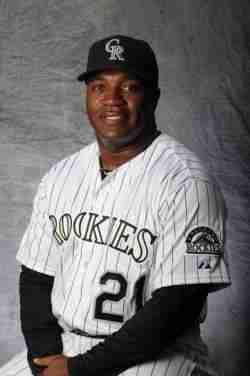
The history of the Colorado Rockies effectively began with a single swing from Eric Young. As an original member of the 1993 expansion squad, "E.Y." provided the first iconic moment in franchise history by launching a leadoff home run in the club's inaugural home opener at Mile High Stadium. Young’s stay in Colorado was defined by an elite, high-frequency approach to baserunning that remains the gold standard for the organization. He reached a personal best in steals during the 1996 campaign, a summer in which he led the National League with 53 stolen bases and earned both an All-Star selection…
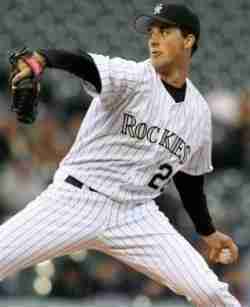
A first-round pick out of the University of British Columbia, the left-hander arrived in Denver with a polished delivery and a professional poise that seemed immune to the psychological toll of pitching at altitude. For a brilliant three-year window in the mid-2000s, "The Socially Conscious Southpaw" provided the Rockies with a steady-state reliability that finally allowed the organization to dream of October. He established himself as a model of specialized durability between 2005 and 2007, a three-year run where he averaged over 190 innings per season and posted consistent winning records. He possessed a rare, high-leverage mental toughness, navigating the…
The arrival of Adam Ottavino in Colorado in 2012 was a quiet transaction that eventually reshaped the backend of the Rockies' bullpen for the better part of a decade. Claimed off waivers from St. Louis, the right-hander brought a lanky frame and a sweeping slider that seemed specifically designed to frustrate hitters in the thin mountain air. While he began his professional journey as a starter, the move to the high country saw him fully embrace a relief role, He established himself as a model of durability over his first three years, appearing in 75 games in 2014 alone and…
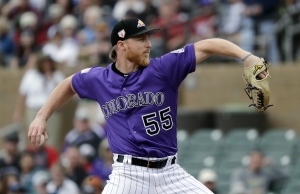
When Jon Gray was selected third overall in 2013, he carried the immense weight of being the "Gray Wolf”, the power-armed savior meant to lead the Colorado rotation for a generation. While the high altitude of Denver often made for a bumpy ride, Gray’s time in purple was defined by flashes of pure, unadulterated dominance that few in franchise history have ever replicated. Gray’s stay in Denver was marked by a relentless ability to miss bats, a trait that allowed him to rewrite the franchise record books early in his career. He established himself as a model of consistency between…
Pitching in Colorado during the late 1990s was widely considered a fool's errand, but Pedro Astacio approached the challenge with a relentless, rubber-armed mentality. While his box scores often featured the kind of astronomical numbers that would break a lesser pitcher’s confidence, Astacio leaned into the chaos. He became the rotation's undisputed workhorse, a man who would gladly trade a few long balls for the chance to stay on the mound long enough to record a win. Arriving in late 1997 via a trade with the Dodgers, he quickly realized that survival at Coors Field required a thick skin and…
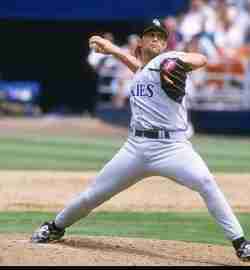
During the high-scoring, pre-humidor years of the Colorado Rockies, the bullpen was often a place where dreams went to die. Curt Leskanic, however, became one of the few arms capable of weathering the storm. An original member of the franchise who debuted during their 1993 inaugural season, the right-hander possessed a durable, "take-the-ball-every-day" mentality that made him the backbone of the Denver relief corps for nearly a decade. Leskanic’s time in Colorado was defined by a remarkable ability to stay healthy and productive while pitching in the league's most punishing environment. He became a staple of the late-inning rotation, eventually…

The story of Tyler Chatwood in Colorado is a study of a pitcher who spent years trying to solve the atmospheric puzzle of Coors Field. Arriving in late 2011 via trade, Chatwood brought a high-velocity sinker and a relentless ground-ball approach that seemed tailor-made for the thin air of the Rockies. For five seasons, he operated as a vital engine of the Colorado rotation, showing a unique ability to find success on the road while battling the unpredictable physics of his home mound. Chatwood’s tenure in Denver was defined by a statistical anomaly that remains a point of fascination. In…

Before Troy Tulowitzki redefined the shortstop position in Denver, Clint Barmes was the athletic, high-energy presence who bridged the gap for the Colorado Rockies. Arriving as a 10th-round pick from Indiana State, Barmes didn't just fill a spot on the roster; he became a vital part of the franchise's mid-2000s identity. Barmes’ tenure in Colorado began with a sensational 2005 campaign. Through the first six weeks of the season, he led the major leagues in batting average, hitting over .400 and capturing the NL Rookie of the Month honors for April. This stretch was punctuated by a legendary walk-off home…
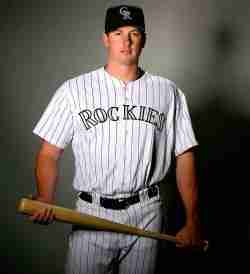
The journey of Brad Hawpe in Colorado is a study in raw, left-handed power that seemed perfectly calibrated for the gaps of Coors Field. Arriving in 2004, Hawpe transitioned from a college first baseman at LSU into a cornerstone of the Rockies' outfield during their most competitive era. While he lacked the foot speed of a traditional right fielder, he possessed a heavy, consistent bat that anchored the middle of the order, providing the run-producing muscle that fueled the franchise’s historic 2007 "Rocktober" run. In 2007, he was a vital part of the National League champions. That summer, he blasted…
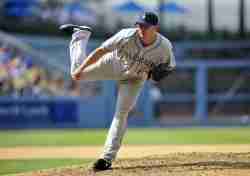
The road to the ninth inning in Denver is rarely paved with consistency, but for Rafael Betancourt, the path was as unconventional as his signature foot-tapping windup. Originally signed by the Red Sox as an eighteen-year-old shortstop from Venezuela, Betancourt struggled to find his stroke at the plate, eventually yielding to a mid-90s organizational shift that placed him on the mound. It was a career-saving pivot that saw him navigate the minor leagues, a stint in Japan, and a decade of elite setup work before he finally emerged as the tactical anchor of the Rockies’ bullpen in the twilight of…
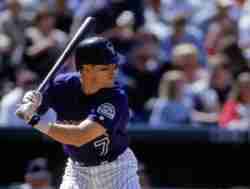
Jeff Cirillo was only a member of the Colorado Rockies for two seasons, but it was an impactful one. Cirillo was an All-Star in 2000, a year he accumulated 195 Hits with a Slash Line of .326/.392/.477. His second and final year in Colorado was almost as good with 165 Hits and a .313/.364/.477 Slash Line. That year, he had 17 Home Runs, the best of his career.
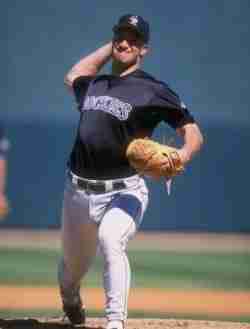
For a brief but electric window in the mid-1990s, Kevin Ritz was the definition of "Coors Field Proof." Arriving as an expansion draft selection from Detroit, Ritz didn't just survive the thin air of Denver; he thrived in it, providing the Colorado Rockies with the first legitimate ace in franchise history. During the 1995 campaign, Ritz emerged as the backbone of the "Blake Street Bombers" era, leading the club to its first-ever postseason appearance. He authored a season of such profound efficiency that he finished 8th in the National League in bWAR for pitchers (4.5). The year after he won…
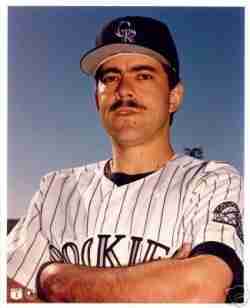
A right-hander from Mexico who had previously struggled to find a permanent home in Atlanta, Reynoso became an original member of the 1993 inaugural rotation. Reynoso’s time in Denver began with a 1993 season that remains one of the best for a starter in the team's early history. He led the inaugural staff with 12 wins and 189 innings pitched. In an era where a 5.00 ERA was often considered a success at altitude, Reynoso produced a sharp 4.00 mark and struck out 117 batters. The calling card of his time in purple and black was a professional resilience that…
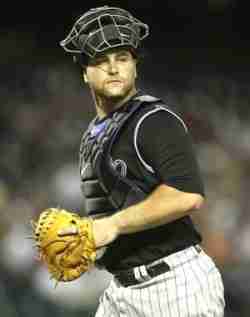
While the Colorado Rockies are often defined by the high-altitude power of their "Blake Street Bombers," Chris Iannetta brought a different, more patient brand of value to the catcher's spot. A fourth-round pick from North Carolina State, Iannetta didn't just occupy the space behind the plate; he became a vital, if occasionally underrated, asset for a franchise seeking stability in its battery. His career in Denver was marked by two distinct chapters, one as a young, power-hitting starter and another as a respected veteran, proving that a catcher’s worth is often measured by the trust of his pitchers as much…
