


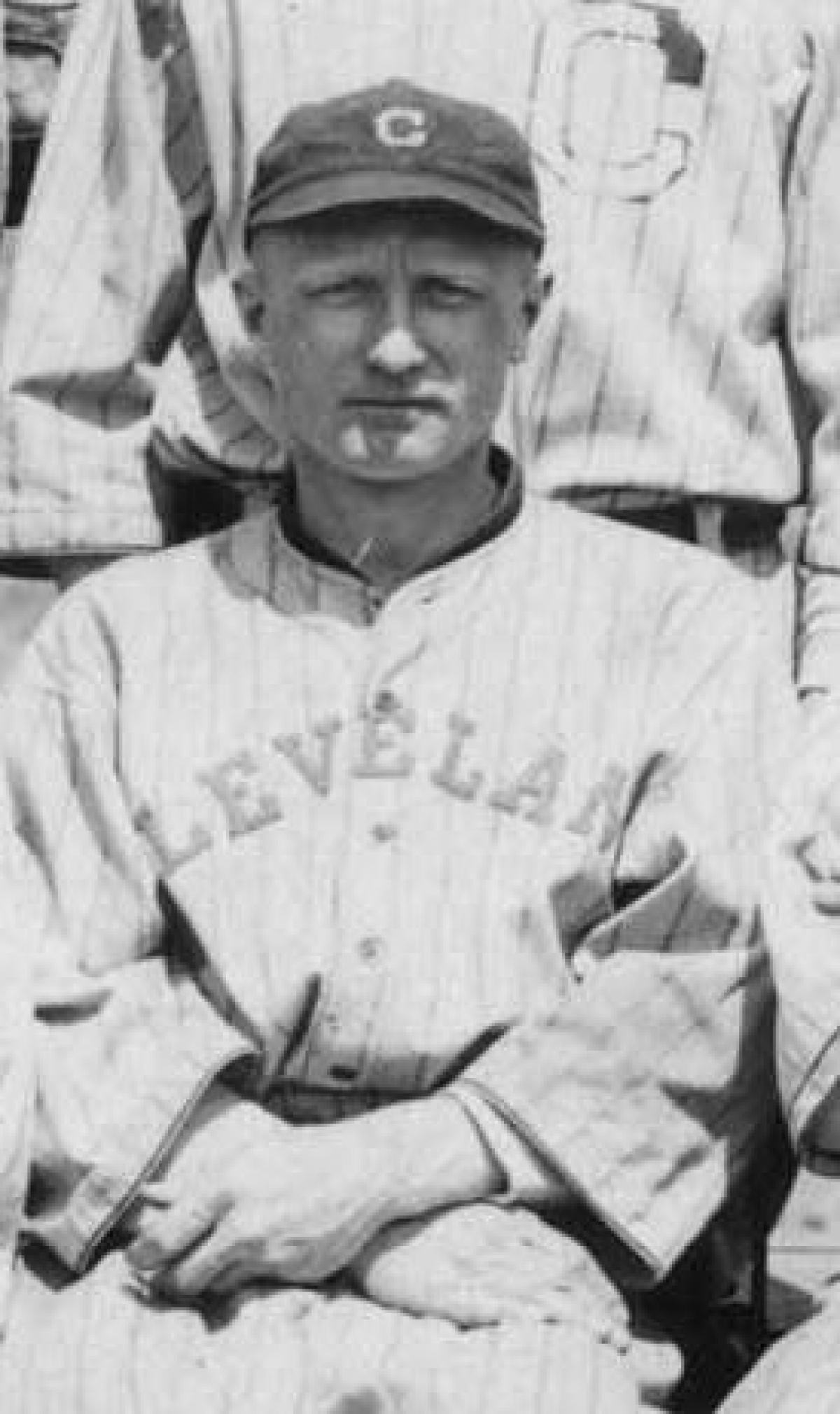

Terry Turner’s path to the American League was paved by the depth of the Pittsburgh roster, where future Hall of Famers Honus Wagner and Tommy Leach blocked his path to a starting role. Cleveland recognized the opening and secured the young infielder in 1904, a move that stabilized their defense for the next decade and a half. He surfaced as a shortstop and matured instantly into a premier run-preventer, reaching a defensive apex in 1906 when he recorded a staggering 5.4 dWAR, a mark that stands as one of the most statistically dominant fielding seasons in baseball history. He was a model of specialized range, leading the league in assists and double plays while providing the pitching staff with an elite security blanket.
The most impressive aspect of his tenure was his mastery of the "small ball" tactics required to survive the deadball era. Turner was a master of the sacrifice, authoring a career total of 264 sacrifice hits, a mark that still ranks him among the top three in franchise history. He possessed a specialized ability to manufacture runs without the benefit of power, utilizing a respectable .254 average and a fearless approach on the basepaths to pressure opposing batteries. He was the pioneer of the head-first slide, a technique he adopted to protect his ankles, and it served him well as he swiped 254 bases during his stay, a record that remained the Cleveland gold standard until the modern era.
In 1918, Turner departed as the organization’s most durable player, having played more games in a Cleveland uniform than any peer of his generation. With Cleveland, Turner compiled 1,472 hits, 254 stolen bases, and 264 sacrifice hits while appearing in a then-franchise record 1,619 games.

Comments powered by CComment