


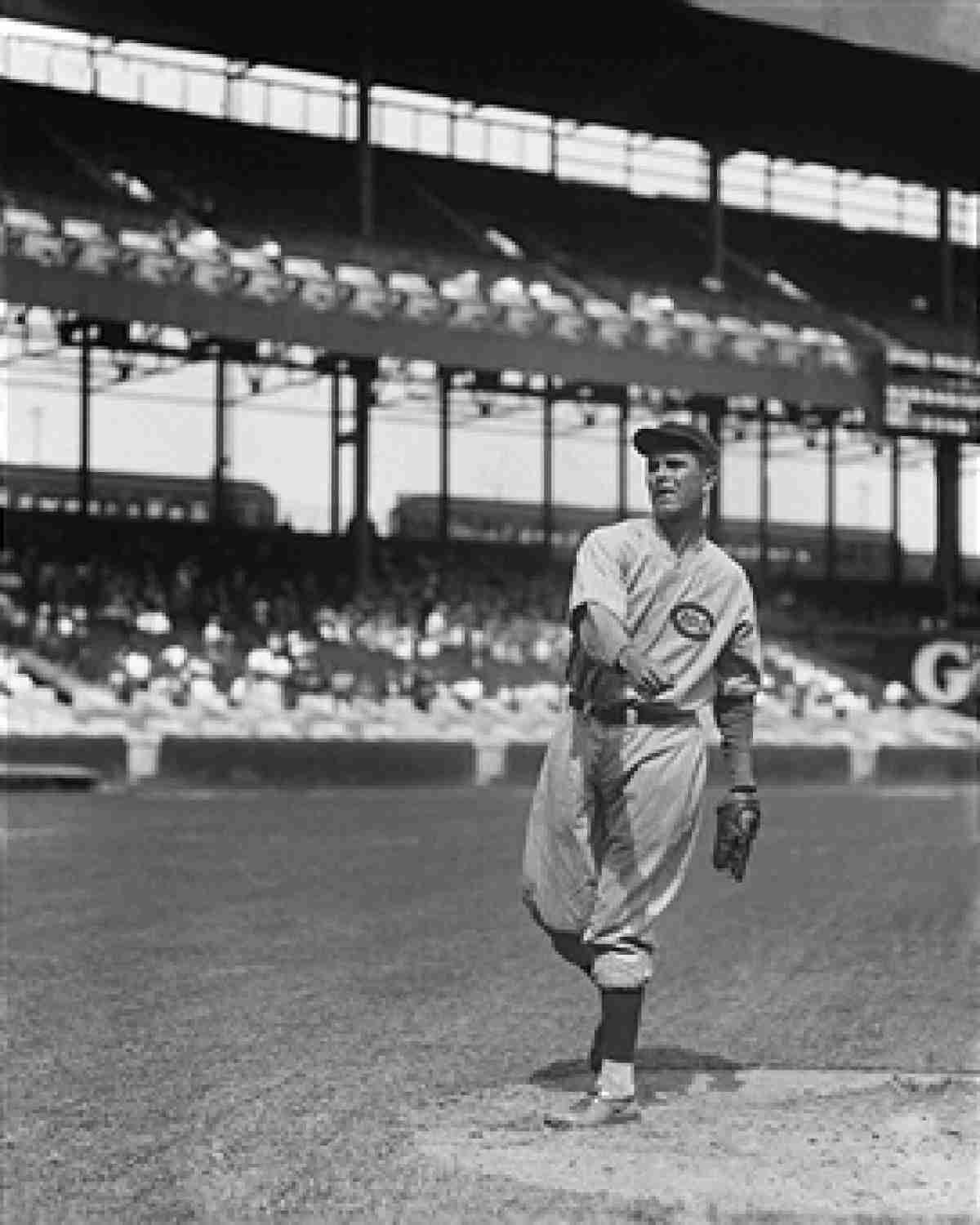


Pete Donohue’s path to the majors was swift, and by 1921, he had matured into the rotation's most dependable asset. He possessed a specialized ability to induce contact on his own terms, peaking between 1923 and 1926. During this four-year stretch, he was a high-frequency winner, eclipsing the 20-victory mark on three separate occasions. This was not merely the product of a potent lineup behind him; he was a model of specialized efficiency, twice finishing third in the league in ERA and consistently ranking among the elite in FIP, proving that he was the tactical master of his own destiny on the mound.
The most impressive aspect of his longevity was a technical command that bordered on the obsessive. Donohue was a master of the "free pass"—or rather, the refusal to grant them—leading the National League in fewest walks per nine innings during his title-winning 1926 campaign. He would finish in the top ten of that category seven different times as a Red, serving as the high-leverage anchor of a staff that prioritized economy and strikes. He wasn't just a volume producer; he was a high-stakes technician who managed the decade’s physical toll by ensuring that every pitch served a specific, strategic purpose.
His presence was defined by professional resilience and durability, which saw him log over 2,100 innings for the franchise. Donohoe was with the Reds until 1930, but he left the organization as a statistical titan of his generation. He departed with 127 wins and 147 complete games while twice leading the league in fewest walks per nine innings.
The organization provided the ultimate punctuation on his legacy in 1964, decades after his final pitch, by inducting him into the Cincinnati Reds Hall of Fame.

Comments powered by CComment