


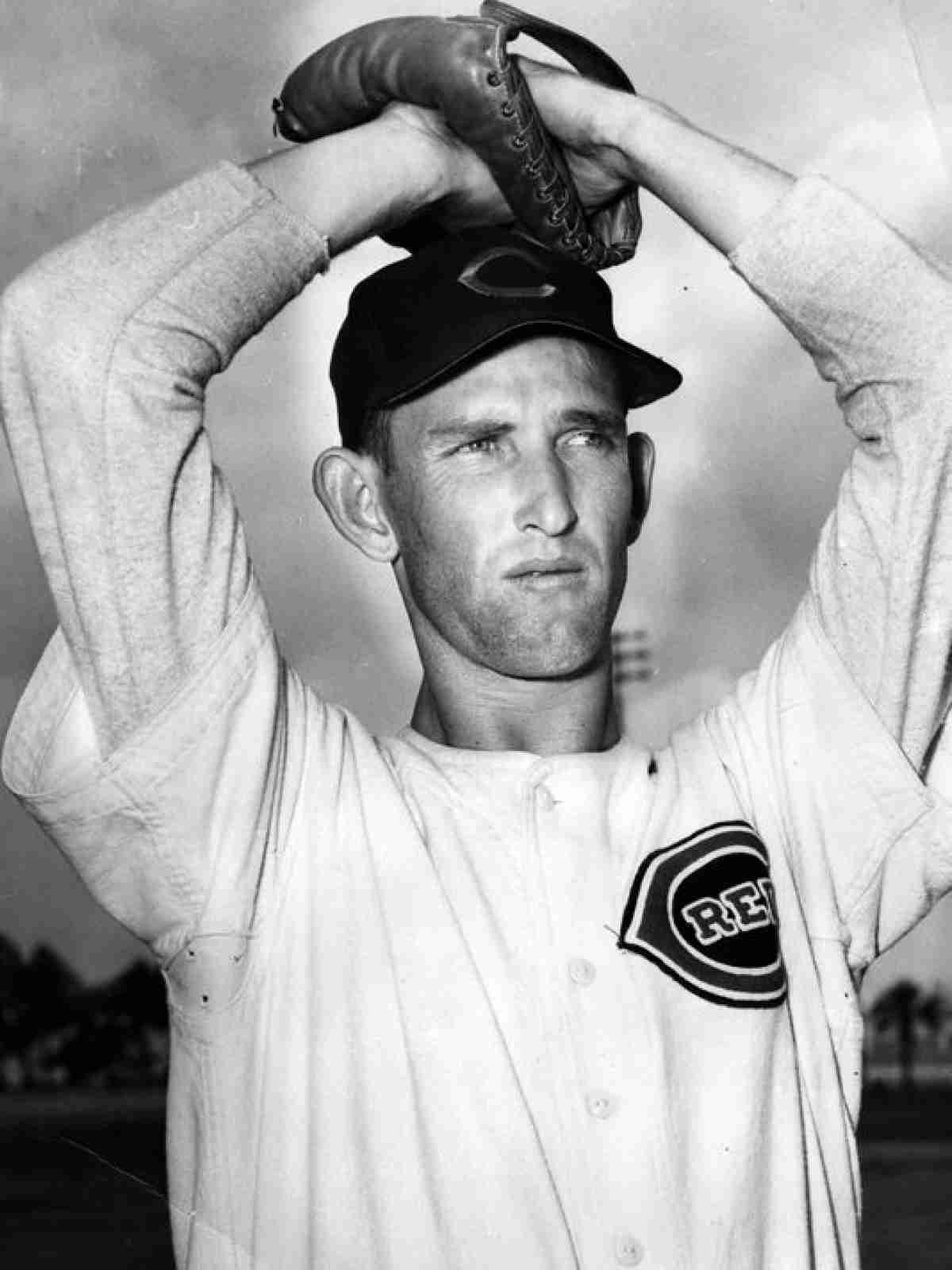



Ewell Blackwell emerged in Cincinnati following his return from military service and matured instantly into the most feared arm in the senior circuit. He arrived with an unorthodox, sidearm whip that made the ball seem to come from behind a hitter's shoulder, a tactical advantage he used to rule the strike zone with clinical precision. Between 1946 and 1951, he was a perennial force, earning six consecutive All-Star selections and proving that his raw, explosive stuff was matched only by a sophisticated understanding of run prevention. He was a master of efficiency, leading the National League in FIP three separate times during his tenure.
The absolute pinnacle of his career arrived in 1947, a season in which he stood as the undisputed king of the hill. Blackwell was a force of nature that summer, authored by a historic 16-game winning streak that included a no-hitter and a near-miss at a second consecutive no-no just days later. He finished the year as the runner-up for the National League MVP, leading the league in wins (22), strikeouts (193), and strikeout-to-walk ratio. He wasn't just piling up stats; he was a high-leverage nightmare who used his imposing height and side-winding delivery to dismantle the best lineups of the post-war era.
His identity was synonymous with a relentless, "uncomfortable" at-bat that resonated across the league. Blackwell was a foundational pillar of the Cincinnati rotation, accumulating 79 wins and 819 strikeouts despite a career that was eventually hampered by the physical toll of his high-stress delivery and various ailments. Whether he was freezing a hitter with a tailing heater or watching them bail out of the box against his sweeping curve, he played with a focused intensity that made him a local immortal. He proved that even a career defined by a short, sharp burst of brilliance could leave a permanent mark on the game’s history.
The chapter concluded in 1952, when he was traded to the New York Yankees. He left the organization as a statistical titan of the era, having established himself as the most dominant right-hander to wear a Reds uniform in the decade following the war. He departed as a six-time All-Star, leaving behind a legacy of strikeout mastery and a delivery that haunted the dreams of National League batters for years.
In recognition of his impact on the mound, the organization inducted him into the Cincinnati Reds Hall of Fame in 1960.

Comments powered by CComment