


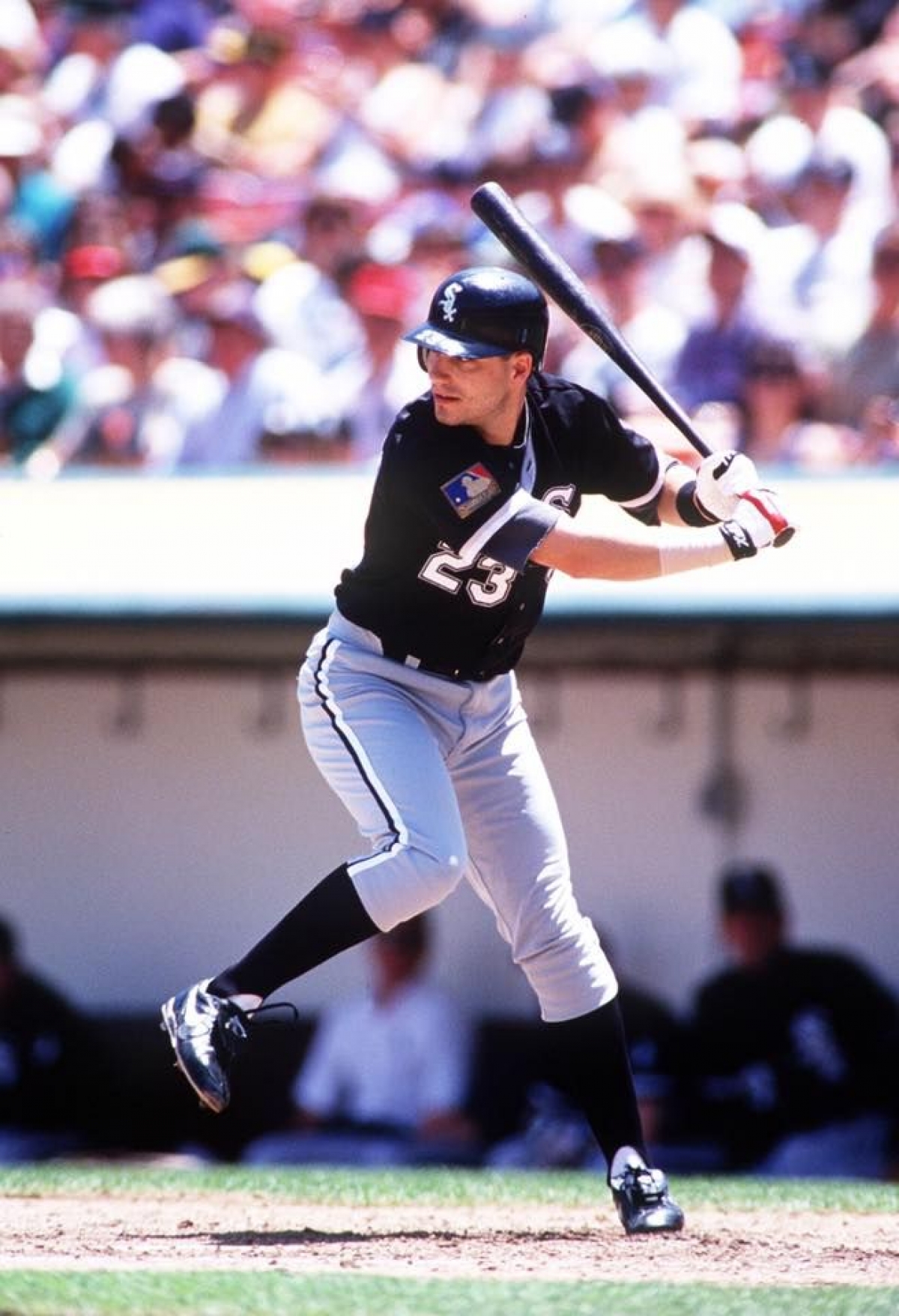



When Robin Ventura arrived on the South Side in 1989, he was the crown jewel of the White Sox farm system, a first-round pedigree with a legendary collegiate resume. While he initially struggled to adjust to big-league pitching, he soon found his rhythm, evolving into a surgical, left-handed threat who provided a perfect counterweight to Frank Thomas in the lineup. He arrived as a high-potential prospect and matured into a defensive institution at third base, but his tenure would ultimately be defined by a single, scorching August afternoon in Texas.
Ventura was a defensive vacuum who captured five Gold Gloves during his ten-year stay in Chicago. He led the league in Total Zone Runs at his position, making the most difficult backhand stabs at the hot corner look routine. Offensively, he was just as reliable; beginning in 1991, he rattled off four seasons of at least 20 home runs, twice eclipsing the 100-RBI plateau. He was the quiet, cerebral professional of the 1993 division-winning squad until the third inning of a game against the Rangers on August 4th.
The signature moment of his stint, for better or worse, occurred when Ventura was plunked by a 46-year-old Nolan Ryan. In a rare display of youthful rage, the 26-year-old Ventura threw down his bat and charged the mound. What followed became the most iconic snapshot in baseball history: the veteran Ryan met him halfway, caught him in a headlock, and delivered a flurry of punches to the top of Ventura's head. While Ventura later famously dismissed the blows as "a couple of noogies," the image of the young star being handled by the "Old Express" became a permanent part of his legacy. It was a moment where the "Franchise Identity" of the gritty White Sox met the immovable force of a living legend.
Despite that viral moment, Ventura’s skills remained undeniable. He was a two-time All-Star in Chicago and maintained a level of poise that helped the team navigate the high-leverage years of the early 90s. He wasn't just the guy in the headlock; he was the guy who provided 1,244 hits and 171 home runs while playing some of the most elite defense the South Side had ever seen. His walk toward the exit came after the 1998 season, when he signed with the New York Mets, leaving a void at third base that the organization struggled to fill for years.

Comments powered by CComment