


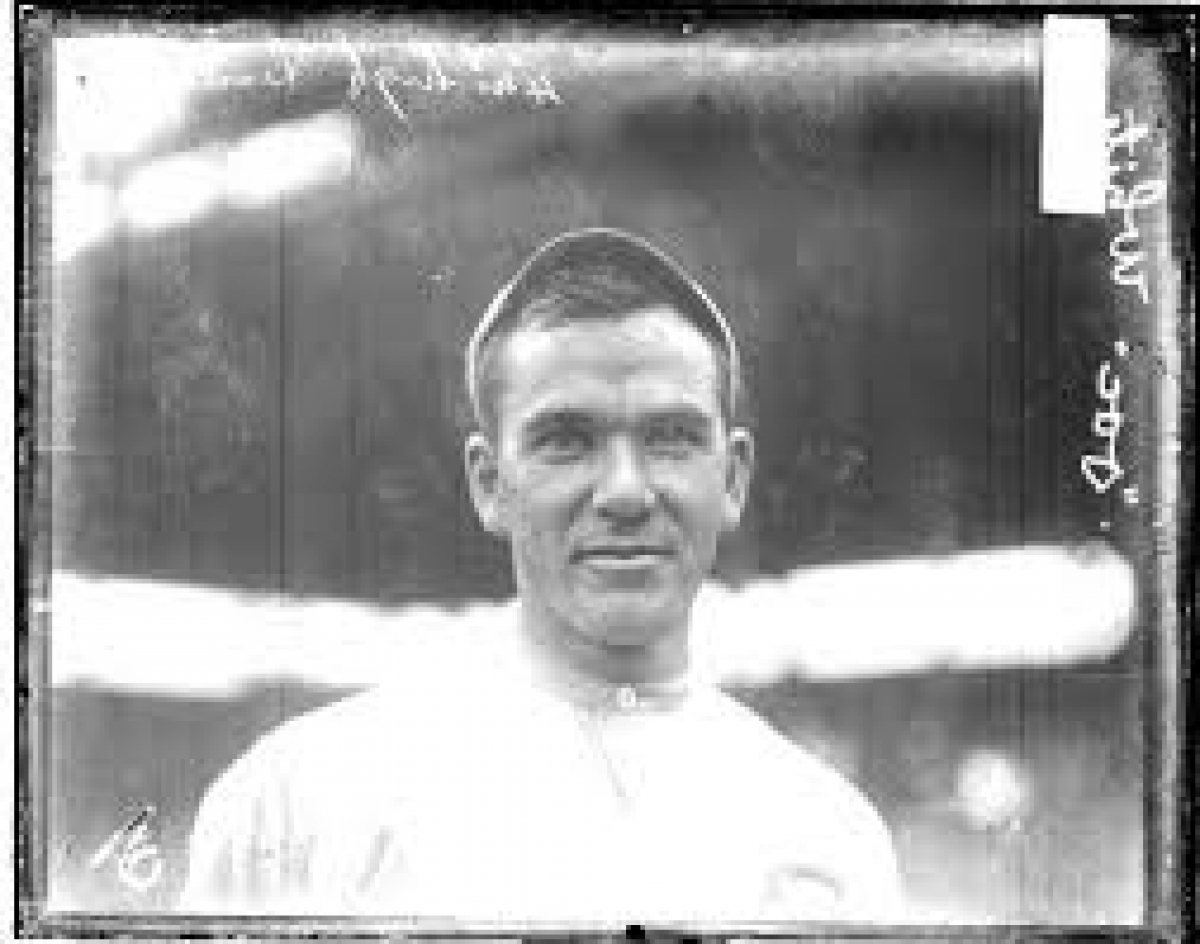
Doc White arrived on the South Side in 1903 following a brief but brilliant stint with the Philadelphia Phillies. A graduate of Georgetown’s dental school, White brought a clinical precision to the mound that immediately translated to the American League. While he lacked the overwhelming power of some of his contemporaries, he was a master of the sinker, the curve, and the spitball, utilizing a cerebral approach to keep hitters off-balance. His residency in Chicago began with a literal bang; in 1904, he set a Major League record by tossing five consecutive shutouts, a feat of durability and dominance that stood for 64 years until it was eclipsed by Don Drysdale.
The pinnacle of his career arrived in 1906, when he served as a primary architect of the White Sox's first World Series championship. That season, White was nearly untouchable, leading the American League with a microscopic 1.52 ERA and a league-best WHIP. During the historic crosstown World Series against the 116-win Cubs, White etched his name into the record books twice: first by recording the first save in World Series history (retroactively calculated) and then by winning the clinching Game 6. He was the high-efficiency engine of a staff that had to be perfect to compensate for the team's anemic offense.
The momentum of the championship season carried directly into 1907, which stands as the statistical masterpiece of his tenure. White led the league with 27 wins and displayed a level of control that bordered on the impossible, issuing only 38 walks in 291 innings. He even authored an American League record by pitching over 65 consecutive innings without allowing a single walk. He was a master of the "short game," working quickly and efficiently, often finishing games in under 90 minutes. At this apex, he was widely considered the premier left-hander in the game, a technician who had turned pitching into a science.
However, the bill for those high-workload seasons eventually came due. Following a solid 18-win campaign in 1908, White began a gradual, painful descent. By 1909, the junk that had frustrated hitters for years started to lose its bite, and his ERA began a steady climb. While he managed one final 15-win season in 1910, the remainder of his journey was marked by a struggle to regain the elite form of his youth. The transition from superstar to veteran mentor was difficult, and by 1913, his arm had finally reached its limit.
Doc White’s walk toward the exit came after the 1913 season, concluding an eleven-year residency that saw him accumulate 159 wins in a White Sox uniform. He left the organization as a World Series hero and a statistical outlier whose records for shutouts and control would stand for generations. He arrived as a young dentist with a nasty sinker and left as a permanent fixture of South Side lore, the man who proved that sometimes, the smartest player on the field is the most dangerous one.

Comments powered by CComment