

9. Stan Hack
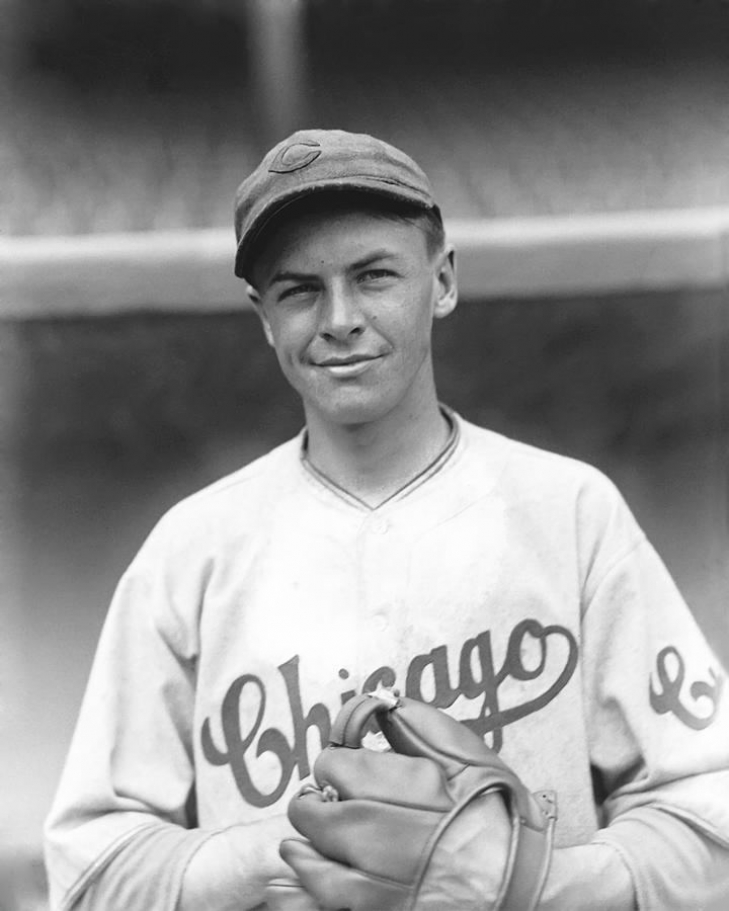
In an era of baseball defined by rugged toughness and loud personalities, Stan Hack was a different kind of weapon. He arrived in Chicago in 1932 and quickly made the "hot corner" his permanent residence, but it wasn't just his glove that made him indispensable. As the Cubs' permanent leadoff man, Hack brought a scientific approach to the top of the order. While others were swinging for the fences, Hack was busy mastering the art of the professional plate appearance. He didn't just hit his way on base; he haunted pitchers by working the count, finishing his career with a .394 On-Base Percentage, a number that would make a modern sabermetrician weep with joy.
His run with the team was defined by a metronomic, "smiling" consistency. From 1934 until his final game in 1947, Hack was the engine that powered the Chicago offense. He was a two-time hits leader and a perennial .300 hitter, but his true value emerged when the lights were brightest. Hack helped lead the Cubs to four National League pennants, and while the franchise famously fell short in those World Series appearances, it was never for a lack of effort from their third baseman. Hack was a postseason revelation, batting a scorching .348 in October and proving that his patient approach was immune to the pressure of the Fall Classic.
Hack was the rare superstar who never felt the need to raise his voice or change his uniform. He played all 1,938 of his Major League games in a Cubs jersey, amassing 2,193 hits and serving as the bridge between the glory days of the late 20s and the post-war era. He was the "Lifer" before the term was even popularized, a man whose loyalty to the North Side was as unwavering as his batting eye.
The story reached its formal acknowledgement in 2021 when the Cubs inaugurated their own Hall of Fame. Hack was an easy, unanimous choice for the first class, a permanent tribute to the man who proved that you could dominate a game with a smile and a walk as easily as a home run. He arrived as a young prospect and left as a franchise institution, the gold standard for what a leadoff man should be.
32. Stan Hack
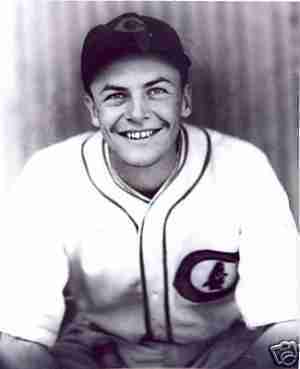
Stan Hack played his entire 16-season career with the Chicago Cubs. He was one of the Cubbies most popular players as “Smilin” Stan’s sunny disposition made him a fan favorite among players, fans, and journalists alike. It also didn’t hurt that he was one hell of a hitter.
Hack hit over 2,100 hits batting first for Chicago, but like any true good leadoff hitter, he found a way to get on base. Hack knew how to draw the free pass and was constantly among league leaders in On Base Percentage. Once on the base paths, Hack was an intelligent base runner, making few mistakes. He made even fewer mistakes at third, where he would have likely won multiple Gold Gloves had they been implemented at the time.
Hack had no significant slugging numbers, but that was not what he was paid to do. His main goals were to get on base and defend the hot corner, and he did both very well. He did accumulate some of his numbers during a weakened league (during World War II), but he was a consistent performer who should have gotten more Hall of Fame votes than he did.
