


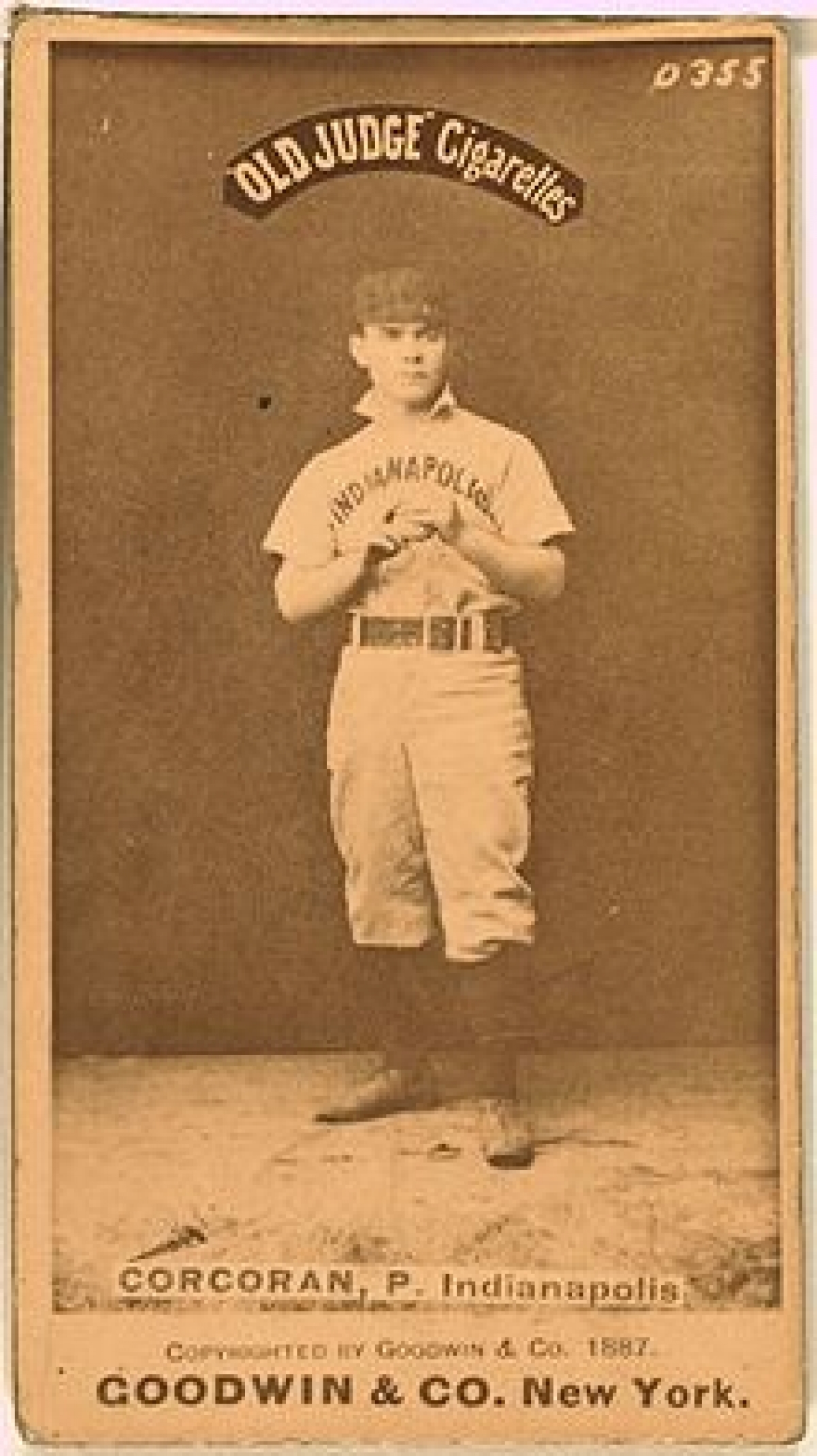
Corcoran debuted in 1880 and bypassed the usual maturation process, maturing instantly into the most feared right-hander (and occasional left-hander) in the National League. He was the definition of a workhorse for a White Stockings club that terrorized the league during the early 1880s. Between 1880 and 1884, Corcoran amassed a staggering 170 wins, a total that speaks to a level of durability that is almost incomprehensible by modern standards. He relied on a rare, "switch-pitching" ability that allowed him to alternate arms to combat fatigue or exploit a hitter's weakness, a tactical outlier in an era of iron-man rotations.
The absolute pinnacle of his career arrived in 1882, a season in which he stood as the undisputed king of the mound. Corcoran was an efficiency machine that summer, capturing the National League ERA title and leading the circuit in WHIP and hits per nine innings. Most notably, he made history by becoming the first pitcher in the history of the sport to throw a second career no-hitter. He wasn't just piling up wins; he was suppressing runs at a rate that made him a statistical titan, serving as the cornerstone for a championship-caliber roster.
His identity was synonymous with the high-stakes, high-workload environment of the early professional game. Corcoran was a master of the "Deadball" tactical battle, using his unique arm flexibility to navigate the grueling schedules of the 1880s. However, the sheer volume of his production eventually demanded a toll. By 1885, the arm that had carried the franchise to multiple titles was effectively "dead," the victim of a workload that saw him average nearly 400 innings a season during his prime. Whether he was baffling hitters with a side-arm curve or making history with his second no-no, he played with a focused intensity that made him a local immortal.
The chapter reached a sudden and quiet conclusion in 1887, just two years after his effectiveness vanished.

Comments powered by CComment