

If I Had a Vote in the 2025 Baseball Hall of Fame Election
After a decade of "ballot logjam," has voting for the National Baseball Hall of Fame finally returned to normal? We will know when results from the ballots cast by the qualified members of the Baseball Writers' Association of America (BBWAA, or "the writers") are announced on January 21, 2025, although based on voting trends over the last decade, the bulk of the results are predictable and, by now, unsurprising.
What does a "return to normal" mean? Of the 14 first-time candidates on the BBWAA 2025 ballot, only two, CC Sabathia and Ichiro Suzuki, stand out as likely Hall of Famers, and neither are a lock for first-ballot induction. Of the 14 returning candidates, none of the "normal" candidates are automatic Hall of Famers, else they would have been elected already. Thus, there is no "ballot logjam," meaning that there are not more than ten sure-fire Hall of Famers who exceed the maximum of ten votes allowed per ballot.
Fernando Rodney
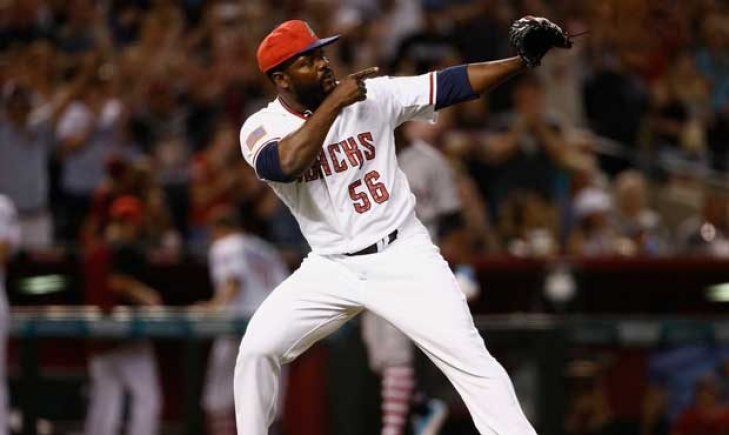
Fernando Rodney had one of the more unique celebrations after a save, as he mimicked shooting an arrow from the mound. As he is a member of the 300-Save club, we got to see it often.
Rodney had a long career, 17 years in total, playing for Detroit (2002-09), Los Angeles (AL) (2010-11), Tampa Bay (2012-13), Seattle (2014-15), Chicago (NL) (2015), San Diego (2016), Miami (2016), Arizona (2017), Minnesota (2018), Oakland (2018-19) and Washington (2019). A four-time All-Star, Rodney twice led the American League in Games Finished, and when he was a Mariner, he won the Saves Title with 48. He would have five other seasons where he had at least 35 Saves.
The Dominican never started any of his 951 Games but did finish 590 of them with 327 total Saves.
Rodney closed off his MLB career with the Nationals, winning a World Series Ring.
45. Fernando Rodney
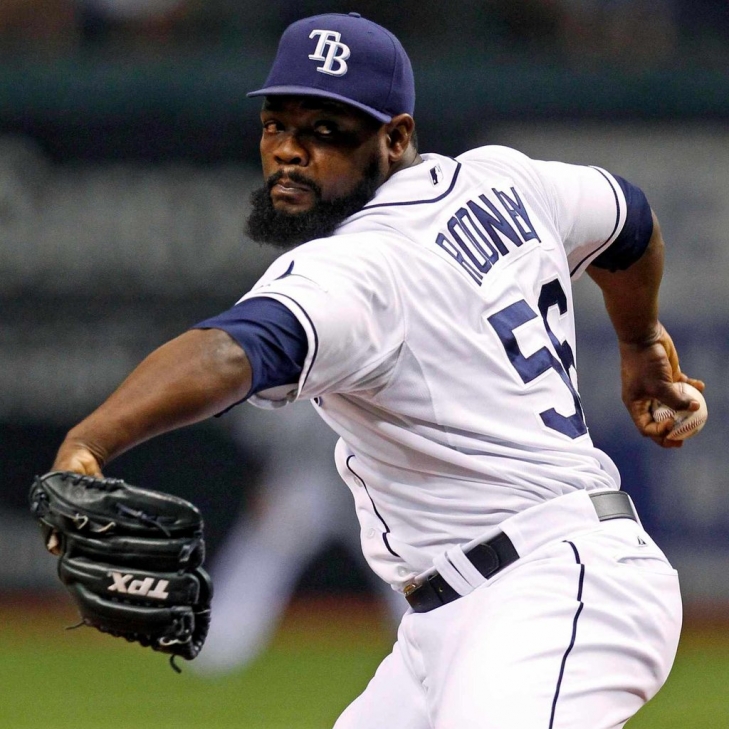
In the wildly unpredictable career of Fernando Rodney, the two-season chapter he spent in St. Petersburg stands as an absolute mountain peak. Signed as an unheralded free agent ahead of the 2012 season after nine years of varying success with Detroit and the Los Angeles Angels, the Dominican right-hander was handed the ninth-inning keys by Joe Maddon. What followed wasn't just a career resurgence—it was one of the most historically dominant relief seasons in baseball history.
Weaponizing a generational, fading changeup that completely locked up opposing hitters, Rodney turned the 2012 campaign into a personal masterpiece. He slammed the door for a franchise-record 48 saves, but it was his pristine efficiency that rewrote the record books: Rodney yielded a microscopic 0.60 ERA over a career-high 74.2 innings, setting a major league record for the lowest single-season ERA by any pitcher with at least 50 innings thrown. The baseball world took notice of the performance—and his signature, tilted-cap style—rewarding him with an All-Star selection, a fifth-place finish in the AL Cy Young voting, and a 13th-place finish in the MVP race. Every time he pulled back his invisible bow and arrow to celebrate a final out, the Rays were securing a win on the back of historically elite run prevention.
While maintaining that mythical level of perfection was impossible, Rodney returned in 2013 to provide the club with another highly productive baseline. He locked down 37 saves across 68 appearances, anchoring a steady bullpen that propelled the Rays right back into the postseason picture.
With his market value thoroughly restored, Rodney hit the open market that winter and signed a lucrative free-agent deal with the Seattle Mariners. Rodney made 144 appearances (all in relief). He compiled a 7–6 record with 85 saves, a spectacular 1.91 ERA, and a 1.03 WHIP, striking out 158 batters over 141.1 innings pitched as a Ray.
