

Committee Chairman
18. Troy Glaus
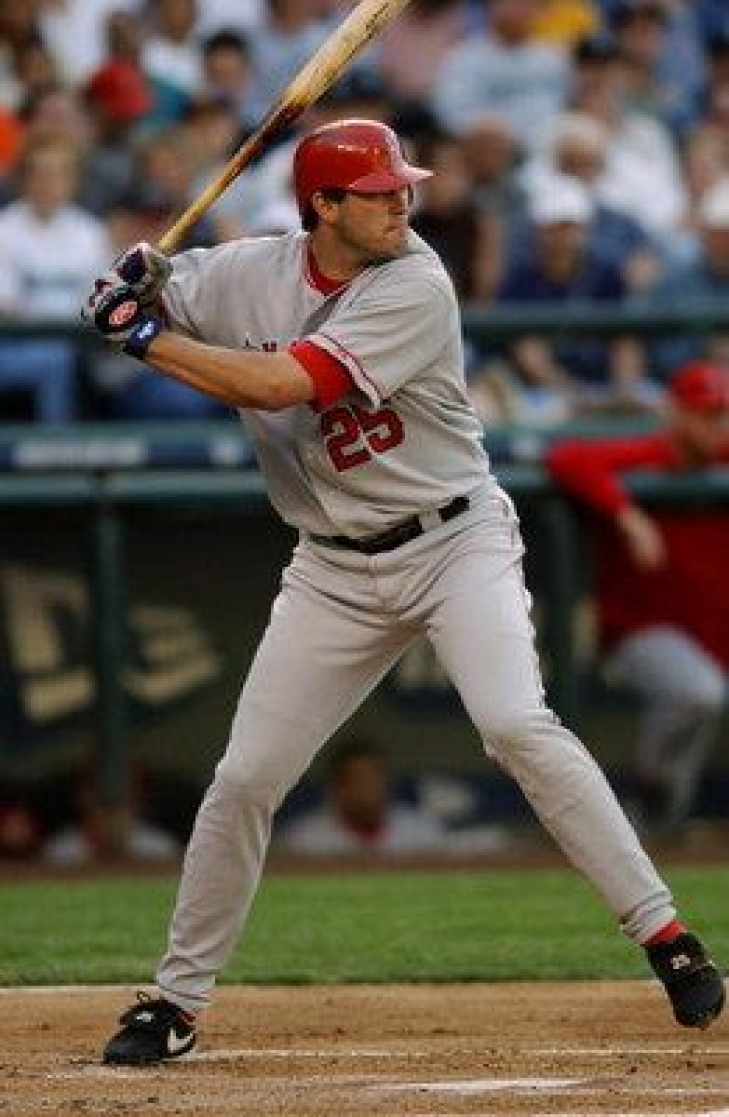
Troy Glaus was the power man of the Angels in the early 2000s, and his role in their 2002 World Series win should be forever celebrated in Southern California.
After he was chosen Third Overall in the 1998 Amateur Draft, Glaus made the Angels and was the regular Third Baseman as a sophomore, where he belted 29 Home Runs. Over the next few years, Glaus was the top power-hitting Third Baseman in the American League, winning the Home Run Title in 2000 (47) and posting an even 1.000 OPS. In 2000 and 2001, Glaus was both an All-Star and Silver Slugger, and although he was neither in 2002, it had to be the highlight year for Glaus in baseball.
2002 saw Glaus have 30 Home Runs (his third straight achieving that mark), but his post-season was pure electricity. Glaus hammered seven Home Runs in the playoffs, batting .300 in every series on route to the Angels' first World Series win. He won the World Series MVP and the Babe Ruth Award that year.
Over the next two years, Glaus missed a plethora of games but was still executing good power when he was playing. He left the Angels to sign with Arizona after the 2004 season, and he provided them with 182 Home Runs and the vital piece to their first title.
16. John Lackey
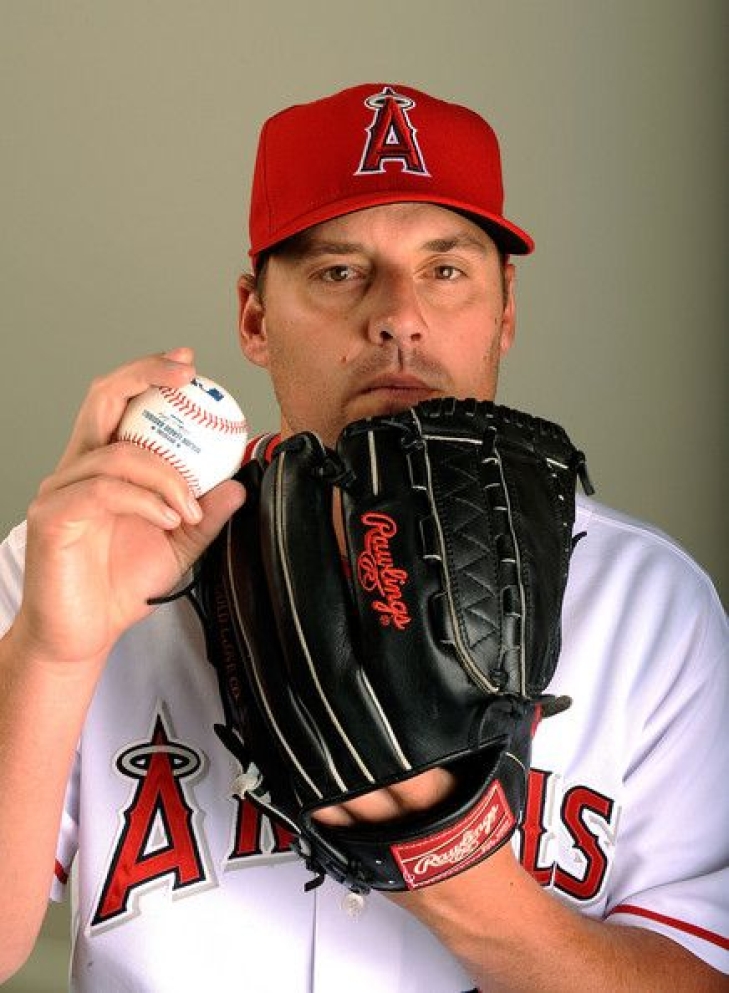
John Lackey’s Major League debut was in June of 2002 where he became a member of the Angels’ starting rotation. The timing could not have been better for Lackey, who was about to become part of a World Series Championship team. Lackey won a game in both the ALCS and World Series, and he entered 2003 as a permanent starter.
The hurler was up and down but always showed flashes of greatness and could eat a lot of innings. Lackey had his best season in baseball in 2007, where he went 19-9, led the American League in ERA (3.01) and ERA+ (150), and was third in Cy Young voting. He had two more decent years with the Angels before he signed with Boston as a Free Agent.
Lackey won two more World Series Rings, 2013 with Boston and 2016 with the Cubs. As an Angel, Lackey had 102 Wins against 71 Losses with 1,201 Strikeouts.
14. Mark Langston
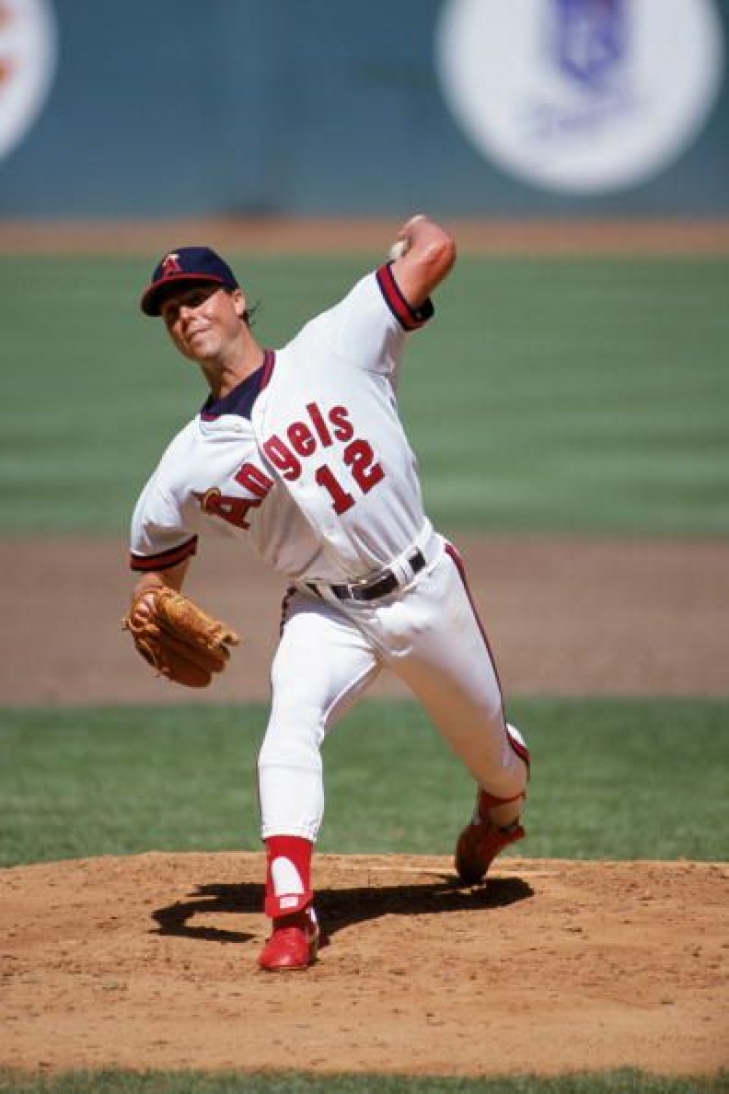
Mark Langston landed in Anaheim as a high-profile free agent in 1990, returning to the West Coast after a whirlwind season that saw him traded from Seattle to Montreal. Known for a blistering heater and a devastating pickoff move, the left-hander arrived with the heavy expectations of a franchise looking for a front-line starter to lead them back to contention. For eight seasons, he anchored the Angels' rotation, evolving from a raw power pitcher into a refined southpaw.
Langston’s tenure in a California uniform took a massive leap forward during the 1991 season. After a rocky debut year in Orange County, he found his groove with a 19-8 record and a 3.00 ERA, earning his first All-Star nod in four years. This resurgence proved he was more than just a high-priced rental; he was a workhorse capable of silencing the best lineups in the American League. His performance that summer garnered a sixth-place finish in the Cy Young race.
Langston was defined by a rare blend of pitching prowess and defensive mastery. Between 1991 and 1995, Langston was a vacuum on the mound, capturing five consecutive Gold Gloves for his ability to shut down the opposition's bunting and running game. He remained a perennial threat in the mid-summer classic, earning All-Star honors in 1992 and 1993 while consistently racking up high inning totals. Even as the league's offensive numbers began to skyrocket, he maintained a sharp edge, eventually fanning 1,112 batters during his stay with the Halos. He provided a veteran presence that gave the club a chance to win every fifth day, regardless of the shifting roster around him.
Following the 1997 season, the veteran hurler moved on to San Diego. He left the organization with 88 wins, 1,112 strikeouts, and five consecutive Gold Glove Awards.
13. Garret Anderson
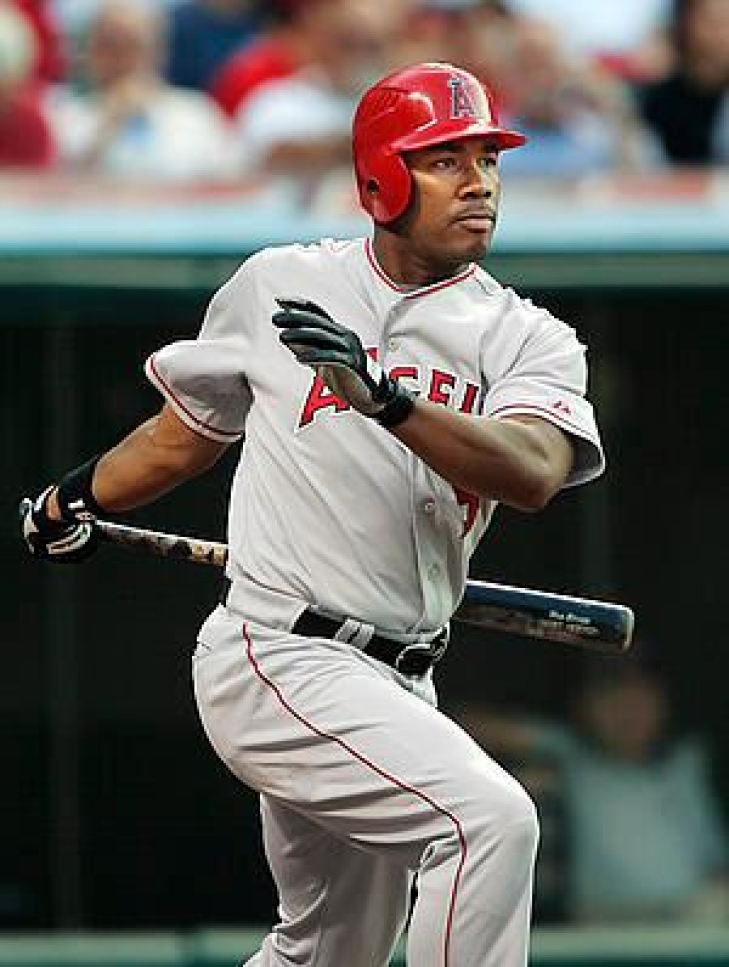
Garret Anderson emerged as the most durable fixture in the history of the Anaheim outfield, a 1990 draft pick who transformed from a quiet prospect into the franchise’s most prolific run-producer. After a brief introduction to the big leagues in 1994, he secured the starting role in left field and immediately proved his worth by finishing as the runner-up for the 1995 American League Rookie of the Year. For fifteen seasons, he anchored the lineup that thrived on his short, effortless left-handed stroke.
Anderson’s journey in a California uniform reached a historic peak during the 2002 and 2003 campaigns. As the club marched toward its first World Series title, he emerged as a premier American League standout, earning his first All-Star selection and a Silver Slugger Award in 2002. That summer, he demonstrated a specialized ability to drive the ball into the gaps, leading the league with 56 doubles while finishing fourth in the MVP voting. He showed the organization that he was a foundational piece of a championship core, providing the high-velocity production of 123 RBIs and 29 home runs in the heart of the "Thundersticks" order.
Between 2000 and 2003, Anderson was a constant presence at the top of the leaderboards, recording four straight seasons with at least 28 home runs and 116 RBIs. He possessed a focused intensity that allowed him to maintain a batting average over .300 for three consecutive years during that span, becoming a perennial fixture at the mid-summer classic. Despite a low-walk approach that impacted his overall efficiency, he remained a model of reliability, eventually setting franchise records for hits, runs, and RBIs.
In 2008, Anderson moved on to Atlanta as a free agent. He left behind a statistical footprint that remains unmatched in the team’s record books: 2,368 hits, 272 home runs, and 1,292 RBIs. In 2016, he was inducted into the Angels Hall of Fame.