

7. Jimmy Key
Looking at the early days of the Toronto Blue Jays’ rise in competitiveness, it's tempting to think of their exciting, heavy-hitting offenses. However, the true foundation of their journey from an expansion team to a force in the American League was actually built on the quiet strength of a humble, steady left-hander from Alabama. Jimmy Key didn't need a blazing fastball or dramatic mound antics; he simply outsmarted major-league hitters with careful precision, perfect control, and remarkable mental calmness. He started in 1984 as a flexible rookie reliever, earning ten saves, but the team quickly saw his real potential as a starting pitcher. When he moved into the full-time rotation the next spring, Key became the quietly reliable, highly effective cornerstone of the entire organization.
Key’s emergence as a key front-line pitcher became clear during the groundbreaking 1985 season. In his first summer as a regular starter, the southpaw baffled American League hitters to a 14–6 record, earning his first All-Star selection and leading the Blue Jays to their first-ever American League East division pennant. This breakthrough put him in the spotlight, but his true masterpiece came in the legendary 1987 season. Relying on a devastating slider and a sinking fastball that caused endless weak contact, Key dominated the Junior Circuit. He won the American League ERA Title with a low 2.76 and posted a league-leading 1.057 WHIP, finishing with a solid 17–8 record to place second in the AL Cy Young Award voting and earning The Sporting News Pitcher of the Year honor.
After his outstanding 1987 season, Key had to demonstrate his strong competitive spirit rather than just rely on his usual efficiency. In May 1988, an elbow injury threatened his progress, leading to arthroscopic surgery to remove bone chips. Although he was sidelined for ten weeks, Key made a quick comeback by adjusting his pitching style to overcome any lingering discomfort. He finished the season with an impressive 12–5 record, providing stability for a pitching staff in dire need of his workload.
By 1989, Key pitched a total of 216 innings over 33 starts, securing 13 wins and acting as the steadying force that helped lead the team to the postseason. While players like Dave Stieb made headlines nationally, Key stayed focused on his performance, leading to a personal best of 16 wins in 1990 and anchoring the rotation for a team that was actively building a championship-ready roster.
That consistent development led to a standout 1991 season. With the Midsummer Classic hosted in Toronto, Key achieved his second All-Star nod and was the winning pitcher in the 1991 All-Star Game, played before his home crowd at the newly opened SkyDome. Although Key’s regular-season contributions provided essential stability, his most significant moment came in October 1992. In his last games with the team, he pitched an exceptional Game 4 and secured an important relief win in the 11th inning of Game 6 against Atlanta, giving Toronto its first-ever world championship banner.
Following his 1992 Fall Classic victory, Key entered free agency and signed a four-year deal with the Yankees, maintaining his elite performance with two All-Star selections, a league-leading 17 wins in 1994, and another World Series title in 1996. He finished his 15-year career with the Orioles. His nine-year Toronto stint included a 116–81 record, 3.42 ERA, and 944 strikeouts over 317 appearances.
157. Jimmy Key
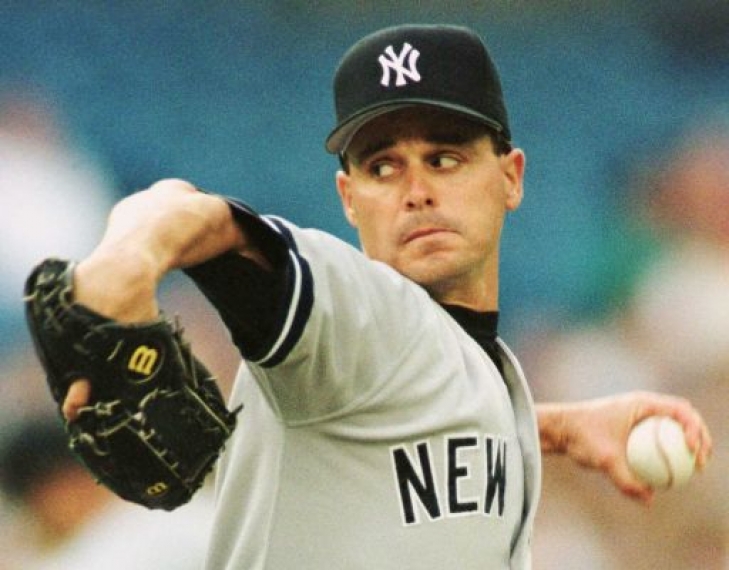
Jimmy Key played his entire career in the American League East, dividing between three teams, Toronto, New York, and Baltimore, finding success with all three clubs.
Key’s foray into the Majors first came with the Blue Jays, where he was used in late relief as a rookie. That year ended his bullpen days, as Toronto promoted him to the starting rotation, and he was an All-Star. Key would remain an essential figure in the Jays’ staff, winning the ERA Title in 1987 when he was the runner-up for the Cy Young. Key was again an All-Star in 1991, and the following year, he helped take the Jays to their first World Series win.
Key was not in Toronto in 1993 to defend their title as he joined their rival, New York, as a Free Agent. The Pitcher went to have the best back-to-back years of his career, earning All-Star nods in pinstripes in both '93 and '94, and finishing fourth and second in Cy Young voting, respectively. In that runner-up year, he led the AL in Wins (17) and was also sixth in MVP voting.
In his final two years in baseball (1997 & 1998), he was with Baltimore and was an All-Star in what was his penultimate year. Key left the game with a 186-117 record.
