

6. Babe Adams
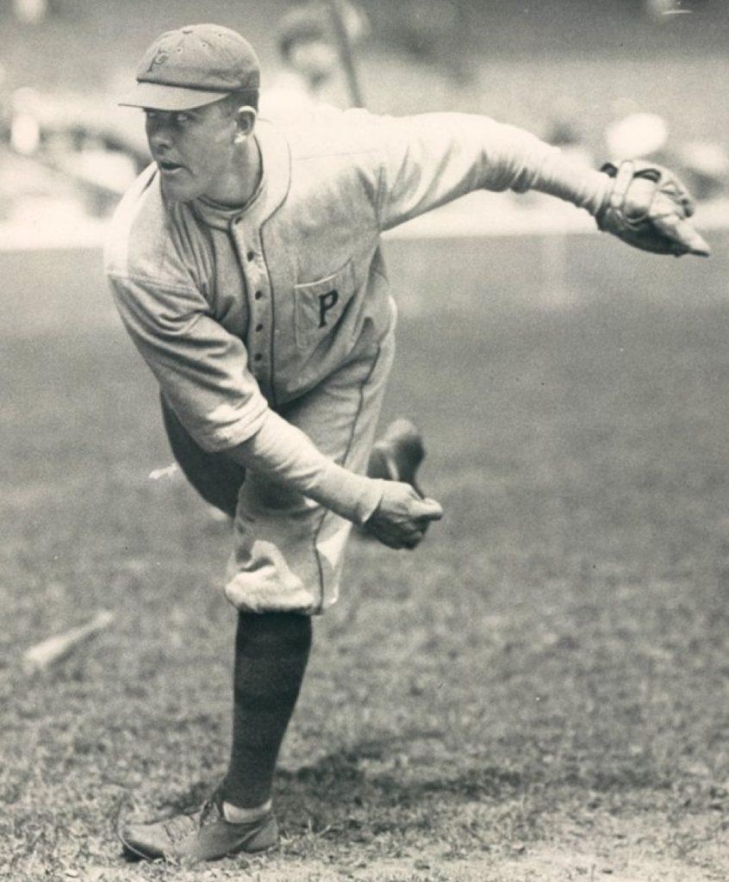
The history of pitching is full of fire-breathers who used raw speed to overpower batters, but Babe Adams took a different approach. Throughout his 19-year MLB career, mostly with the Pittsburgh Pirates, except for a brief relief stint with the St. Louis Cardinals in 1906, Adams made his mark with remarkable control. He turned the strike zone into his personal canvas of precision, effectively neutralizing the best hitters of the Deadball Era by avoiding unnecessary walks.
His official debut as a key player coincided with the historic 1909 pennant race, leading to one of the most memorable rookie performances ever seen on baseball's biggest stage. Facing Ty Cobb and the formidable Detroit Tigers in the Fall Classic, manager Fred Clarke gambled on his young right-hander. Adams responded with exceptional excellence, pitching and winning three games, including a complete-game shutout in the crucial Game 7. He dominated the American League champions over 27 intense innings, allowing only four runs, ending the series with a remarkable 1.33 ERA and a 0.889 WHIP, earning Pittsburgh its first world championship.
Far from being just a flash in October, Adams quickly proved himself as a top-tier pitcher. He showcased a remarkably smooth and effortless delivery paired with a potent curveball, achieving two outstanding 20-win seasons in 1911 and 1913. Consistently excelling in run prevention and baserunner suppression, he led the National League in WHIP in 1911 and 1914, and frequently topped the circuit in FIP. This highlights that his effectiveness was largely independent of his team's defensive support.
Yet, the immense physical toll of throwing over 300 innings a year finally caught up to him. A severe shoulder injury severely derailed his velocity, culminating in a dismal 1916 campaign that looked like a permanent career exit. Adams spent the bulk of the subsequent two summers buried in the minor leagues, a stretch that would have broken a lesser competitor.
His second act represents one of the greatest, unheralded comeback stories in baseball folklore. Returning to Forbes Field in 1919 with a completely rebuilt pitching repertoire, Adams embarked on a spectacular twilight peak that defied both Father Time and the explosive arrival of the live-ball era. From 1919 through 1921, he systematically paralyzed National League lineups to lead the league in WHIP for three consecutive summers. Even more staggering, across a four-year window from 1919 to 1922, his control reached an era-defining peak, leading all of baseball in fewest walks per nine innings and strikeout-to-walk ratio. Opposing hitters knew exactly where the pitch was going, but his pinpoint accuracy meant they still couldn't square it up.
By the time the mid-1920s rolled around, Adams had transitioned into a revered, 40-something elder statesman in the clubhouse. While his overall playing time was significantly reduced, he served as a highly functional veteran anchor on the historic 1925 championship roster. When the Pirates defeated Washington in a thrilling seven-game Fall Classic that October, Adams etched his name permanently into a unique corner of club lore, becoming the solitary player to bridge the generation gap as a member of both the 1909 and 1925 World Series title teams.
By 1924, his performance had declined, but he was in his 40s by then. In 1925, Adams participated in the World Series; although he had limited playing time, he helped the championship team. This made him the only player to win both Pittsburgh's 1909 and 1925 World Series titles. His final season was in 1926, and he retired with a record of 194-139 and a WHIP of 1.090.
85. Babe Adams
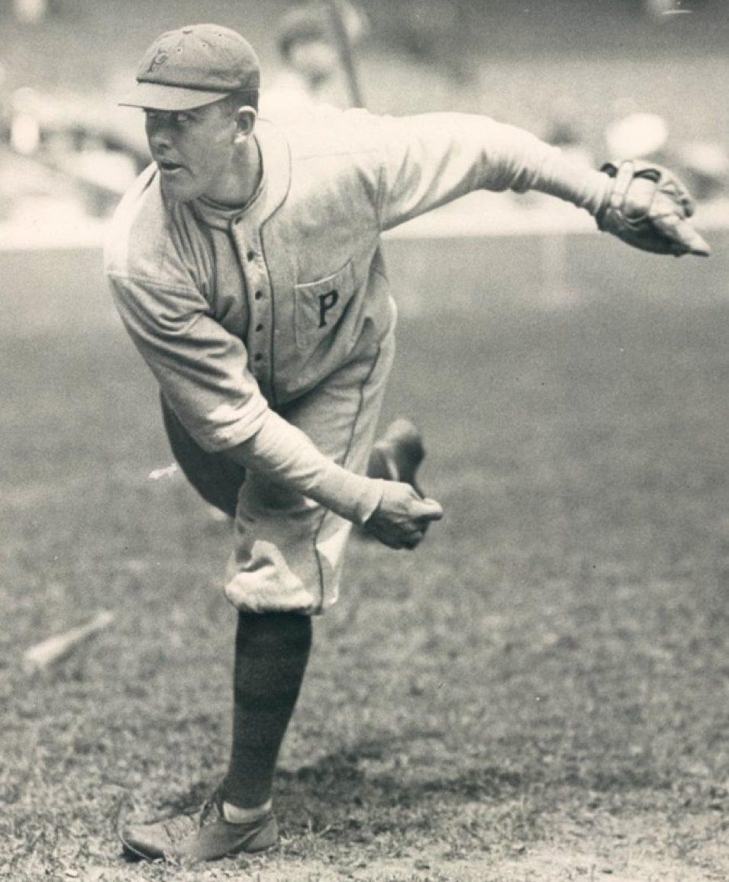
Playing all but one game of his career with the Pittsburgh Pirates, Babe Adams was one of the best control Pitchers of his day.
Adams played in one game for the St. Louis Cardinals in 1906, and his contract was traded to the Pirates shortly after. 1909 was the year he struck, and in that year's World Series, he was their shining star, winning three Games and posting a 1.33 ERA and a 0.889 WHIP.
Over the next few years, Adams was a high-end starter for the Pirates, leading the NL in WHIP in 1911 and 1914 and going 20-for-20 in saves in both 1911 and 1913. Sadly for Adams, shoulder trouble led to a subpar 1916 season, and he spent 1917 in the minors and most of 1918 on the sidelines. It looked like it was over for Adams, but he got healthy, and had there been a Comeback Player of the Year Award, he likely would have won it (although the players coming back from World War I might have had something to say about that).
From 1919 to 1921, he led the National League in WHIP, and from '19 to '22, he was the first-place finisher in BB/9 and SO/BB. Adams would also lead the NL in FIP four times in his career.
His play fell off by 1924, but he was in his 40s by this time. Adams did play in the 1925 World Series, and although he did not play much, he was a member of that championship team, making him the only player who was on both Pittsburgh's 1909 and 1925 World Series Titles. His last season was 1926, and he retired with a record of 194-139 and a WHIP of 1.090.
