Menu
A+ A A-

Our All Time Top 50 Chicago White Sox have been revised to reflect the 2025 Season

Yes, we know that this is taking a while!

As many of you know, we at Notinhalloffame.com are slowly generating the top 50 of each major North American sports team. That being said, we maintain and update our existing Top 50 lists annually.  As such, we are delighted to present our pre-2026 revision of our top 50 Chicago Cubs.

As for all of our top 50 players in baseball, we look at the following: 

1.  Duration and Impact.

2.  Traditional statistics and how they finished in the Major League Baseball.

3.  Advanced Statistics.

4.  Playoff performance.

5. Their respective legacy on the team.

6. How successful the team was when he was there.

7. Respecting the era in which they played.

Criteria 1-4 will make up the lion’s share of the algorithm.  Please note that we have implemented this for the first time.  This has changed the rankings all throughout the board.

Last year, the White Sox were awful, winning only 60 Games.  None of the active players made a debut on the Top 50, nor were there any active players on the list.

As always, we present our top five, which saw a slight change.

1. Frank Thomas
2. Ed Walsh
3. Luke Appling
4. Ted Lyons
5. Red Faber

You can find the entire list here.

The new algorithm has led us to revise the list, with the most notable change in the top five, where Ed Walsh and Luke Appling flipped spots.

We thank you for your continued support of our lists on Notinhalloffame.com.

Our All Time Top 50 Chicago White Sox has been revised to reflect the 2024 Season

Yes, we know that this is taking a while!

As many of you know, we at Notinhalloffame.com are slowly generating the top 50 of each major North American sports team. That being said, we have existing Top 50 lists and consistently look to update them when necessary and based on necessity. As such, we are delighted to present our post-2024 revision of our top 50 Chicago Whute Sox.

As for all of our top 50 players in baseball, we look at the following:

1.  Advanced Statistics.

2.  Traditional statistics and how they finished in the National League.

3.  Playoff accomplishments.

4.  Their overall impact on the team and other intangibles that are not reflected in a stat sheet.

Please note that our algorithm has changed, which yielded minor changes throughout the baseball lists.

Last year, the White Soc posted only 41 wins and was one of the worst teams ever to disgrace the diamond.  Nobody from the ’24 roster came close to breaking the top 50; however, there is one new entry, a former player who appears here based on the latest algorithm.

As always, we present our top five, which saw no changes.

1. Frank Thomas

2. Luke Appling

3. Ed Walsh

4. Ted Lyons

5. Red Faber

You can find the entire list here.

With the new algorithm, Lee Tannehill enters at #49.

We thank you for your continued support of our lists on Notinhalloffame.com.

48. Lee Tannehill

Lee Tannehill surfaced in the Chicago lineup in 1903 and rapidly established himself as a fixture of the infield. He arrived with a reputation for sure-handedness, a trait that became the tactical engine of the 1906 "Hitless Wonders." During that historic season, he provided the defensive stability at third base and shortstop that allowed the White Sox to capture the World Series despite a collective lack of offensive punch. He was a model of specialized efficiency, proving that in an era of small ball and low scores, a master of the leather was just as vital as a heavy hitter.

The most impressive aspect of his career was the sustained defensive dominance he displayed across nine seasons. Tannehill was a master of range and reaction, twice leading the American League in defensive bWAR in 1909 and 1911. His craftsmanship at third base was a matter of statistical record; he led the league in assists four times, double plays turned twice, and range factor on three separate occasions. He wasn't just a steady glove; he was a high-leverage technician who understood the geometry of the infield, consistently taking away base hits and providing his pitching staff with an elite margin for error.

Tannehill remained a fixture of the South Side through 1912, navigating the physical demands of the early game with a stoic resolve. Whether he was charging a bunt to cut down a runner or backhanding a sharp grounder to start a double play, he competed with a focused intensity that made him a central figure in the franchise’s formative years. He proved that a player could become the heartbeat of a world championship team through a rare combination of grit and defensive wizardry.

Tannehill hung up his spikes following the 1912 season. He left the organization as a statistical pillar of the early American League, having spent his entire professional life defending the same dirt on the South Side.

Our All-Time Top 50 Chicago White Sox Have Been Revised to Reflect the 2023 Season

Yes, we know that this is taking a while!

As many of you know, we here at Notinhalloffame.com are slowly generating the 50 of each major North American sports team.  That being said, we have existing Top 50 lists out and we always consistently look to update them when we can and based on necessity.  As such, we are very happy to present our post 2022/23 revision of our top 50 Chicago White Sox.

As for all of our top 50 players in baseball we look at the following:

1.  Advanced Statistics.

2.  Traditional statistics and how they finished in Major League Baseball.

3.  Playoff accomplishments.

4.  Their overall impact on the team and other intangibles not reflected in a stat sheet.

Last year, the White Sox did not make the playoffs, and we had no new entrants.  For the first time ever, the only change was lowering a player based on the past year!

As always, we present our top five, which saw no changes:

1. Frank Thomas

2. Ed Walsh

3. Luke Appling

4. Ted Lyons

5. Red Faber


You can find the entire list here.

The only change was a first for us.  Tim Anderson had such a bad season, that he dropped from #43 to #48.  We have dropped players one spot before, this is unprecedented, especially for a team with as long as a history as the White Sox.

We thank you for your continued support for our lists on Notinhalloffame.com.

Our All Time Top 50 Chicago White Sox have been updated to reflect the 2022 Season

Yes, we know that this is taking a while!

As many of you know, we here at Notinhalloffame.com are slowly generating the 50 of each major North American sports team.  That being said, we have existing Top 50 lists out and we always consistently look to update them when we can and based on necessity.  As such, we are very happy to present our post 2022 revision of our top Chicago White Sox.

As for all of our top 50 players in baseball we look at the following:

1.  Advanced Statistics.

2.  Traditional statistics and how they finished in the American League.

3.  Playoff accomplishments.

4.  Their overall impact on the team and other intangibles not reflected in a stat sheet.

Last year, Chicago was not able to make the playoffs, but they were contenders.  There were no new entrants, though one elevation.

As always, we present our top five, which was not affected by the last season:

1. Frank Thomas

2. Ed Walsh

3. Luke Appling

4. Ted Lyons

5. Red Faber

You can find the entire list here.

Shortstop, Tim Anderson, climbed from #50 to #43.

We welcome your input and comments and as always, we thank you for your support.

Our All-Time Top 50 Chicago White Sox have been revised to reflect the 2021 Season

Yes, we know that this is taking a while!

As many of you know, we here at Notinhalloffame.com are slowly generating the 50 of each major North American sports team.  That being said, we have existing Top 50 lists out and we always consistently look to update them when we can and based on necessity.  As such, we are very happy to present our post-2021 revision of our top 50 Chicago White Sox.

As for all of our top 50 players in baseball we look at the following: 

1.  Advanced Statistics.

2.  Traditional statistics and how they finished in the American League. 

3.  Playoff accomplishments.

4.  Their overall impact on the team and other intangibles not reflected in a stat sheet.

Last year, Chicago made it to the playoffs but were unable to get past Houston in the Divisional round.  We have one significant jump in the rankings, and one new entry.

As always, we present our top five, though there were no changes.

1. Frank Thomas

2. Ed Walsh

3. Luke Appling

4. Ted Lyons

5. Red Faber

You can find the entire list here.

Current White Sox star, Jose Abreu, climbed to #20 from #17.

Shortstop, Tim Anderson, debuts at #50.

We welcome your input and comments and as always, we thank you for your support.

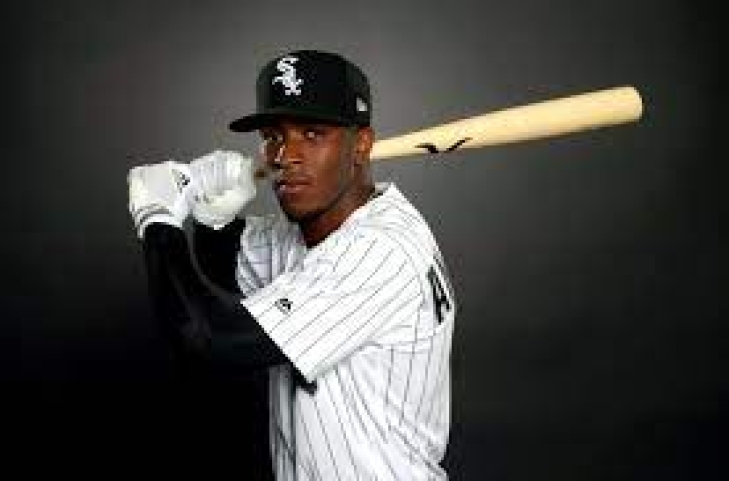
49. Tim Anderson

Tim Anderson debuted in the Chicago lineup in 2016 and matured instantly into a dynamic force at the top of the order. He emerged with a specialized, aggressive approach at the plate, utilizing his elite hand-speed to drive the ball to all fields. His breakout reached a massive ceiling in 2019 when he stood as the undisputed batting king of the American League, securing the Batting Title with a .335 average. He was a model of multi-tool production, proving he could pair his contact skills with consistent power, launching double-digit home runs over five consecutive summers between 2017 and 2021.

The most impressive aspect of his tenure was the charismatic energy he brought to the diamond, which translated into back-to-back All-Star selections in 2021 and 2022. Anderson was a master of the "big moment," often serving as the tactical catalyst for a lineup that returned the White Sox to postseason contention. He wasn't just a statistical producer; he was a high-leverage presence whose "bat flip" heard 'round the world came to symbolize a rejuvenated franchise. At his peak, he was a premier offensive shortstop who could dictate the tempo of a game from the very first pitch.

However, the momentum of his career reached a sudden and difficult crossroads in 2023. That season, Anderson struggled through a period of profound regression, marked by a decline in his power and an uncharacteristic drop in his offensive efficiency. It was a challenging final chapter on the South Side, underscored by physical toll and a high-profile on-field altercation with Jose Ramirez that signaled the end of his time in Chicago. Despite the difficult exit, his years of elite production remained a foundational part of the team's modern identity, leaving behind a legacy of a player who, at his best, was as dangerous as anyone in the sport.

The White Sox declined his option after the 2023 Season. In Chicago, Anderson compiled 1,021 hits, 1,021 runs, 98 home runs, and a 2019 American League Batting Title.

228. Magglio Ordóñez

Magglio Ordonez proved to be a very good hitter over his fifteen-year career, with 2,156 Hits, a .308 career Batting Average, a Batting Title in 2007, and had good power numbers with three Silver Slugger Awards and a career Slugging Average over .500.  In 2007, Ordonez was the runner-up for the American League MVP Award, and he went to six All-Star games.  He was a good player for a long time, but his career bWAR of 38.5, while decent, is not indicative of Hall of Fame candidacy by today’s standards.

288. George Gore

The first half of George Gore's career was by far the best half, where he was a member of the Chicago White Stockings, the team that became the iconic Chicago Cubs.

251. Chet Lemon

Chet Lemon split his career with the Chicago White Sox and Detroit Tigers, and over his career, the Centerfielder's main calling card was a dependable defense with underrated offensive skill.

177. Doc White

Guy Harris “Doc” White was not a superstar, but a player teams would covet for his dependable, durable production.

White debuted in 1901 for the Philadelphia Phillies, where he played for two seasons, the second of which saw his 5.411 SO/9 lead the National League.  White jumped to the Chicago White Sox of the American League in 1903, and he stayed with the team until his Major League career ended in 1913.

From '03 to 08, White won at least 16 Games, including a league-leading 27 in 1907.  White progressively rose in ERA rankings: fourth in 1903 (2.13), third in 1904 (1.78), second in 1905 (1.76), and first in 1906 (1.52).  1906 was incredibly sweet for the Pitcher as he helped the White Sox win their first-ever World Series Title.  White also led the AL in WHIP in 1906 (0.903) and BB/9 twice (1907 & 1911).

It is worth mentioning that White was a respectable hitter, accumulating 278 Hits with a .217 Batting Average over his career.  Whited finished off with a record of 189-156 with 1,384 Strikeouts. 

197. Robin Ventura

Forget about Robin Ventura headbutting Nolan Ryan’s fist.

Before he reached the Majors, Robin Ventura already had a full trophy case.  In 1988, the Oklahoma State star was a three-time All-American, won the Dick Howser Trophy, the Golden Spikes Award, and was a Gold Medal winner for the United States.

Professionally, Ventura proved to be a good-hitting third baseman who spent the majority of his career with the Chicago White Sox, the team he debuted with in 1989.  Ventura became a starter in 1990 and was an All-Star in 1992.  With the Chi-Sox, Ventura had five 20 Home Run years and six 90-plus RBI years, but his best asset was his defense, as he earned five of his six Gold Gloves with Chicago.  Ventura is also currently in the top twenty all-time in Total Zone Runs.

While the White Sox are the team Ventura is best known for, he would have another four-year run of 20 Home Runs, three with the Mets and one with the Yankees.

Over Ventura’s career, he blasted 294 Home Runs with 18 of them being Grand Slams.  He would later manage the White Sox from 2012 to 2016.

153. Wilbur Wood

Wilbur Wood began his first five seasons in the Majors with Boston and Pittsburgh, but he did not accomplish much of note.  He was traded to the Chicago White Sox in 1966, and after a year in the minors and developing the knuckleball, he would become one of the better Pitchers in ChiSox history.

Wood essentially had two careers in Chicago, where he began as a closer, leading the American League in Games Pitched annually from 1968 to 1970, and in the bookend years, he was first in Games Finished.  Wood moved the starting rotation, and from 1971 to 1974, he was a 20 Game winner, with three All-Star Games.  During this period, he twice led the AL in Wins and twice in Innings, and from 1970 to 1972, he finished in the top five in Cy Young voting.

Wood’s career was derailed when a line drive cracked his kneecap in 1976, and while he managed to carve out two more years, he wasn’t the same.  Wood retired in 1978 with a record of 164-156 with 1,411 Strikeouts and 57 Saves.

121. Eddie Cicotte

The Hall of Fame victim most often cited in the Black Sox Scandal is "Shoeless" Joe Jackson, but Pitcher Eddie Cicotte might also have cost a Cooperstown plaque.

After a brief stint with the Detroit Tigers in 1905, he went back to the minors, only to return three years later with the Boston Red Sox.  Cicotte did better there, good enough to stay on the roster but far from a star.  That changed when he was traded to the Chicago White Sox during the 1912 season.

With Chicago, he had his breakout season in 1913, when he went 18-11 with a 1.58 ERA, and a monster season in 1917, when he led the American League in Wins (28), ERA (1.53), and WHIP (0.912).  Cicotte would help Chicago win the 1917 World Series, going 1-1 with a 1.57 ERA.  1919 was just as good as he again led the AL in Wins (29) and had a 1.82 ERA.  Cicotte and the White Sox were heavily favored in the 1919 World Series against the Cincinnati Reds, but gamblers got into the palms of some White Sox players (allegedly), and Cicotte was one of them (allegedly).  In that World Series, he went 1-2 and looked ineffective (or throwing the game) in his first two starts.  Chicago would lose that series to the Reds.

After going 21-10 in 1920, the suspected White Sox players were brought to trial.  Although the court would find the White Sox players innocent, Commissioner Kennesaw Mountain Landis banned the eight players from baseball after 1920, ending their careers at age 36.

Our All-Time Top 50 Chicago White Sox have been revised

Yes, we know that this is taking a while!

As many of you know, we here at Notinhalloffame.com are slowly generating the 50 of each major North American sports team.  That being said, we have existing Top 50 lists out and we always consistently look to update them when we can and based on necessity. As such, we are very happy to present our pre-2021 revision of our top 50 Chicago White Sox of all-time.

As for all of our top 50 players in baseball we look at the following: 

1.  Advanced Statistics.

2.  Traditional statistics and how they finished in the American League. 

3. Playoff accomplishments.

4. Their overall impact on the team and other intangibles not reflected in a stat sheet.

There are no new additions in the Top 50, though there were minor changes through the list, but nothing affecting our top five.  As always, we announce them here.

They are:

1. Frank Thomas

2. Ed Walsh

3. Luke Appling

4. TedLyons

5. Red Faber

You can find the entire list here.

Jose Abreu, who won the MVP in 2020, rocketed up to #33 to #20.

We welcome your input and commentsand as always, we thank you for your support.

Our All-Time Top 50 Chicago White Sox are now up

Yes, we know that this is taking a while!

As many of you know, we here at Notinhalloffame.com are slowly generating the 50 of each major North American sports team.  We have a new one to unveil today, that of the Chicago White Sox. 

The White Sox were an inaugural team of the American League, and while they have been the adversary of the Chicago Cubs of the National League, the Chi-Sox were a formidable team in their own right.

The White Sox won their first World Series in 1906, and their second in 1917, but they were cursed when they allegedly threw the 1919 World Series to Cincinnati in 1919.  The White Sox straggled for decades and after decades of struggles they won the World Series again in 2005.

As for all of our top 50 players in baseball we look at the following: 

1.  Advanced Statistics.

2.  Traditional statistics and how they finished in the American League.

3.  Playoff accomplishments.

4.  Their overall impact on the team and other intangibles not reflected in a stat sheet.

Remember, this is ONLY based on what a player does on that particular team and not what he accomplished elsewhere and also note that we have placed an increased importance on the first two categories.

This list is updated up until the end of the 2019 Season.

The complete list can be found here, but as always we announce our top five in this article.  They are:

1. FrankThomas


2. Ed Walsh


3. Luke Appling


4. Ted Lyons


5. Red Faber

We will continue our adjustments on our existing lists and will continue developing our new lists.  

Look for our more material coming soon!

As always we thank you for your support.

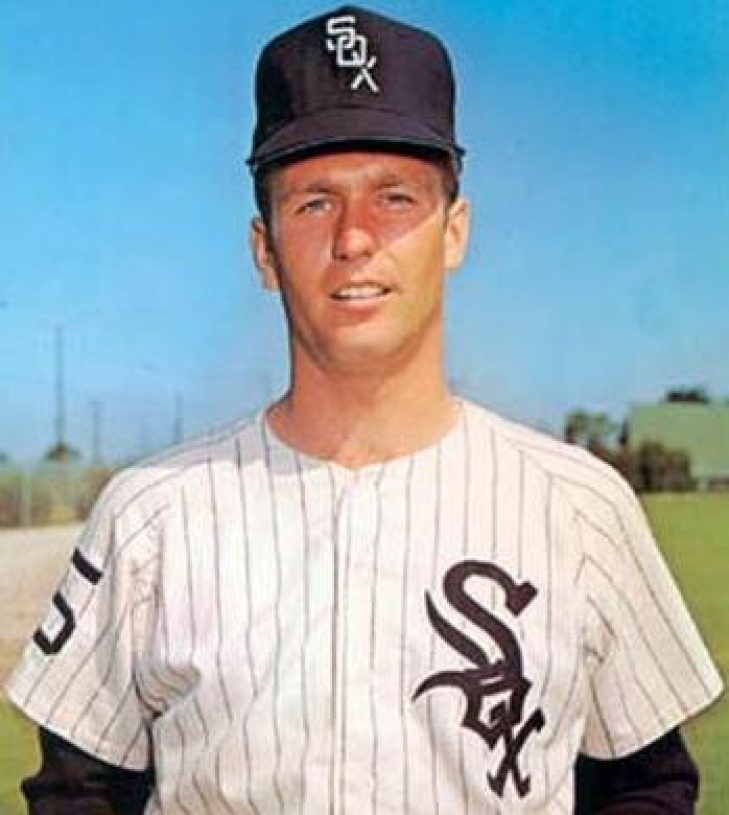
37. Tommy John

Arriving in a trade from the Cleveland Indians in 1965, Tommy John matured instantly into a cornerstone of the Chicago rotation. He arrived as a young pitcher with a burgeoning sinker and quickly evolved into a tactical master who specialized in run suppression. His stay in Chicago was marked by a remarkable stretch of consistency; from 1966 to 1968, he was a perennial fixture near the top of the ERA leaderboards, finishing in the top five for three consecutive seasons. He wasn't overpowering hitters with raw velocity, but rather dismantling them with a relentless sequence of ground balls and strikes.

The peak of his career in a White Sox uniform was marked by an elite ability to finish what he started. John led the American League in shutouts twice during his seven-year tenure, proving that his game was built on a high-volume workload and an unwavering focus. He earned an All-Star nod in 1968, a season in which he stood as one of the few arms capable of matching the historic efficiency of the league's most decorated stars. With two top-six finishes in WHIP during his prime years, he was a pitcher who simply refused to give opposing offenses any free real estate.

The chapter concluded after the 1971 season, when he was traded to the Dodgers in a blockbuster deal for Dick Allen. While the move sparked a new era for both franchises, John left the South Side as an established master of his craft.

His identity was defined by a quiet, professional durability. John logged over 1,400 innings during his stay with the club, pitching with a technical grace that allowed him to navigate the high-leverage moments of the late 1960s. He concluded his journey with the White Sox with 82 wins and a sparkling 2.95 ERA, a total that remains one of the most effective marks in the team’s modern history. He proved that a southpaw with a sharp sinker and a disciplined mind could thrive in any environment, setting a standard for craftsmanship that would carry him through four decades of professional ball.

35. Willie Kamm

The landscape of Chicago baseball shifted in 1922 when the organization bought Kamm from the Pacific Coast League for the then-unheard-of sum of $100,000. He matured instantly into a defensive wizard, bringing a level of consistency to third base that the American League had rarely seen. Kamm was a tactical master of his position, leading the league in fielding percentage six different times during his Chicago tenure. Had the Gold Glove been a reality in the 1920s, his trophy case would have been overflowing; he possessed a glove-shaped vacuum and a rare internal clock that allowed him to turn certain base hits into routine outs.

While his defense was his calling card, Kamm was a highly sophisticated offensive threat who understood the value of the free pass. He arrived as a high-average prospect and evolved into a disciplined catalyst, famously leading the American League in walks in 1925. He wasn't a prototypical slugger of the "Live-ball" era, but his ability to reach base and keep the line moving was vital to the Chicago offense. He maintained a respectable .279 batting average during his time with the club, proving that his value was rooted in a rare balance of elite run prevention and patient run production.

Reliability and a deep connection to the city became the hallmarks of his identity. Kamm was a fixture in the Chicago infield for nine seasons, providing a level of stability that made him one of the most popular figures of his generation. He was a high-volume producer who amassed 1,136 hits in a White Sox uniform, serving as the steady pulse of a team navigating a difficult transition period. Whether he was charging a bunt with barehanded brilliance or working a deep count to spark a rally, he played with a professional calm that resonated with the South Side faithful.

The chapter eventually reached its conclusion in mid-1931, when a trade sent him to the Cleveland Indians.

19. Robin Ventura

When Robin Ventura arrived on the South Side in 1989, he was the crown jewel of the White Sox farm system, a first-round pedigree with a legendary collegiate resume. While he initially struggled to adjust to big-league pitching, he soon found his rhythm, evolving into a surgical, left-handed threat who provided a perfect counterweight to Frank Thomas in the lineup. He arrived as a high-potential prospect and matured into a defensive institution at third base, but his tenure would ultimately be defined by a single, scorching August afternoon in Texas.

Ventura was a defensive vacuum who captured five Gold Gloves during his ten-year stay in Chicago. He led the league in Total Zone Runs at his position, making the most difficult backhand stabs at the hot corner look routine. Offensively, he was just as reliable; beginning in 1991, he rattled off four seasons of at least 20 home runs, twice eclipsing the 100-RBI plateau. He was the quiet, cerebral professional of the 1993 division-winning squad until the third inning of a game against the Rangers on August 4th.

The signature moment of his stint, for better or worse, occurred when Ventura was plunked by a 46-year-old Nolan Ryan. In a rare display of youthful rage, the 26-year-old Ventura threw down his bat and charged the mound. What followed became the most iconic snapshot in baseball history: the veteran Ryan met him halfway, caught him in a headlock, and delivered a flurry of punches to the top of Ventura's head. While Ventura later famously dismissed the blows as "a couple of noogies," the image of the young star being handled by the "Old Express" became a permanent part of his legacy. It was a moment where the "Franchise Identity" of the gritty White Sox met the immovable force of a living legend.

Despite that viral moment, Ventura’s skills remained undeniable. He was a two-time All-Star in Chicago and maintained a level of poise that helped the team navigate the high-leverage years of the early 90s. He wasn't just the guy in the headlock; he was the guy who provided 1,244 hits and 171 home runs while playing some of the most elite defense the South Side had ever seen. His walk toward the exit came after the 1998 season, when he signed with the New York Mets, leaving a void at third base that the organization struggled to fill for years.

11. Wilbur Wood

When Wilbur Wood was acquired from the Pittsburgh Pirates in 1966 for a player to be named later, the transaction barely registered as a footnote in the local papers. He arrived as a 25-year-old who had spent years oscillating between the majors and minors, unable to find a permanent home or a consistent out-pitch. However, the trajectory of his career changed forever when he crossed paths with the legendary Hoyt Wilhelm. Under Wilhelm’s tutelage, Wood fully committed to the knuckleball, a decision that would transform him from a roster afterthought into the busiest man in baseball.

His initial residency in Chicago was defined by a record-breaking stint in the bullpen. Starting in 1968, Wood became the league’s most frequent visitor to the mound, leading the American League in appearances for three consecutive seasons. In '68 alone, he set a then-Major League record by pitching in 88 games, proving that his knuckleball didn't just dance, it allowed him to throw nearly every other day without the typical wear and tear of a power pitcher. He was the ultimate safety net for the South Side pitching staff, a man who arrived as a specialist and left the bullpen as a statistical outlier.

The middle chapter of Wood’s tenure saw a daring transition as the White Sox moved their relief ace into the starting rotation in 1971. The results were immediate and historic. Over the next four years, Wood embarked on a run of durability that feels like a relic from the Deadball Era. He rattled off four consecutive 20-win seasons, twice leading the league in victories with 24. In 1972 and 1973, he eclipsed 350 innings pitched in each campaign—numbers that are virtually extinct in the modern game. He was an All-Star fixture and a perennial Cy Young contender, peaking as the runner-up in 1972, serving as the stoic anchor for a franchise that relied on his ability to take the ball every three days.

The final walk toward the exit was dictated not by a fading arm, but by a freak accident. In May of 1976, a screaming line drive off the bat of Ron LeFlore shattered Wood’s kneecap, an injury that robbed him of the stability required to drive his signature pitch. While he showed immense grit by returning to the mound, the magic of the knuckleball had lost its edge. He retired after the 1978 season with 163 wins and over 2,500 innings in a White Sox uniform. He arrived as an anonymous trade piece and left as one of the most prolific hurlers in franchise history, the man who proved that a dancing pitch could carry an entire organization on its back.

Subscribe to this RSS feed